July 14, 2026
Package Storage for Multifamily Properties: 2026 Guide
Discover the best package storage solutions for multifamily properties in 2026. Improve delivery management and resident satisfaction today!
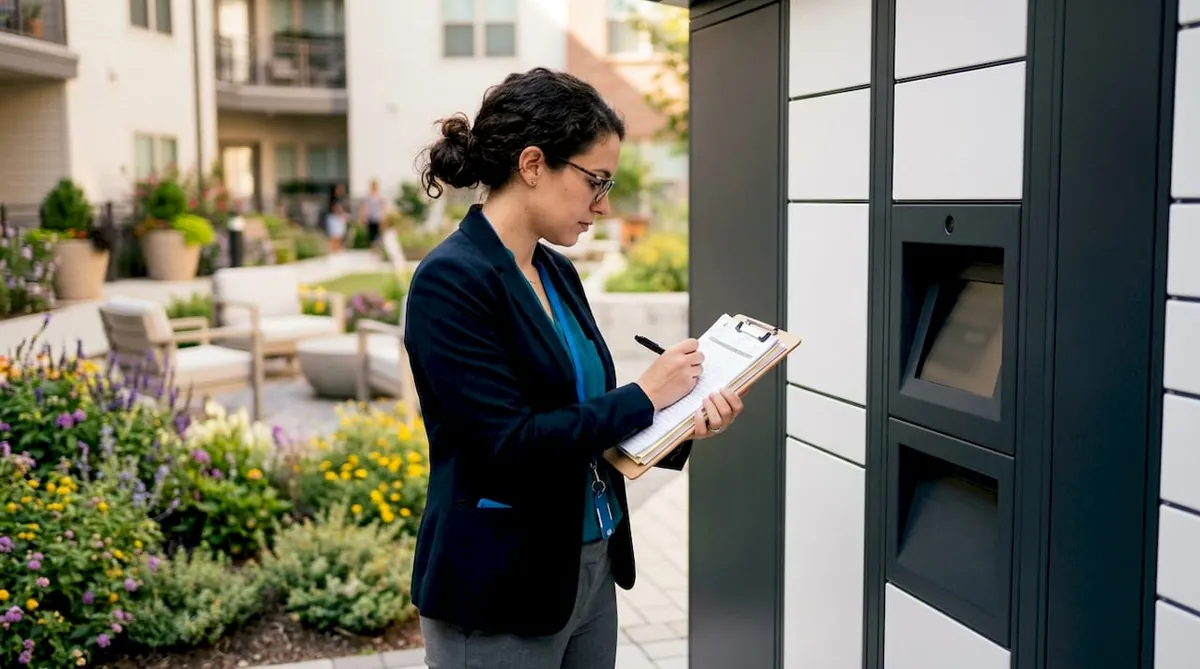
Efficient package storage is the organized system of securely receiving, holding, and managing resident deliveries through solutions like smart parcel lockers, automated package rooms, and dedicated parcel storage lockers. Multifamily properties now handle more deliveries per unit than at any point in the past decade. That volume creates real operational pressure on leasing staff and real frustration for residents who miss deliveries or find packages left unsecured in lobbies. The right parcel storage solution removes both problems at once, cutting staff workload while giving residents 24/7 access to their deliveries.
What types of package storage solutions are available for multifamily properties?
Smart parcel lockers are the most widely adopted form of package storage in multifamily housing today. They use electronic access methods including PIN codes, QR codes, and mobile apps to authenticate pickup. Locker notifications use text and email with single-use PINs, so residents know the moment a package arrives and can retrieve it without involving staff. That automation directly reduces front desk workload and eliminates the missed-delivery problem that frustrates residents most.
Standard parcel lockers handle everyday deliveries well, but they are not built for heavier or oversized shipments. Parcel storage lockers fill that gap. Advanced parcel lockers use multi-point locking and heavier steel gauges, with door steel up to 1.5mm compared to 0.8–1.0mm on standard units. That extra material thickness matters for properties where residents receive furniture components, appliance parts, or bulk orders that sit in a locker for several days.
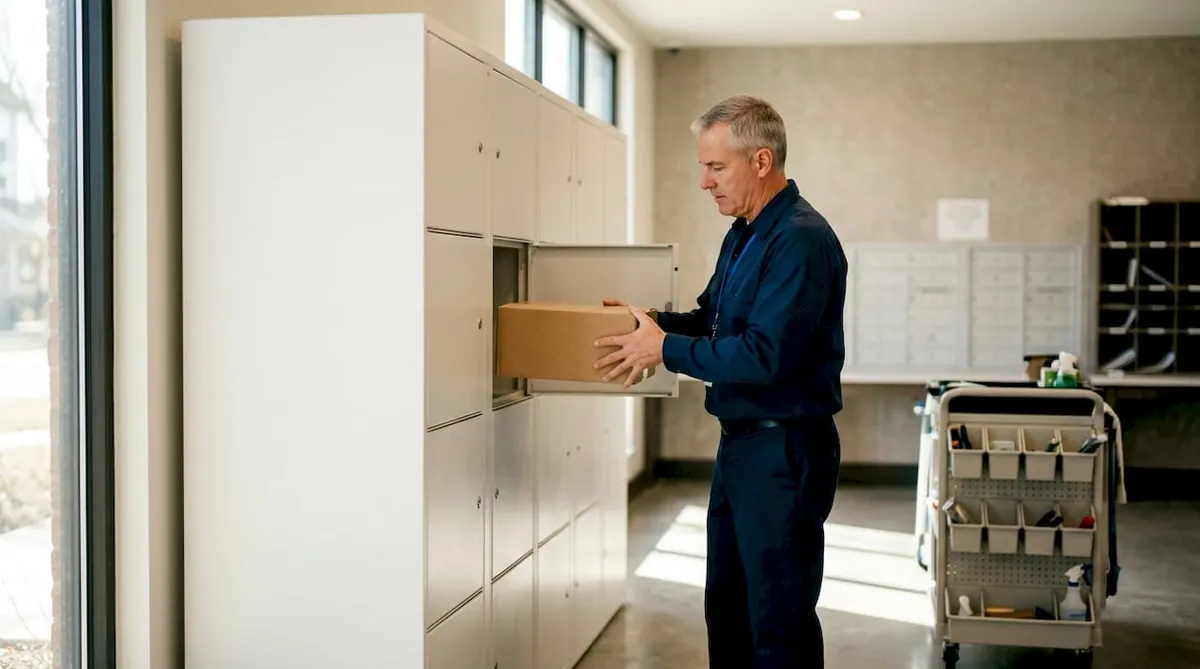
Package rooms represent a third category, suited to properties where locker banks alone cannot handle peak delivery volume. An automated package room uses camera surveillance, electronic access control, and software logging to create a secure, self-service space for any parcel size. We offer monitored package rooms through our Luxer One® platform, combining video oversight with resident-facing access technology.
The table below maps each solution type to its primary use case.
| Solution type | Best fit | Key feature |
|---|---|---|
| Smart parcel lockers | Mid-size properties, standard deliveries | PIN/QR/app access, automated alerts |
| Parcel storage lockers | Heavy or oversized packages, longer dwell times | Multi-point locking, 30kg load rating per compartment |
| Automated package rooms | High-volume properties, mixed parcel sizes | Camera surveillance, software integration |
| Outdoor weatherproof lockers | Properties without lobby space | IP65 electronics rating, weather-resistant materials |
| Refrigerated lockers | Properties with grocery or meal kit deliveries | Temperature-controlled compartments |
Outdoor units deserve a specific mention. Outdoor smart parcel lockers require weatherproof materials and often an awning or shading structure to maintain operational reliability. Industrial-grade ABS plastic, stainless steel supports, and IP65-rated electronics are the standard for any unit exposed to rain, sun, or freezing temperatures. We supply outdoor parcel lockers built to those specifications for apartment complexes across varying climates.
What infrastructure and technology do you need before installing package storage?
Infrastructure readiness is the single most common reason smart locker deployments fail. Many smart locker solutions need dedicated electrical supply and stable Wi-Fi or hardwired networks because real-time logging and camera integration depend on continuous connectivity. A property that installs a locker bank without verifying those prerequisites will face unreliable alerts, failed access events, and frustrated residents within weeks.
Before selecting any system, property managers need to confirm the following:
- Electrical supply: Dedicated circuits with appropriate amperage for the locker bank or package room hardware
- Internet connectivity: Stable wired Ethernet preferred; Wi-Fi acceptable only with verified signal strength at the installation point
- Physical space: Sufficient square footage for the chosen configuration, with ADA-compliant clearance for resident access
- Courier access: A defined workflow for how carriers enter the building and deposit packages without staff involvement
- Property management software integration: Confirm the locker system can push notifications and log events into your existing platform
Security technology is equally non-negotiable. Video surveillance at the locker bank or package room entrance creates a deterrent and provides evidence if a dispute arises. Automated package rooms and smart lockers reduce missed deliveries and theft by opening only upon authenticated access, which means every transaction is logged with a timestamp and user identity.
Pro Tip: Run a connectivity test at the exact installation location, not just in the lobby or mailroom. Signal strength drops significantly behind metal doors and concrete walls, and a failed connectivity test before installation saves weeks of troubleshooting after.
Integration with property management software is often treated as optional but functions as a core requirement for efficient operation. When the locker system feeds data directly into your management platform, you get occupancy reports, dwell time alerts, and resident usage patterns without manual data entry.
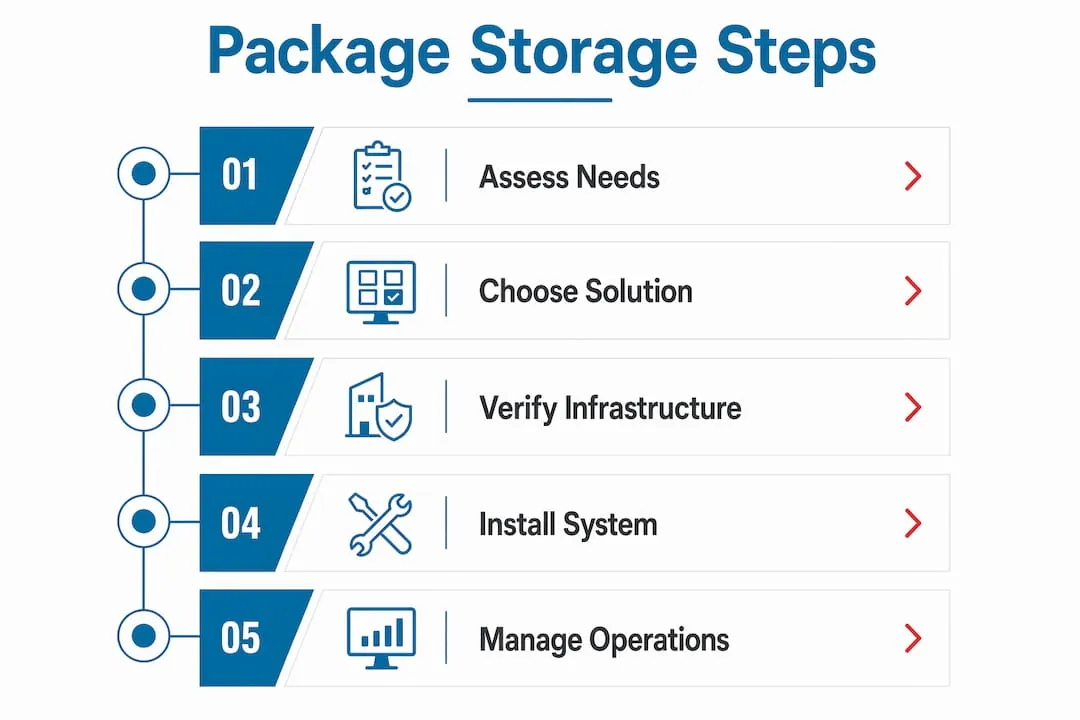
How do you implement and manage package storage efficiently?
A successful implementation follows a clear sequence. Skipping steps early creates problems that are expensive to fix after hardware is installed.
- Assess your delivery volume. Count average daily parcels per unit across a full month, not just peak periods. Properties with more than one delivery per unit per week need higher-capacity configurations.
- Profile your package mix. Identify the proportion of oversized, refrigerated, or high-value deliveries. That profile determines whether standard lockers, parcel storage lockers with 30kg-rated compartments, or refrigerated units belong in your plan.
- Choose indoor, outdoor, or a hybrid layout. Indoor installations protect hardware from weather but require lobby or mailroom space. Outdoor units free up interior square footage but need weatherproofing and shading.
- Confirm infrastructure. Verify electrical, network, and space requirements before signing any equipment contract.
- Define courier workflows. Work directly with major carriers to confirm they will use your system. A locker bank that couriers bypass defeats its own purpose.
- Configure access and notifications. Set up unique access codes per resident, multi-PIN support for different carriers, and automatic alerts via text and email.
- Train staff. Leasing and maintenance staff need to know how to reset access codes, handle overflow situations, and escalate hardware issues.
- Monitor dwell time from day one. Packages left in lockers beyond 48–72 hours block capacity. Set automated reminders to push residents toward timely pickup.
Pro Tip: Negotiate a pilot period with your locker vendor before full deployment. Running a 30-day trial on one locker bank gives you real usage data to right-size the full installation and avoid over-purchasing compartments you will not fill.
Smart lockers support resident-initiated returns, which adds a reverse logistics function that most property managers overlook during planning. Residents deposit return packages in the locker, and the carrier collects them on the next scheduled visit. That feature alone reduces the number of residents who ask leasing staff to hold packages or facilitate returns.
The benefits of automated delivery systems for multifamily properties extend beyond convenience. Properties that implement well-managed parcel solutions report fewer resident complaints about deliveries and measurable reductions in staff time spent on package handling.
What mistakes should property managers avoid with package storage?
The most costly mistakes in package storage implementation share a common root: underestimating complexity before installation and underinvesting in management after it.
- Ignoring dwell time limits. Compartments that stay occupied for days block incoming deliveries and create a backlog. Without automated reminders, residents simply forget. Set escalating alerts at 24, 48, and 72 hours.
- Buying for today’s volume, not next year’s. Delivery volume at multifamily properties grows year over year. A locker bank sized for current needs will be at capacity within 18 months if you do not account for growth.
- Skipping courier coordination. A locker system only works if carriers use it. Confirm participation from major carriers before installation, and provide clear access instructions for each one.
- Neglecting maintenance schedules. Electronic locks, cameras, and network hardware all require periodic inspection. A single failed compartment that goes unrepaired for weeks signals to residents that the system is unreliable.
- Undertraining staff. Leasing teams that cannot answer basic resident questions about the locker system create confusion and erode trust in the technology.
“The gap between a locker system that residents love and one they ignore almost always comes down to the first 90 days of operation. Properties that monitor usage, fix issues fast, and communicate clearly during that window build habits that sustain the system for years. Properties that install and walk away spend the next year fielding complaints.”
Poor infrastructure compatibility produces the most immediate failures. Verifying reliable Wi-Fi and electrical capacity is critical for smart locker success. Lack of compatibility leads to failed deployments, and retrofitting infrastructure after the fact costs significantly more than addressing it during planning.
Key Takeaways
Effective package storage in multifamily housing requires the right solution type, verified infrastructure, and active management from day one.
| Point | Details |
|---|---|
| Match solution to delivery profile | Choose lockers, parcel storage units, or package rooms based on your actual volume and package size mix. |
| Verify infrastructure first | Confirm dedicated electrical supply and stable network connectivity before signing any equipment contract. |
| Coordinate with carriers | Locker systems only work when major carriers actively use them; confirm participation before installation. |
| Manage dwell time actively | Set automated reminders at 24, 48, and 72 hours to keep compartments available for incoming deliveries. |
| Plan for volume growth | Size your system for projected delivery growth, not just current volume, to avoid capacity problems within 18 months. |
What we have learned from deploying package storage at scale
The properties that get the most from their parcel storage investment are not always the ones with the largest locker banks. They are the ones that treat the system as an ongoing operation rather than a one-time installation. Resident expectations around delivery have shifted permanently. A property that cannot guarantee secure, 24/7 package access now faces a real leasing disadvantage against one that can.
We have seen properties underestimate how quickly delivery volume grows after a new locker system goes live. Residents who previously avoided online shopping because of theft or missed deliveries start ordering more once they trust the system. That behavioral shift is good for resident satisfaction and hard on an undersized locker bank.
The return logistics function is consistently the most underused feature at properties we work with. Resident-initiated returns ease leasing staff workload in a way that most managers do not anticipate until they see the time savings firsthand. Building that capability into the initial configuration costs nothing extra and pays back immediately.
Technology upgrades matter too. A locker system installed five years ago may lack the software integration and access method flexibility that residents now expect. Treating the locker platform as infrastructure that needs periodic review, not a permanent fixture, keeps the property competitive.
Luxer One lockers for multifamily package management
We provide Luxer One® parcel lockers, automated package rooms, and refrigerated units built specifically for multifamily properties. Every configuration supports automated resident alerts, video surveillance, and carrier-specific access workflows.
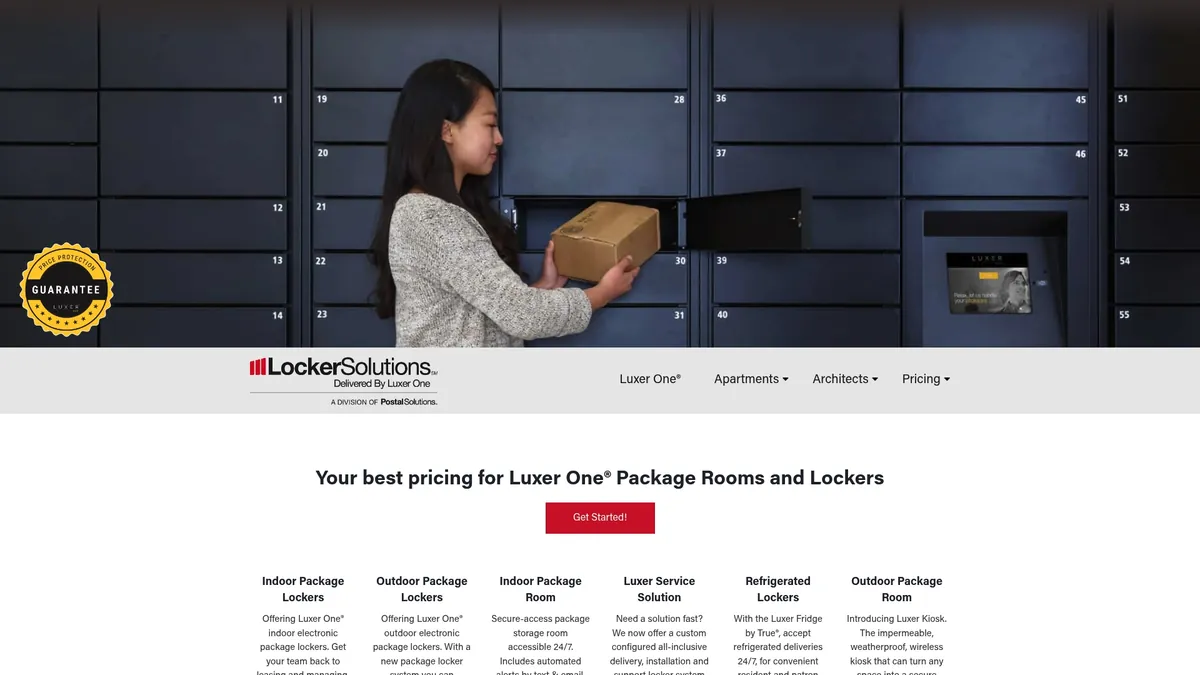
Whether your property needs indoor Luxer One lockers for a lobby installation, a weatherproof outdoor bank, or a fully managed package room, we offer configurations that fit properties of any size. The automated package rooms guide walks through the full implementation process, from infrastructure assessment to resident onboarding. Contact us to discuss the right configuration for your property’s delivery volume and layout.
FAQ
What is the difference between a parcel locker and a parcel storage locker?
A standard parcel locker handles everyday deliveries with basic electronic access. A parcel storage locker uses heavier steel construction, multi-point locking, and higher load ratings, up to 30kg per compartment, for larger or heavier packages that need to sit longer.
How much space does a smart locker bank require?
Space requirements vary by configuration and property size. Indoor installations need ADA-compliant clearance around each unit. Outdoor units require additional space for weatherproofing structures like awnings or shading.
Do major carriers use smart parcel lockers?
Most major carriers support smart locker delivery when the property provides clear access instructions and a defined workflow. Confirming carrier participation before installation is a required step, not an optional one.
What happens when a locker is full?
Overflow protocols vary by system. Well-configured platforms send alerts to property managers when capacity drops below a threshold, and some systems redirect overflow to a designated package room or holding area automatically.
How do automated package rooms differ from locker banks?
An automated package room uses a secured, camera-monitored space for any parcel size, while a locker bank assigns individual compartments per delivery. Package rooms handle high-volume and oversized deliveries that locker compartments cannot accommodate.
Recommended
Ready for a Luxer One® package locker quote?
Tell us your unit count and we'll send right-sized pricing with a fast response time.
Get my free quote