July 13, 2026
Legacy Building Retrofit for Lockers: A 2026 Guide
Discover the role of legacy building retrofit for lockers. Upgrade existing systems efficiently while enhancing occupant experience and sustainability.

Retrofitting lockers in legacy buildings is defined as upgrading existing locker hardware and access technology without full replacement, preserving the physical structure while adding modern functionality. The role of legacy building retrofit for lockers has grown significantly as property developers, architects, and facility managers face pressure to meet 2026 ESG targets, reduce capital expenditure, and improve resident and occupant experience. Locker Solutions works directly with multifamily and mixed-use properties navigating these upgrades, and the evidence is clear: retrofitting locker systems extends asset life, cuts waste, and delivers measurable operational gains without the disruption of a full infrastructure overhaul.
What are the main methods used in legacy building locker retrofits?
Locker system modernization centers on replacing mechanical cam locks with electronic or combination alternatives, using the existing locker cabinet as the base. Most steel lockers manufactured in the last several decades share a standard 16x19mm cut-out dimension. That standardization means retrofit locks fit without door replacements or structural modifications, which is the single biggest cost reducer in any legacy building renovation project.
Two primary technology paths exist for retrofitting lockers: battery-powered electronic locks and hardwired systems. Battery-powered locks simplify installation because they require no electrical routing through existing cabinetry. Hardwired systems carry higher upfront installation complexity but lower long-term operational costs because battery replacement cycles are eliminated. The right choice depends on usage volume. High-traffic environments like multifamily lobbies or university buildings accumulate battery costs quickly, making hardwired systems the better long-term investment.
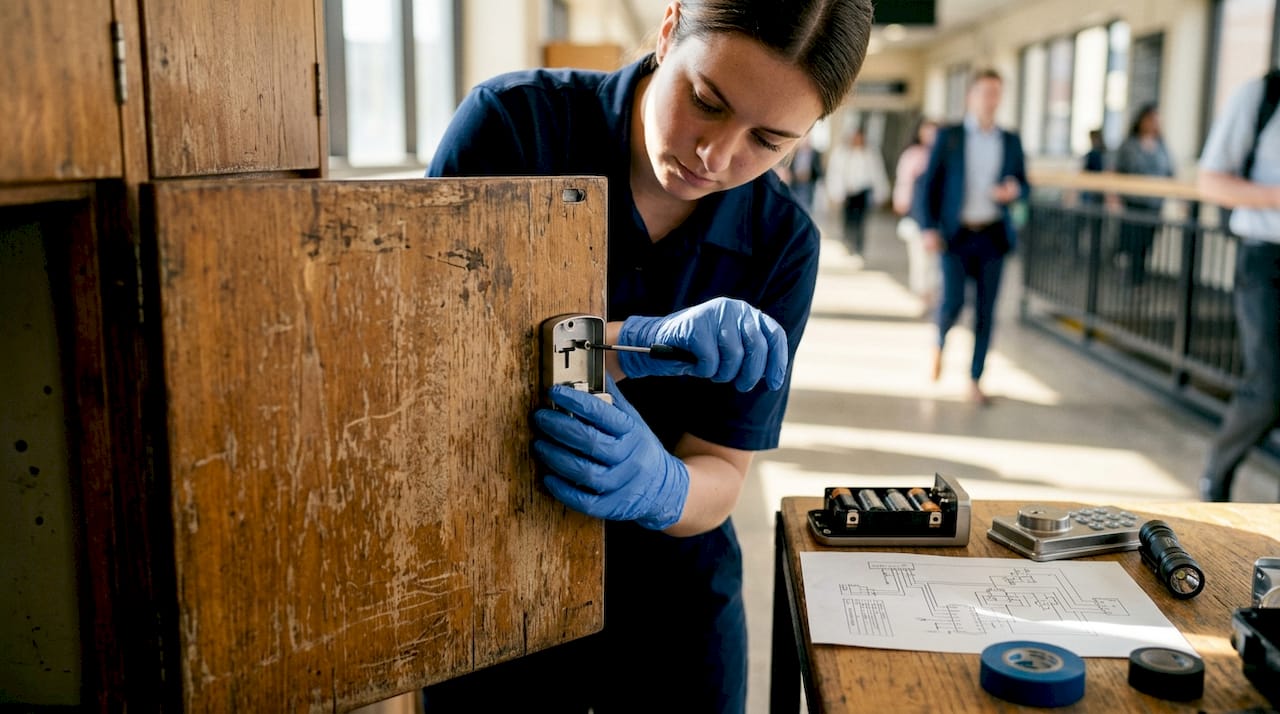
Installation speed is a decisive advantage of retrofitting over full replacement. Lock retrofits complete in hours, while full locker replacement projects typically run days or weeks. For facilities that must stay operational during upgrades, that difference is not a minor convenience. It directly affects staff scheduling, resident access, and the total cost of the project.
Key technical considerations for facility managers and architects planning a retrofit:
- Lock cut-out compatibility: Confirm existing door dimensions match the retrofit lock specification before ordering at scale.
- Door thickness and material: Older steel lockers vary in door gauge, which affects mounting hardware selection.
- Mounting interface: Some retrofit locks require backing plates or adapters not included in standard kits.
- Power routing: Hardwired systems need conduit access planning during the building survey phase.
- Software integration: Electronic locks that connect to building management platforms require network access points near locker banks.
Pro Tip: Run a pilot installation on 10–20 units before committing to a full order. Labor and assessment costs dominate retrofit budgets, and a pilot reveals compatibility issues before they become expensive surprises across hundreds of units.
How do retrofits support sustainability in legacy building renovations?
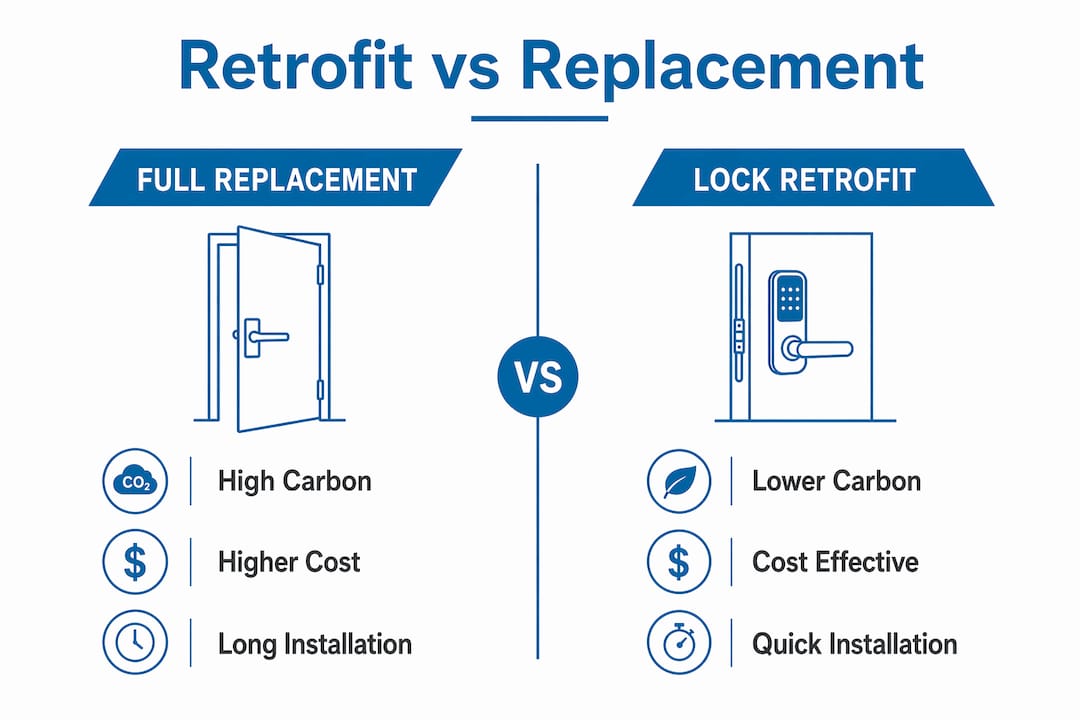
Reusing existing locker infrastructure reduces embodied carbon by up to 75% compared to full replacement. Embodied carbon refers to the emissions generated during manufacturing, transporting, and installing new materials. That figure matters because ESG reporting frameworks increasingly require developers and facility managers to account for embodied carbon, not just operational energy use.
Systems-based retrofits achieve 49%–82% more energy savings than isolated single-component replacements. Applying that principle to locker upgrades means pairing lock modernization with lighting, access control, and HVAC improvements in the same project phase. Coordinated retrofits capture compounding efficiency gains that piecemeal upgrades miss entirely.
Retrofitting existing locker systems contributes significantly to sustainability goals by reusing materials and reducing embodied carbon amid growing ESG requirements. Properties that treat locker upgrades as part of a broader building reuse strategy consistently outperform those that replace infrastructure on a unit-by-unit basis.
The lifecycle cost comparison between retrofit locks and full locker replacement favors retrofitting in nearly every scenario. Sustainability criteria favor reuse and modular retrofits to achieve green building targets under frameworks like LEED and BREEAM. Retrofit combination or electronic locks cost more per unit upfront but eliminate key management labor, reduce locksmith callouts, and align the property with energy-efficient building practices that support certification goals.
| Comparison factor | Full locker replacement | Lock retrofit |
|---|---|---|
| Embodied carbon impact | High (new manufacturing) | Low (reuses existing cabinet) |
| Installation timeline | Days to weeks | Hours per bank |
| Upfront cost | High | Moderate |
| ESG alignment | Neutral to negative | Positive |
| Operational disruption | Significant | Minimal |
What challenges do facility managers face when retrofitting lockers?
The primary cost driver in any locker retrofit is labor, not hardware. Assessing mounting hardware compatibility and conducting test installations before full deployment consumes the majority of project hours. Facility managers who budget only for hardware costs routinely underestimate total project spend by a wide margin.
Older legacy buildings introduce structural peculiarities that standard retrofit kits do not anticipate. Locker banks installed decades ago may have non-standard door dimensions, corroded mounting points, or cabinet configurations that require custom adapters. A building-wide survey before procurement is not optional. It is the difference between a project that finishes on schedule and one that stalls mid-installation.
Battery replacement is a hidden maintenance cost that facility managers frequently overlook when selecting electronic lock systems. Battery-powered electronic locks introduce ongoing replacement cycles that increase total cost of ownership in high-usage environments. A 200-unit multifamily building with daily locker access will cycle through batteries far faster than a low-traffic office installation. Factor that cost into the 5-year total cost of ownership calculation before selecting a lock type.
Common challenges and mitigation strategies:
- Scope creep from undocumented locker conditions: Conduct a full physical audit, not just a visual inspection, before finalizing specifications.
- Compatibility gaps with older locker generations: Order a sample kit and test on the oldest locker bank in the building first.
- Resident or occupant disruption during installation: Schedule retrofits in phases by floor or wing to keep at least partial access available throughout.
- Software integration delays: Confirm network infrastructure requirements with your IT team before the electronic lock order is placed.
Pro Tip: Engage your MEP (mechanical, electrical, and plumbing) consultant during the survey phase, not after. Early integrated surveying prevents the physical conflicts and costly rework that derail retrofit timelines.
How do locker retrofits improve functionality and user experience?
Modern electronic and combination locks eliminate the lost-key problem entirely. Combination locks reduce lost keys and the forced-access damage that follows, which is a recurring expense in schools, gyms, offices, and multifamily properties. Keyless access also removes the administrative burden of key tracking, cutting staff time spent on locker management.
Software-connected electronic locks add a layer of management capability that mechanical systems cannot provide. Property managers gain real-time visibility into locker usage, can reset access remotely, and receive alerts when a locker is left open or accessed outside normal hours. For multifamily package management, that visibility directly reduces package theft and resident complaints.
Retrofitted locker systems also support flexible use cases that legacy mechanical lockers cannot accommodate. A single bank of retrofitted lockers can serve residents in the morning, delivery carriers in the afternoon, and maintenance staff overnight, all with different access credentials managed through one platform. That flexibility is particularly valuable in mixed-use legacy buildings where occupant types and schedules vary.
Practical improvements facility managers and developers see after retrofitting lockers:
- Reduced locksmith callouts from lost or broken keys, lowering maintenance costs per quarter.
- Faster resident onboarding because digital access credentials replace physical key distribution.
- Audit trail access showing who opened which locker and when, supporting security investigations.
- Remote lock management allowing staff to grant or revoke access without being on-site.
- Compatibility with package delivery workflows so carriers can deposit parcels securely without staff involvement.
Key Takeaways
Retrofitting lockers in legacy buildings delivers the strongest return when it combines compatible lock technology, early MEP surveying, and a systems-based approach that aligns with ESG and operational goals.
| Point | Details |
|---|---|
| Standard cut-outs enable retrofits | Most steel lockers share a 16x19mm cut-out, allowing lock upgrades without door replacement. |
| Embodied carbon savings are substantial | Reusing locker cabinets reduces embodied carbon by up to 75% versus full replacement. |
| Labor drives retrofit costs | Assessment and pilot installation labor dominates budgets; plan for it explicitly. |
| Battery vs. hardwired is a lifecycle decision | High-traffic properties should favor hardwired systems to avoid compounding battery replacement costs. |
| Software integration multiplies value | Electronic locks connected to building platforms add remote management and package delivery capability. |
What we’ve learned from working with legacy building retrofits
The most common mistake we see is treating a locker retrofit as a hardware swap. It is not. It is a building systems project that happens to involve lockers. Properties that bring in their MEP team during the initial survey phase consistently finish on time and on budget. Properties that skip that step discover mid-project that their conduit routing conflicts with existing plumbing or that their locker bank sits on a wall with no accessible network drop nearby.
The sustainability argument for retrofitting is stronger than most developers realize. Embodied carbon is becoming a reportable metric under an expanding set of green building frameworks, and replacing functional locker cabinets with new ones generates a carbon liability that shows up in ESG disclosures. Reusing what exists is not a compromise. It is the correct technical decision when the cabinet is structurally sound.
We also want to be direct about hidden costs. Battery-powered electronic locks look attractive on a per-unit basis, but a preventive maintenance plan that accounts for battery cycles over five years often reverses that initial cost advantage. The properties that get the best long-term results are the ones that model total cost of ownership before selecting a lock type, not after the first battery replacement cycle.
The user experience gains from retrofitting are real and measurable. Residents notice when lost keys stop being a problem. Staff notice when locker management stops consuming hours each week. Those are not soft benefits. They show up in resident satisfaction scores and staff productivity, both of which affect a property’s competitive position in the market.
— Locker Solutions
Locker Solutions for legacy building upgrades
Legacy building locker upgrades require products built for retrofit conditions: fast installation, flexible access control, and reliable performance in buildings that were not designed with modern package volumes in mind.
Locker Solutions offers Luxer One® electronic package lockers, access control systems for multifamily properties, and automated package room configurations that work within existing building footprints. Each solution is designed for rapid deployment with minimal structural modification, making them well suited for legacy building renovation projects where disruption must stay low. Contact Locker Solutions to discuss your specific building conditions and get a retrofit plan built around your property’s actual constraints.
FAQ
What is a legacy building locker retrofit?
A legacy building locker retrofit is the process of upgrading existing locker hardware, typically replacing mechanical locks with electronic or combination systems, without removing or replacing the locker cabinet itself.
How long does a locker retrofit take to install?
Lock retrofits on existing locker banks complete in hours, compared to days or weeks for full locker replacement projects, making them the preferred option for occupied buildings.
Do retrofit locks fit all existing steel lockers?
Most steel lockers share a standard 16x19mm cut-out that accommodates retrofit combination and electronic locks without door modification, though a pilot installation is recommended before full deployment.
Are locker retrofits considered a sustainable building upgrade?
Retrofitting lockers qualifies as a sustainable building upgrade because reusing existing cabinets reduces embodied carbon by up to 75% versus full replacement and supports ESG reporting goals under frameworks like LEED.
What is the biggest cost driver in a locker retrofit project?
Labor for compatibility assessment and pilot installations is the primary retrofit cost driver, not hardware. Budgeting for a thorough building survey and test installation phase prevents cost overruns during full deployment.
Recommended
- Smart Lockers for Property Managers: 2026 Guide — Locker Solutions Blog
- Preventive Maintenance for Lockers: A Facility Manager’s Guide — Locker Solutions Blog
- Space-Efficient Locker Configuration: A Developer’s Guide — Locker Solutions Blog
- Snow-Resistant Locker Design: A Guide for Developers — Locker Solutions Blog
Ready for a Luxer One® package locker quote?
Tell us your unit count and we'll send right-sized pricing with a fast response time.
Get my free quote