June 10, 2026
Package Locker Systems for Multifamily Properties: 2026 Guide
Discover how package locker systems can streamline delivery for multifamily properties in 2026. Explore types, benefits, and more!
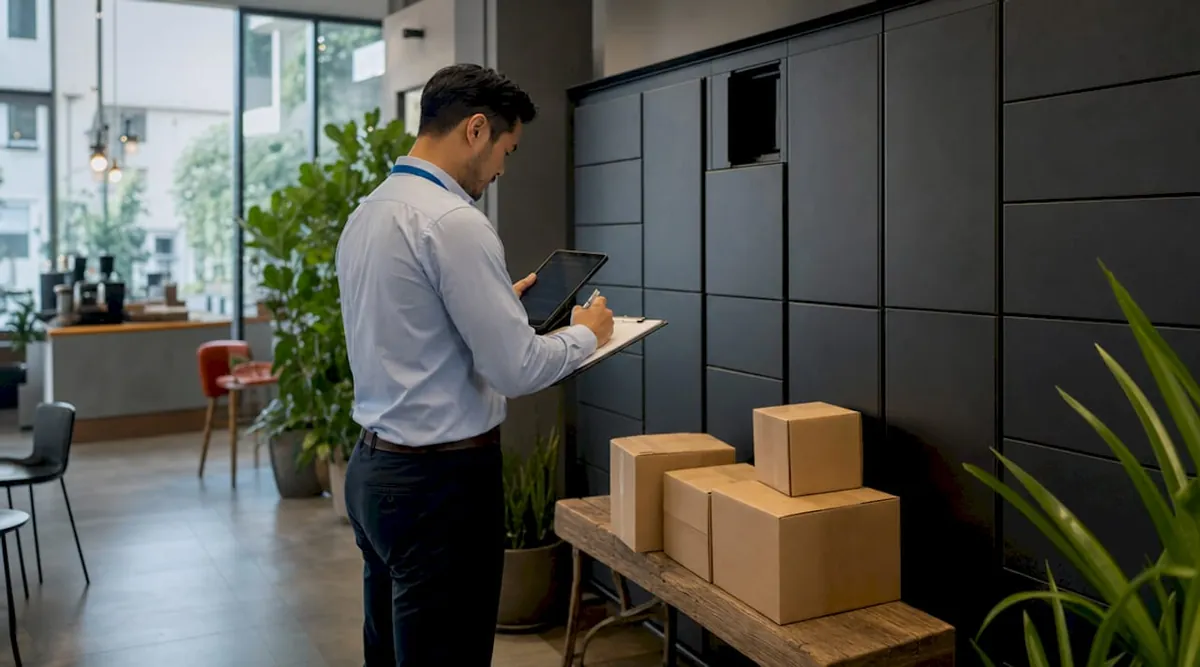
Package locker systems are secure, automated storage units that manage parcel delivery and pickup in multifamily residential properties without staff involvement. As e-commerce volumes continue climbing, property managers at communities of every size face the same pressure: packages pile up, staff time disappears into manual sorting, and residents grow frustrated with missed deliveries. Systems from providers like Luxer One, Parcel Pending, and USPS Smart Package Lockers have become the standard infrastructure response. This guide covers system types, workflow benefits, carrier compliance challenges, and a practical selection framework built around the realities of 2026 multifamily operations.
What types of package locker systems are available?
Package locker systems fall into three distinct categories, each with different capacity ceilings, cost structures, and operational demands. Understanding the differences before you commit to a vendor saves significant time and money.
Fixed smart locker banks are the most common entry point. Luxer One installs modular banks of electronic compartments in a lobby or mail room. Residents receive a PIN or QR code the moment a carrier scans a package into the system. Locker installations represent a significant upfront investment that scales upward based on compartment count and feature set. The limitation is physical: once every compartment is full, the system cannot accept new deliveries.
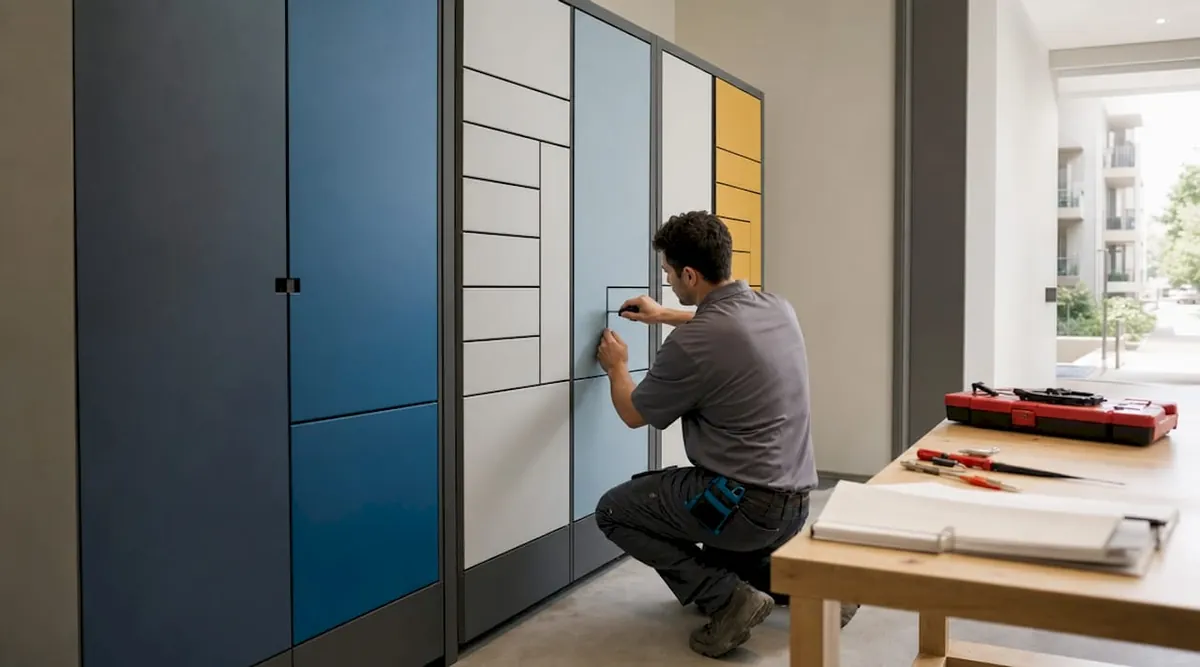
AI-powered smart package rooms replace fixed compartments with computer vision and automated access control. A carrier deposits packages anywhere in a designated room, and the system logs each item, assigns it to a resident, and sends a notification. These rooms can handle roughly three times the volume of a comparably sized locker bank, which makes them attractive for high-density urban properties. The tradeoff is higher upfront cost and a heavier dependency on carrier compliance with intake scanning protocols.
Hybrid staffed package rooms convert underutilized amenity spaces, such as a rarely used business center or storage room, into managed package areas. Staff or a part-time attendant handles intake, and residents pick up during set hours. This approach works well for mid-size suburban properties that cannot justify the capital expense of a full smart locker installation but need more structure than a front-desk pile.
| System type | Best for | Key benefit | Main limitation | Typical cost |
|---|---|---|---|---|
| Fixed smart locker bank | Communities under 200 units | Fully automated, no staff needed | Capacity caps out quickly | A significant upfront investment |
| AI-powered package room | High-volume urban properties | 3x capacity of locker banks | Requires strict carrier compliance | A significant upfront investment |
| Hybrid staffed room | Mid-size suburban properties | Low capital cost | Requires staff time | Minimal hardware cost |
Pro Tip: Mixed door sizes on locker compartments, ranging from envelope slots to oversized bays, reduce failed deliveries by accommodating packages of every dimension without overflow.
How do package locker systems improve delivery workflows?
The operational lift from a well-configured package locker system is immediate and measurable. The core mechanism is simple: a carrier scans a package at intake, the system assigns a compartment, and automated notifications go out via text or app with a unique access code. No staff member touches the package between delivery and pickup.
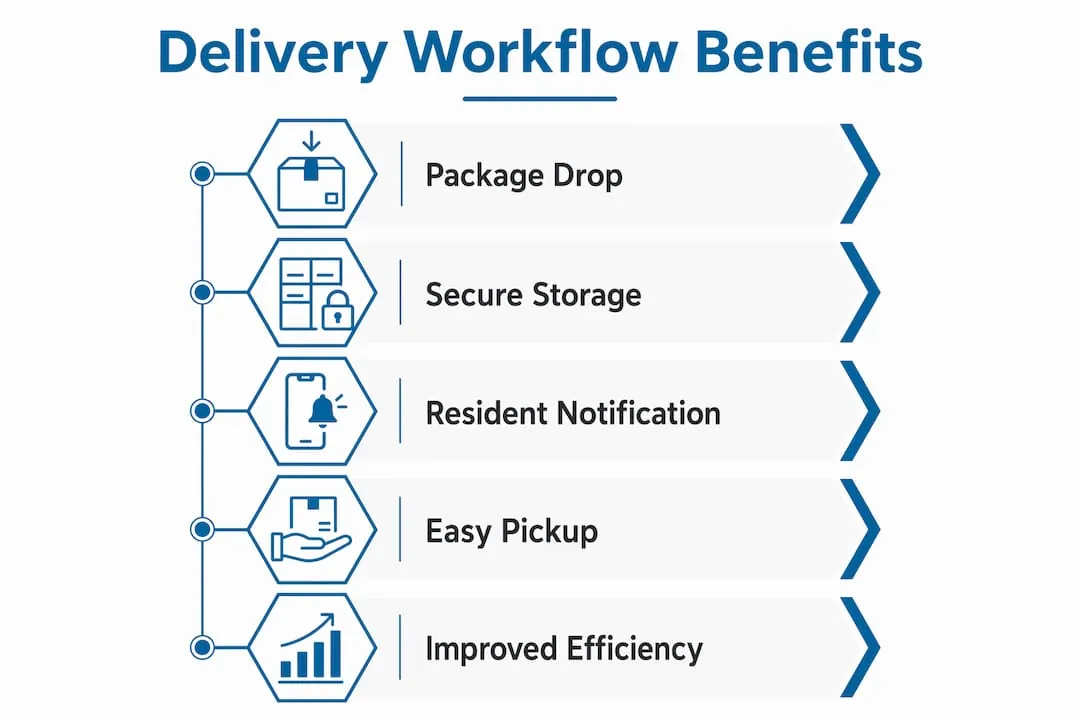
That single workflow change produces a cascade of benefits for both your operations team and your residents. The 24/7 pickup window is the most visible improvement. Residents working non-standard hours no longer miss packages because the leasing office is closed. USPS Smart Package Lockers, for example, trigger notifications with unique access codes the moment a parcel is deposited, and uncollected items are held for five days before being returned to the post office. That structure eliminates the ambiguity that drives resident complaints.
Key benefits for property teams and residents include:
- Zero staff sorting time. Carriers deposit directly into the system, and residents retrieve independently.
- Theft reduction. Locked compartments with video surveillance eliminate porch piracy and lobby theft.
- Real-time status visibility. Residents track package status through a mobile app rather than calling the front desk.
- Carrier-agnostic intake. Systems from Luxer One accept deliveries from UPS, FedEx, USPS, and Amazon without separate accounts.
- Reduced missed deliveries. Smart parcel lockers enable 24/7 access so residents pick up on their schedule, not the carrier’s.
- Integration with property management software. Leading systems connect to platforms like Yardi and RealPage for centralized reporting.
- Contactless delivery. Residents never need to interact with a carrier or staff member to receive a package.
Pro Tip: When evaluating vendors, ask specifically whether their notification system triggers on carrier scan or on door close. Scan-triggered notifications are faster and more reliable, especially in high-volume buildings.
What challenges affect package locker system success?
The technology in modern package locker systems is reliable. The humans operating within that technology are not always. Delivery failures most often trace back to driver non-compliance with scanning and intake workflows, not hardware malfunctions. A driver who drops a package in the lobby instead of scanning it into the locker breaks the entire notification chain. The resident never gets an alert, the package sits untracked, and your team fields a complaint.
This is not a minor edge case. 60% of property managers in the 2026 multifamily package management framework identified better carrier compliance as their most needed improvement. That figure confirms that the gap between what locker systems promise and what residents experience is primarily a people problem, not a technology problem.
Capacity overflow is the second most common failure point. A 200-unit building with a 40-compartment locker bank will hit its ceiling during peak delivery periods. When compartments fill, carriers default to lobby drops, which defeats the purpose of the system entirely.
| Common challenge | Root cause | Recommended solution |
|---|---|---|
| Driver bypass of intake | No accountability mechanism | Require vendor documentation on non-compliance detection |
| Capacity overflow | Undersized locker bank | Add a supplemental package room or multi-vendor locker setup |
| Oversized package rejection | Fixed compartment dimensions | Include oversized bays or a dedicated overflow area |
| Resident notification failure | Scan not triggered at intake | Audit intake logs weekly and flag missed scans |
| Operational complexity | Multiple vendor systems | Standardize on a unified management software layer |
No single locker vendor meets all needs across large portfolios. Two or three providers often coexist within a single property, which creates operational complexity but solves the capacity and size coverage gaps that a single system cannot address.
Pro Tip: Ask every vendor candidate to explain in writing how their system detects and responds to carrier bypass. Vendors who cannot answer that question specifically have not solved the compliance problem.
How to choose the right package locker system for your property
Selecting the right system starts with four property-specific variables: unit count, average daily package volume, available floor space, and resident demographics. Each variable narrows your options before you ever speak to a vendor.
Follow this step-by-step selection process:
- Audit your current package volume. Count packages received per day over a 30-day period, including peak weeks. This number determines the minimum compartment count or room capacity you need.
- Map your available space. Measure the footprint you can dedicate to package infrastructure. Indoor installations require climate control and power access. Outdoor locker units need weatherproof materials and often benefit from awnings or lighting for resident usability.
- Match system type to property tier. High-volume urban properties above 300 units should evaluate AI-powered package rooms first. Mid-size suburban communities between 100 and 300 units are well served by a fixed smart locker bank with an overflow room. Smaller properties under 100 units can often manage with a compact locker bank and a clear carrier communication protocol.
- Verify carrier acceptance. Confirm that your shortlisted system is accepted by UPS, FedEx, USPS, and Amazon. Carrier rejection of a locker system is a dealbreaker regardless of the hardware quality.
- Evaluate integration compatibility. Check whether the vendor’s software connects to your existing property management platform. Disconnected systems create reporting gaps and increase staff workload.
- Request compliance documentation. Before signing any contract, require the vendor to document how their system detects driver bypass and what the escalation process looks like. This is the single most important due-diligence step in the entire selection process.
- Plan for growth. Choose a system with modular expansion options. A locker bank that cannot add compartments as your property grows will require a full replacement within three to five years.
For properties managing multiple buildings, review how locker systems integrate during multifamily planning to avoid retrofitting costs later. Building the infrastructure into the original design is significantly cheaper than adding it post-occupancy.
Key takeaways
Carrier compliance is the single most important factor determining whether a package locker system delivers on its promise or generates resident complaints.
| Point | Details |
|---|---|
| Carrier compliance is the primary risk | 60% of property managers cite it as the top needed improvement; require vendor documentation on bypass detection. |
| System type must match property scale | High-volume urban properties need AI-powered rooms; smaller communities can use fixed locker banks effectively. |
| Multi-vendor setups are common | No single vendor covers all package sizes and volumes; plan for two to three providers in large portfolios. |
| Outdoor units need weatherproofing | Exterior installations require durable materials, awnings, and lighting to maintain usability and longevity. |
| Integration drives operational efficiency | Connect locker software to Yardi, RealPage, or your existing platform to centralize reporting and reduce staff workload. |
What we have learned from years of multifamily package infrastructure
The most persistent mistake we see property managers make is treating package locker systems as a one-time purchase rather than an ongoing operational program. You buy the hardware, install it, and assume the problem is solved. It is not. The hardware is only as effective as the workflow surrounding it, and that workflow depends almost entirely on carrier behavior you do not directly control.
The 2026 data on carrier compliance is not surprising to anyone who has managed a busy multifamily property. Drivers are under time pressure. If scanning a package into a locker takes 90 seconds longer than dropping it in the lobby, a percentage of drivers will take the shortcut every single time. The property managers who get the best results are the ones who treat carrier compliance as an active management responsibility, not a vendor guarantee.
We are also skeptical of single-vendor turnkey pitches. Every vendor will tell you their system handles everything. In practice, oversized packages, refrigerated deliveries, and peak-season overflow always expose the gaps. A layered approach combining a primary locker bank, a supplemental package room, and a clear overflow protocol outperforms any single-system solution. For properties serious about resident satisfaction through package rooms, the investment in that layered infrastructure pays back quickly in reduced complaints and leasing retention.
The future of this space is smarter software, not smarter hardware. AI-driven tracking, predictive capacity alerts, and tighter integration with carrier APIs will matter more in the next three years than any new locker design. Choose vendors who invest in their software roadmap, not just their cabinet aesthetics.
Explore Luxer One package locker solutions
We specialize in Luxer One® package management infrastructure built specifically for multifamily residential properties. Whether you need indoor electronic locker banks, outdoor parcel lockers rated for harsh climates, or fully automated package rooms, the product lineup covers every property tier from boutique communities to large urban developments.
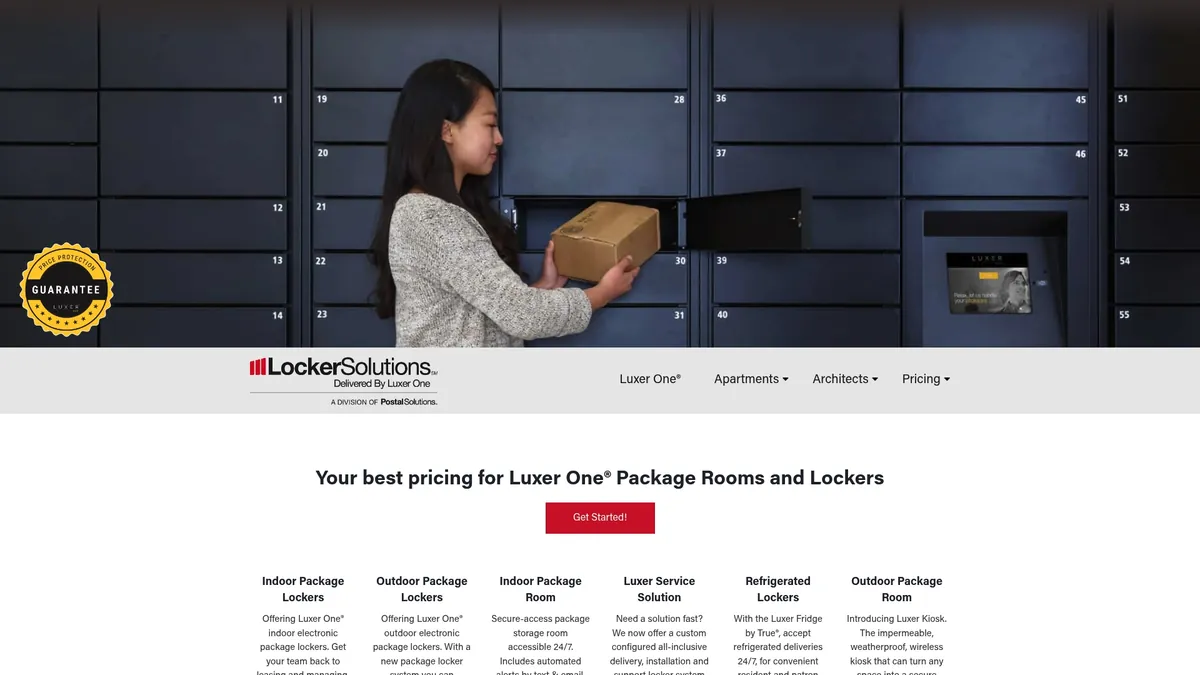
Every installation includes carrier communication support, software integration assistance, and ongoing maintenance coverage. We also offer contactless delivery systems that meet the access and security expectations of today’s residents without adding staff workload. If you are evaluating options for a new development or retrofitting an existing property, our team can configure a solution matched to your specific volume, space, and budget requirements.
FAQ
What are package locker systems?
Package locker systems are automated, electronic storage units that accept parcel deliveries from carriers and notify residents with a unique access code or QR code for secure, self-service pickup. They operate without staff involvement and are available 24/7.
How much do package locker systems cost?
Fixed smart locker bank installations represent a significant upfront investment that increases based on compartment count and features. AI-powered package rooms carry higher upfront costs but offer significantly greater capacity for high-volume properties.
Why do package locker systems fail to notify residents?
Notification failures almost always trace back to carrier non-compliance. When a driver bypasses the intake scan and leaves a package outside the system, the automated notification chain never triggers. Requiring vendors to document their bypass detection process is the most effective preventive measure.
Can one locker system handle all carriers?
Most leading systems, including Luxer One, accept deliveries from UPS, FedEx, USPS, and Amazon. However, no single vendor fully covers all package sizes and volumes, which is why large portfolios often run two to three systems in parallel.
Should outdoor lockers be treated differently than indoor units?
Yes. Outdoor installations require weatherproof enclosures, and exterior units benefit from awnings and lighting to protect hardware and improve resident usability in all weather conditions.
Recommended
Ready for a Luxer One® package locker quote?
Tell us your unit count and we'll send right-sized pricing with a fast response time.
Get my free quote