May 18, 2026
Package security for multifamily: Why it matters
Discover the importance of package security for multifamily properties. Protect residents, enhance trust, and prevent costly theft today!
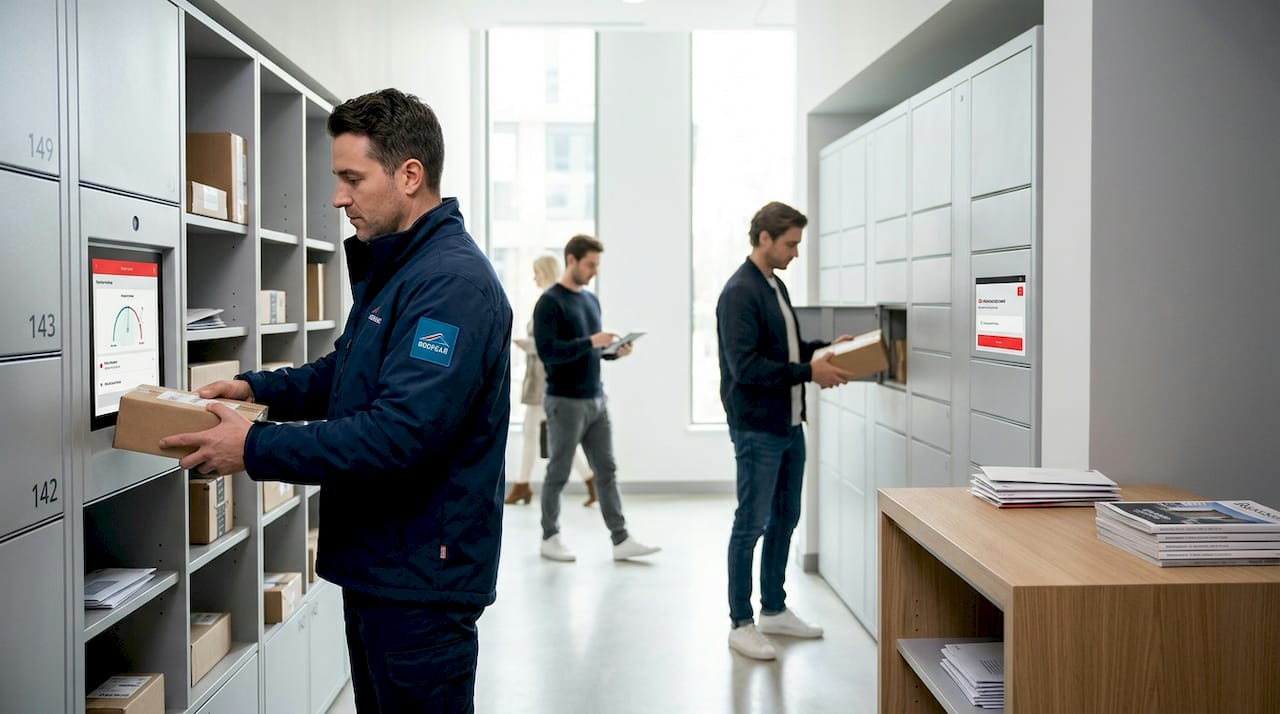
Apartment residents are 3 to 3.5 times more likely to experience package theft than single-family homeowners, and if you manage a multifamily property, that number should get your attention. The importance of package security for multifamily communities goes far beyond stolen goods. Every stolen package is a trust problem, a potential negative review, and in many cases a sign of a larger operational gap. This guide breaks down why the risk is so high, what it actually costs you, and which solutions and practices will protect your residents and your property’s bottom line.
Table of Contents
- Why package security is crucial for multifamily properties
- Key impacts of inadequate package security on multifamily operations
- Modern solutions for enhancing package security in multifamily buildings
- Best practices for implementing package security in multifamily communities
- Comparing package security approaches: Automated lockers vs manual systems vs third-party services
- Why proactive package security is a key differentiator for multifamily success
- Explore advanced package security solutions with Locker Solutions
- Frequently asked questions
Key Takeaways
| Point | Details |
|---|---|
| Higher theft risk | Apartment residents face 3 to 3.5 times greater package theft risk than single-family homeowners due to shared access areas. |
| Financial impact | Package theft costs multifamily properties millions annually in losses, staff time, and resident turnover. |
| Effective solutions | Automated smart lockers and secure package rooms with controlled access drastically reduce theft and workload. |
| Operational benefits | Modern package systems improve workflow, reduce disputes, and increase resident satisfaction and loyalty. |
| Proactive management | Strategically implementing layered security solutions protects both residents and your property’s reputation. |
Why package security is crucial for multifamily properties
Multifamily buildings are structurally different from single-family homes in ways that make package theft almost inevitable without intentional safeguards. The moment a delivery driver leaves a package in a shared lobby, mailroom, or hallway, it becomes a potential target. And once a thief gains access to a shared building entrance, they do not have to pick just one door to knock on.
Several factors stack the odds against security in these settings:
- Shared access points allow anyone who enters the building to walk past dozens of package drop zones in minutes.
- Unattended windows are long. Most deliveries happen between 9 a.m. and 5 p.m. when residents are at work.
- Low staff presence in most mid-size buildings means no one is watching the lobby consistently.
- High delivery volume creates constant opportunities. A busy 200-unit building can receive 100 or more packages per day.
“Apartment residents are 3 to 3.5 times more likely to experience package theft than single-family homeowners due to shared spaces like lobbies and mailrooms.”
The ripple effects go beyond individual packages. When residents feel their deliveries are not safe, they start questioning whether the building is safe overall. That is a perception problem that affects leasing decisions. Understanding package room security practices is a foundational step in closing these gaps before they become complaints, disputes, or move-outs.
Key impacts of inadequate package security on multifamily operations
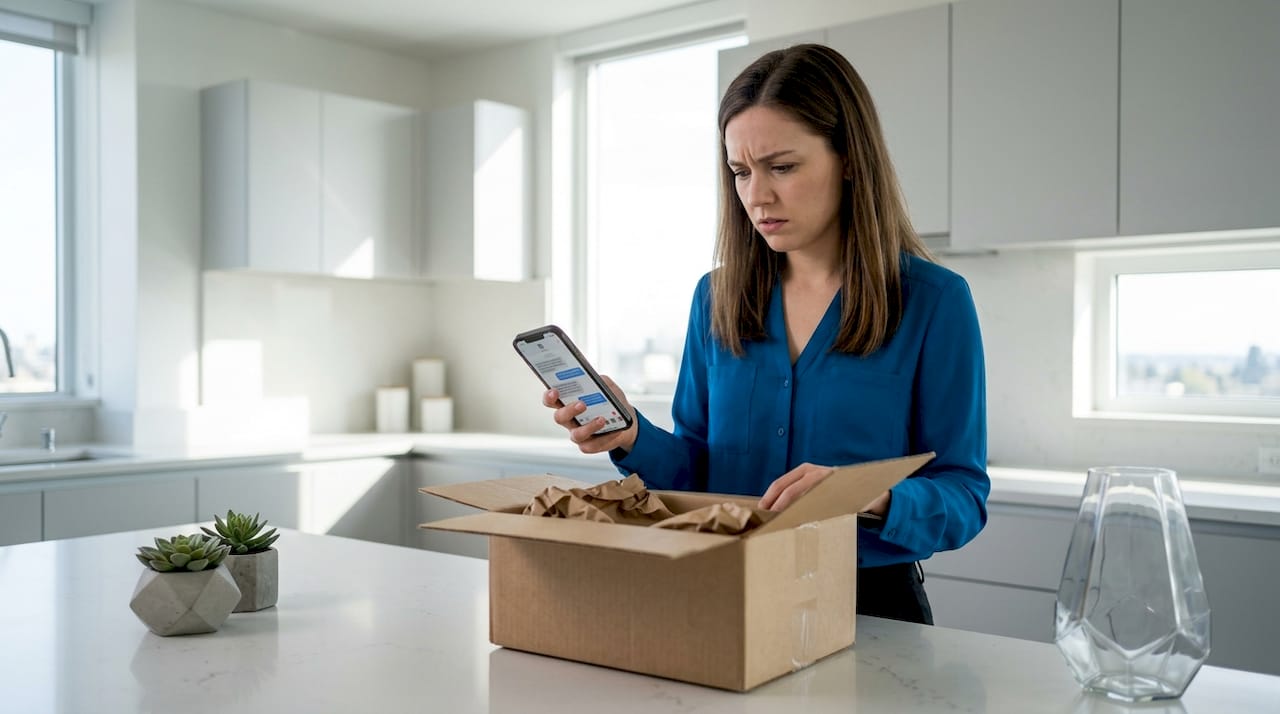
The costs of poor package security are not abstract. They show up in your staffing hours, your lease renewal rates, and your operating budget.
Here is what inadequate systems actually produce:
- Staff overload. Property management teams spend 4 to 6 hours per week just managing package-related tasks: logging deliveries, fielding complaint calls, investigating theft reports, and coordinating with carriers. That time comes directly out of leasing, maintenance, and resident relations.
- Lease renewal pressure. Residents who repeatedly deal with stolen or misplaced packages are less likely to renew. A single bad experience can generate a one-star review that discourages prospective tenants.
- Financial loss. Industry-wide losses from theft exceed $6 billion annually, and that figure does not account for the cost of resolving disputes, replacing lost property, or the management hours absorbed by the problem.
- Compounding inefficiency. As e-commerce volume grows year over year, the problem does not stay static. Without an adequate system, every peak delivery season becomes a bigger operational headache than the last.
“Failing to address package management costs money through excessive staff hours, lost lease renewals, and over $6 billion in annual losses industry-wide from theft.”
The deeper issue is that most of these costs are invisible until they compound. You may not track how many staff hours go toward packages, or how many lease non-renewals mention delivery problems. But the data is there if you look. Exploring secure package delivery methods early gives you a clearer picture of where to close the gaps.
Modern solutions for enhancing package security in multifamily buildings
Technology has moved fast in this space, and property managers now have options that were not available or affordable five years ago. The right solution depends on your building’s size, layout, and resident expectations, but the core tools are well proven.
Automated package systems like smart lockers significantly reduce theft risk through controlled access, real-time tracking, and reduced human handling at every step.
Here is how the main technology solutions work in practice:
- Smart lockers assign individual compartments per delivery. The carrier places the package inside, the door locks, and the resident receives a one-time access code. No staff involvement required.
- Automated package rooms use digital check-in systems that log every package in and out, with restricted access for anyone without an authorization code. They work well for oversized items that do not fit in standard locker compartments.
- AI-enabled access screening routes deliveries to specific areas based on unit assignments, reducing misdirected packages and unauthorized handling.
- Video surveillance at delivery zones serves two functions: it deters theft and provides documentation if a dispute arises.
| Solution | Security level | Staff involvement | Best for |
|---|---|---|---|
| Smart lockers | High | Minimal | Standard-size deliveries |
| Automated package rooms | High | Low | Oversized items and high volume |
| Open shelving/manual log | Low | High | Very low-volume properties only |
| Third-party off-site service | Medium | None onsite | Buildings with limited space |
Reviewing an automated package rooms guide can help you understand which setup fits your building’s specific layout and volume needs. If your property already has security cameras but has not positioned them strategically near delivery areas, look into how video surveillance boosts package security before investing in new hardware.
Pro Tip: Place cameras at eye level near locker banks and package room entrances rather than angled down from ceilings. Eye-level footage captures identifying details like faces and clothing far more clearly than overhead angles, which makes it far more useful if you ever need to review an incident.
Best practices for implementing package security in multifamily communities
Technology alone does not solve the problem. How you implement, communicate, and maintain your package security system determines whether it actually works.
Follow these steps to build a system that holds up under real-world delivery volume:
- Audit your current delivery volume and storage capacity. Count incoming packages across a typical week, including peak days. Your system needs to handle your current load plus 20 to 30 percent growth for the next few years.
- Design storage with oversized items in mind. Many package theft incidents involve items that could not fit in a locker and ended up in an unsecured hallway. Plan for this from the start with dedicated oversized storage.
- Train carriers on your property’s delivery process. Carriers who do not know where your package room or locker bank is located will leave items in the lobby. Clear signage and a written carrier guide reduce this problem significantly.
- Set up real-time monitoring. Most modern systems include dashboards that show you package status, locker capacity, and access logs. Reviewing these proactively prevents backlogs before residents notice them.
- Layer your security approach. Combine access-controlled technology with clear written policy and at least periodic staff oversight. A technology-only approach with no human checks can miss edge cases that erode resident trust over time.
A strategic approach that combines workflow design, controlled access, real-time monitoring, and strong support turns package management from a liability into an operational asset.
Pro Tip: When onboarding new residents, include a one-page package delivery guide with your welcome materials. Residents who understand how the system works from day one generate far fewer complaints and misuse incidents.
Investing time in efficient package room design before installation saves significantly more time during daily operations. And revisiting package room security strategies annually keeps your approach current as delivery habits and technology evolve.
Comparing package security approaches: Automated lockers vs manual systems vs third-party services
Not every property needs the same solution, but every property needs to understand the tradeoffs before committing to one.
| Approach | Security | Efficiency | Resident experience | Cost to property |
|---|---|---|---|---|
| Manual logging, open shelving | Low | Low | Poor | Low upfront, high long-term |
| Automated smart lockers | High | High | Excellent | Medium upfront, low ongoing |
| Automated package rooms | High | High | Excellent | Medium-high upfront |
| Third-party off-site service | Medium | Medium | Variable | Ongoing per-package fee |
| Hybrid (lockers plus door delivery) | High | High | Best possible | Highest upfront |
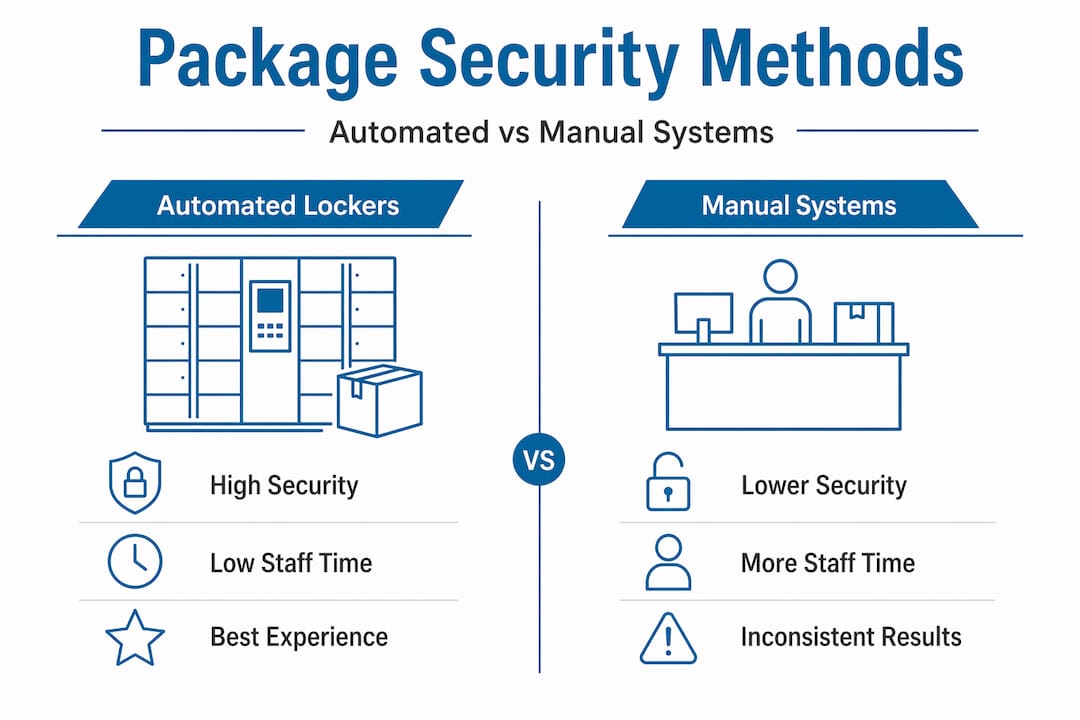
Automated solutions dramatically reduce staff time spent on packages and related complaints compared to manual systems, while third-party off-site delivery services can complement onsite approaches for properties with space constraints.
The practical reality for most mid-size to large multifamily properties:
- Manual systems create accountability gaps that thieves exploit and staff absorb.
- Smart lockers pay for themselves when you account for reduced staff hours and improved lease renewals over 24 to 36 months.
- Third-party services work well as overflow solutions but should not be your primary security strategy since you lose direct visibility into the delivery chain.
- Hybrid approaches require the most planning but deliver the highest resident satisfaction scores because they account for every delivery scenario.
Staff acceptance is often the variable that determines whether a new system succeeds. Involve your team early in the selection process, and give them clear ownership of the new workflow. A secure delivery solutions comparison can help you align your team around the right option before purchase.
Why proactive package security is a key differentiator for multifamily success
Here is something most articles on this topic will not tell you: package security is not a resident amenity. It is a signal.
When prospective residents tour your property and see a chaotic pile of packages in the lobby, they are not thinking “I wish they had a locker system.” They are thinking “Is this building safe?” Package security is one of the most visible, daily indicators of how a property is managed. And it shapes perception far beyond the mailroom.
Properties that treat package security as a checkbox item will keep losing ground to communities that treat it as part of the resident experience. The impact on retention and NOI is measurable. Buildings that invest in tech-driven package security build resident trust, reduce operational costs, and see positive effects on lease renewal rates.
The trend lines are also not slowing down. E-commerce growth means more deliveries per unit every year. Grocery delivery, pharmacy orders, and large furniture shipments are all becoming normal parts of apartment life. A system that barely handles today’s volume will be a serious liability in three years.
The properties that are winning this race are not necessarily the largest or the most expensive. They are the ones whose managers saw package security as a core operational priority early and built systems that could scale. That proactive posture is what separates properties that residents choose to stay in from those they leave when a better option appears.
Think of package security and retention as connected metrics, because your residents already do.
Explore advanced package security solutions with Locker Solutions
If the challenges covered in this article sound familiar, you are not alone, and the solutions are more accessible than you might expect.
Locker Solutions specializes in package management infrastructure built specifically for multifamily residential properties. From contactless delivery lockers that require zero staff involvement to fully monitored package rooms with dedicated oversight, every product is designed to reduce your team’s workload while giving residents a secure, convenient experience. If your current setup is producing complaints, consuming staff hours, or leaving packages exposed, the automated package rooms guide is a practical starting point for understanding what a better system looks like for your specific property size and delivery volume.
Frequently asked questions
Why is package theft more common in multifamily buildings than single-family homes?
Multifamily buildings have shared entrances and common delivery areas where packages sit unattended for hours, increasing theft risk compared to private single-family homes with controlled access. Apartment residents face 3 to 3.5 times higher package theft risk specifically because of these shared spaces.
How do smart lockers help reduce package theft in apartment buildings?
Smart lockers provide secure individual compartments that only authorized residents can access using a one-time code, plus real-time tracking and reduced human handling, which significantly lowers theft opportunities. Automated delivery solutions like smart lockers are among the most effective tools available for apartment package theft prevention.
What operational benefits do automated package systems offer for property managers?
These systems decrease staff time spent managing deliveries and disputes, improve workflow efficiency, and give residents secure, convenient access to their packages without requiring staff to be present. Automated package systems reduce both staff time and package-related complaints compared to manual approaches.
Can third-party off-site package management services improve security?
Yes, third-party services that handle package sorting and deliver directly to residents’ doors reduce onsite exposure and theft risk, though they typically involve per-package fees that may be passed to residents. Off-site delivery services work best as a complement to onsite security rather than a replacement.
What initial steps can property managers take to improve package security immediately?
Start with clear delivery instructions posted at all entrances, require signatures for high-value deliveries, and use carrier tracking tools to reduce unattended drop windows. Free prevention steps like USPS Informed Delivery alerts and carrier-specific instructions can reduce theft risk before any new technology is in place.
Recommended
Ready for a Luxer One® package locker quote?
Tell us your unit count and we'll send right-sized pricing with a fast response time.
Get my free quote