May 15, 2026
How technology boosts multifamily efficiency and resident satisfaction
Discover the role of technology in multifamily housing and how it enhances efficiency and resident satisfaction—boost your property profits!
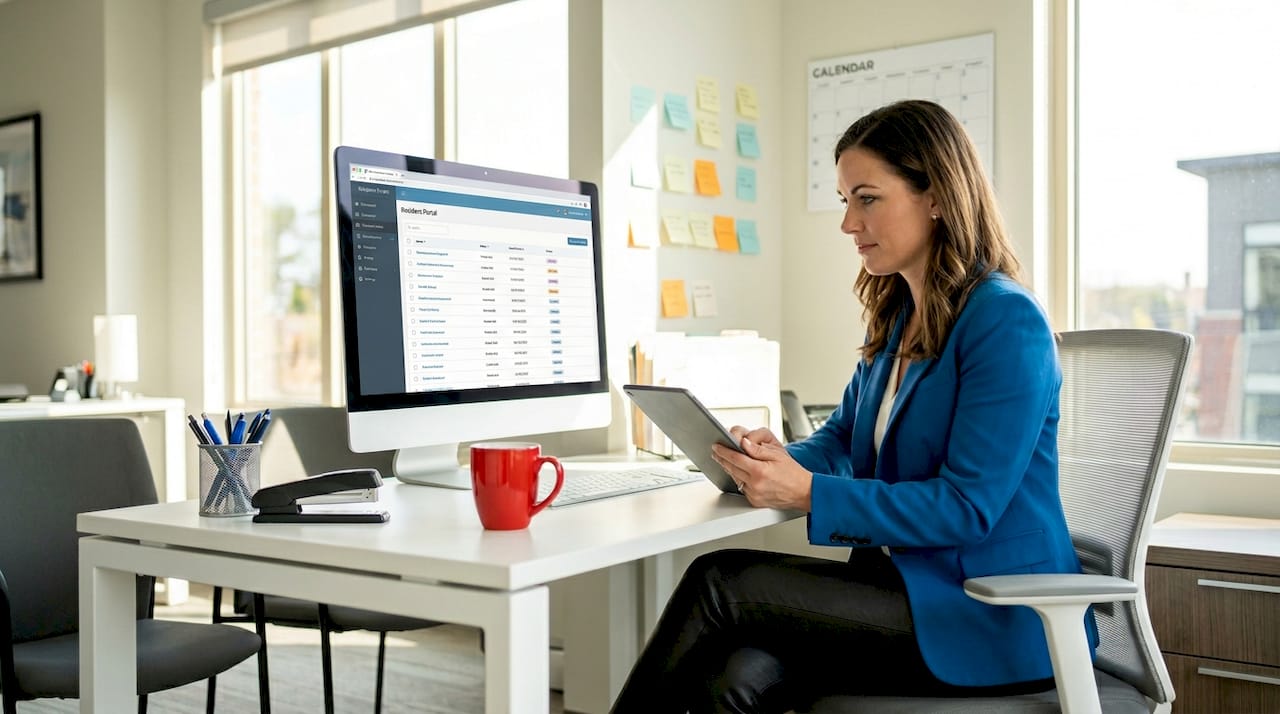
Most property managers assume their technology setup is “good enough.” A resident portal for rent payments, a maintenance ticketing system, maybe some key fobs at the front door. The reality? Only 27% of residents report being extremely satisfied with the technology their communities offer, meaning the vast majority are quietly frustrated and far more likely to walk at renewal. Technology has moved from a marketing checkbox to a core operational driver, and the gap between what residents expect and what most properties deliver is costing owners real money.
Table of Contents
- How technology transformed multifamily operations
- Essential tech solutions for property management
- Automation and integration: Maximizing ROI and closing the tech gap
- Package management tech: Solving the modern delivery challenge
- A nuanced take: Why integration beats the shiniest tech tools
- Take the next step: Make smart package management your edge
- Frequently asked questions
Key Takeaways
| Point | Details |
|---|---|
| Technology is resident-driven | Residents now expect digital solutions that make everyday living and communication easier. |
| Unified platforms win | Integrated systems deliver higher ROI and prevent costly data silos and errors. |
| Automation pays off fast | Maintenance and rent automation produce measurable savings and quick payback. |
| Modular package solutions scale | Flexible locker and package rooms handle volume spikes and boost satisfaction in high-density buildings. |
| Integration beats flashy tools | A unified approach outperforms isolated tech features for long-term operational success. |
How technology transformed multifamily operations
Ten years ago, offering high-speed Wi-Fi in the lobby was enough to stand out. Today, residents arrive with the same digital expectations they have for their bank, their grocery delivery, and their streaming service. Speed, convenience, and reliable automation are assumed. Fitness centers and resort-style pools still matter, but for a growing segment of renters, friction-free technology beats granite countertops as a deciding factor when signing or renewing a lease.
The multifamily amenities checklist for 2026 looks dramatically different from one written in 2018. Smart access control, digital communications platforms, seamless package management, and AI-powered maintenance tools have all moved from “premium upgrade” to expected standard. Properties that lag behind on any of these categories face a compounding problem: harder lease-up, lower renewal rates, and a reputation that’s increasingly difficult to rehabilitate in the age of online reviews.
The technology satisfaction gap is striking when you break it down. Residents rank technology access control and smart maintenance as top priorities, yet satisfaction remains low. That gap points directly to lost net operating income (NOI). High turnover is expensive, with unit turnover costs regularly cited in the thousands of dollars per unit when you factor in vacancy, make-ready costs, and leasing commissions.
Key technology priorities residents consistently rank highest include:
- App-based building and unit access control
- Automated maintenance request routing and status updates
- Secure, self-service package management
- Digital communication tools with two-way messaging
- Online payment portals with flexible scheduling
“Technology is no longer a differentiator. It is a baseline expectation. Communities that fail to meet that baseline don’t just lose prospects; they lose renewals to properties that do.”
Essential tech solutions for property management
Understanding which tools deliver the most tangible impact requires a structured approach. There are four categories that consistently produce measurable results across portfolios of all sizes.
1. Digital resident portals The shift to integrated resident portals and payment platforms has fundamentally changed resident engagement. When rent payments, maintenance requests, rewards programs, and two-way messaging exist in a single platform that connects to your property management system (PMS), staff spend less time on manual data entry and more time on relationship-building. Residents get real-time updates instead of unanswered voicemails.
2. Automated maintenance management AI-driven work order routing assigns tasks to the right technician based on availability, skill set, and location within the property. Proactive alerts flag recurring issues before they escalate, which protects the physical asset while reducing emergency repair costs. Residents notice the difference immediately when a request submitted at 9 PM gets acknowledged within minutes and resolved the next morning.
3. Access control systems App-based entry eliminates lost key fobs and the administrative burden of replacing them. More importantly, it creates an audit trail. You know who entered which building and when, which matters for security incidents and liability. Visitor management features allow residents to grant temporary access to guests or delivery personnel without involving staff.
4. Package management infrastructure This category deserves special attention because scalable package room systems directly impact both resident satisfaction and staff workload. Designing the right setup from the start matters more than most managers realize. You can learn a lot from designing efficient package rooms before committing to a configuration.
Here is how these technology categories compare across key performance metrics:
| Technology category | NOI impact | Resident engagement | Staff time savings |
|---|---|---|---|
| Digital resident portals | High | Very high | Moderate |
| Automated maintenance | High | High | Very high |
| Access control | Moderate | High | Moderate |
| Package management | Moderate to high | Very high | Very high |
| Smart communications | Moderate | High | Moderate |
Pro Tip: Resist the temptation to buy five separate point solutions from five different vendors. Every additional platform that doesn’t integrate with your PMS becomes a data island. Prioritize vendors with proven API connections to your existing stack before evaluating features.
Automation and integration: Maximizing ROI and closing the tech gap
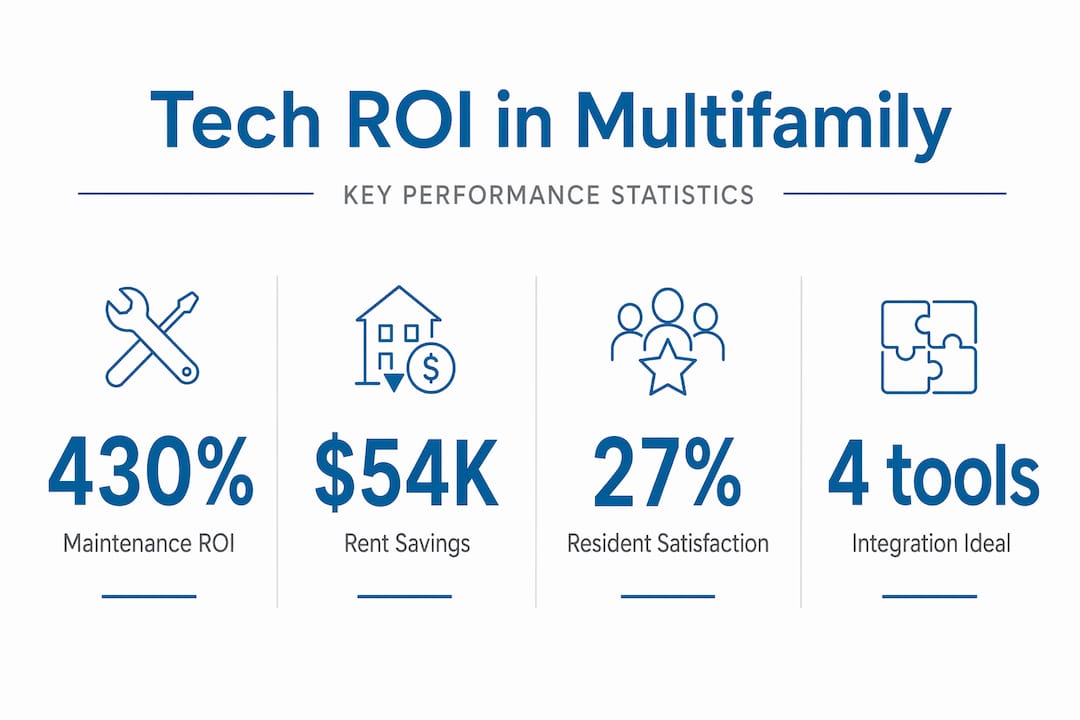
The financial case for automation in property management is no longer theoretical. Maintenance automation delivers between 430% and 790% ROI in the first year alone for communities with 150 to 500 units, with payback periods ranging from just 29 to 69 days. For a 300-unit property, that math is hard to ignore. Rent collection automation alone saves an average of $11.40 per unit per month in staff labor and processing costs.
Think about what that means at scale. A 400-unit community automating rent collection saves roughly $54,720 annually. Combine that with maintenance automation, and you are looking at operational savings that cover the cost of technology upgrades many times over.
The bigger challenge is not finding tools that work in isolation. It is making those tools work together. API integrations and middleware are the connective tissue between your PMS, CRM, access control platform, and communications stack. REST APIs and webhooks allow real-time data flow between systems so that when a lease is signed in your CRM, the access control system is updated automatically and the resident portal account is provisioned without a single manual step.
When that integration layer is missing, the consequences are costly. Fragmented technology stacks cause roughly 60% of financial discrepancies in multifamily operations, according to data tracking industry trends. Point-to-point integrations built in-house are brittle. They break when a vendor updates their API, and nobody notices until a batch of rent payments fails to reconcile.
The most effective approach pairs automated package alerts with building-wide automation so residents receive instant notifications when a parcel arrives, locker access is granted automatically, and the system logs the transaction without any staff involvement. That kind of seamless loop is only possible when your technology ecosystem is built on a unified, API-first foundation.
“Integration isn’t a feature. It’s the prerequisite for every other feature to deliver its promised value.”
Here is a breakdown of automation ROI by property size:
| Property size (units) | Maintenance automation ROI (Year 1) | Payback period | Rent automation savings/month |
|---|---|---|---|
| 150 units | 430% | 69 days | ~$1,710 |
| 300 units | 610% | 45 days | ~$3,420 |
| 500 units | 790% | 29 days | ~$5,700 |
Pro Tip: Before signing with any new technology vendor, ask for their API documentation and a list of their current PMS integrations. If they cannot provide both within 24 hours, that is a sign of how the relationship will go when you need support later.
Package management tech: Solving the modern delivery challenge
Package volume at multifamily properties has grown at a pace most managers did not anticipate five years ago. The combination of e-commerce growth, grocery delivery, meal kits, and subscription boxes means a 300-unit community might process hundreds of parcels every week. Multiply that by peak seasons like the holidays, and the math gets overwhelming fast.
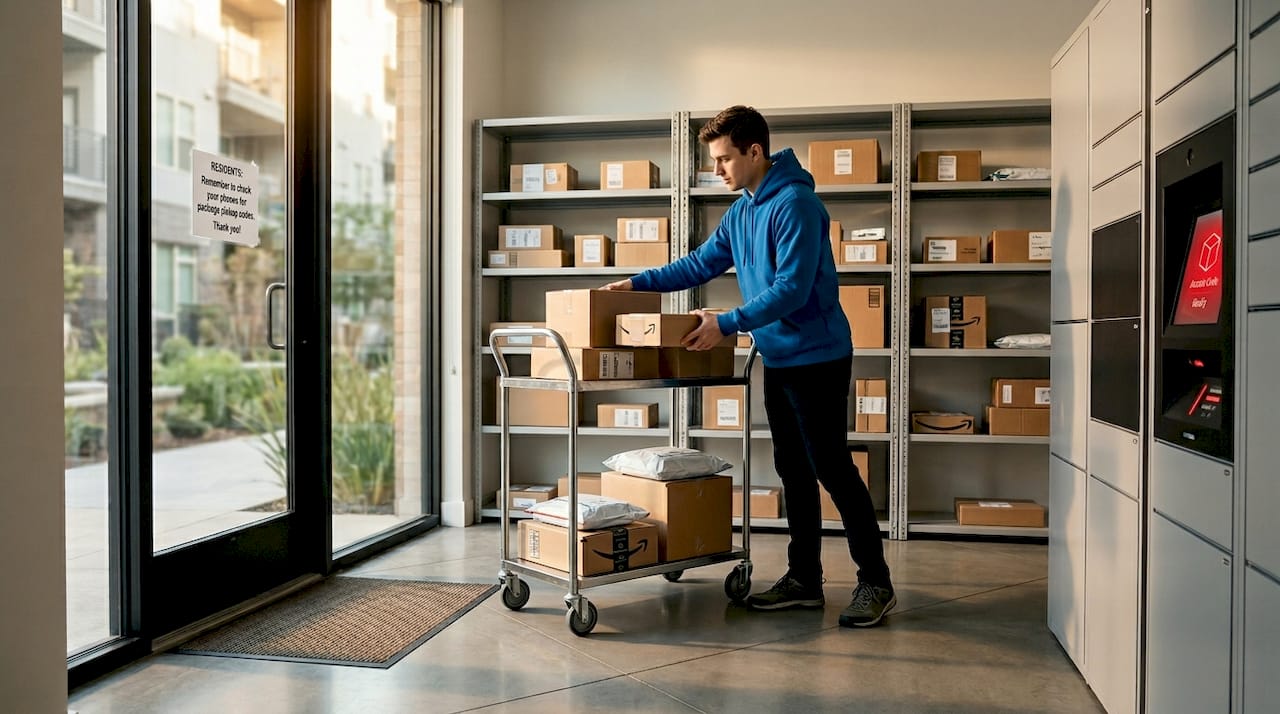
The problems that come with high parcel volume are predictable but painful. Packages pile up at the leasing office. Staff spend hours logging, organizing, and notifying residents. Lost or stolen packages generate complaints and sometimes legal headaches. Residents who work long hours miss pickup windows and file grievances. None of this is a staffing problem. It is an infrastructure problem.
High-density properties need scalable modular lockers and rooms rather than fixed-cabinet systems specifically because volume is not constant. A fixed cabinet that works fine in February is overflowing in December. Modular systems add capacity as needed without requiring a full hardware replacement, which protects the capital investment and eliminates the overflow problem that frustrates both residents and delivery carriers.
Smart locker and package room features that make the biggest operational difference include:
- Automated resident notification via text and email the moment a package is secured
- Video surveillance integrated into the locker system for dispute resolution and deterrence
- Carrier-agnostic access so UPS, FedEx, USPS, and Amazon drivers can all use the same system
- Refrigerated locker options for grocery and meal-kit deliveries
- Weatherproof outdoor configurations for communities with decentralized mailroom layouts
You can go deep on the physical setup with guidance on how to design efficient package rooms that work for your specific footprint. And for properties where theft is a primary concern, video surveillance for package security delivers both deterrence and evidence when incidents do occur.
Integrating smart lockers directly with your PMS completes the loop. When a package is picked up, the record updates automatically. Staff are never manually checking for unclaimed parcels because the system flags them and triggers follow-up notifications on a set schedule.
“The best package management system is one your staff never has to think about. Automation and modular design get you there faster than any single product feature.”
A nuanced take: Why integration beats the shiniest tech tools
Here is the uncomfortable truth the technology vendor landscape does not want you to internalize. Buying the most advanced individual tools rarely produces the best outcomes. What produces results is how well your tools communicate with each other.
Unified technology stacks and middleware prevent integration drift, which is what happens when your stack grows over three to five years through a series of “we need this now” purchases that nobody mapped against the existing architecture. The result is four vendors billing you monthly, three of which don’t connect to your PMS, and a financial reconciliation process that takes someone two days at month-end to untangle manually.
Point solutions create islands. An island strategy might feel fast at purchase, but it multiplies risk and cost as your portfolio grows. The data reliability problems compound. A lease signed in your CRM does not update access control. A maintenance ticket closed in one system does not sync to the resident portal. Residents feel the friction even when they cannot name the cause.
AI-driven leasing tools and chatbots illustrate this well. They genuinely boost efficiency for routine inquiries but require human oversight for nuanced or sensitive situations. A resident asking about early lease termination due to a domestic situation does not need a chatbot response. The hybrid model, where AI handles volume and humans handle complexity, works when the underlying system is integrated well enough for the handoff to be seamless.
The same logic applies to package management. A locker system that operates in isolation from your PMS and communications stack is better than nothing. But a locker system that feeds real-time data into your resident portal, triggers automated follow-ups for unclaimed packages, and generates reports you can pull into your monthly operations review is a fundamentally different category of investment.
When evaluating any new addition to your tech stack, map your multifamily amenities for 2026 against what you already own. Ask not just “what does this do?” but “where does this data go and how does it connect to what we already run?” The second question separates properties that get ROI from technology from those that accumulate subscription fees.
Think of your technology stack the way a good architect thinks about a building. Every element has to carry structural load and connect to the systems around it. A beautiful fixture that doesn’t connect to the plumbing is just an expensive decoration. Your package room design strategies should follow the same principle.
Pro Tip: Before your next technology evaluation, spend one hour mapping every platform you currently pay for, what data it holds, and whether it syncs bidirectionally with your PMS. That single exercise will reveal more about your operational risk than any vendor demo.
Take the next step: Make smart package management your edge
Residents notice great package management before they notice almost anything else about a community’s technology. It is daily, tangible, and directly tied to their quality of life. Getting it right signals that your property takes operations seriously.
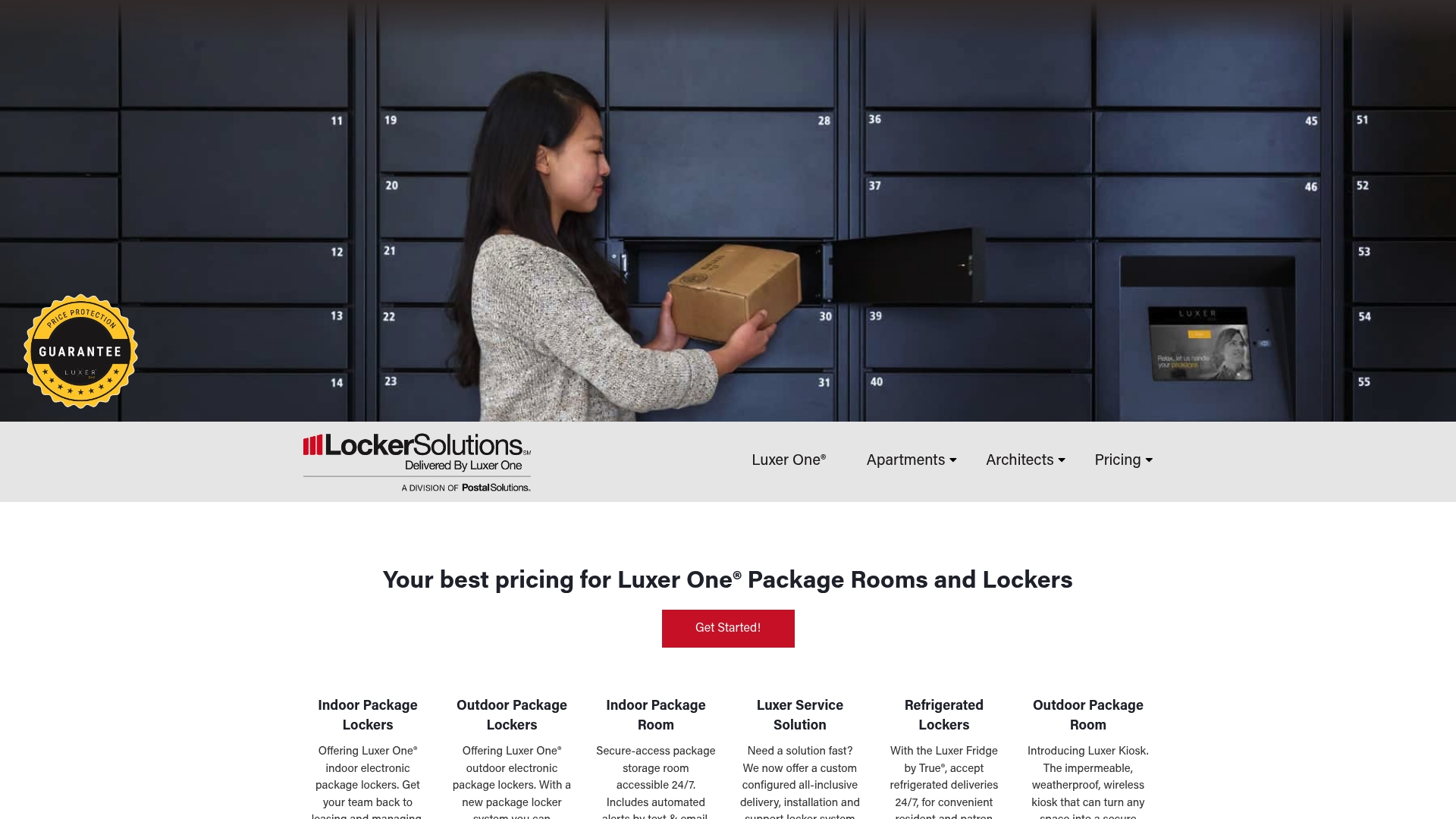
Locker Solutions specializes in Luxer One® secure lockers and package rooms built specifically for multifamily properties. Whether you need indoor electronic lockers, outdoor weatherproof systems, refrigerated options for grocery deliveries, or a fully automated package room that integrates with your existing PMS, the configurations are designed to scale with your property. Automated notifications, video surveillance, and carrier-agnostic access mean your staff spends less time managing deliveries and more time serving residents. If you are ready to close the technology gap with a solution that connects to your broader operational stack, start exploring options built for exactly this challenge.
Frequently asked questions
How does tech integration help reduce operational costs in multifamily housing?
Maintenance automation delivers 430% to 790% ROI in year one, while API integration and middleware eliminate the data silos that create costly financial reconciliation errors and manual correction workflows.
What is the most common tech gap reported by residents?
Access control and smart maintenance features are what residents want most, yet only 27% report being extremely satisfied with the technology their current community provides, pointing to a gap that directly affects renewal decisions.
Why are modular package management systems preferable for high-density properties?
Modular lockers and package rooms scale capacity during delivery surges like holiday peaks, preventing overflow situations and the resident complaints that follow when fixed-cabinet systems run out of space.
Are AI leasing chatbots effective for multifamily property management?
AI chatbots improve efficiency for high-volume routine inquiries, but human oversight remains essential for nuanced interactions, making a hybrid AI-plus-human model the most effective approach for leasing and maintenance communication.
Recommended
Ready for a Luxer One® package locker quote?
Tell us your unit count and we'll send right-sized pricing with a fast response time.
Get my free quote