May 10, 2026
Design efficient package rooms for multifamily properties
Learn how to design package rooms for multifamily properties to boost resident satisfaction and streamline deliveries. Discover effective strategies!
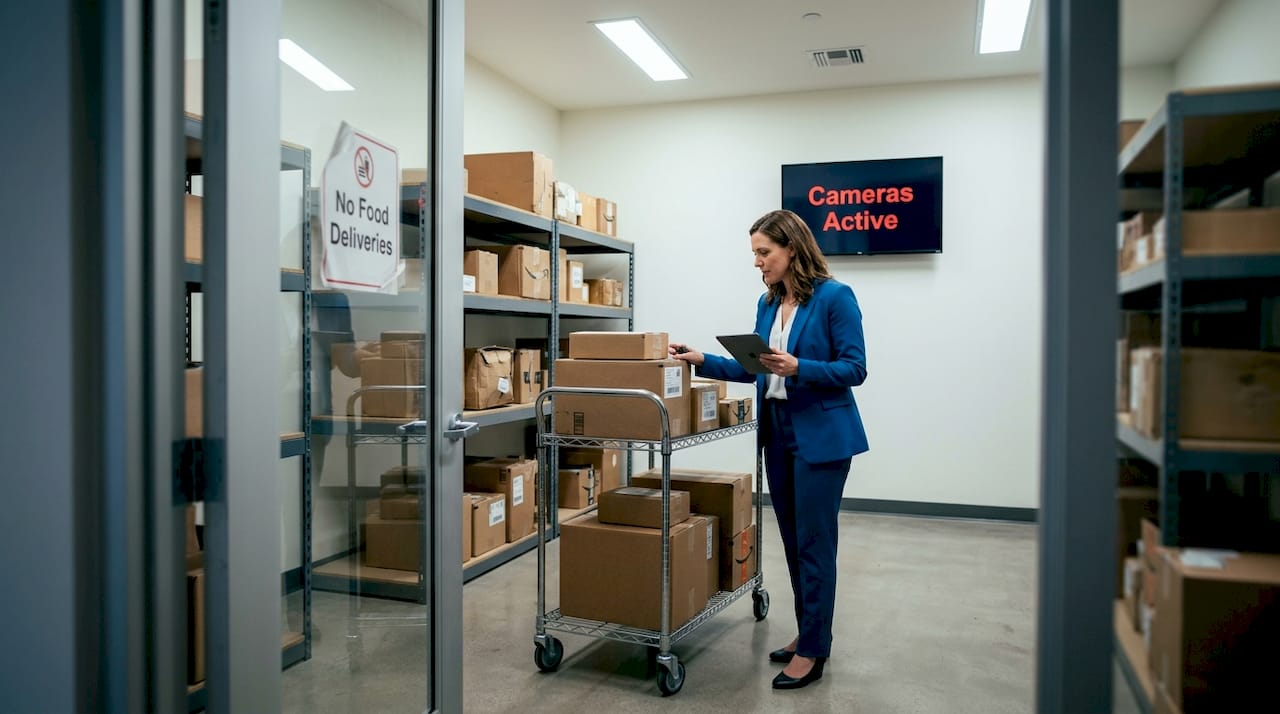
Package delivery volume in multifamily buildings has surged well beyond what most original lobby closets and mailrooms were built to handle, creating daily friction for residents and staff alike. Packages pile up in hallways, go missing, and generate a steady stream of complaints that chip away at resident satisfaction scores and lease renewal rates. The good news is that a purposefully designed package room solves most of these problems before they start. This guide walks property owners and developers through each stage of the process, from sizing your space to measuring results, so you can build a package room that works as hard as your team does.
Table of Contents
- Understanding the package room challenge
- Define your package room’s requirements
- Compare package room layout strategies
- Implement your design and avoid common mistakes
- Measure results and optimize over time
- Why conventional package room designs miss the mark
- Upgrade your property with tailored package room solutions
- Frequently asked questions
Key Takeaways
| Point | Details |
|---|---|
| Size for demand | Package room size must match unit count and projected delivery volume—plan for at least 150 sq ft for most properties. |
| Design with flexibility | Use adjustable shelving, clear pathways, and zone layouts to adapt to changing package needs. |
| Prioritize security and convenience | Hybrid layouts balance theft prevention, speed, and resident ease of use for high satisfaction. |
| Engage residents for feedback | Ongoing input helps fine-tune storage, layout, and tech as delivery trends evolve. |
Understanding the package room challenge
Residential package deliveries have exploded over the past several years, and multifamily properties bear the biggest share of that load. A single 200-unit community might receive 30,000 or more parcels annually, and that number keeps climbing as residents shift more spending online. Older buildings were simply never designed to handle this kind of throughput.
The problems that follow are predictable. Lobby areas fill up with uncollected boxes, creating both a safety hazard and an eyesore that undercuts the curb appeal your leasing team works to maintain. Packages get lost, stolen, or damaged when stored in uncontrolled spaces. Front desk staff spend significant time logging deliveries, fielding complaints, and tracking down missing items rather than focusing on resident service.
Space requirements vary more than most people expect. According to guidance on apartment design best practices, there is no universal size formula because the right footprint depends on unit count, delivery volume, and package turnover speed. A 500-unit high-rise handling roughly 45,000 to 60,000 packages per year might need around 500 square feet, while a smaller community should plan for at minimum 150 square feet to avoid constant overflow.
Exploring efficient package room solutions designed specifically for multifamily properties gives you a practical baseline for what is possible within a range of building footprints and budgets. Understanding current modern residential architecture tips also helps you integrate package infrastructure into the overall building design rather than treating it as an afterthought.
| Property size | Unit count | Estimated annual packages | Suggested room size |
|---|---|---|---|
| Small community | Under 100 units | Up to 12,000 | 150 sq ft minimum |
| Mid-size community | 100 to 300 units | 12,000 to 36,000 | 200 to 350 sq ft |
| Large community | 300 to 500 units | 36,000 to 60,000 | 350 to 500 sq ft |
| High-rise | 500+ units | 60,000+ | 500+ sq ft |
Common pain points in under-designed spaces include:
- Cluttered common areas that create liability and reduce perceived property value
- Lost and stolen packages that generate disputes and erode resident trust
- Staff overload from manual package logging and retrieval processes
- No space for oversized items like furniture boxes or large appliances
“There is no one-size-fits-all approach to package room sizing. The right square footage depends on your unit count, delivery velocity, and how quickly residents typically pick up. A 500-unit high-rise will have very different demands than a 100-unit garden-style community.” — Package room design guidance, How to Design an Apartment
Define your package room’s requirements
Before you sketch a single floor plan, you need a clear picture of what your specific property actually requires. Rushing this step leads to rooms that are either too small from day one or configured in ways that create new bottlenecks instead of solving old ones.
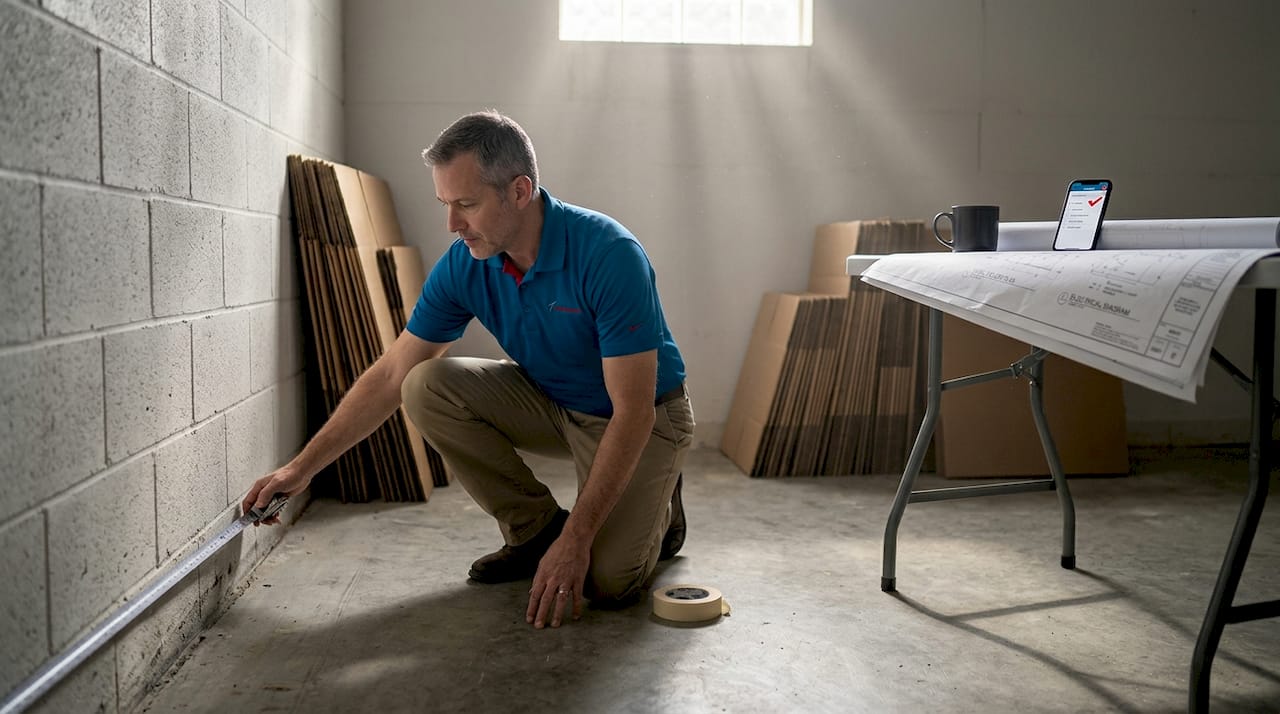
A functional package room needs several core elements working together. Research on package room layouts consistently shows that the best-designed spaces include clear entry and exit paths, distinct zones for small items and oversized packages, a dedicated returns area, and refrigerated storage for grocery and meal kit deliveries. Adjustable shelving is a must because package dimensions vary wildly, and rigid fixed shelving almost always ends up wasted.
Your requirements checklist should include:
- Clear access lanes for both delivery carriers and residents, wide enough to avoid congestion during peak delivery windows
- Separate zones for standard packages, oversized items, returns, and chilled or frozen goods
- Adjustable, modular shelving that can be reconfigured as delivery patterns shift
- ADA-compliant design with accessible counter heights, adequate turning radius for wheelchairs, and accessible electronic interfaces
- Lighting and wayfinding that makes self-service retrieval fast and intuitive for every resident
- Security infrastructure including cameras, access-controlled entry, and audit logs
ADA compliance is not optional. Federal law requires accessible design in common areas, and failing to meet those standards exposes your property to legal risk. Beyond the legal obligation, accessible design is simply good practice because it ensures every resident, regardless of physical ability, can use the space independently.
Pro Tip: Position your package room adjacent to the mailroom whenever possible. Residents already make a habit of checking their mail, and co-locating both spaces creates a natural destination that drives faster package pickup and reduces dwell time.
Evaluating indoor package room installation options alongside monitored package room options helps you match the right technology stack to your specific space and resident profile before you finalize any plans.
Compare package room layout strategies
Once you know what your property needs, the next decision is which layout model best fits your security requirements, resident expectations, and staffing resources. Three primary approaches dominate the market, and each has a distinct profile.
| Layout type | Security level | User access | Operational demands | Best fit |
|---|---|---|---|---|
| Automated lockers | High | 24/7 self-service | Low, automated alerts | Theft-prone areas, unstaffed properties |
| Open/staffed room | Moderate | Staff-assisted | High, requires personnel | Luxury buildings, concierge-style service |
| Hybrid (lockers + open space) | High | Self-service + overflow | Low to moderate | Large or mixed-use communities |
Industry reporting on multifamily mailroom design confirms that lockers are the go-to choice when theft risk is high and around-the-clock access is a priority, while open and staffed rooms suit luxury properties where personalized service is part of the brand promise. Hybrid designs are increasingly common because they give large properties both secure, automated storage and the flexibility to handle irregular oversized deliveries.
Comparing your package room and locker options side by side with your building’s specific traffic patterns is the fastest way to narrow down the right configuration. Review options for secure package storage to understand the full range of configurations available before committing to a layout.
Follow these steps to evaluate and finalize your layout strategy:
- Audit your delivery data. Pull at least three months of package logs to understand peak delivery days, average parcel sizes, and current pickup times.
- Map your available space. Measure the square footage you have and identify constraints like load-bearing walls, utility access points, and fire egress routes.
- Survey your residents. A short poll asking about pickup habits, preferred access hours, and pain points with the current system gives you direct input that protects against expensive design assumptions.
- Model your peak-day load. Estimate the busiest single delivery day of the year and size your system to handle that volume without overflow.
- Score each layout type against your security needs, budget, staffing model, and resident expectations.
- Get quotes for multiple configurations before finalizing, because pricing often changes the calculus between a locker-only and a hybrid approach.
Pro Tip: For properties with more than 250 units, hybrid designs that combine automated lockers with a flexible open overflow area almost always deliver a better return on investment than either solution alone, because they handle the full range of delivery types without requiring a dedicated staff member.
Implement your design and avoid common mistakes
Execution is where good plans often go sideways. Even well-researched package room designs can underperform if common implementation mistakes are not caught early. Knowing what to watch for saves time, money, and a lot of resident frustration.
The most frequent mistakes in package room execution include:
- Underestimating capacity by planning for current volume without a growth buffer of at least 20 to 30 percent
- Ignoring peak-day variability, which means a room that works on an average Tuesday fails completely the week after a major sales event
- Skipping chilled storage, which is a growing gap as grocery and meal kit deliveries increase
- Poor access design that creates bottlenecks at entry points during high-traffic morning and evening windows
- Neglecting aesthetics, which makes residents less likely to use the space regularly and reflects poorly on the overall property
Industry data on multifamily amenity design highlights that enhancing package room aesthetics with quality lighting, thoughtful artwork, and clean wayfinding signage measurably improves resident satisfaction. Residents who enjoy the experience of collecting their packages are less likely to complain about the system and more likely to pick up promptly, which frees space for incoming deliveries.
“A package room that meets ADA standards and incorporates attractive lighting, clear signage, and even simple artwork creates a space residents want to visit, not just tolerate. The experience of picking up a package should reinforce the quality of your property, not undermine it.” — Multifamily Mailrooms Get Makeover
Exploring refrigerated locker options is essential if your residents use grocery delivery services, since a single missed perishable item generates a disproportionate amount of negative feedback. For properties without ground-floor access for all residents, outdoor package kiosks provide a weather-protected, accessible option that keeps the interior package room from overloading. Referencing flexible floor plan strategies also helps you design a room that can adapt as your property’s needs shift over time.
Pro Tip: Specify adjustable shelving systems from the start rather than fixed built-ins. The average package size has grown significantly as residents order more furniture and electronics online, and a shelving system that cannot adapt will waste space and require costly retrofitting within a few years.
Measure results and optimize over time
Installing a well-designed package room is not the finish line. Properties that treat package management as an ongoing system rather than a one-time renovation consistently outperform those that set it and forget it. Measuring performance closes the loop and gives you the data to justify future upgrades.
The three metrics that matter most are resident satisfaction scores related to package management, the number of incidents such as lost or stolen packages, and average package pickup time. Improvements in all three tend to correlate directly with lower staff burden and higher lease renewal intent.
Best practice feedback channels include:
- Resident satisfaction surveys sent quarterly with specific questions about package retrieval experience
- Staff debriefs after peak delivery periods to identify capacity gaps and process friction points
- Technology monitoring using locker system dashboards to track pickup times, overflow frequency, and usage patterns by time of day
- Online review tracking to catch negative mentions related to package management before they accumulate
| Metric | Before redesign | After redesign |
|---|---|---|
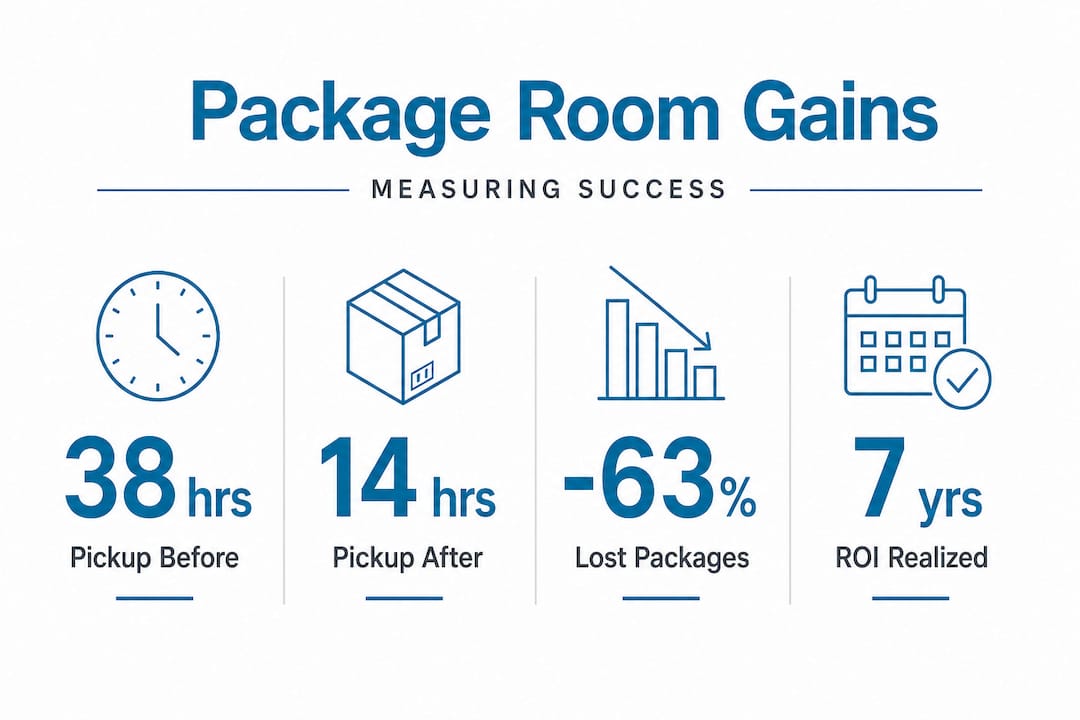
| Average package pickup time | 38 hours | 14 hours |
| Monthly package complaints | 22 per month | 4 per month |
| Room capacity overflow incidents | 12 per month | 1 per month |
| Staff time on package tasks | 3.5 hours/day | 0.8 hours/day |
As noted in apartment design guidance, the right room size and configuration is determined by your unique delivery volume, not by a standard formula. Tracking your own data over time is the only reliable way to know when your current setup has reached its limits and what specific upgrade will address the constraint. Monitoring package room efficiency improvements as your property evolves keeps you ahead of resident expectations rather than reacting to complaints.
Why conventional package room designs miss the mark
Here is the uncomfortable truth about most package room projects: they are designed around storage capacity and technology specs, not around the resident experience or long-term adaptability. Property teams spend months choosing the right locker brand and the right square footage, then open a room that frustrates residents within the first year because it was never designed to grow or flex.
The instinct to fill every square foot with lockers makes sense on paper. Lockers look like the obvious answer to theft and self-service access. But a room packed wall-to-wall with fixed hardware cannot accommodate the oversized television that arrives the week before a major holiday, the grocery delivery that needs refrigeration, or the 40 percent increase in deliveries that follows a new high-demand tenant profile. Rigidity is expensive.
What actually works is a resident-first design philosophy that prioritizes the experience of using the space every single day. That means enough open floor area to move comfortably, enough visual clarity to find your package in under two minutes, and enough operational flexibility to absorb the unexpected. Technology should enable that experience, not define the entire room. Reviewing real-world implementation stories consistently reveals that the properties with the highest resident satisfaction scores are not the ones with the most sophisticated lockers. They are the ones with the most thoughtfully designed overall environment.
The properties we see underperform are almost always the ones that optimized for the day they opened rather than the year five version of their community. Designing for flexibility and resident experience from the start is not a premium feature. It is the baseline requirement for any package room that will still work well three years from now.
Upgrade your property with tailored package room solutions
A professionally designed package room is one of the highest-return investments a multifamily property can make, directly improving resident retention, reducing staff burden, and protecting packages from loss and theft.
Locker Solutions offers a full range of indoor, hybrid, and monitored package room systems built specifically for multifamily properties at every scale. Whether you are starting from scratch or retrofitting an existing space, our secure package delivery products and expert configuration support make the process straightforward. Explore our efficiency-focused package room solutions to find the right configuration for your property, or reach out to our team to schedule a consultation tailored to your building’s specific needs.
Frequently asked questions
How large should a package room be for a 200-unit building?
Most design guidance suggests a minimum of 150 to 200 square feet for a 200-unit building, with additional buffer space recommended to accommodate peak delivery periods and future volume growth.
Do most properties choose lockers, open rooms, or a hybrid?
Hybrid package rooms have become the most popular choice for medium to large properties because they combine the security and automation of lockers with the flexibility of open storage space for oversized items.
Is refrigeration necessary in a modern package room?
Yes. With grocery and meal kit deliveries growing rapidly, refrigerated storage is now considered a core component of a complete package room rather than an optional upgrade, especially in markets with high resident expectations.
What design features improve resident experience most?
Clear access paths, quality lighting, artwork, and distinct package zones are consistently cited as the features that most directly improve how residents feel about using the space and how quickly they collect their deliveries.
Recommended
Ready for a Luxer One® package locker quote?
Tell us your unit count and we'll send right-sized pricing with a fast response time.
Get my free quote