May 2, 2026
Secure package delivery for multifamily properties
Discover the ultimate secure delivery guide for multifamily properties to protect against package theft, boost resident satisfaction, and safeguard your NOI.
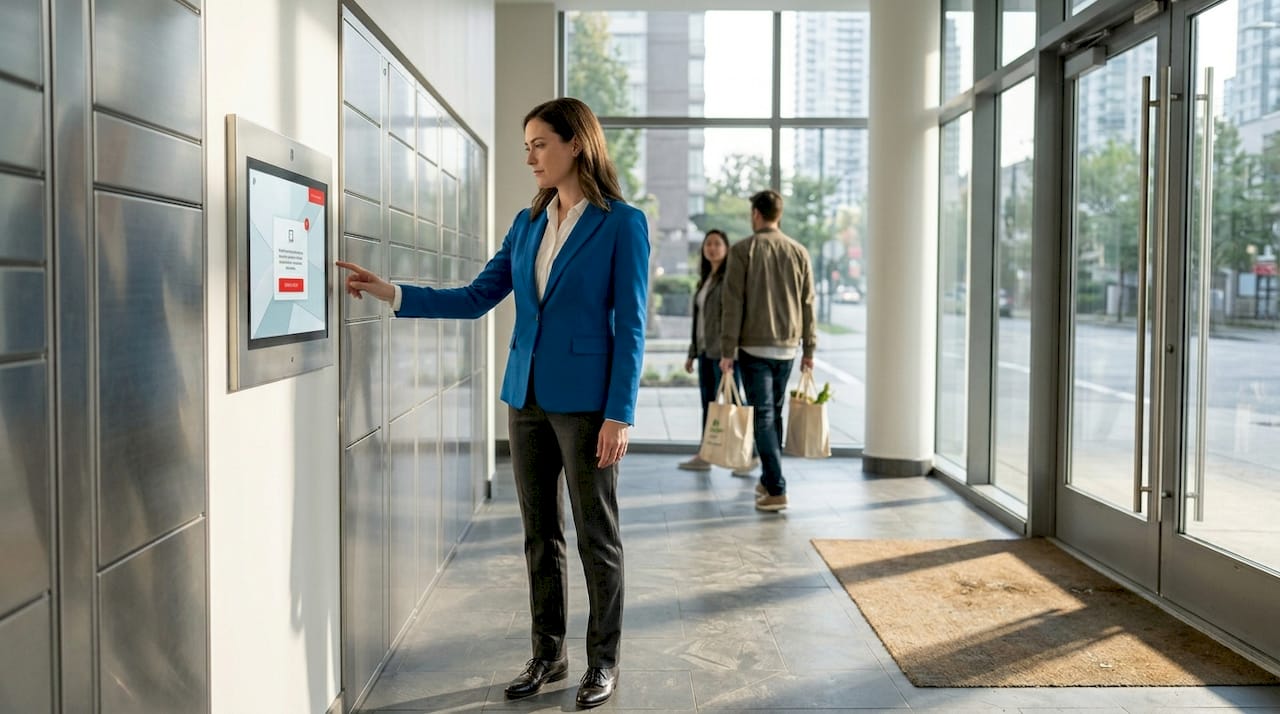
Package theft in apartment communities has quietly become one of the most damaging threats to resident satisfaction and net operating income (NOI). With parcel volume at record highs, property managers are fielding more theft complaints, facing lease renewal pressure, and navigating genuine legal exposure. This guide gives you a practical, step-by-step framework for assessing your risks, selecting the right delivery infrastructure, and running a system that keeps residents happy and your property protected.
Table of Contents
- Understanding the risks and legal responsibilities
- Preparing for secure delivery: Essential requirements and options
- How to implement a secure delivery process: Step-by-step
- Common pitfalls and how to avoid them
- Testing and verifying your secure delivery system
- Why the best secure delivery systems go beyond hardware
- Explore modern package locker solutions for your property
- Frequently asked questions
Key Takeaways
| Point | Details |
|---|---|
| Legal responsibilities | Managers must secure common areas and maintain features promised in leases to avoid liability. |
| Preparation is key | Assess needs, requirements, and property layout before choosing a delivery solution. |
| Step-by-step execution | Follow a clear process from planning to resident communication for best results. |
| Stay proactive | Regular testing, maintenance, and open feedback channels keep systems effective. |
Understanding the risks and legal responsibilities
With the stakes set, let’s clarify the key risks and legal landscape you face.
Package theft is not just a nuisance. It erodes resident trust, generates negative reviews, and can trigger lease non-renewals that quietly drain your NOI over time. For property managers, the question is rarely “should we do something?” It’s “what are we actually required to do, and what happens if we fall short?”
The legal baseline is more nuanced than most managers realize. Landlords generally must secure common areas but are not typically liable for individual package losses unless the lease or marketing materials promise otherwise. That distinction matters enormously. If your property advertises secure package lockers as an amenity and those lockers are broken or poorly maintained, you have created liability where none otherwise existed.
Here are the most common scenarios that generate complaints and legal risk:
- Packages left in unsecured lobbies where any resident or visitor can access them
- Overflow situations where lockers fill up and carriers leave parcels on the floor
- Broken locker units that residents report but management doesn’t repair promptly
- Lease language that promises secure delivery but doesn’t define what that means operationally
- No documented process for handling misdelivered or unclaimed packages
The takeaway here is that your exposure grows in direct proportion to what you’ve promised. A property that never advertised any package solution has limited liability. A property that markets “secure, 24/7 package access” and then lets the system go unmaintained is in a very different position.
“Landlords have a duty to secure common areas but generally not individual packages unless promised in the lease; failure to maintain advertised features like lockers creates liability.” — Package Theft at California Apartments: Landlord Guide
Understanding this distinction shapes every decision that follows. Your goal isn’t just to install hardware. It’s to build a system you can actually maintain and stand behind.
Preparing for secure delivery: Essential requirements and options
Knowing your risks, it’s time to identify what truly secure delivery systems require.
Not every solution fits every property. A 40-unit walk-up in a mild climate has very different needs than a 300-unit high-rise in a region with harsh winters. Before you evaluate vendors or request quotes, you need to define your requirements clearly.
Core features every secure delivery system should include:
- Secure, controlled access so only authorized residents can retrieve their packages
- Automated notifications that alert residents the moment a parcel is deposited
- Audit trails and tracking so you can resolve disputes with documented evidence
- Scalable capacity that handles peak delivery days, especially around holidays
- Carrier compatibility with all major services including USPS, UPS, FedEx, and Amazon
- Weatherproofing for any outdoor or semi-outdoor installation
Once you know what you need, you can compare the main solution categories objectively. The table below summarizes the most common options:
| Solution type | Best for | Key benefit | Main limitation |
|---|---|---|---|
| Traditional package room | Small to mid-size properties | Low upfront cost | No tracking, higher theft risk |
| Smart locker bank | Mid to large properties | Automated access and alerts | Higher installation cost |
| Automated package room | High-volume, large properties | Handles any parcel size | Requires dedicated space |
| Outdoor weatherproof kiosk | Properties with limited lobby space | 24/7 access in any climate | Limited to smaller parcels |
| Refrigerated lockers | Properties with grocery/meal delivery | Preserves perishable items | Specialized use case |
Pro Tip: Match your solution to your resident profile, not just your unit count. A property with a high percentage of remote workers ordering frequent deliveries will need significantly more locker capacity than a similar-sized community with lower delivery volume. Survey residents before committing to a configuration.
When evaluating vendors, documentation and clear lease disclaimers reduce liability, but it’s the consistently maintained security features that actually build resident trust and protect your NOI over time. A vendor who offers ongoing maintenance support is worth more than one who disappears after installation.
You can explore secure package room options that range from simple locker banks to fully automated systems, and review indoor locker installation configurations that work within existing lobby footprints without major construction.
How to implement a secure delivery process: Step-by-step
With your solution selected, here’s how to put your secure delivery plan into action.
Implementation is where most properties either get it right or create new problems. A rushed rollout leads to confused residents, carrier errors, and the exact kind of documented failure that creates liability. Follow these steps to get it right the first time.
-
Assess your current situation. Walk every delivery touchpoint in your property. Count average daily packages during a typical week and during a peak period. Identify where packages currently land and where theft or loss has occurred.
-
Define your budget with total cost of ownership in mind. Hardware cost is only part of the equation. Factor in installation, software subscriptions, maintenance contracts, and the staff time you’ll save once the system is running.
-
Evaluate and select your vendor. Request proposals from at least three vendors. Ask specifically about uptime guarantees, maintenance response times, carrier onboarding support, and resident-facing app quality. Check references from properties similar to yours.
-
Update your lease language before launch. Work with your attorney to add clear language describing the package service, its limitations, and the resident’s responsibility to retrieve parcels within a defined window. This step protects you legally and sets clear expectations.
-
Coordinate installation with minimal disruption. Schedule installation during lower-traffic periods. Communicate the timeline to residents at least two weeks in advance so they can plan their deliveries accordingly.
-
Onboard carriers before you go live. Contact your local USPS postmaster and the regional contacts for UPS, FedEx, and Amazon to ensure they have access codes and understand the new delivery protocol. Carrier confusion is the number one cause of failed locker deployments.
-
Launch with a resident communication campaign. Send a detailed email, post signage at the locker location, and hold a brief walkthrough if your community is large enough to warrant it. Show residents exactly how to retrieve packages and who to contact with questions.
The comparison below helps you decide whether to manage the system in-house or rely on a vendor-managed model:
| Factor | DIY management | Vendor-managed |
|---|---|---|
| Upfront cost | Lower | Higher |
| Ongoing staff time | Significant | Minimal |
| Maintenance reliability | Depends on staff | Contractually guaranteed |
| Liability if system fails | Higher | Shared with vendor |
| Scalability | Limited by internal resources | Built into service agreement |
Remember that failing to maintain advertised locker features creates real legal exposure. A vendor-managed model with a documented service level agreement gives you a paper trail that protects you if a resident ever claims negligence.
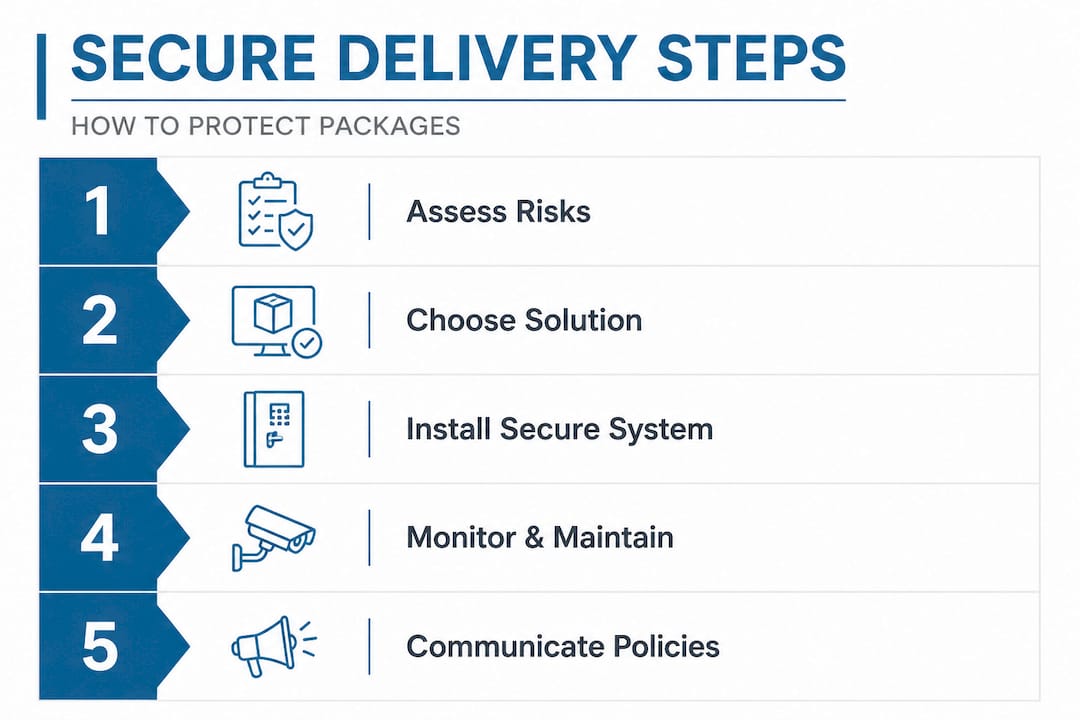
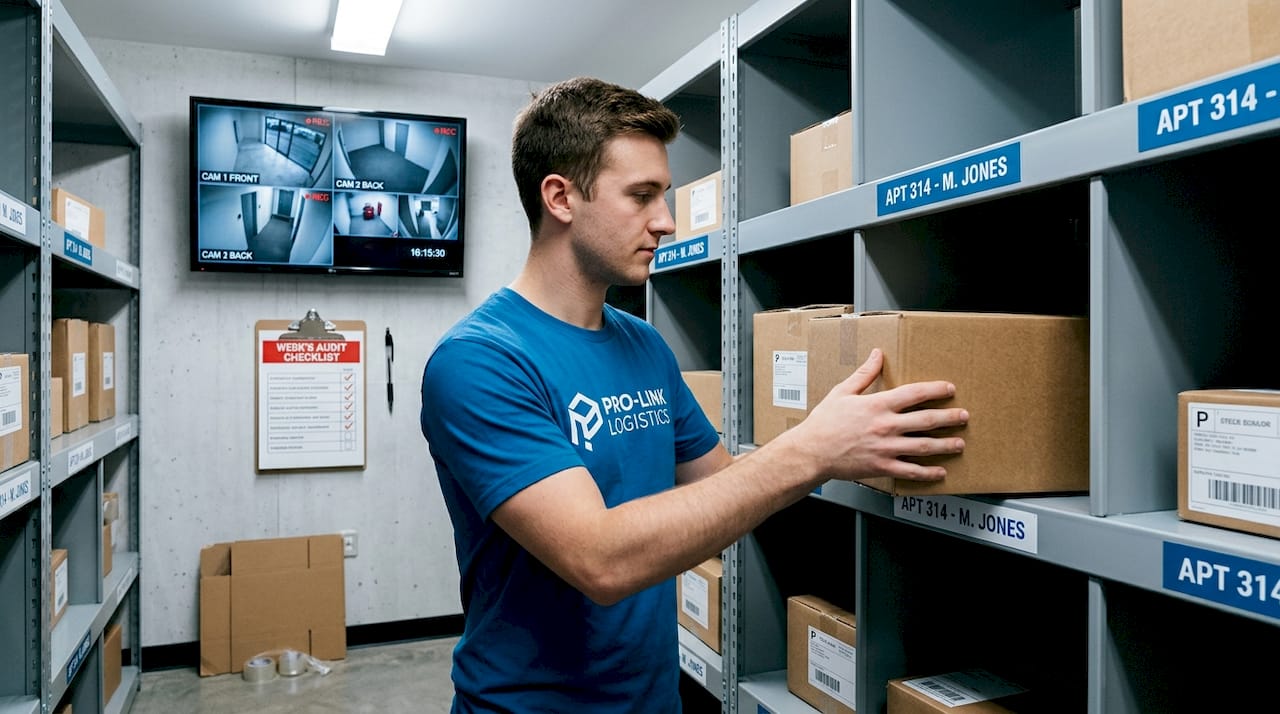
For properties that want full visibility into delivery activity, monitored package rooms combine video surveillance with automated access logs. Properties with limited indoor space should also consider outdoor kiosk strategies that keep the lobby clear while maintaining secure, weather-protected delivery access.
Common pitfalls and how to avoid them
To maximize the benefits of your secure delivery investment, be alert for these common missteps.
Even well-planned systems fail when execution gets sloppy. The following mistakes show up repeatedly across multifamily properties of all sizes, and every one of them is avoidable with a bit of forethought.
- Skipping resident communication at launch. Residents who don’t understand how the system works will revert to old habits, prop doors open, or call the office for every retrieval question. A thorough launch communication campaign pays for itself in staff time saved.
- Ignoring carrier onboarding. If USPS doesn’t have the access code, they’ll leave packages at the door. If Amazon drivers don’t know the locker location, they’ll pile parcels in the lobby. Carrier coordination is not optional.
- Letting the system run without regular checks. A locker bank that is 90% full during peak season creates overflow problems. A unit with a broken door sensor is a liability waiting to happen. Build weekly visual checks into your maintenance schedule.
- Failing to update lease language after installation. Installing lockers without updating your lease creates ambiguity about what residents can expect and what you’re responsible for.
- Not documenting incidents. When a resident reports a missing package, you need a documented response process. Without it, you have no defense if the situation escalates.
Pro Tip: Set a recurring calendar reminder every 90 days for a full system audit. Check locker functionality, review retrieval time data, confirm carrier access codes are current, and verify that your lease language still accurately describes the service you’re providing. Ninety days is short enough to catch problems before they become complaints.
The legal principle here is consistent: clear lease disclaimers reduce liability, but maintained security features are what actually build the resident trust that drives renewals and referrals.
For properties handling grocery and meal kit deliveries, refrigerated lockers address a growing resident need while reducing the front desk burden of managing perishable packages.
Testing and verifying your secure delivery system
Once your system is running, ongoing monitoring is essential.
Going live is not the finish line. The first 90 days after launch are your most important window for identifying gaps, correcting carrier behavior, and building resident confidence in the system.
Here’s a structured approach to testing and ongoing verification:
-
Run test deliveries on day one. Have a staff member ship a package to the property before residents start using the system. Walk through the full retrieval experience yourself. Note any friction points in the process.
-
Survey residents at 30 and 90 days. A simple three-question survey asking about ease of use, notification reliability, and overall satisfaction gives you actionable data quickly. Residents who feel heard are far more likely to renew.
-
Track key performance indicators weekly. Monitor average package retrieval time, the number of packages held longer than 48 hours, any reported losses, and the frequency of overflow events. These numbers tell you whether the system is working before complaints start arriving.
-
Audit carrier compliance monthly. Review delivery logs to confirm that all carriers are using the system correctly. Any carrier repeatedly bypassing the lockers needs a direct conversation with their regional management.
-
Review and update your communication materials quarterly. Resident turnover means new residents who have never seen your onboarding materials. Refresh your welcome packet and locker instructions every quarter to keep new move-ins informed from day one.
“Maintained security features build trust and NOI.” — Package Theft at California Apartments: Landlord Guide
For properties that want real-time visibility into system performance, system integration and monitoring tools connect locker activity data directly to your property management workflow, making it easy to catch issues before they become resident complaints.
Why the best secure delivery systems go beyond hardware
Here’s the perspective most property managers miss.
After working with multifamily properties across a wide range of sizes and markets, we’ve noticed a consistent pattern. The properties that see the strongest resident satisfaction scores and the lowest package-related complaints are not necessarily the ones with the most expensive hardware. They’re the ones where management treats secure delivery as an ongoing commitment rather than a one-time installation.
Hardware is table stakes. Every serious competitor in the multifamily market now offers some form of secure delivery. The properties that actually differentiate themselves are the ones where residents feel the difference. That feeling comes from fast maintenance response when something breaks, proactive communication when the system is at capacity during peak seasons, and a genuine willingness to adjust the setup when resident needs change.
There’s also a financial argument that most managers underestimate. Residents who trust that their packages are safe are meaningfully more likely to renew their leases. In a market where a single lease non-renewal can cost you thousands in turnover costs, the ROI on a well-maintained delivery system is far higher than the hardware cost alone suggests.
The uncomfortable truth is that many properties install lockers, check the amenity box, and then let the system drift. Maintenance tickets pile up. Carrier access codes go stale. Residents stop using the system and start leaving packages at the door again. At that point, you have the liability of having advertised a feature without the benefit of actually delivering on it.
The best secure delivery programs we’ve seen share three traits: they’re maintained obsessively, communicated clearly, and treated as a living part of the resident experience rather than a set-it-and-forget-it amenity.
Explore modern package locker solutions for your property
Ready to offer residents a truly secure package experience? Here’s where to start.
Locker Solutions specializes in Luxer One® package management systems built specifically for multifamily residential properties. Whether you need a compact indoor locker bank for a boutique community or a high-capacity automated package room for a large urban complex, there’s a configuration that fits your footprint, your climate, and your resident profile.
Explore monitored package rooms that combine video surveillance with automated resident notifications, or view outdoor kiosk solutions designed to handle any weather condition while keeping your lobby clear. Every system includes automated alerts, full audit trails, and maintenance support so you can stand behind the amenity you’re advertising. The result is less staff time spent on package logistics, fewer resident complaints, and a concrete amenity that supports lease renewals.
Frequently asked questions
Are property managers liable for stolen packages in apartment complexes?
Generally, managers are not liable for individual package losses unless the lease or marketing materials promise secure delivery, but failing to maintain advertised features like lockers creates direct legal exposure.
What is the best package delivery solution for multifamily properties?
Monitored package rooms or smart locker systems provide secure, trackable access with automated resident notifications, and they significantly reduce the staff time spent managing deliveries manually.
How can I reduce package theft in my building?
Install a secure delivery system, communicate the process clearly to both residents and carriers, and document all management efforts so you have a paper trail if a dispute arises.
Do I need to update resident leases after installing package lockers?
Yes, your lease should clearly describe the service, its limitations, and resident retrieval responsibilities, because clear lease disclaimers reduce liability and set accurate expectations from move-in day.
Recommended
Ready for a Luxer One® package locker quote?
Tell us your unit count and we'll send right-sized pricing with a fast response time.
Get my free quote