May 20, 2026
Secure Package Pickup Workflow for Multifamily Properties
Transform your multifamily property with a secure package pickup workflow. Reduce theft, enhance efficiency, and improve resident satisfaction today!
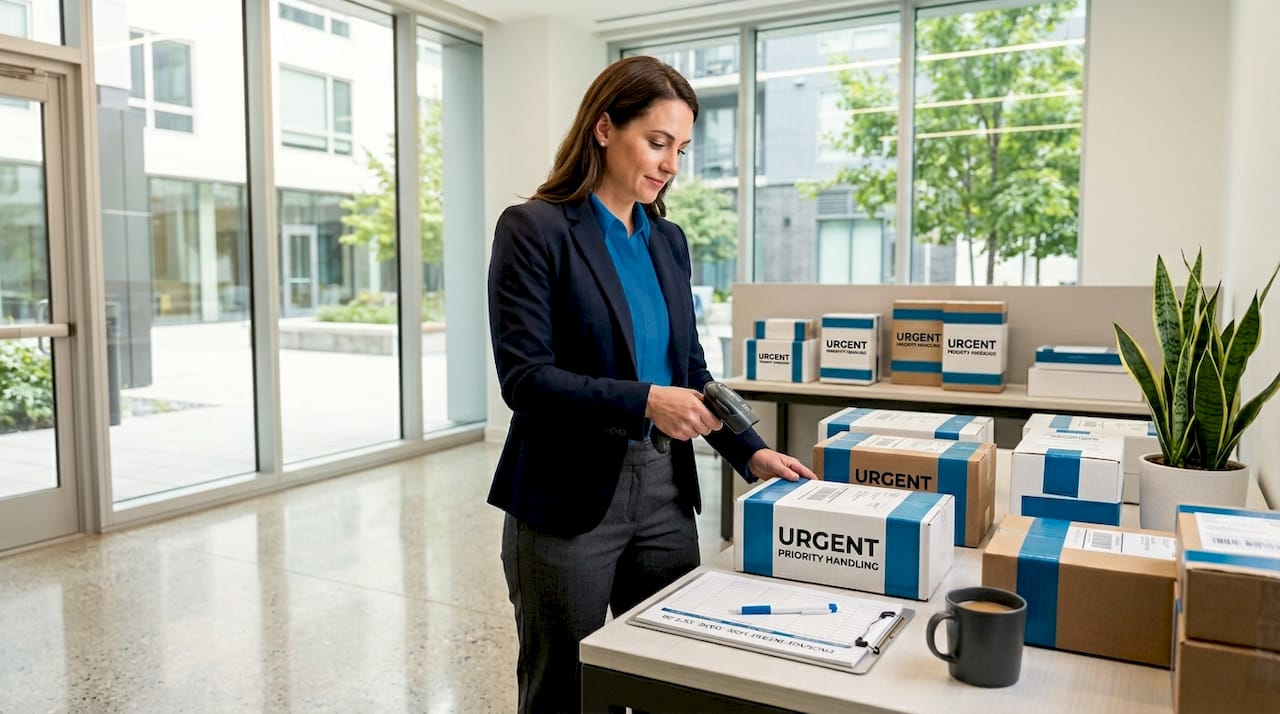
Package theft is no longer a suburban nuisance. It’s a daily operational problem for multifamily property managers. Residents file complaints, staff scramble to investigate missing deliveries, and your property’s reputation takes the hit. Building a secure package pickup workflow is the most direct way to cut through this chaos. Done right, it reduces theft exposure, lowers staff burden, and gives residents the reliable, hands-off pickup experience they expect from modern apartment living.
Table of Contents
- Key takeaways
- Building a secure package pickup workflow: what you need first
- How to design and implement your workflow step by step
- Common mistakes that break secure pickup workflows
- What a working workflow actually delivers
- My honest take on where most properties get this wrong
- Ready to put the right infrastructure behind your workflow
- FAQ
Key takeaways
| Point | Details |
|---|---|
| Infrastructure comes first | Secure lockers or a dedicated package room are the physical foundation any workflow depends on. |
| Automation drives consistency | Automated notifications with unique access codes replace manual handoffs and reduce human error. |
| Retention policies prevent clutter | A 7 to 14 day hold window with automated reminders keeps uncollected packages from piling up. |
| Staff training is non-negotiable | Even the best technology fails without staff who understand and follow chain-of-custody protocols. |
| Measure what matters | Tracking theft rates, pickup times, and resident satisfaction scores tells you if the workflow is actually working. |
Building a secure package pickup workflow: what you need first
Before you design a single step in your package collection workflow, you need the right physical and digital foundation in place. Skipping this phase is the most common reason well-intentioned workflows break down within weeks of launch.
Physical infrastructure
Your building needs a designated, secured space for package receipt. That means electronic lockers, an automated package room, or a staffed pickup point with controlled access. Each option has trade-offs. Lockers work well for high-volume properties where 24/7 self-service pickup matters. Package rooms handle oversized deliveries that don’t fit standard locker compartments. The right choice depends on your building’s volume, layout, and resident demographics.
The key physical requirements to address before launch:
- A dedicated, access-controlled space that carriers can enter without staff assistance
- Visible surveillance cameras covering the intake and pickup zones
- Clear signage that directs carriers to the correct delivery point every time
- Weatherproof options if any part of the intake area is exposed to the elements
Technology requirements
Package retrieval security lives or dies by your tech stack. You need a system that logs every package at intake, sends automated notifications to residents, and generates unique access codes for pickup. UPS invested over $100 million in RFID technology to improve tracking visibility. At the property level, even a mid-tier locker management platform delivers that same visibility within your building.
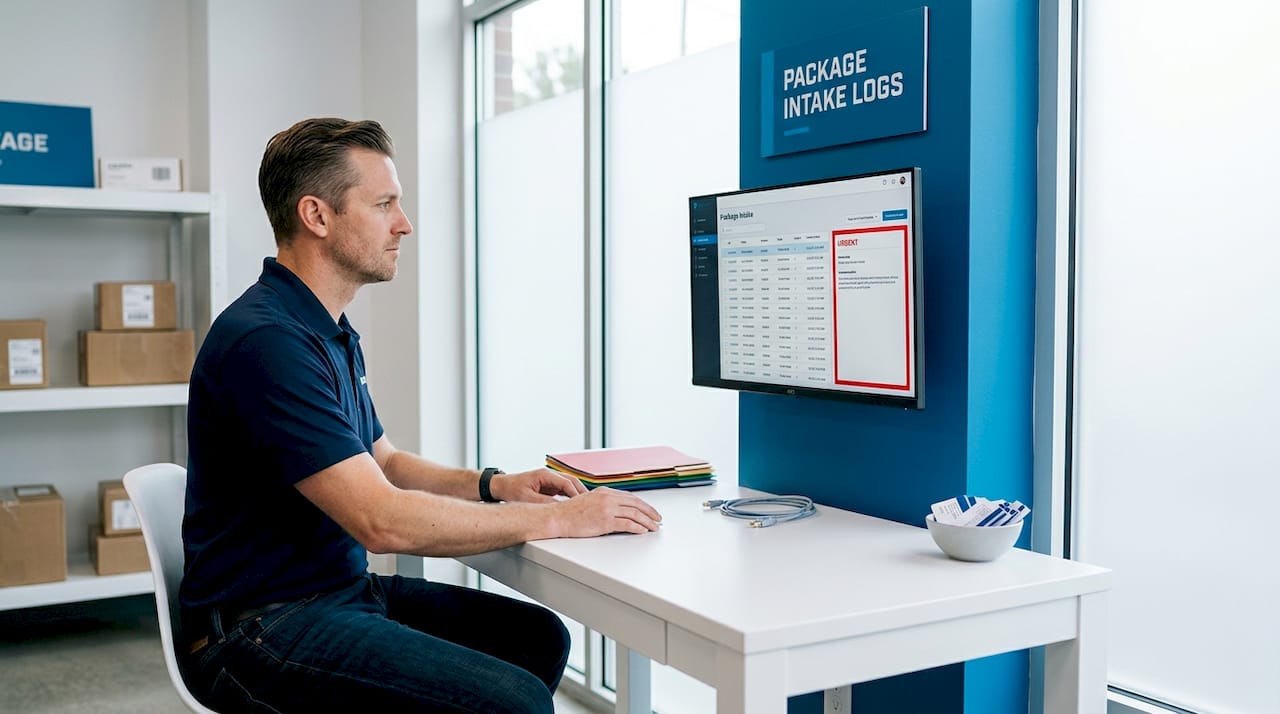
Access control integration matters too. Your package system should connect with your building’s entry system so residents never need a separate app or fob to retrieve deliveries.
Staff training and carrier coordination
Training delivery personnel in security best practices significantly reduces risks of theft, damage, or loss. That principle applies to your on-site team as well. Staff need clear written protocols for handling packages that arrive outside normal intake procedures, like oversized items, signature-required deliveries, or damaged boxes.
Coordinate directly with major carriers. Give UPS, FedEx, USPS, and Amazon delivery drivers written instructions, access codes, and fallback procedures. Carriers who know exactly where to go and how to get in will default to your secure intake point instead of leaving packages at unit doors.
Pro Tip: Create a one-page carrier instruction sheet with photos of the delivery entrance, locker access steps, and a contact number for exceptions. Laminate it and post it at every delivery entry point.
| Infrastructure component | Purpose | Priority |
|---|---|---|
| Electronic lockers or package room | Primary secure intake and pickup point | High |
| Video surveillance | Deterrence and documentation | High |
| Automated notification system | Resident alerts with access codes | High |
| Access control integration | Resident identity verification at pickup | Medium |
| Carrier instruction materials | Consistent delivery behavior | Medium |
How to design and implement your workflow step by step
With your infrastructure in place, you can map the actual package collection workflow from delivery arrival to resident retrieval. Each step needs a clear owner, a defined action, and a documented record.
Step 1: Receive and log the package. Every package that enters the building gets logged at the point of intake. Your locker or package room system should do this automatically with a scan or photo confirmation. If a package arrives outside the automated system (at the front desk, for example), staff must log it manually into the same platform before doing anything else. This is your chain of custody. Without it, every dispute becomes a guessing game.
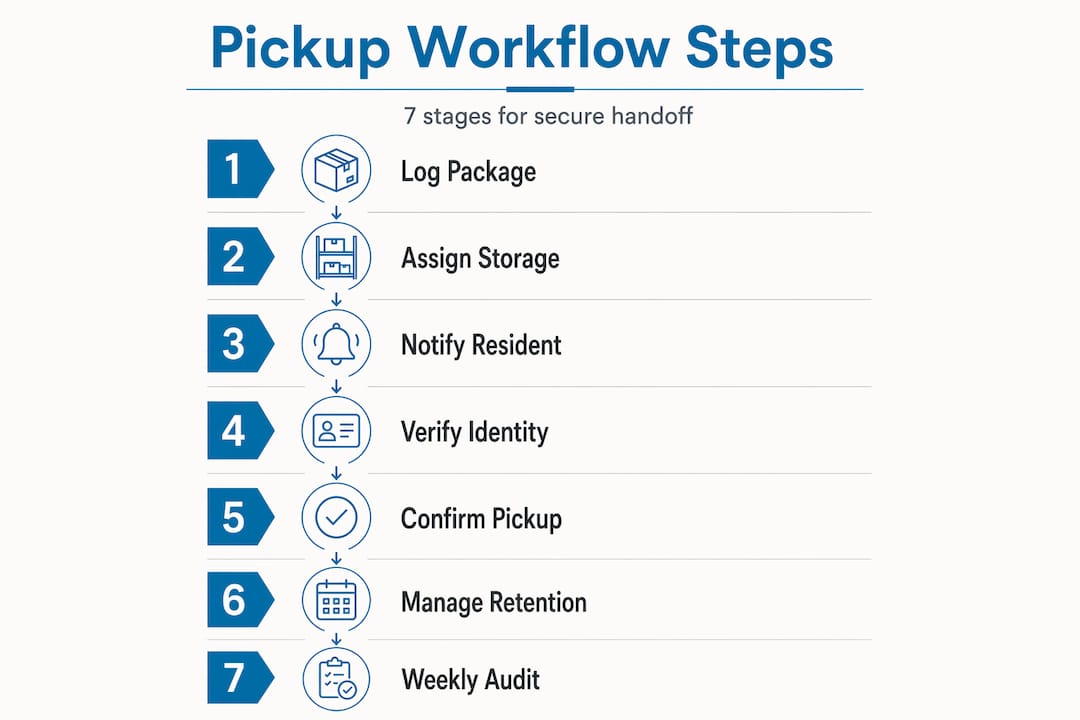
Step 2: Assign a secure storage location. The system assigns the package to an available locker compartment or a designated shelf in the package room. Oversized packages that don’t fit standard compartments need a separate protocol, typically a large-item bay or a reserved area with a sign-out log.
Step 3: Notify the resident automatically. Automated notification systems trigger pickup alerts with location info and unique codes, helping maintain security and resident convenience. Your notification should include the locker number or room location, the unique access code, and the pickup deadline. Send it by text and email. Don’t rely on one channel.
Pro Tip: Set your notification to include the carrier name and an estimated package size. Residents who know what to expect are far more likely to pick up promptly.
Step 4: Verify identity at pickup. Controlled access is what separates a secure package delivery process from a simple storage solution. The resident enters their unique code or scans their credential at the locker or room entrance. No code sharing, no proxy pickups without written authorization on file. Some properties require residents to register alternate pickup contacts in advance through the resident portal.
Step 5: Confirm pickup and close the record. When the resident retrieves their package, the system logs the pickup with a timestamp. That record closes the chain of custody and removes the package from your active inventory. If a resident reports a missing package after this step, you have a documented trail to reference.
Step 6: Manage uncollected packages. Retention windows are typically 7 to 14 days, with automated reminders reducing uncollected packages before return to sender. Set escalating reminders at day three, day seven, and day ten. After the hold period expires, follow your written policy. That might mean returning to the carrier, donating non-perishables, or storing overflow in a secondary location while you pursue the resident.
Step 7: Review and audit weekly. Pull a weekly report from your system showing intake volume, average pickup time, uncollected packages, and any exceptions. This is the data that tells you whether the workflow is holding or developing gaps.
Common mistakes that break secure pickup workflows
Even a well-designed workflow develops weak points over time. Most failures trace back to a small set of recurring mistakes.
- Skipping the intake log. When staff accept packages at the front desk and forget to log them, the chain of custody breaks immediately. Any later dispute has no documentation to lean on.
- Overly complex resident instructions. If your pickup notification requires residents to follow more than three steps, pickup rates drop and complaints rise. Simplicity directly improves the safe pickup procedure.
- Ignoring delivery exceptions. Not every carrier will comply with your intake system. Packages left at unit doors, in the lobby, or handed to neighbors create immediate security gaps. You need a defined protocol for these exceptions, not just an expectation that it won’t happen.
- Failing to act on internal theft signals. Most carriers do not cover thefts of delivered shipments, making internal documentation and surveillance critical for recourse. If packages go missing after confirmed intake, that points to internal access problems. Review footage immediately and treat it as a serious operational failure.
Property managers who review package workflow data monthly find misplacement and exception patterns before they become theft patterns. Waiting until a resident complaint forces the issue means the problem has been running for weeks.
Leverage your system’s data actively. Identify which carriers generate the most exceptions, which time windows produce the most unclaimed packages, and whether certain units consistently report missing deliveries. This feedback loop is what separates a static policy from an optimized package pickup system.
What a working workflow actually delivers
The results of a well-executed secure package pickup workflow show up in measurable places, not just resident satisfaction surveys.
| Outcome | What to measure | Realistic target |
|---|---|---|
| Reduced theft and loss | Reported missing packages per month | Less than 1% of monthly intake volume |
| Faster pickup times | Average hours from notification to retrieval | Under 24 hours for 80% of packages |
| Lower staff workload | Staff hours spent on package handling per week | Reduction of 30 to 50% from baseline |
| Resident satisfaction | Satisfaction scores tied to package handling | Above 4.2 out of 5.0 in resident surveys |
Pickup points with verified handoff reduce theft rates to below 0.1%, compared to residential theft rates exceeding 5% in high-risk areas. That is not a marginal improvement. That is a structural change in how your property handles package security.
Residents notice the difference. Properties with reliable, 24/7 self-service package retrieval consistently cite it as a leasing differentiator. Effective secure delivery combines location choice, timing, and visibility to materially lower theft risk. When your workflow gets all three right, the property benefits extend well beyond package management.
On the operational side, delivery alerts that prompt immediate pickup most effectively reduce theft exposure by shortening the window packages sit unattended. Fewer unattended packages mean fewer complaints, fewer investigations, and less time your team spends managing package-related issues instead of higher-priority work.
My honest take on where most properties get this wrong
I’ve seen properties spend significant budget on locker systems and still struggle with package complaints six months later. The technology wasn’t the problem. The workflow around it was.
What I’ve found is that property managers often underestimate how much resident behavior shapes the outcome. A resident who doesn’t check their notifications, or who waits four days to pick up a package, creates downstream problems for every step in the workflow. The properties that get this right treat resident communication as part of the workflow itself, not an afterthought. They send onboarding instructions at move-in, post reminders in common areas, and follow up personally when pickup rates dip below expectations.
The other mistake I keep seeing is treating the workflow as a one-time setup. In my experience, the best-performing properties review their package data at least monthly. They catch carrier compliance issues before they become theft patterns. They adjust retention policies when seasonal volume spikes. They retrain staff after any exception that broke the chain of custody.
The uncomfortable truth is that a secure package pickup workflow is not a product you install and forget. It’s a process you manage. The physical infrastructure matters. The technology matters. But the properties that actually see lasting results are the ones where someone owns the workflow and keeps improving it.
— Craig
Ready to put the right infrastructure behind your workflow
A workflow is only as strong as the system supporting it. Locker-solutions provides Luxer One® electronic lockers, automated package rooms, and weatherproof kiosks built specifically for multifamily properties. These systems handle intake logging, resident notifications, and access-controlled pickup automatically, so your workflow runs with minimal staff involvement. Whether you manage a 50-unit building or a 500-unit community, there’s a configuration that fits your volume and layout. Explore the full range of package management solutions available for multifamily properties, or review efficient package room options to find the right fit for your community. You can also browse all locker solutions for apartments to compare formats side by side.
FAQ
What is a secure package pickup workflow?
A secure package pickup workflow is a defined process for receiving, logging, storing, and releasing resident packages with controlled access and documented chain of custody at every step. It typically combines physical infrastructure like lockers or package rooms with automated notifications and access verification.
How do automated notifications improve package security?
Automated alerts sent immediately after package intake shorten the window packages sit unattended, which directly reduces theft exposure. Systems that include unique pickup codes add a layer of access control that prevents unauthorized retrieval.
What retention period should I use for uncollected packages?
Standard retention windows run 7 to 14 days, with automated reminders sent at intervals before the deadline. Setting escalating reminders at day three and day seven significantly reduces uncollected package rates before the return-to-sender cutoff.
What should I do when a resident reports a package as missing?
Verify the delivery status with the carrier first, then pull surveillance footage from the intake and pickup zones. Carriers generally do not cover theft after delivery, so your internal documentation and video records are the primary tools for resolving disputes and supporting resident claims.
How do I measure whether my workflow is working?
Track four metrics monthly: missing package reports as a percentage of intake volume, average hours from notification to pickup, staff hours spent on package handling, and resident satisfaction scores tied specifically to package management. Consistent improvement across all four indicates a workflow that is performing as intended.
Recommended
Ready for a Luxer One® package locker quote?
Tell us your unit count and we'll send right-sized pricing with a fast response time.
Get my free quote