June 30, 2026
Preventive Maintenance for Lockers: A Facility Manager's Guide
Discover what is preventive maintenance for lockers and how it can save costs by preventing failures. Keep your locker systems secure and functional.
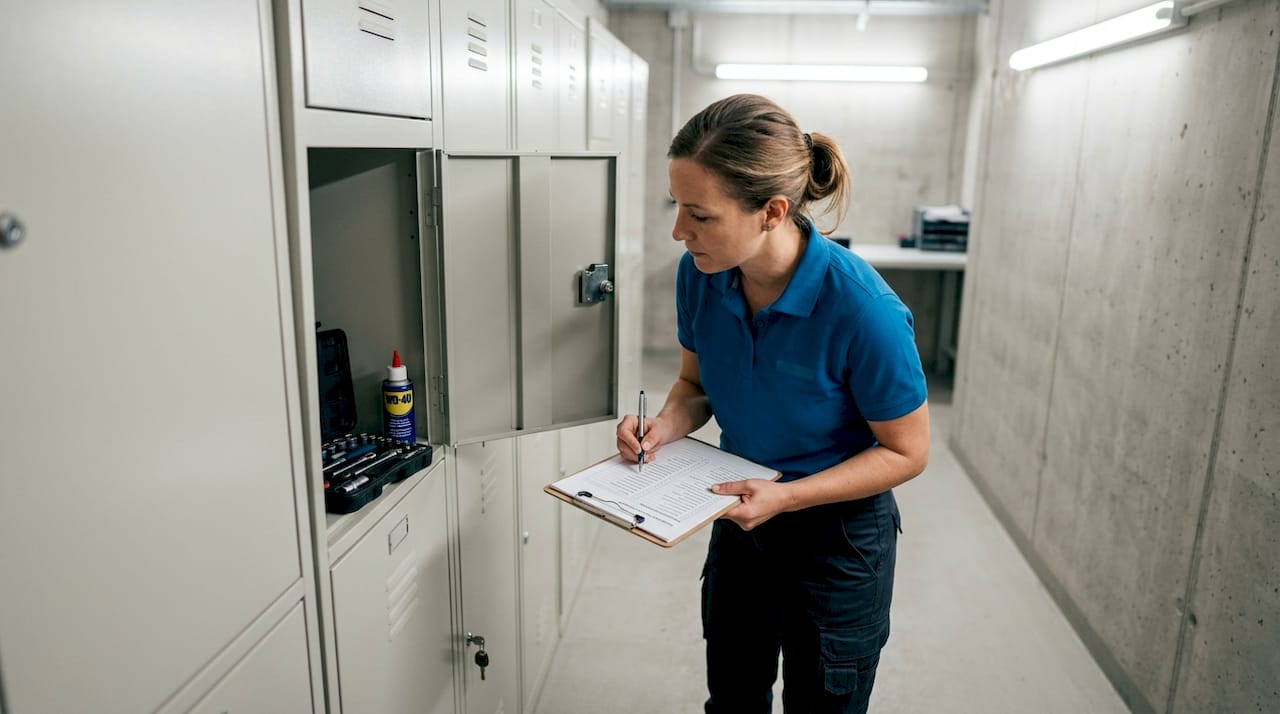
Preventive maintenance for lockers is defined as a scheduled program of inspections, cleaning, lubrication, and repairs designed to keep locker systems functional, secure, and durable over their full service life. In facility management, this practice is also called planned preventive maintenance (PPM). Property managers who apply PPM to locker systems catch small problems before they become expensive failures. The core principle is simple: regular care costs far less than emergency repair or full unit replacement. This guide covers what preventive maintenance for lockers actually involves, how to schedule it, and what failure modes it prevents.
What is preventive maintenance for lockers?
Preventive maintenance for lockers covers every scheduled task that keeps a locker system operating correctly between failures. The industry term is planned preventive maintenance, and it applies to mechanical, electronic, and structural locker components equally. Integrating locker management into broader facility maintenance reduces failure rates and long-term repair costs compared to reactive, repair-after-failure models. That gap in cost is the clearest argument for adopting a PPM program.
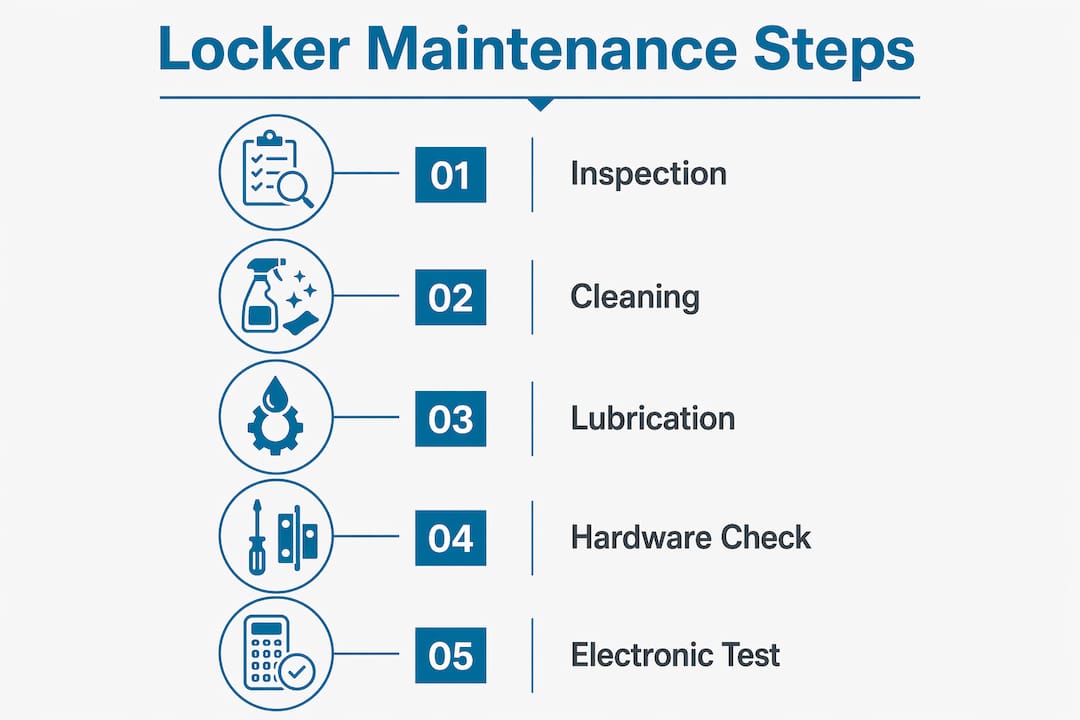
The scope of locker PPM includes five core activity types: visual inspection, cleaning, lubrication, hardware testing, and electronic system checks. Each activity targets a specific failure mechanism. Visual inspection catches misalignment and physical damage early. Cleaning removes abrasive particles that cause friction and wear. Lubrication keeps moving parts operating within their designed force range. Hardware testing confirms that locks, hinges, and fixings are secure. Electronic checks verify battery health and software function in digital lock systems.
Locker systems are not maintenance-free assets. Treating lockers as maintenance-free leads to premature lifecycle failure, while documented records, spare parts standardization, and proactive refurbishment prolong service life. That finding applies directly to multifamily properties, where locker banks handle high daily traffic from residents and delivery carriers.
What are the key tasks in a locker maintenance program?
Effective locker upkeep best practices break down into four task categories, each with a specific method and purpose.
Cleaning
Routine cleaning targeting hinge barrels, lock channels, and underside edges removes abrasive particles that cause resistance and wear. Use a dry cloth or low-pressure compressed air for metal and laminate surfaces. Avoid water-based cleaners on lock mechanisms. For high-traffic locker banks, clean contact surfaces weekly and full units monthly.
Lubrication
Standard maintenance tasks include cleaning keyways with non-residual products and lubricating moving parts with dry lubricants. Dry lubricants, such as PTFE spray or graphite powder, do not attract dust the way oil-based products do. Apply lubricant to hinges, latch bolts, and lock cylinders on a quarterly schedule. Never use WD-40 as a long-term lubricant on lock mechanisms. It displaces moisture short-term but leaves a residue that attracts grit.
Hardware inspection and tightening
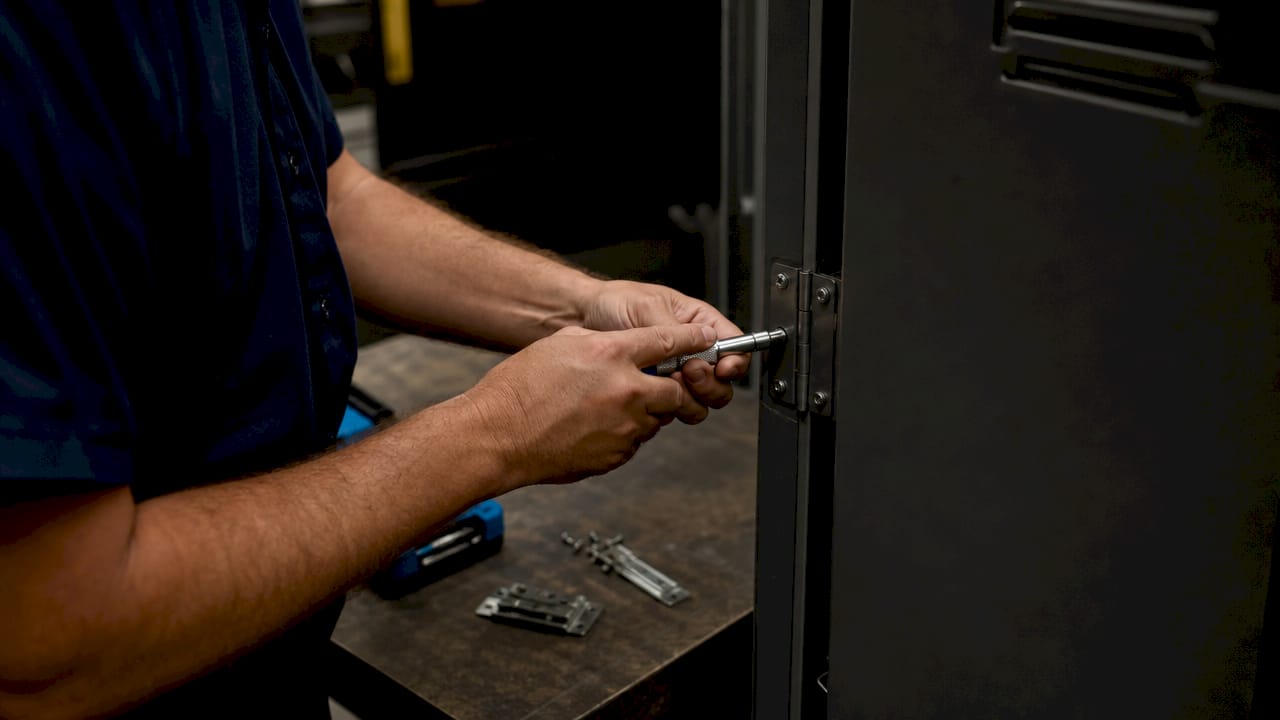
Check that door hinges are aligned, that latch bolts engage cleanly, and that all fixings are tight. A door that sags by even a few millimeters puts stress on the latch mechanism every time it closes. Tighten loose fixings immediately. Replace worn hinge pins before the door begins to bind.
Electronic system checks
Electronic locker battery failure is the leading cause of emergency lockouts. Scheduled battery replacements every 3–12 months, depending on usage, prevent costly emergency overrides. Test each electronic lock’s keypad, RFID reader, or PIN function during every quarterly inspection. Log the test result and the battery replacement date in your maintenance record.
Pro Tip: Mark battery replacement dates directly on the inside of each locker door with a permanent marker. This gives any technician an instant reference without needing to pull up a digital record.
How to schedule and implement a locker maintenance program
A structured schedule is what separates a real PPM program from occasional ad hoc repairs. Effective preventive maintenance schedules for lockers include weekly or monthly visual inspections of high-use areas, quarterly hardware inspections, and an annual review of layout and capacity. Each tier serves a different purpose.
- Weekly or monthly visual checks. Walk the locker bank and look for doors that are not closing flush, visible damage, or graffiti. Flag anything that needs follow-up. This takes under 10 minutes per bank and catches the issues that escalate fastest.
- Quarterly hardware inspections. Test every lock, tighten every fixing, lubricate all moving parts, and replace batteries in any electronic unit approaching its replacement window. Document findings in a maintenance log.
- Annual strategic review. Assess overall layout, capacity utilization, and the condition of the full locker bank. Identify units that need refurbishment or replacement. Use occupancy and usage data to guide decisions.
Classifying issues for efficient prioritization
Classifying maintenance issues into A (Safety/Security), B (Operational/Jamming), and C (Cosmetic) enables prioritizing repairs and batching work efficiently. This three-tier system prevents your team from spending the same time on a scratched door panel as on a jammed lock. Class A issues get same-day attention. Class B issues get scheduled within the week. Class C issues get batched into the next planned maintenance visit.
| Issue class | Examples | Response target |
|---|---|---|
| A: Safety/Security | Broken lock, door that will not secure | Same day |
| B: Operational | Stiff hinge, jammed latch, battery warning | Within one week |
| C: Cosmetic | Surface scratch, faded label, minor dent | Next scheduled visit |
Standardizing replacement parts is equally important. Stock the most common components for your specific locker model: hinge pins, latch bolts, lock cylinders, and batteries. A technician who arrives with the right part fixes the problem in one visit. A technician who has to order parts doubles the labor cost and extends the downtime.
Pro Tip: Create a single-page locker maintenance checklist for each inspection tier and laminate it. Technicians complete it on-site and return it to a central file. This creates an audit trail without requiring a digital system.
Common causes of locker failures and how preventive care addresses them
Understanding failure mechanisms makes maintenance decisions easier. The most common locker failures fall into four categories.
- Mechanical misalignment. Doors shift out of alignment from repeated use, thermal expansion, and building settlement. A misaligned door puts lateral stress on the latch and hinge every time it closes. Maintenance manages the force balance within locker systems by preventing small deviations caused by moisture, dust, and thermal expansion from becoming permanent structural damage. Quarterly alignment checks catch this before the latch fails.
- Lock battery failure. Electronic locks give no warning before a battery dies completely. A dead battery means a locked-out resident and an emergency call to your maintenance team. Scheduled replacement cycles eliminate this failure mode entirely.
- Corrosion and surface degradation. Moisture penetrates hinge barrels and lock channels in outdoor or high-humidity environments. Corrosion increases friction, which increases the force users apply to open doors, which accelerates mechanical wear. Regular cleaning and dry lubrication break this cycle.
- User-forced operation. Users forcing lockers that feel stiff rather than reporting resistance accelerate mechanical failure. A resident who yanks a stiff door open can strip a hinge or break a latch in a single motion. Training users to report resistance instead of forcing the door is one of the highest-return actions a property manager can take.
“Maintenance is not just fixing problems. It is managing the system’s force balance so that small deviations never become structural damage.”
Each of these failure modes has a direct preventive countermeasure. The pattern is consistent: the failure that costs the most to repair is always the one that was cheapest to prevent.
Best practices for maximizing locker system longevity
Routine inspections are the foundation, but the property managers who get the most life from their locker systems do several things beyond the checklist.
- Train residents to report resistance. Post a short notice near the locker bank asking residents to notify the office if a door feels stiff or a lock feels sluggish. This turns your residents into an early-warning system. One report of a stiff door can prevent a broken hinge that costs ten times more to fix.
- Treat lockers as mission-critical infrastructure. Lockers must be treated as mission-critical assets with documented installation records and proactive maintenance rather than as maintenance-free units. Keep a record for each locker bank that includes the installation date, model specifications, and a full maintenance history.
- Plan battery replacement proactively. Do not wait for a low-battery warning. Set a fixed replacement schedule based on your locker model’s rated battery life and your property’s usage volume. Replace all batteries in a bank at the same time to simplify future scheduling.
- Schedule refurbishment cycles before failure. A locker bank that is eight to ten years old needs a refurbishment assessment, not just routine maintenance. Identify which units are approaching end of life and budget for replacement before a wave of failures forces emergency spending.
- Run occupancy and usage audits. Knowing which lockers are used most heavily tells you where to concentrate maintenance effort. A locker that handles ten package pickups per day needs more frequent attention than one used twice a week. Usage data from smart locker systems makes this analysis straightforward.
Pro Tip: Photograph every locker bank at the start of each annual review. A visual record of condition over time is far more useful than written descriptions alone when planning refurbishment budgets.
Key Takeaways
Preventive maintenance for lockers is the most cost-effective way to extend system life, reduce emergency repairs, and keep residents satisfied with reliable package access.
| Point | Details |
|---|---|
| Define a PPM schedule | Use weekly visual checks, quarterly hardware inspections, and an annual strategic review. |
| Classify issues by urgency | Sort problems into Safety, Operational, and Cosmetic tiers to prioritize repairs efficiently. |
| Replace batteries proactively | Schedule electronic lock battery replacements every 3–12 months to prevent emergency lockouts. |
| Train residents to report resistance | Early reports of stiff doors prevent the forced operation that breaks hinges and latches. |
| Document everything | Maintenance records, installation dates, and usage audits guide smarter refurbishment decisions. |
What experience with locker systems has taught us
At Locker Solutions, the pattern we see most often is this: a property manager calls about a locker bank that has become unreliable, and when we ask about their maintenance history, the answer is usually “we fix things when they break.” That reactive approach is understandable. Lockers look durable, and they are, until they are not.
The properties that get the longest service life from their locker systems are the ones that treat maintenance as a scheduled operating cost, not an emergency fund. They keep records. They stock parts. They tell residents to report problems instead of forcing doors. These are not complicated practices. They are consistent ones.
The other thing experience teaches is that electronic locker systems require a different maintenance mindset than mechanical ones. A mechanical lock gives you physical feedback when something is wrong. An electronic lock can fail silently, with no warning until a resident is locked out at 10 p.m. Proactive battery management is not optional for electronic systems. It is the single maintenance task with the highest return on time invested.
If you are setting up a maintenance program for the first time, start with the classification system. Sorting every issue into Safety, Operational, or Cosmetic takes five minutes and immediately makes your team more efficient. Build the schedule around that framework, and the rest follows naturally.
— Locker Solutions
How Locker Solutions supports locker maintenance at multifamily properties
Property managers who want locker systems built for long-term reliability and easy upkeep will find that Locker Solutions designs with maintenance in mind. Luxer One® electronic lockers feature accessible hardware, clear battery indicators, and configurations that fit standard facility management workflows.
Whether you manage a single building or a large portfolio, Locker Solutions offers indoor and outdoor locker systems with the durability and support structure that makes a PPM program practical. For properties that handle high package volumes, package room management services reduce the maintenance burden on your team while keeping residents’ deliveries secure. Contact Locker Solutions to discuss the right configuration for your property’s size, climate, and usage patterns.
FAQ
What is preventive maintenance for lockers?
Preventive maintenance for lockers is a scheduled program of inspections, cleaning, lubrication, and hardware testing designed to prevent failures before they occur. It is also called planned preventive maintenance (PPM) in facility management.
How often should lockers be inspected?
High-use locker banks need weekly or monthly visual inspections, quarterly hardware checks, and an annual review of layout and capacity. Electronic lock batteries need replacement every 3–12 months depending on usage volume.
What causes most locker failures?
The most common causes are mechanical misalignment from repeated use, electronic lock battery failure, corrosion from moisture, and user-forced operation on stiff doors. Each failure mode has a direct preventive countermeasure in a standard PPM program.
How do I prioritize locker maintenance issues?
Classify issues as Safety/Security (fix same day), Operational such as jamming or stiff hinges (fix within one week), or Cosmetic such as scratches (batch into the next scheduled visit). This three-tier system keeps urgent repairs from being delayed by minor ones.
Do electronic lockers need different maintenance than mechanical ones?
Electronic lockers require proactive battery management that mechanical lockers do not. Battery failure causes emergency lockouts with no prior warning, so scheduled replacement cycles are a non-negotiable part of any electronic locker maintenance program.
Recommended
- Smart Lockers for Property Managers: 2026 Guide — Locker Solutions Blog
- Weatherproof lockers for smarter multifamily package management - Luxer One Locker Solutions
- Apartment locker setup guide: maximize efficiency now - Luxer One Locker Solutions
- Single Door Locker Guide for Multifamily Properties — Locker Solutions Blog
Ready for a Luxer One® package locker quote?
Tell us your unit count and we'll send right-sized pricing with a fast response time.
Get my free quote