June 27, 2026
Energy-Efficient Package Locker Systems for Apartments
Discover what is energy-efficient package locker system. Enhance security, reduce costs, and support sustainability in your apartment community.
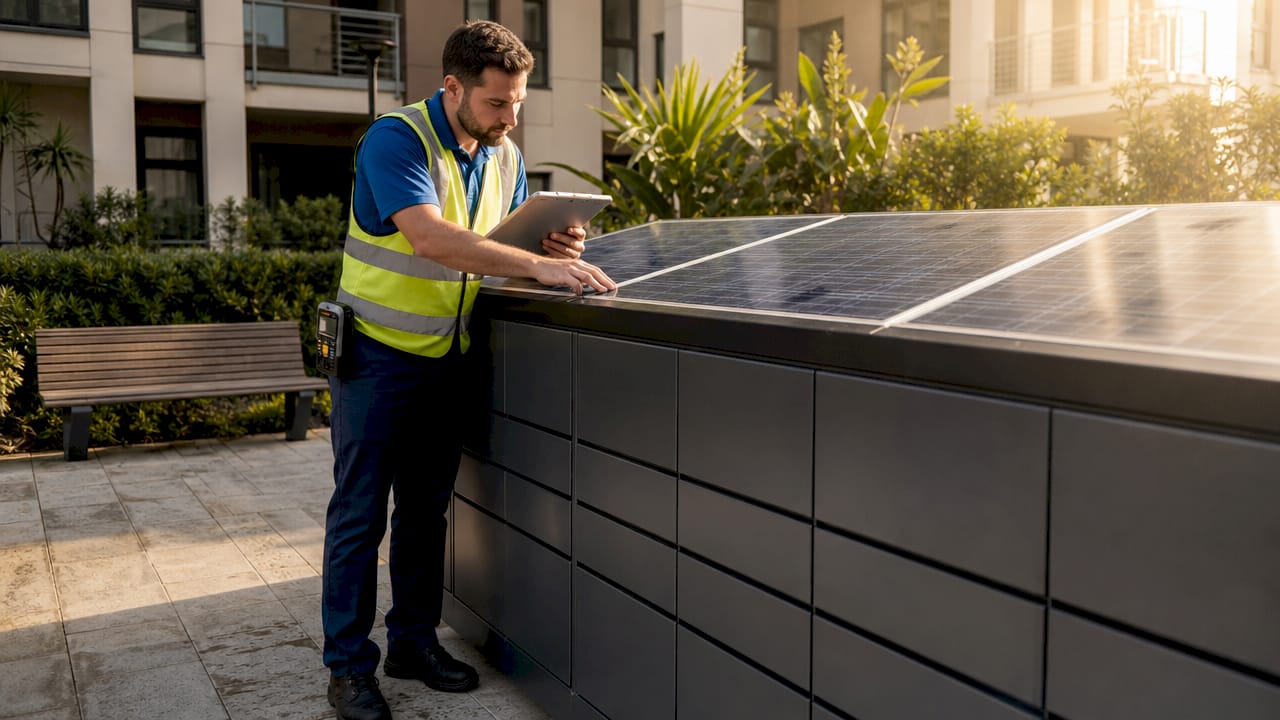
An energy-efficient package locker system is a secure, technology-enabled parcel storage solution that runs on renewable energy, primarily solar power combined with battery storage, to minimize grid electricity use while delivering reliable 24/7 package access for multifamily residents. The industry term for this category is “solar-powered smart parcel locker.” Property managers increasingly adopt these systems because they cut operating costs, support sustainability goals, and solve the growing parcel volume problem in apartment communities. Package delivery volumes at multifamily properties have risen sharply over the past decade, making secure, always-on storage infrastructure a practical necessity rather than a luxury.
What is an energy-efficient package locker system?
An energy-efficient package locker system is a self-contained parcel storage unit that generates its own electricity through solar panels and stores surplus power in onboard batteries. This architecture removes the system from dependence on the building’s electrical grid for day-to-day operation. The result is lower utility bills, fewer installation constraints, and a smaller carbon footprint compared to conventional grid-powered package delivery lockers.
The core technology works in three layers: energy generation, energy storage, and intelligent access control. Solar panels mounted on or above the locker cabinet capture sunlight and convert it to electricity. That electricity charges a high-capacity battery bank, which powers the locker’s electronics around the clock. Access control technology, including QR code scanners, infrared sensors, and GSM communication modules, handles secure resident and courier interactions through a mobile app interface, as smart parcel systems demonstrate.
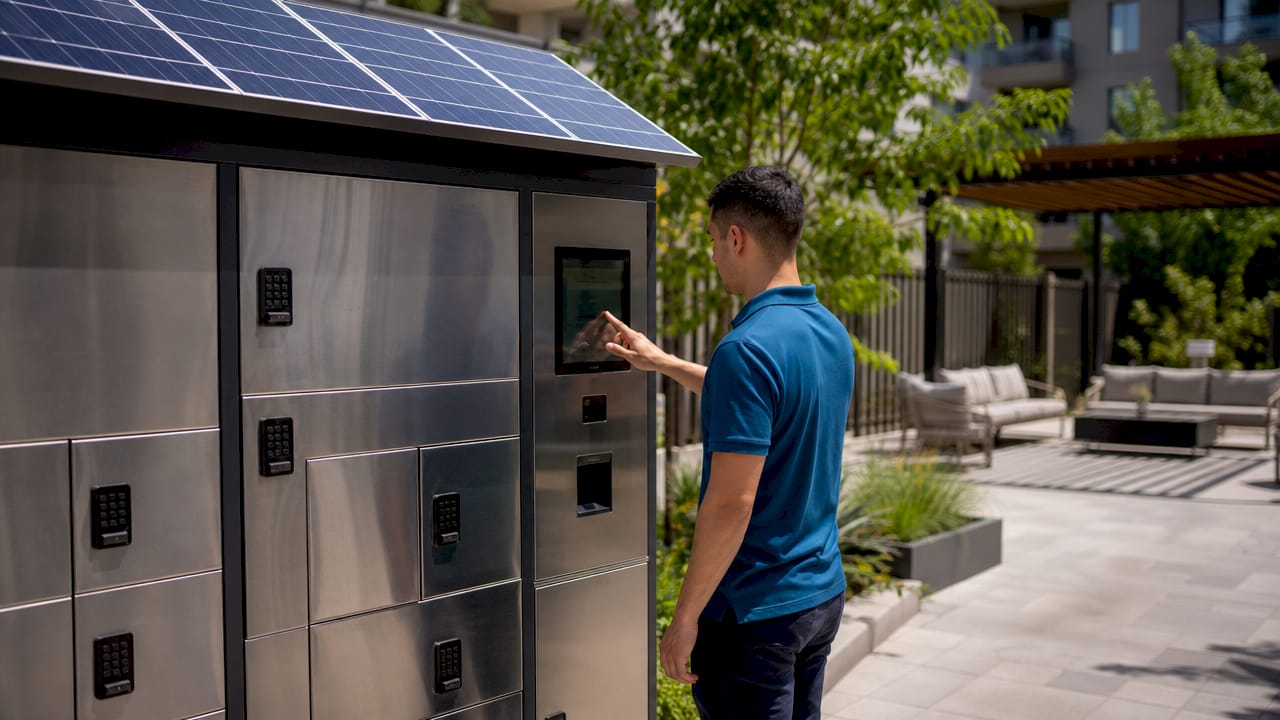
A key performance fact surprises most property managers: one hour of full sunlight powers a modern solar locker for up to seven days, and battery reserves can sustain operation for up to 30 days without any sunlight at all. That figure effectively eliminates the “what about cloudy winters?” objection that stalls many purchasing decisions. Properties in northern climates, including those in the upper Midwest and Pacific Northwest, can operate these systems year-round without grid backup.
The engineering behind this reliability is more straightforward than it sounds. A single 100 Wp solar panel can power an 80-compartment locker unit, which means the energy demand per compartment is extremely low. Manufacturers achieve this by designing the electronics for minimal standby consumption and activating high-draw components, such as door motors and displays, only during active use.
Pro Tip: When evaluating solar locker proposals, ask vendors for the battery capacity rating in watt-hours and the rated standby consumption in milliwatts. These two numbers tell you exactly how many days the system runs without sun, regardless of the marketing language.
What are the environmental and economic benefits?
Solar-powered package lockers carry a CO₂ footprint approximately 20% lower than equivalent grid-connected units. That gap matters because multifamily properties with net-zero or ESG commitments need documented, measurable reductions, not estimates. A solar locker provides a direct, auditable source of avoided grid emissions.
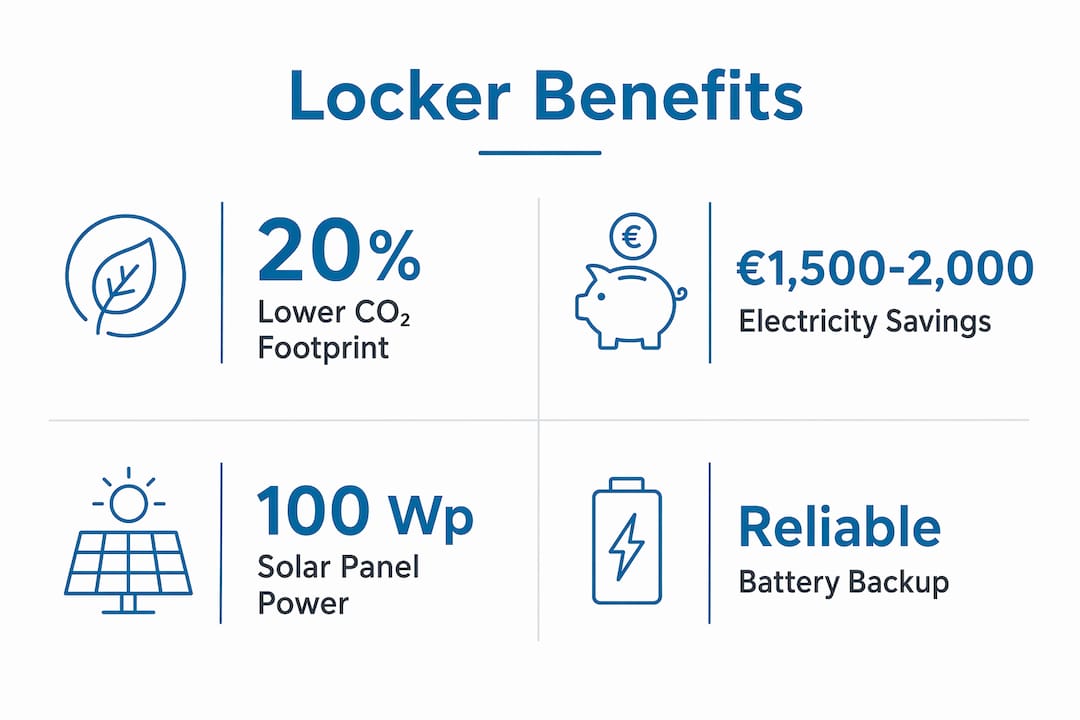
The economic case is equally concrete. Property owners can save between €1,500 and €2,000 per locker unit in electricity costs over the lifetime of the system compared to grid-powered alternatives. For a property deploying a bank of 10 units, that translates to a meaningful reduction in total cost of ownership. Lower operating costs also mean the system is less sensitive to future electricity rate increases, which adds financial predictability for long-term budget planning.
The environmental benefits extend beyond the locker itself. Centralized locker networks reduce delivery vehicle trips by consolidating multiple parcels into a single courier stop rather than multiple door-to-door attempts. Fewer truck trips mean lower street-level emissions, less traffic congestion, and improved pedestrian safety around the property. For communities pursuing net-zero greenhouse gas goals, this consolidated delivery model is a documented pathway to measurable progress.
Here is a summary of the primary benefits property managers should weigh:
- Energy cost savings: Lifetime electricity savings of €1,500–€2,000 per unit compared to grid-powered lockers
- Lower CO₂ emissions: Solar-powered units produce approximately 20% less CO₂ than grid-connected equivalents
- Reduced delivery traffic: Consolidated parcel drop-off cuts the number of courier vehicle trips to the property
- Grid independence: High-capacity battery storage supports continuous operation without utility connection
- Lower maintenance costs: Fewer electrical infrastructure requirements reduce installation and ongoing service expenses
One counterintuitive point: battery-only lockers without solar panels actually perform worse environmentally than grid-connected units because of the resource cost of battery replacement over time. Solar integration is what drives the environmental advantage, not battery storage alone.
What should property managers consider before implementation?
Successful deployment of eco-friendly package lockers starts with site assessment, not product selection. The placement of the locker cabinet determines solar panel exposure, which directly affects energy generation and battery charge cycles. South-facing installations in unshaded locations produce the most consistent output. Rooftop or canopy-mounted panels above outdoor locker banks often outperform panel-on-cabinet configurations because they capture a wider collection area.
Capacity planning is the second critical factor. A property with 100 units receiving an average of one parcel per resident per week needs a different compartment count than a 300-unit building with high-volume e-commerce residents. Undersized systems create pickup backlogs that frustrate residents and increase staff workload. Locker Solutions offers configurations across a range of building sizes, with outdoor parcel lockers designed specifically for multifamily complexes and built to handle varying weather conditions.
Follow these steps when planning your installation:
- Audit current package volume. Count average daily inbound parcels over a 30-day period, including peak weeks, to size compartment count accurately.
- Map sun exposure at candidate locations. Use a solar pathfinder tool or consult your vendor to confirm daily peak sun hours at each potential site.
- Confirm battery capacity for your climate. Properties in northern states or high-overcast regions need larger battery banks. Request the rated days-of-autonomy figure from your vendor.
- Plan courier access flow. Couriers need a clear, unobstructed path to the locker bank. Poor courier access increases failed delivery attempts and defeats the purpose of centralized storage.
- Integrate with your property management system. Resident notifications, access logs, and package status updates should feed into your existing resident communication platform.
Pro Tip: Request a site-specific solar yield estimate from your vendor before signing a contract. A reputable supplier will model your location’s average peak sun hours and confirm that the proposed panel and battery combination meets your autonomy requirements.
Security features deserve equal attention. Modern systems use QR code authentication, PIN entry, and mobile push notifications to control compartment access. Video surveillance integration adds a deterrence layer that reduces theft liability for the property. Residents access their parcels at any hour without staff involvement, which is a meaningful convenience advantage in competitive leasing markets.
How do these systems improve delivery efficiency and security?
Automated package lockers remove the three biggest friction points in apartment parcel management: missed deliveries, package theft, and staff time spent handling parcels. Each of these problems has a direct cost, and each is solved by a well-deployed locker system.
Residents benefit from 24/7 self-service pickup via PIN codes, QR codes, or mobile notifications, eliminating the need to be home during delivery windows. Couriers benefit from a single, predictable drop-off point that handles multiple parcels in one stop. Property managers benefit from a complete digital log of every delivery and pickup, which simplifies dispute resolution and reduces liability exposure.
The security architecture of these systems is worth understanding in detail:
- Compartment-level access control: Each compartment unlocks only for the assigned resident’s credential, preventing unauthorized access even if a courier makes an error
- Automated resident alerts: Push notifications or SMS messages tell residents the moment a parcel is deposited, reducing dwell time and freeing compartments faster
- Video surveillance integration: Camera coverage of the locker bank creates a documented record that deters theft and supports insurance claims
- Audit trail logging: Every access event is timestamped and stored, giving property managers a complete chain of custody for every package
The operational efficiency gains extend to resident satisfaction and retention. Properties that solve the package problem consistently report it as a leasing differentiator. Prospective residents ask about package management during tours, and the presence of a modern, automated system signals that the property takes resident convenience seriously. That perception has real value in competitive rental markets.
Consolidated delivery also reduces the number of courier vehicles circling the property. Fewer vehicle trips mean less wear on parking areas, less noise during off-hours, and a measurable contribution to the property’s sustainability profile, as NYC DOT’s centralized locker pilot demonstrated by cutting truck traffic and package theft simultaneously.
Key Takeaways
Energy-efficient package locker systems powered by solar energy deliver measurable cost savings, lower emissions, and better parcel security than grid-connected alternatives, making them a sound long-term investment for multifamily properties.
| Point | Details |
|---|---|
| Solar plus battery is the standard | One hour of sunlight powers a modern locker for up to seven days; batteries extend operation to 30 days without sun. |
| CO₂ advantage is documented | Solar-powered lockers produce approximately 20% less CO₂ than grid-connected units over their lifetime. |
| Lifetime cost savings are real | Property owners save €1,500–€2,000 per unit in electricity costs compared to traditional grid-powered lockers. |
| Site assessment drives success | Solar panel placement and battery sizing must match your property’s sun exposure and package volume before purchase. |
| Delivery consolidation multiplies benefits | Centralized locker networks reduce courier vehicle trips, cutting emissions and improving street safety around the property. |
Why solar-powered lockers are more reliable than most managers expect
The most common objection I hear from property managers is reliability. The assumption is that a solar-powered system will fail during a stretch of cloudy weather and leave residents without package access. That assumption is wrong, and the engineering data is clear on this point.
Advanced battery and firmware technologies have dispelled the myth that solar-powered lockers are less reliable than grid-connected counterparts. The systems are designed with deep discharge protection, intelligent power management, and battery reserves sized for worst-case weather scenarios. A properly specified system in a northern climate will operate through a full winter without grid backup.
The second misconception is about user acceptance. Residents adapt to automated locker pickup faster than most managers anticipate. The mobile notification workflow, where a resident receives an alert, opens an app, and scans a QR code at the locker, takes less than 60 seconds. After the first pickup, the process is intuitive. Properties that invest in a brief onboarding communication at move-in see near-universal adoption within the first month.
The longer-term opportunity is integration. Energy-efficient package lockers are a natural entry point into a broader smart building technology ecosystem. Access data, delivery patterns, and energy consumption metrics from the locker system can feed into building management dashboards, giving property managers visibility they did not have before. Properties that adopt these systems now are building the data infrastructure that will support more sophisticated automation in the years ahead.
— Locker Solutions
Locker Solutions for energy-efficient multifamily package management
Locker Solutions provides Luxer One® package lockers and automated package rooms built for multifamily residential properties of every size. The product line includes indoor and outdoor parcel lockers, refrigerated lockers for grocery and meal kit deliveries, and weatherproof kiosks designed for high-volume communities.
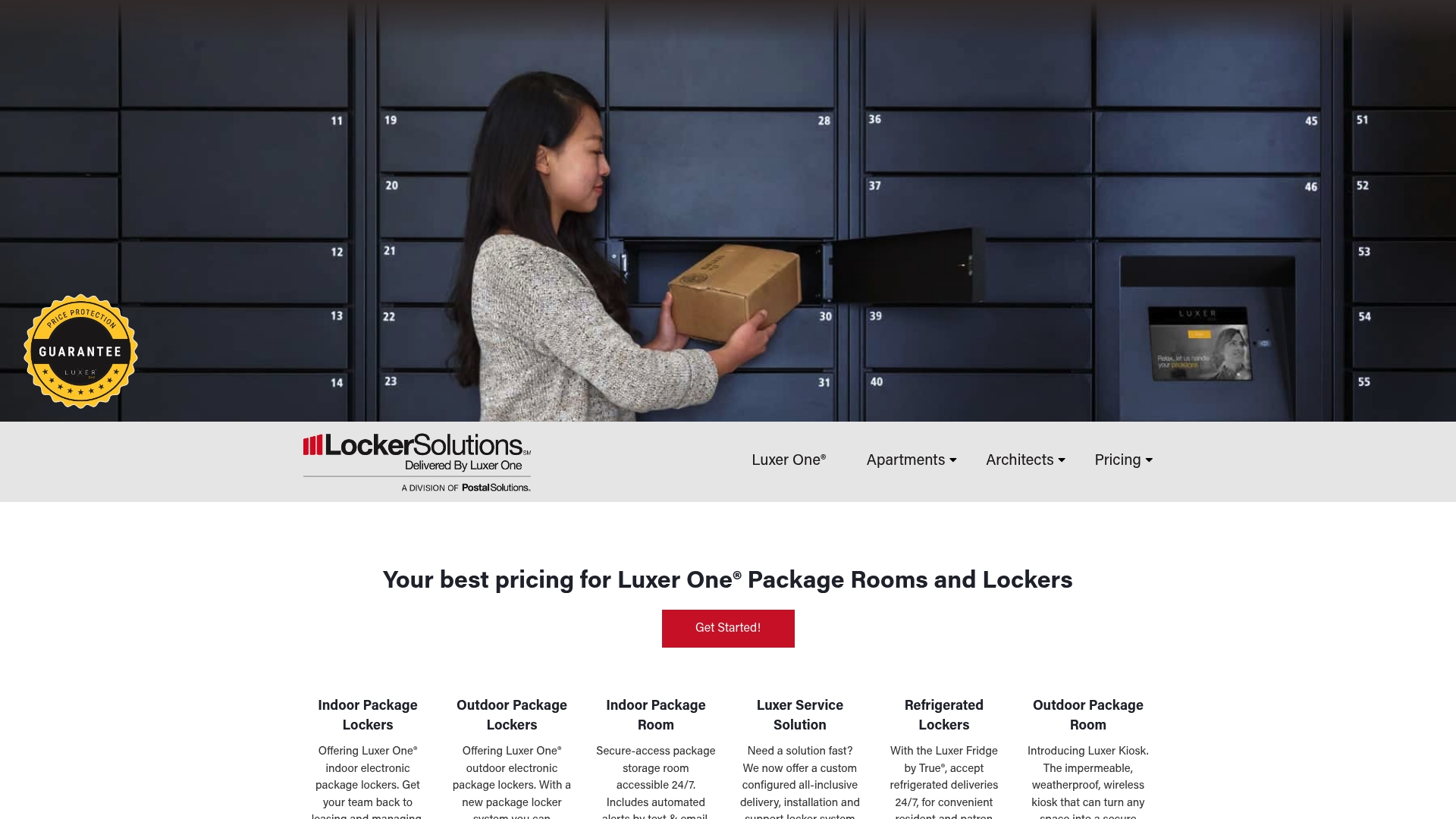
Every system includes automated resident alerts, video surveillance integration, and secure access control. Locker Solutions handles configuration, installation, and ongoing maintenance support, so your team does not carry the operational burden. Whether you manage a 50-unit building or a 500-unit community, Locker Solutions can size and deploy a system that fits your property’s package volume, climate, and sustainability goals. Contact Locker Solutions to request a site assessment and see which configuration fits your property.
FAQ
What is an energy-efficient package locker system?
An energy-efficient package locker system is a solar-powered, battery-backed parcel storage unit that operates with minimal or no grid electricity. It provides secure, automated package delivery and pickup for multifamily residents around the clock.
How reliable are solar-powered lockers in cloudy or winter climates?
Solar-powered lockers are highly reliable in low-light conditions. One hour of full sunlight powers a modern unit for up to seven days, and battery storage sustains operation for up to 30 days without any sunlight.
How much can a property save by switching to solar-powered lockers?
Property owners save between €1,500 and €2,000 per locker unit in electricity costs over the system’s lifetime compared to traditional grid-powered package delivery lockers.
Do energy-efficient lockers reduce package theft?
Yes. Automated lockers use compartment-level access control, QR code or PIN authentication, and video surveillance to prevent unauthorized access and create a documented chain of custody for every parcel.
How do these lockers support a property’s sustainability goals?
Solar-powered lockers produce approximately 20% less CO₂ than grid-connected units and reduce delivery vehicle trips by consolidating parcel drop-off, directly supporting net-zero greenhouse gas emission targets.
Recommended
- Apartment package lockers: cost, ROI, and what drives the price — Locker Solutions Blog
- Boost resident satisfaction with apartment package rooms — Locker Solutions Blog
- Blog — Luxer One® Package Locker Insights for Multifamily
- Smart package lockers for apartments: the 2026 buyer’s guide — Locker Solutions Blog
Ready for a Luxer One® package locker quote?
Tell us your unit count and we'll send right-sized pricing with a fast response time.
Get my free quote