July 5, 2026
Snow-Resistant Locker Design: A Guide for Developers
Discover what is snow-resistant locker design and why it’s vital for developers. Ensure durability and reduce liability in cold climates.
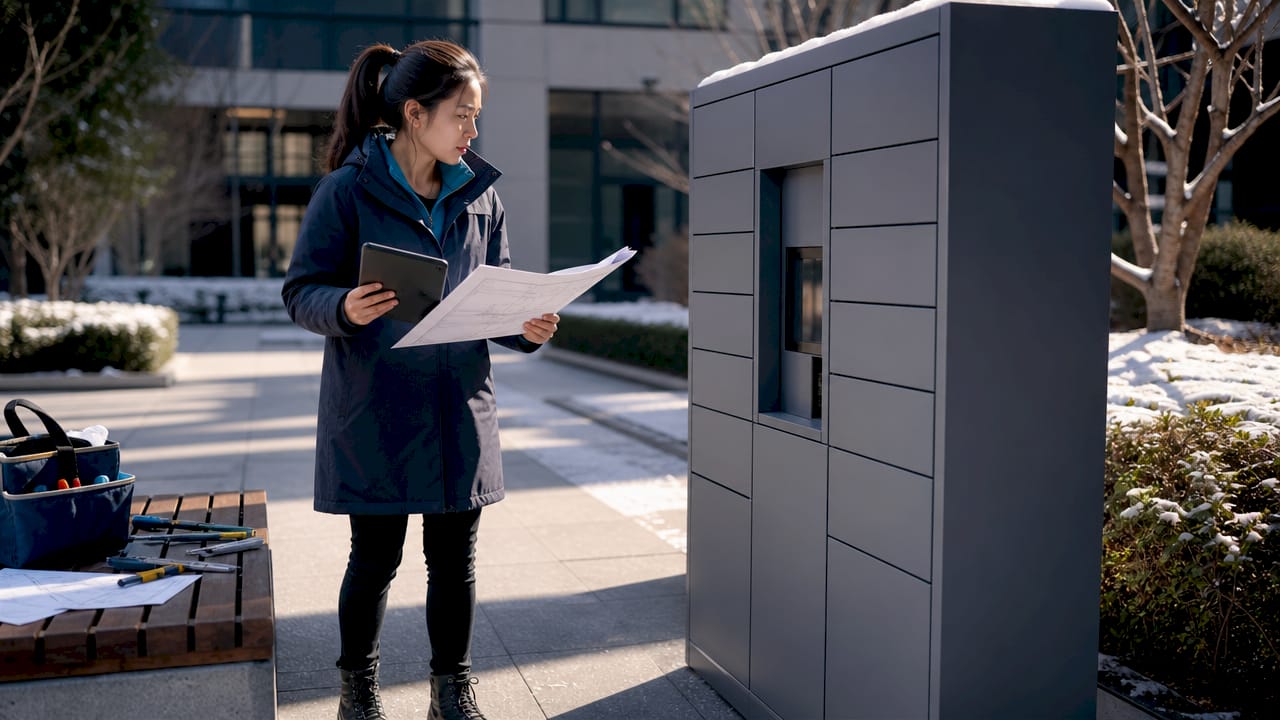
Snow-resistant locker design is the practice of engineering outdoor lockers to endure heavy snow accumulation, freeze-thaw cycles, and wind-driven moisture without structural or functional failure. For property developers, architects, and facility managers working on multifamily housing in cold climates, this is not a nice-to-have feature. It is a baseline requirement. Lockers that fail under winter conditions create liability exposure, resident complaints, and costly replacements. Understanding what is snow-resistant locker design means understanding the intersection of structural engineering, material science, and site planning.
What is snow-resistant locker design, and why does it matter?
Snow-resistant locker design is a specialized engineering approach that combines load-bearing structures, weatherproof materials, and moisture management features to keep outdoor lockers functional through the harshest winters. The industry term for this discipline is “cold-weather storage engineering,” though architects and facility managers commonly use “weatherproof locker design” and “snowproof storage design” interchangeably.
The stakes are real. Weather-related equipment damage costs the industry approximately $2.1 billion annually. That figure reflects the cumulative cost of corrosion, structural fatigue, and electronics failure across outdoor installations. Switching to climate-resilient storage can reduce maintenance costs by up to 20%, which translates directly to lower operating budgets for multifamily properties.
Three engineering pillars define a true snow-resistant locker: structural load capacity, weatherproof enclosure ratings, and moisture management. Each pillar addresses a distinct failure mode. Ignoring any one of them produces a locker that looks adequate in a catalog but fails on-site by february.
What structural features make a locker snow-resistant?
The structural core of any weather-resistant locker is its load rating. Structural load ratings for cold-weather storage range from 35 PSF to 60 PSF, with northern states commonly targeting the higher end to handle heavy, wet snow. A locker rated below this threshold risks roof deformation or full collapse under a sustained snow event.
Key structural features that define a snowproof storage design include:
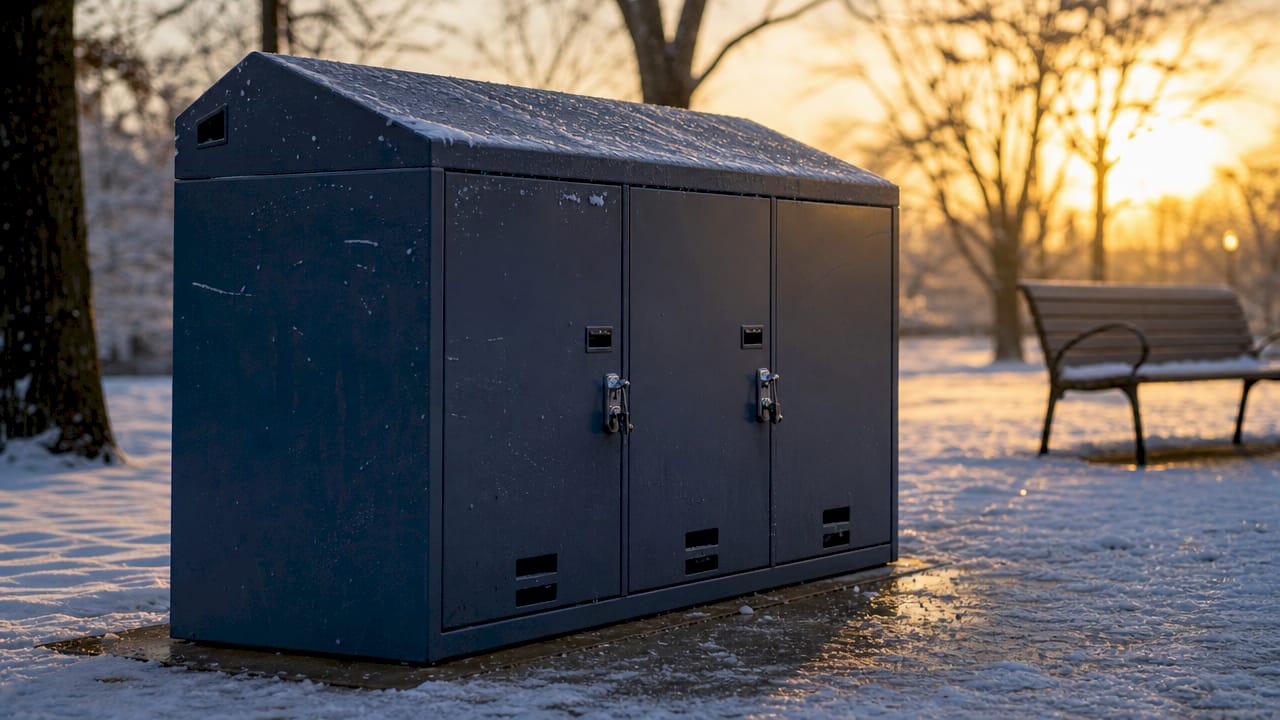
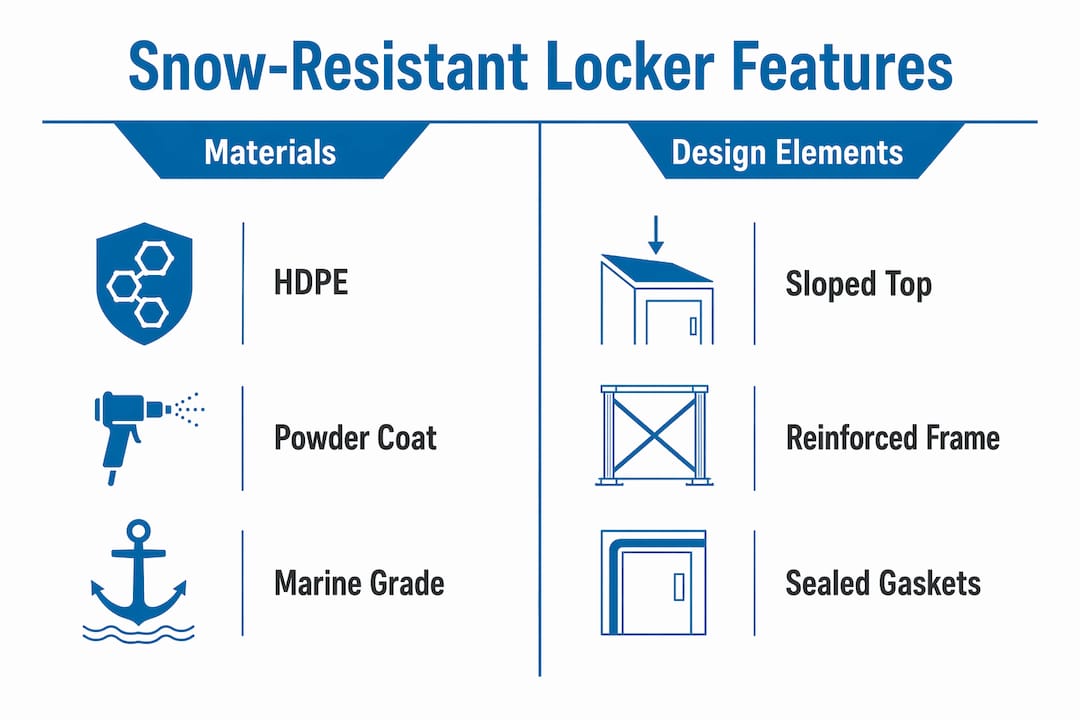
- Sloped tops. Sloped tops are non-negotiable for snow-exposed lockers. They force snow and debris to shed naturally, preventing the structural fatigue that comes from sustained static load.
- Reinforced framing. Heavy-gauge steel frames or reinforced HDPE panels distribute snow weight evenly across the unit rather than concentrating stress at joints.
- Canopy roofs. A canopy roof extends past the door frame, protecting the door interface from direct snow contact and reducing the risk of ice-sealed doors.
- Rubber door gaskets. Rubber gaskets block snow ingress, prevent critter entry, and maintain a sealed interior even when exterior temperatures drop sharply.
- Sealed enclosures. IP65-rated or higher enclosures protect internal electronics and contents from wind-driven snow and dust. IP65 protection is a globally recognized standard that confirms a unit can withstand direct water jets from any direction.
Pro Tip: Request certified engineering drawings from your locker supplier before installation. These documents confirm the unit’s snow load compliance with local building codes and protect you from liability if a structural issue arises.
The combination of a sloped top, reinforced frame, and sealed gaskets works as a system. Removing any one element creates a weak point that winter conditions will find and exploit.
How do weatherproof materials and coatings protect lockers in winter?
Material selection determines how long a durable locker design survives in a snowy environment. The wrong material corrodes, warps, or becomes brittle within a few seasons. The right material holds its structural integrity for a decade or more with minimal intervention.
The strongest options for cold-weather outdoor locker features include:
- HDPE (High-Density Polyethylene). HDPE lockers resist impact, corrosion, and UV damage simultaneously. HDPE does not rust, does not absorb moisture, and maintains flexibility at low temperatures, which prevents cracking during freeze-thaw cycles.
- Powder-coated Zintec steel. Zintec is a zinc-coated steel that resists oxidation at the base metal level. A powder coat over Zintec adds a second barrier against moisture and UV degradation.
- Stainless steel and galvanized steel. Both resist corrosion effectively in moderate cold climates. Galvanized steel is cost-effective for inland properties; stainless steel performs better where salt exposure is a factor.
- Corten steel. Corten forms a stable oxidized surface layer that actually protects the metal beneath. It is particularly effective in coastal environments where salt air accelerates standard steel corrosion.
- Phenolic laminates. These resin-bonded panels resist moisture absorption and maintain dimensional stability across wide temperature swings.
UV-resistant powder coatings prevent color fading and surface degradation caused by reflected sunlight off snow. This matters more than most facility managers expect. UV damage weakens surface coatings over time, which opens the base material to moisture attack.
Pro Tip: For properties within five miles of a coastline, specify Corten steel or marine-grade stainless steel. Standard powder-coated steel will show corrosion within two to three seasons in salt-air environments.
For humidity resistance in outdoor lockers, the material must address both liquid water and vapor. HDPE and phenolic laminates handle both. Standard painted steel handles neither without ongoing maintenance.
What ventilation and moisture management strategies prevent freeze-thaw damage?
Condensation is the hidden threat in cold-weather locker installations. When warm air inside a locker meets a cold metal surface, moisture forms. That moisture freezes overnight, expands, and damages seals, electronics, and stored items. Condensation inside lockers causes freezing and corrosion without specialized ventilation that allows airflow while blocking snow and rain.
Effective moisture management requires a layered approach:
- Ventilated but shielded openings. Vents must allow air circulation to equalize interior humidity. They must also use baffles or louvers angled to block wind-driven snow from entering directly.
- Anti-condensation coatings. Applied to interior metal surfaces, these coatings absorb minor moisture and release it slowly, preventing the rapid freeze-thaw cycle that damages seals and electronics.
- Vapor barriers. In insulated locker designs, a vapor barrier between the insulation layer and the interior surface prevents moisture from migrating into the insulation and reducing its thermal performance.
- Drainage channels. Any water that does enter needs a path out. Drainage channels at the base of the unit prevent standing water from accumulating and freezing into a solid block that stresses the frame.
- Locker orientation. Site orientation directly influences snow accumulation and ventilation effectiveness. Positioning locker banks with their backs to the prevailing wind reduces snow drift accumulation against door faces and improves natural airflow through vents.
For space-efficient locker placement in multifamily properties, orientation decisions also affect resident access paths. A locker bank positioned correctly for wind protection often also creates a more sheltered, usable access corridor for residents during winter months.
Facility managers should conduct a site wind analysis before finalizing locker placement. Prevailing wind direction in january at a Chicago property differs significantly from a Denver property, and the locker orientation strategy should reflect that difference.
How do regional climate factors influence snow-resistant locker design choices?
Not all cold climates are the same. A locker specified for a Boston property faces different stresses than one installed in Minneapolis or Vancouver. Regional variations in salt air exposure, temperature extremes, and snow density require different corrosion-resistant materials and insulation strategies.
| Climate Type | Primary Threat | Recommended Material | Key Design Feature |
|---|---|---|---|
| Coastal cold (Northeast US) | Salt air corrosion | Corten steel, marine stainless | Sealed gaskets, anti-corrosion coating |
| Northern continental (Midwest, Great Lakes) | Heavy snow load, deep freeze | HDPE, powder-coated Zintec steel | 60 PSF load rating, insulated panels |
| Prairie/high plains | Wind-driven snow, UV exposure | Galvanized steel, UV-resistant coating | Baffled vents, sloped tops |
| Mountain/alpine | Snow load, temperature swings | Reinforced HDPE, stainless steel | Reinforced roof, drainage channels |
Certified engineering drawings confirming snow load compliance with local building codes are required before installation in any of these climate zones. Local codes in cold-weather states specify minimum PSF ratings, and a locker that meets a 35 PSF standard may not satisfy a jurisdiction that requires 60 PSF.
Modular locker systems offer an advantage here. A modular design allows facility managers to add insulated panels, upgrade roof reinforcement, or reconfigure the unit layout without replacing the entire installation. This flexibility matters when a property spans multiple climate exposures, such as a high-rise with ground-level outdoor lockers on a wind-exposed north face.
Key Takeaways
Snow-resistant locker design requires structural load ratings, weatherproof materials, and active moisture management working together to protect outdoor lockers through full winter seasons.
| Point | Details |
|---|---|
| Load ratings are non-negotiable | Specify 35–60 PSF structural ratings based on local snow load codes before purchasing. |
| Material choice drives longevity | HDPE and powder-coated Zintec steel outperform standard painted steel in freeze-thaw conditions. |
| Sloped tops prevent structural fatigue | Sloped roofs shed snow naturally and reduce cumulative load stress on the frame. |
| Ventilation must block snow, not just allow airflow | Baffled vents prevent condensation without letting wind-driven snow enter the locker interior. |
| Regional climate dictates the full specification | Coastal, continental, and alpine climates each require different materials and design priorities. |
What facility managers get wrong about winter locker specs
The most common mistake I see in multifamily locker projects is treating weatherproofing as a single checkbox rather than a system. A developer specifies an IP65 enclosure, checks the box, and assumes the locker is winter-ready. Then the first hard freeze arrives, and the door seals fail because the gaskets were not rated for sustained temperatures below 0°F.
The second most common mistake is ignoring ventilation entirely. Facility managers focus on keeping moisture out, which is correct, but they forget that moisture also builds up from inside. A sealed locker with no ventilation becomes a condensation chamber. By march, the interior surfaces are corroded and the electronics are compromised.
The financial case for getting this right is clear. Weather-resilient storage reduces large-scale equipment damage costs and delivers long-term operational savings. A locker that lasts 15 years instead of 5 years does not just save replacement costs. It saves the staff time, resident disruption, and project management overhead that comes with every replacement cycle.
My advice to architects specifying lockers for new multifamily construction: treat the locker specification the same way you treat the roofing specification. Get the engineering drawings. Confirm the load ratings against local codes. Specify the materials for your specific climate zone. And build in a preventive maintenance schedule from day one. A locker that is inspected annually costs far less to maintain than one that is ignored until it fails.
— Locker Solutions
Outdoor lockers built for winter, ready for your property
Locker Solutions provides outdoor parcel lockers engineered for snowy climates, with structural ratings, weatherproof enclosures, and material specifications matched to your region’s conditions. Luxer One® outdoor units feature sloped tops, sealed gaskets, and IP65-rated enclosures as standard. Each installation includes certified engineering support and custom configuration options to fit your property’s layout and climate exposure. Access control integration is available through Luxer Access, giving residents secure, contactless locker retrieval year-round. Contact Locker Solutions for a site-specific consultation and get a locker specification that actually holds up through winter.
FAQ
What PSF rating do outdoor lockers need for snowy climates?
Snow-resistant lockers require structural load ratings between 35 PSF and 60 PSF, with northern cold-weather states typically requiring the higher end to handle heavy, wet snow accumulation.
Are lockers snow-resistant if they have an IP65 rating?
IP65 protects against wind-driven moisture and dust, but snow resistance also requires sloped tops, rubber door gaskets, and a load-bearing frame rated for snow weight. IP65 alone is not sufficient.
What materials last longest in freeze-thaw conditions?
HDPE and powder-coated Zintec steel perform best in freeze-thaw environments. Both resist corrosion, maintain structural integrity at low temperatures, and require less maintenance than standard painted steel.
How does locker orientation affect winter performance?
Positioning locker banks with their backs to the prevailing wind reduces snow drift accumulation on door faces and improves ventilation effectiveness, which lowers the risk of condensation and ice buildup inside the unit.
Do I need engineering drawings before installing outdoor lockers?
Certified engineering drawings are required in most cold-weather jurisdictions to confirm that a locker’s snow load rating complies with local building codes. Skipping this step creates structural liability and potential code violations.
Recommended
- Space-Efficient Locker Configuration: A Developer’s Guide — Locker Solutions Blog
- Outdoor Locker Humidity Resistance: A Guide for Facility Managers — Locker Solutions Blog
- Weatherproof lockers for smarter multifamily package management - Luxer One Locker Solutions
- Preventive Maintenance for Lockers: A Facility Manager’s Guide — Locker Solutions Blog
Ready for a Luxer One® package locker quote?
Tell us your unit count and we'll send right-sized pricing with a fast response time.
Get my free quote