June 29, 2026
Outdoor Locker Humidity Resistance: A Guide for Facility Managers
Learn what outdoor locker humidity resistance is and why it matters. Discover materials and design features that ensure long-lasting locker performance.
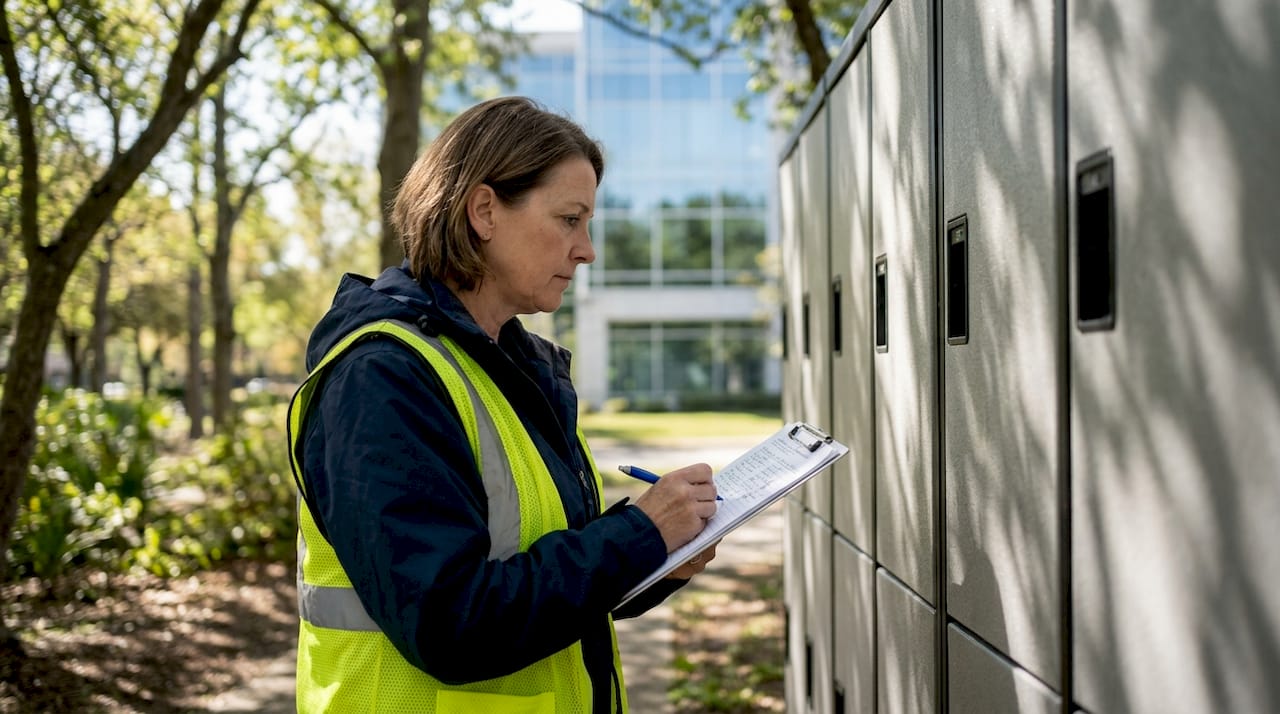
Outdoor locker humidity resistance is the ability of locker materials and designs to withstand moisture exposure without corrosion, warping, or mold growth. For property managers, facility managers, and architects specifying outdoor parcel lockers for residential properties, this capability determines how long a locker system performs before requiring costly repairs or replacement. The industry term for this broader set of protective characteristics is weather resistance, which covers moisture intrusion, UV degradation, and thermal cycling. Understanding what is outdoor locker humidity resistance means knowing which materials, coatings, and design features work together to keep lockers functional across years of outdoor exposure.
What is outdoor locker humidity resistance, and why does it matter?
Humidity resistance in outdoor lockers is defined by three measurable outcomes: the locker resists moisture intrusion, maintains structural integrity through humidity cycles, and protects stored contents from mold and corrosion. These outcomes depend on material selection, protective coatings, and design details working together. No single feature delivers full protection on its own.
Humidity causes four distinct failure modes in outdoor lockers. Moisture intrusion soaks porous materials and weakens joints. Corrosion attacks metal surfaces, especially at welds and scratches. Mold and mildew colonize damp interior surfaces and contaminate stored packages. Warping deforms panels and doors, breaking seals and creating gaps that accelerate all three other failure modes. Property managers who specify lockers without addressing all four failure modes will see premature degradation regardless of initial product quality.
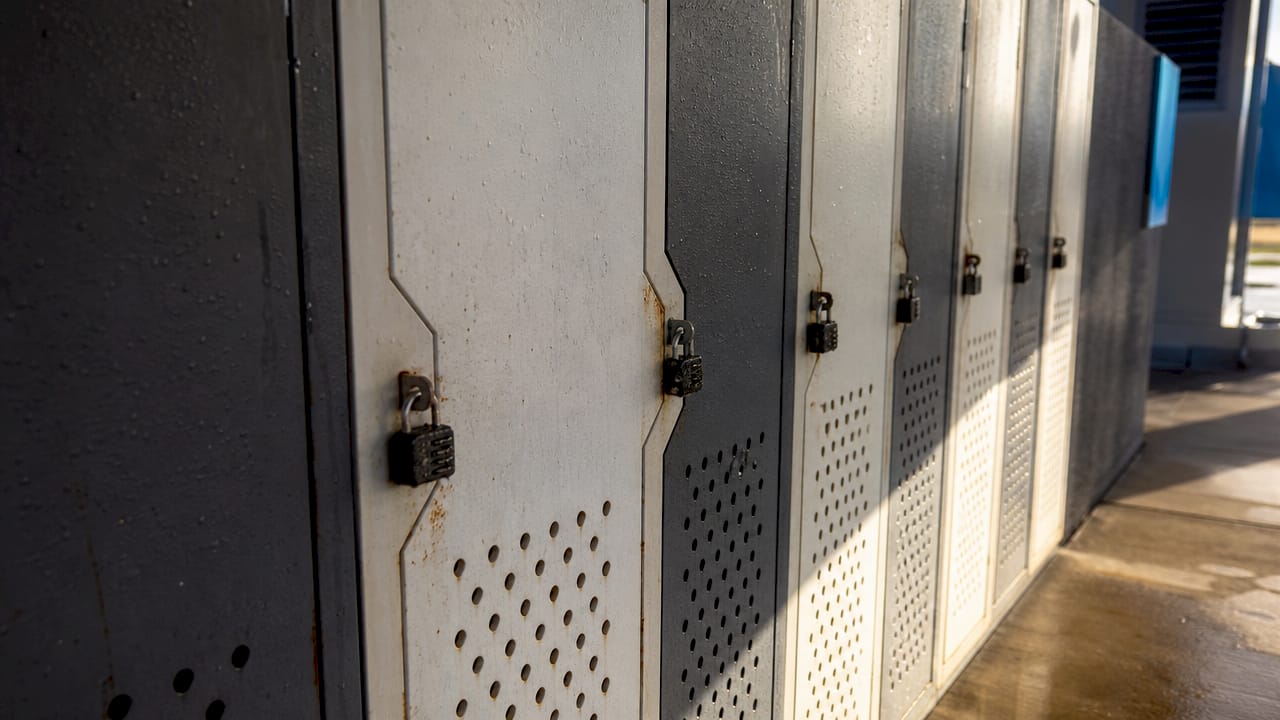
Industry warranties reflect the real performance gap between indoor and outdoor environments. Premium HDPE outdoor units carry warranties of up to 8 years for outdoor undercover use and 20 years for indoor use. That gap tells you exactly how much harder outdoor humidity works on locker materials. Architects and facility managers should treat warranty terms as a proxy for material durability when comparing options.
What materials and coatings provide effective humidity resistance in outdoor lockers?
Material selection is the single most consequential decision in specifying a humidity-resistant outdoor locker. Three material categories dominate the market: high-density polyethylene (HDPE), powder-coated galvanized or stainless steel, and phenolic resin panels. Each has a distinct performance profile.
HDPE: the non-porous standard
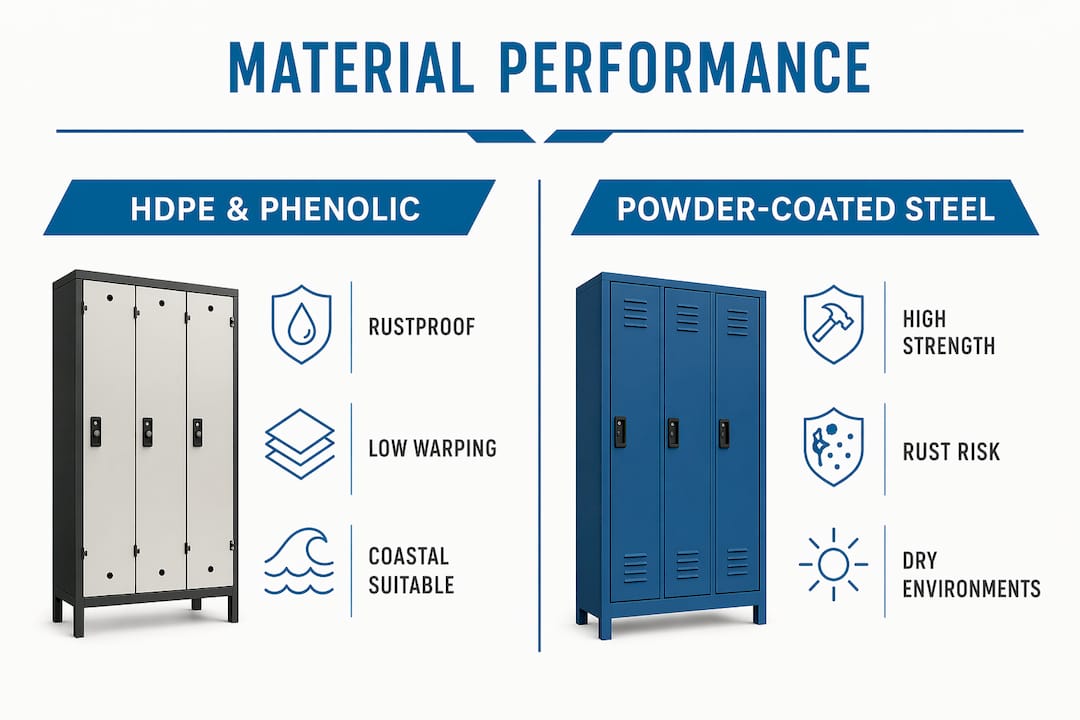
HDPE lockers are non-porous and rustproof, which means moisture cannot penetrate the panel surface or trigger oxidation. HDPE also maintains color retention and impact resistance after prolonged humidity and UV exposure. This makes it the preferred material for high-moisture and chemically exposed environments, including pool areas, coastal properties, and covered parking structures. The tradeoff is that HDPE offers less structural rigidity than steel at equivalent panel thickness.
Powder-coated steel: strong but conditional
Powder-coated galvanized and stainless steel delivers high structural strength and a clean aesthetic. The limitation is crevice corrosion. Material failure in steel lockers most often originates at welds or scratch points where the coating no longer protects the base metal. In coastal or high-humidity zones, a single coating scratch can initiate corrosion that spreads beneath the surface invisibly for months before becoming visible. Powder-coated steel performs well in covered, low-humidity installations but requires more vigilance in exposed or salt-air environments.
Phenolic resin: the dimensional stability option
Phenolic panels use deep resin saturation to achieve dimensional stability that prevents warping across humidity cycles. Unlike powder-coated steel, phenolic panels do not delaminate or warp when humidity fluctuates repeatedly. This makes phenolic the strongest choice for coastal regions and high-humidity climates where daily humidity swings are large.
| Material | Rust risk | Warping risk | Best environment |
|---|---|---|---|
| HDPE | None | Very low | Coastal, pool, high-moisture |
| Powder-coated steel | Moderate at welds | Low | Covered, low-humidity |
| Phenolic resin | None | Very low | Coastal, high-humidity cycles |
Pro Tip: Match material to your local climate before specifying. A powder-coated steel locker that performs well in a dry inland property will show crevice corrosion within two years at a beachfront apartment complex.
How do design features enhance outdoor locker humidity resistance?
Material quality sets the ceiling for humidity resistance. Design features determine whether that ceiling is reached in practice. The most common design failures are not material failures. They are engineering oversights that trap moisture, block drainage, or allow rain to pool against seals.
The following design elements separate lockers that maintain their weather resistance over time from those that degrade quickly:
- Sloped roofs. A roof pitched at a minimum angle sheds rainwater away from door seals and prevents pooling. Flat-topped lockers accumulate standing water that degrades seals within 1–3 years even on otherwise high-quality units.
- Weep holes and drainage channels. Strategic weep holes at the base of each locker compartment allow any water that enters to drain out rather than pool at the floor. Without them, even a small moisture intrusion becomes a standing water problem.
- Ventilation slots and door gaps. Locker designs with door gaps and vent slots keep the internal environment dry by allowing airflow. Ventilation must be positioned to allow moisture escape without permitting rain penetration.
- Corrosion-resistant hardware. Hinges, locks, and fasteners made from stainless steel or coated aluminum prevent rust streaking and hardware failure that can compromise door alignment and seal integrity.
- Weatherproof door seals. Gaskets and compression seals on door frames block wind-driven rain. These seals require periodic inspection because they are the first component to degrade under UV and temperature cycling.
The counterintuitive insight here is that fully sealed lockers accelerate corrosion rather than prevent it. A completely airtight locker traps humidity inside, creating a greenhouse effect that concentrates moisture against every interior surface. Breathable designs that exclude rain but allow moisture to escape consistently outperform sealed designs in long-term field conditions.
Pro Tip: When reviewing locker specifications, check for weep holes and vent placement before approving a design. A locker with no drainage path is a moisture trap regardless of how good its surface coating is.
What installation and environmental factors influence humidity resistance?
The best materials and design features still fail prematurely when lockers are installed in the wrong location or without proper site preparation. Installation decisions are within the direct control of property managers, facility managers, and architects, making them a high-leverage area for extending locker lifespan.
- Install under canopies or covered structures. Direct rainfall exposure is the primary accelerant of seal and coating degradation. Installing lockers under canopies or with sloped overhead protection reduces precipitation exposure and extends locker longevity while reducing maintenance frequency.
- Elevate lockers above grade. Mounting lockers on a raised pad or sloped concrete base prevents groundwater and surface runoff from pooling at the base. Even a few inches of elevation dramatically reduces moisture contact at the locker’s most vulnerable points: the base welds and bottom seals.
- Ensure site drainage. The surrounding pavement or landscaping should slope away from the locker installation. Standing water around the base negates the protection provided by weep holes and drainage channels.
- Account for salt air in coastal properties. Salt air accelerates corrosion on any metal surface, including coated steel. Properties within a mile of the ocean should default to HDPE or phenolic materials rather than powder-coated steel, regardless of coating quality.
- Provide shade where possible. UV radiation degrades polymer seals, plastic components, and powder coatings over time. Shaded installations extend the service life of every material category.
- Document the microclimate. Properties in humid subtropical climates, such as Florida or the Gulf Coast, face different conditions than properties in the arid Southwest. Specify lockers rated for your actual climate, not a generic outdoor standard.
Facility managers who treat installation as an afterthought consistently report higher maintenance costs and shorter locker lifespans than those who plan the site alongside the product specification.
How to maintain outdoor lockers for lasting humidity resistance
Humidity resistance is not a permanent property. It degrades with time, UV exposure, physical damage, and neglect. A structured maintenance program preserves the performance that materials and design features deliver at installation.
The core maintenance tasks for outdoor lockers are:
- Quarterly visual inspections. Check door seals for cracking or compression loss. Inspect welds and coating edges for rust spots or bubbling. Look for warping in panel faces that indicates moisture infiltration behind the surface.
- Biannual cleaning. Routine cleaning prevents mold and mildew from colonizing interior surfaces and door gaskets. Use a mild detergent and rinse thoroughly. Avoid pressure washing directly at seals, which forces water past gaskets.
- Hardware lubrication. Hinges and locking mechanisms should be lubricated with a corrosion-inhibiting product twice per year. Stiff hardware is an early indicator of moisture infiltration into the mechanism.
- Moisture absorbers in high-humidity zones. Silica gel and similar moisture absorbers placed inside locker compartments protect stored contents and internal components in very damp environments. Replace absorbers on a schedule rather than waiting for visible moisture.
- Prompt seal and coating repair. A scratched coating or cracked seal is a minor repair when caught early. Left unaddressed, it becomes a corrosion or moisture intrusion failure that requires full panel or door replacement.
- Warranty tracking. Record installation dates and warranty terms for each locker bank. Use warranty expiration as a trigger for a comprehensive condition assessment rather than waiting for visible failure.
The most common maintenance failure is reactive rather than preventive management. Facility managers who inspect on a schedule catch seal degradation and coating damage before moisture penetrates the structure. Those who wait for visible rust or warping are already managing a structural problem, not a surface one.
Key takeaways
Outdoor locker humidity resistance depends on matching the right material to the local climate, specifying breathable designs that drain and ventilate, and maintaining seals and coatings on a regular schedule.
| Point | Details |
|---|---|
| Material determines the ceiling | HDPE and phenolic panels outperform powder-coated steel in coastal and high-humidity environments. |
| Breathable beats sealed | Ventilated designs prevent internal moisture buildup better than fully sealed compartments. |
| Installation site matters | Canopy coverage, elevation, and site drainage extend locker lifespan independent of material quality. |
| Maintenance is not optional | Quarterly inspections and biannual cleaning preserve humidity resistance that degrades without attention. |
| Warranty terms signal durability | An 8-year outdoor warranty versus a 20-year indoor warranty reflects the real performance gap between environments. |
What Locker Solutions has learned about specifying for humidity
The most persistent misconception we see among property managers and architects is that weatherproofing is a binary feature. A locker either has it or it does not. The reality is that humidity resistance exists on a spectrum, and the right position on that spectrum depends entirely on your property’s specific environment and usage patterns.
We have seen powder-coated steel lockers perform well for a decade in covered, low-humidity installations and fail within two years at coastal properties where the same spec was applied without adjustment. The material was not wrong. The specification process was. Climate data, site exposure, and maintenance capacity all belong in the conversation before a product is selected.
The other pattern we consistently observe is that architects and facility managers who collaborate early in the design process produce better outcomes than those who treat locker specification as a procurement afterthought. When the architect understands the facility manager’s maintenance constraints, and the facility manager understands the architect’s site drainage design, the locker specification reflects both. That alignment is what produces a weatherproof locker installation that still performs at year eight.
Long-term cost efficiency favors upfront investment in the right material and design for the environment. A phenolic or HDPE locker costs more at purchase than a powder-coated steel alternative. Over a ten-year horizon in a humid climate, the maintenance and replacement costs on the steel option typically exceed the price difference. Specify for the environment you have, not the environment you wish you had.
— Locker Solutions
Outdoor lockers built for real weather conditions
Property managers and architects who need lockers that hold up in humid, exposed outdoor environments have a clear path forward with Locker Solutions. The Luxer One® outdoor locker line is built with weatherproof materials, ventilated designs, and corrosion-resistant hardware specifically for multifamily residential properties.
Locker Solutions offers outdoor parcel lockers configured for a range of climates and property types, from covered suburban apartment complexes to coastal high-rises. Each unit is designed to manage package delivery securely while maintaining structural integrity through years of humidity exposure. Contact Locker Solutions to discuss which configuration fits your property’s climate, site conditions, and resident volume.
FAQ
What is outdoor locker humidity resistance?
Outdoor locker humidity resistance is the ability of locker materials and designs to prevent moisture intrusion, corrosion, mold, and warping under prolonged outdoor exposure. It depends on material selection, protective coatings, ventilation design, and installation conditions working together.
Which locker material is best for humid environments?
HDPE and phenolic resin panels outperform powder-coated steel in coastal and high-humidity environments because they are non-porous, rustproof, and dimensionally stable across humidity cycles. Powder-coated steel is suitable for covered, low-humidity installations where coating integrity can be maintained.
Why shouldn’t outdoor lockers be completely sealed?
Fully sealed lockers trap internal humidity, creating a greenhouse effect that concentrates moisture against interior surfaces and accelerates corrosion. Breathable designs with ventilation slots and weep holes allow moisture to escape while excluding rain, producing better long-term performance.
How often should outdoor lockers be inspected for humidity damage?
Quarterly visual inspections are the recommended minimum for outdoor locker installations. Inspections should check door seals, coating edges, welds, and hardware for early signs of moisture intrusion or corrosion before structural damage occurs.
Does locker placement affect humidity resistance?
Yes. Installing lockers under canopies, elevating them above grade, and ensuring site drainage away from the base all reduce moisture contact and extend locker lifespan independent of the material or design specified.
Recommended
- Weatherproof lockers for smarter multifamily package management - Luxer One Locker Solutions
- Smart Lockers for Property Managers: 2026 Guide — Locker Solutions Blog
- Single Door Locker Guide for Multifamily Properties — Locker Solutions Blog
- Apartment locker setup guide: maximize efficiency now - Luxer One Locker Solutions
Ready for a Luxer One® package locker quote?
Tell us your unit count and we'll send right-sized pricing with a fast response time.
Get my free quote