July 8, 2026
Locker House Guide for Multifamily Property Managers
Discover how a locker house enhances multifamily properties. Improve package management and resident satisfaction with smart locker systems.
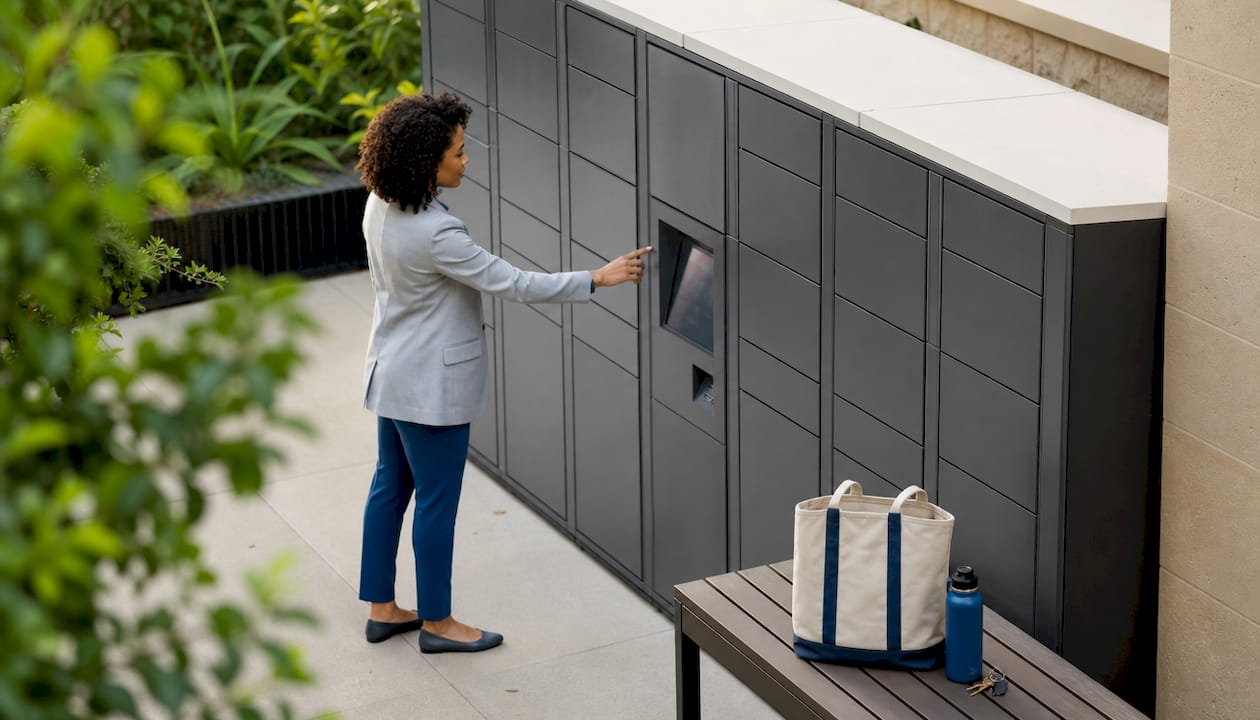
A locker house is a secure, software-enabled system of lockers designed to manage package delivery and storage in multifamily residential properties. The industry standard term is “smart locker system,” and the two phrases describe the same infrastructure. Property managers who install these systems report fewer lost packages, less staff time spent sorting deliveries, and higher resident satisfaction scores. Locker Solutions specializes in Luxer One® smart locker systems built specifically for apartment communities, covering everything from indoor electronic lockers to refrigerated units and automated package rooms.
1. What is a locker house and why multifamily properties need one
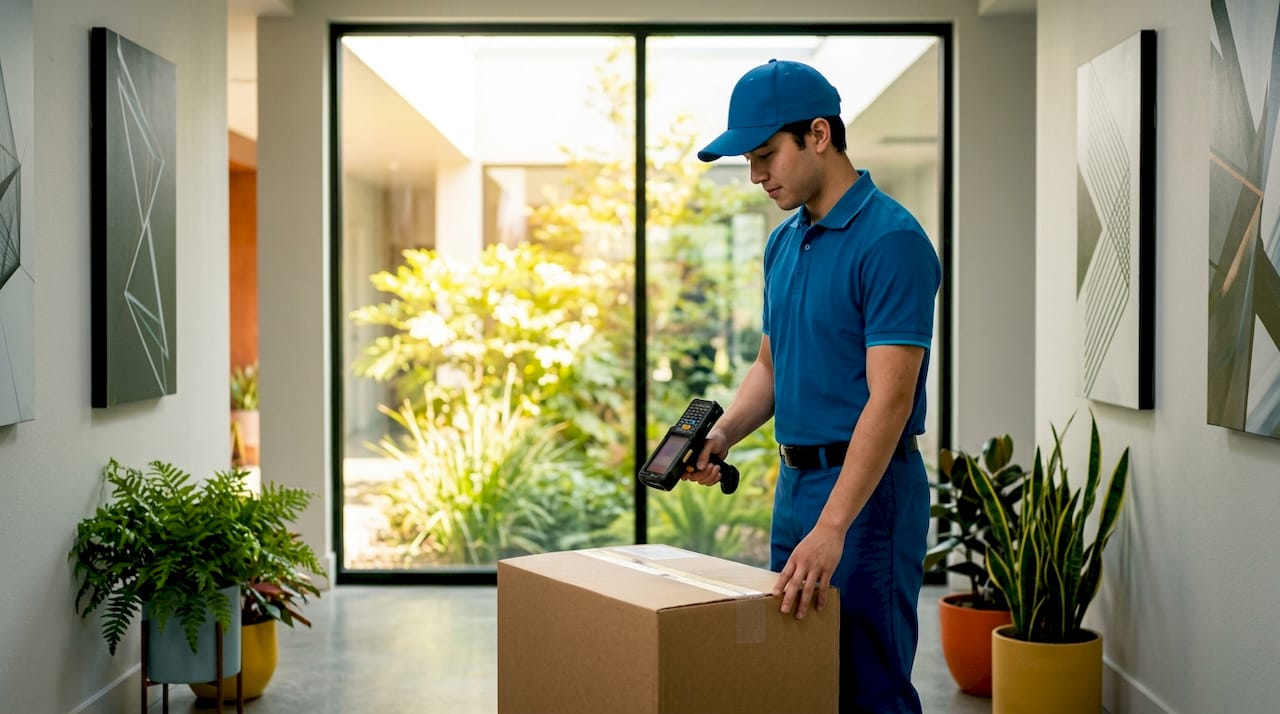
A locker house is a dedicated bank of electronic lockers that accepts, stores, and releases packages without staff involvement. Carriers deposit parcels directly into assigned compartments. Residents receive an automated notification and retrieve their package at any hour using a PIN, mobile credential, or RFID badge. This removes the front desk from the delivery chain entirely.
Package volume in apartment communities has grown faster than most properties can handle with manual processes. Staff spend significant time logging, sorting, and chasing down residents for pickups. A smart locker system eliminates that workload and reduces the risk of theft or misdelivery that comes with packages left in lobbies.
2. Top locker house types and features that enhance package management
Smart locker systems replace traditional lockers by offering mixed-use configurations in a single bank, including assigned storage, day-use compartments, and parcel exchange modes. Property managers can run all three modes simultaneously without adding hardware. That flexibility is the defining advantage over fixed-assignment locker banks.
The most common configurations for multifamily properties include:
- Indoor electronic lockers: Climate-controlled units suited for lobbies and mail rooms, with touchscreen interfaces and app-based access.
- Outdoor parcel lockers: Weatherproof units that accept deliveries around the clock without staff presence. Locker Solutions offers weatherproof outdoor lockers built for year-round exposure.
- Refrigerated lockers: Temperature-controlled compartments for grocery deliveries and meal kits, a growing need as same-day food delivery expands.
- Automated package rooms: Larger enclosed spaces managed by software, suited for high-volume properties where individual locker banks reach capacity.
Pro Tip: Choose a system that supports RFID, mobile credentials, and web-link access simultaneously. Residents adopt the method that fits their routine, and higher adoption means fewer support calls to your leasing office.
Integrating smart lockers with existing building credentials, such as RFID badges or Apple Wallet passes, reduces admin overhead and increases resident adoption compared to requiring a separate app download.
3. How smart locker software transforms property operations
The software layer is what separates a smart locker system from a metal cabinet. A cloud-based dashboard gives property managers remote control over every compartment: assign lockers, release stuck packages, view occupancy rates, and pull usage reports without leaving the management office.
Digital audit trails log every access event, which means you know exactly who opened which locker and when. That data resolves resident disputes quickly and provides evidence if a theft claim arises. It also shows you which locker sizes go unused, so you can reconfigure the bank to match actual delivery patterns.
Resident-facing benefits include:
- 24/7 package pickup: No dependency on office hours or staff availability.
- Automated mobile notifications: Residents receive an alert the moment a carrier deposits a package.
- Keyless entry: Access via PIN, QR code, RFID badge, or mobile app removes the risk of lost keys.
- Oversized package alerts: Software flags when a delivery exceeds available locker capacity so staff can intervene before a carrier leaves the parcel unattended.
Cloud-based auditing tools allow property managers to track usage patterns, optimize locker assignments, and manage allocations before shortages occur. That proactive approach prevents the bottlenecks that frustrate residents during peak delivery periods like the holiday season.
4. Cost efficiency and space optimization
A locker house pays for itself through reduced labor and lower package loss rates. That figure scales with unit count and hardware tier, but it illustrates that entry-level deployments are accessible without a major capital outlay.
Space-efficient locker configuration matters as much as unit count. A well-configured bank uses vertical space and modular sizing to fit more compartments into a smaller footprint than a traditional mail room. Properties that switch from open package shelving to a smart locker bank routinely reclaim floor space for other amenities.
| Cost factor | Impact |
|---|---|
| Staff time saved | Fewer hours spent logging and distributing packages daily |
| Package loss reduction | Digital audit trails cut theft and misdelivery incidents |
| Space reclaimed | Modular banks replace bulky open shelving in mail rooms |
| Installation cost | Quoted per property |
| Long-term flexibility | Software updates extend system life without hardware replacement |
Pro Tip: Request a locker utilization report from your current system or carrier logs before sizing a new installation. Properties consistently overestimate the number of large compartments they need and underestimate demand for small and medium sizes.
5. Key considerations when selecting and installing a locker house system
The right system for your property depends on four factors: compatibility, configurability, support, and compliance. Skipping any one of them creates problems after installation.
- Compatibility with existing infrastructure: The system must integrate with your building’s access control platform. Systems that work with existing credentials avoid the cost and friction of issuing separate key fobs or requiring residents to download yet another app.
- Configurability for changing demand: Package volume grows. A system that supports quick reconfiguration through software updates, rather than hardware swaps, protects your investment as resident count and delivery patterns shift.
- Maintenance and support reliability: Ask vendors for uptime guarantees and response time commitments. A locker bank that goes offline during peak delivery hours creates immediate resident complaints.
- Regulatory and safety compliance: Outdoor units must meet local weatherproofing and electrical codes. Refrigerated lockers require food-safe temperature certifications in many jurisdictions.
Locker Solutions provides locker systems for multifamily properties with national installation support and ongoing maintenance, which removes the burden of sourcing separate contractors for each phase of the project.
6. Real-world locker house applications across property types
Smart locker systems serve different functions depending on the property size, resident profile, and delivery volume. The table below maps common scenarios to the appropriate locker configuration.
| Use case | Recommended configuration | Key feature |
|---|---|---|
| Standard parcel delivery | Indoor electronic locker bank | Automated carrier access, resident PIN notification |
| High-volume urban property | Automated package room | Software-managed intake for unlimited carrier volume |
| Outdoor or gated community | Weatherproof outdoor lockers | 24/7 access without lobby entry |
| Grocery and meal kit delivery | Refrigerated locker units | Temperature control for perishable items |
| Temporary resident storage | Day-use locker mode | Time-limited assignments released automatically |
Refrigerated lockers address one of the fastest-growing delivery categories. Grocery delivery services and meal kit subscriptions require temperature-controlled storage, and properties that offer this feature attract residents who rely on those services daily.
Package room management works best for properties that exceed the capacity of a fixed locker bank. Software controls entry, logs every carrier visit, and notifies residents automatically, replicating the locker experience at a larger scale.
Key takeaways
A locker house succeeds when it combines software-driven flexibility with hardware suited to the property’s delivery volume, outdoor conditions, and resident access habits.
| Point | Details |
|---|---|
| Software drives value | Choose a system where configurations update through software, not hardware swaps. |
| Mixed-use modes maximize space | A single locker bank can handle assigned storage, day-use, and parcel exchange simultaneously. |
| Integration reduces friction | Systems that work with existing RFID or mobile credentials see higher resident adoption. |
| Audit trails protect everyone | Digital access logs resolve disputes and reduce theft claims at multifamily properties. |
| Refrigerated units are a differentiator | Temperature-controlled lockers meet growing demand for grocery and meal kit deliveries. |
The software-first approach is the only approach worth taking
Property managers often focus on hardware specs when evaluating locker systems: locker count, dimensions, material finish. That instinct is understandable, but it leads to the wrong decision. The hardware becomes a commodity within two years. The software is what determines whether the system still fits your operation in 2028.
We have seen properties install large, well-built locker banks that became liabilities because the software could not adapt. When a new carrier integration was needed, or when the property wanted to add a day-use mode for residents storing bikes or luggage, the system required a full hardware replacement. That is an avoidable cost.
The smart lockers for property managers that hold their value are the ones where the vendor treats software updates as a core service, not an afterthought. Before signing any contract, ask the vendor to demonstrate a live configuration change. If it takes more than a few clicks, the system is not built for the way multifamily operations actually work.
The other underrated factor is credential integration. Residents who can use their existing building fob or Apple Wallet pass to open a locker adopt the system immediately. Residents who need a separate app often skip it, which means packages sit uncollected and lockers stay blocked. Adoption is an operational metric, not a marketing one.
— Locker Solutions
Locker Solutions for multifamily package management
Locker Solutions offers a full portfolio of Luxer One® smart locker systems built for apartment communities of every size.
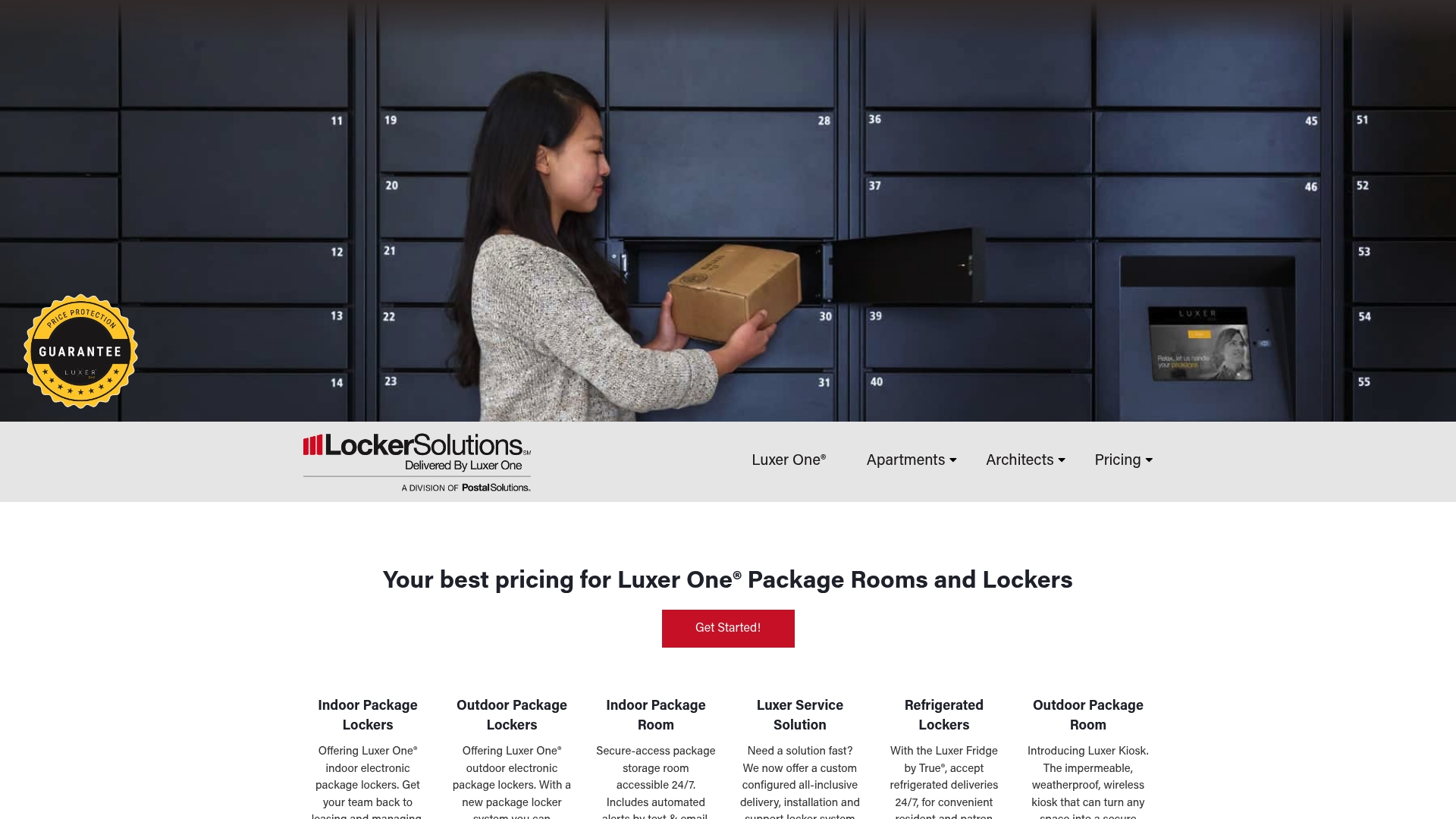
From indoor electronic lockers to outdoor weatherproof units, refrigerated compartments, and full automated package rooms, every system ships with cloud-based management software, national installation support, and ongoing maintenance. Properties get 24/7 resident access, automated notifications, and digital audit trails from day one. Contact Locker Solutions to configure a system matched to your property’s delivery volume, outdoor conditions, and resident access preferences. Visit the Locker Solutions apartment page to review the full product lineup and request a quote.
FAQ
What is a locker house in a multifamily property?
A locker house is a bank of electronic lockers that accepts carrier deliveries and releases packages to residents using PIN codes, RFID badges, or mobile credentials. It removes staff from the package handling process entirely.
How much does a locker house system cost to install?
Larger or more specialized systems, such as refrigerated or outdoor weatherproof units, carry higher costs depending on configuration and site requirements.
What access methods do smart locker systems support?
Smart locker systems support RFID badges, PIN codes, QR codes, web links, and mobile app credentials. The best systems allow all methods simultaneously so residents choose what works for them.
Can a locker house handle refrigerated deliveries?
Yes. Refrigerated locker units maintain controlled temperatures for grocery and meal kit deliveries. Locker Solutions offers refrigerated lockers designed specifically for multifamily properties where perishable delivery demand is growing.
How does locker house software improve security?
Digital audit trails log every access event with a timestamp and credential record. Property managers can review this data to resolve theft claims, identify unauthorized access attempts, and monitor locker utilization in real time.
Recommended
- Package Room Setup Guide for Multifamily Properties — Locker Solutions Blog
- Smart Lockers for Property Managers: 2026 Guide — Locker Solutions Blog
- Single Door Locker Guide for Multifamily Properties — Locker Solutions Blog
- Locker Business Models for Multifamily Properties: 2026 — Locker Solutions Blog
Ready for a Luxer One® package locker quote?
Tell us your unit count and we'll send right-sized pricing with a fast response time.
Get my free quote