July 11, 2026
Package Security Workflow Guide for Multifamily Properties
Explore our package security workflow guide for multifamily properties. Learn best practices and tools to reduce theft and streamline operations.
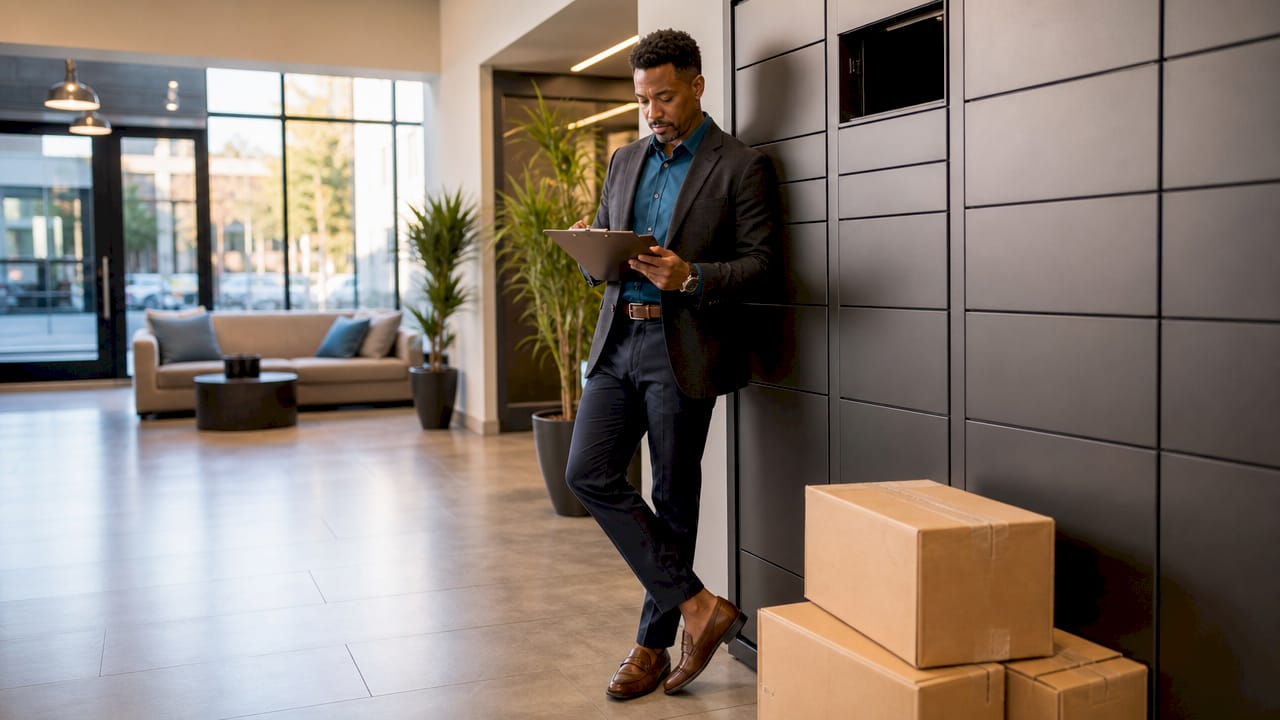
A package security workflow is a coordinated set of practices and tools that multifamily property managers use to prevent theft and manage package handling in residential communities. Package theft costs residents and properties real money, and the problem grows with every spike in online shopping. This package security workflow guide covers the physical tools, step-by-step procedures, and operational best practices that reduce theft and cut staff workload. Property managers, delivery providers, and residents each play a defined role. Locker Solutions builds the infrastructure that ties those roles together.
What physical tools are essential for a package security workflow?
The right hardware is the foundation of any secure delivery system. Without physical barriers, even the best procedures fail when a determined thief walks up to a lobby.
Secure package lockers and lockboxes deliver a 90–95% reduction in package theft compared to unprotected porches. That number reflects a simple reality: a locked compartment removes the opportunity that porch pirates depend on. For multifamily properties managing dozens of deliveries daily, electronic locker systems offer the best combination of capacity, accountability, and resident convenience.
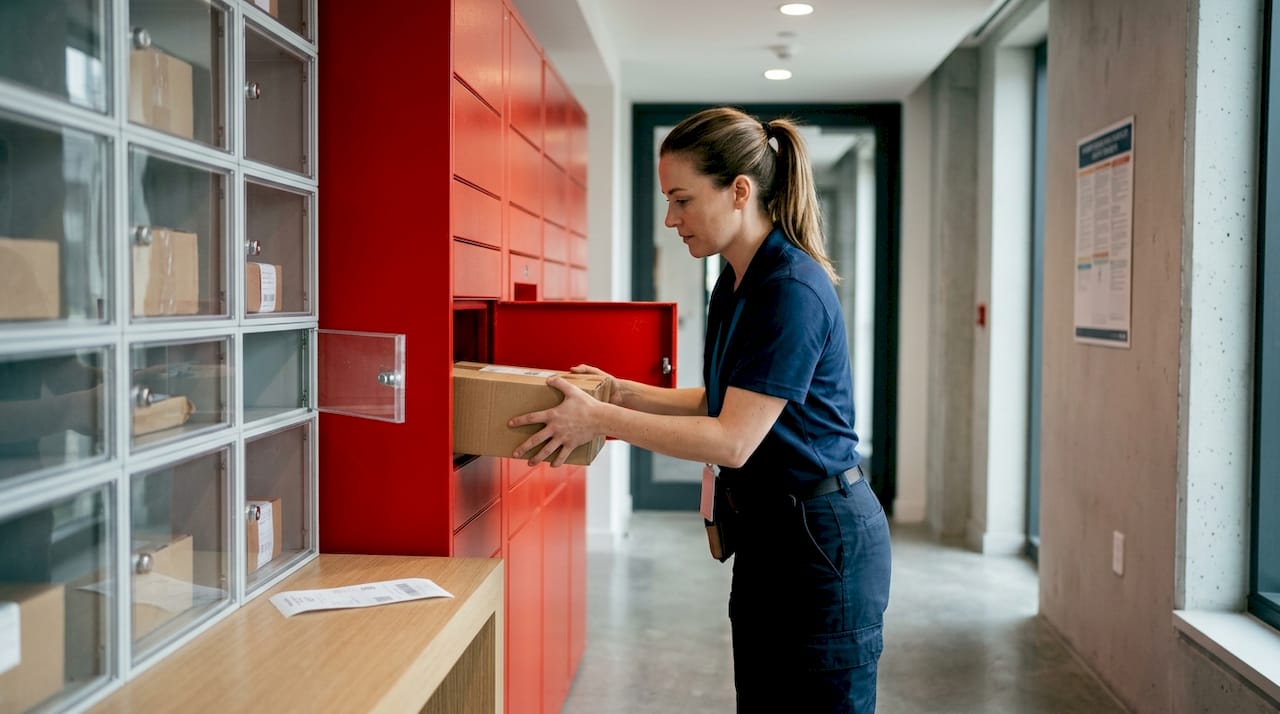
Visible security cameras reduce property-related crime by 13–50%, especially when paired with physical barriers like lockers. Cameras deter opportunistic theft but cannot physically stop a determined thief. That distinction matters for property managers who rely on cameras alone.
Comparing common physical security solutions
| Solution | Upfront cost | Theft reduction | Operational effort |
|---|---|---|---|
| Standard lockbox | $80–$300 | High | Low |
| Electronic package locker | Varies by capacity | 90–95% | Very low with automation |
| Security camera system | $100–$250 per unit | 13–50% deterrence | Moderate (monitoring required) |
| Monitored package room | Custom | Very high | Low with managed service |
| Refrigerated locker | Custom | High | Low |
Pro Tip: Combine cameras with physical locker barriers. Cameras create a record; lockers prevent the theft in the first place. Together, they cover both deterrence and physical protection.
Smart lockers with integrated access control manage multiple deliveries daily using PIN codes or app-based resident access. Physical solution selection must balance cost, capacity, ease of use, and weather resistance. Outdoor installations require weatherproof enclosures rated for your climate. Indoor systems need enough compartment variety to handle packages ranging from envelopes to large boxes.
How to design a secure package handling workflow
A well-designed workflow removes ambiguity at every handoff point. When staff, carriers, and residents each know exactly what to do, packages move through the system without gaps that thieves can exploit.
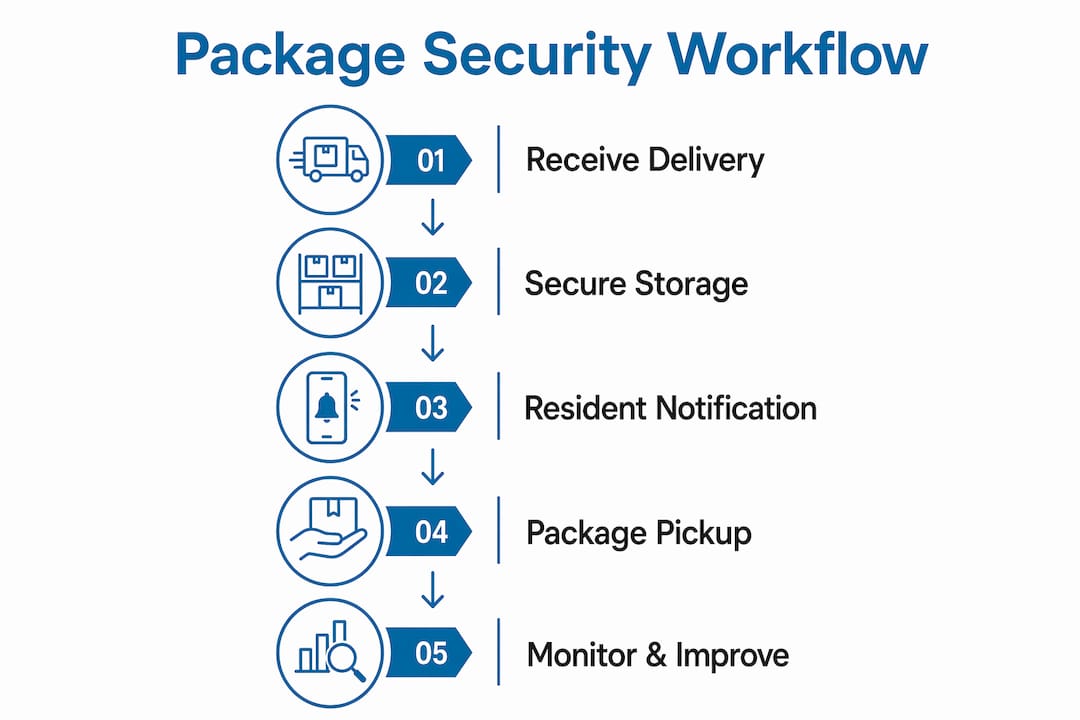
Successful package security workflows rely on ongoing staff training and clear procedures to avoid mistakes like unclear notifications or unauthorized pickups. Training is not a one-time event. Carrier protocols change, locker systems update, and resident populations turn over. Build quarterly refreshers into your property management calendar.
The core workflow follows five steps:
-
Package acceptance. Designate one secure intake point, whether a staffed desk or an automated locker bank. Carriers must deposit packages only at that point. Post clear signage and share carrier instructions with USPS, UPS, FedEx, and Amazon delivery teams serving your property.
-
Logging and verification. Every package gets logged at intake, either by staff scanning a barcode or by the locker system recording the deposit automatically. This creates a chain of custody that protects both the property and the resident.
-
Secure storage. Packages move immediately into a locked compartment or a secured package room. No package should sit in an open lobby or hallway. Automated package rooms handle high-volume properties where individual lockers reach capacity.
-
Resident notification. Send an automated alert the moment a package is logged. Email, SMS, and app notifications all work. The key is speed. A resident who knows a package arrived will retrieve it quickly, freeing the compartment for the next delivery.
-
Secure pickup. Residents access their package using a unique PIN, mobile app, or key fob. No staff involvement is needed. The system logs the retrieval time and closes the chain of custody.
Pro Tip: Use automated notifications tied directly to your locker system. Combining notification software with secure storage reduces missed pickups and cuts theft claims significantly.
Coordinate with delivery providers before you launch. Share your locker access codes, package room hours, and escalation contacts with every carrier. A carrier who cannot access your locker bank will leave packages in the lobby, defeating the entire system.
What operational best practices prevent package theft?
Physical tools handle the hardware side. Operational practices handle the human side. Both are required for a workflow that holds up under real conditions.
Effective mitigation of package theft requires collaborative workflows among property managers, delivery providers, and residents. The USPS Office of Inspector General identifies multi-stakeholder cooperation as the defining factor in last-mile theft prevention. No single party can solve the problem alone.
Key operational practices that protect packages and support your security protocol for shipping:
- Restrict access hours. Limit package room or locker area access to reasonable hours. Unrestricted 24-hour access increases the window for unauthorized entry.
- Require signatures for high-value deliveries. Flag units that regularly receive high-value items and require carrier confirmation before deposit.
- Maintain audit logs. Every locker system should generate a timestamped log of deposits and retrievals. Export these logs weekly and store them for at least 90 days.
- Enforce a package pickup window. Notify residents that unclaimed packages will be moved to a secondary secure location after 72 hours. This keeps locker capacity available and reduces overflow.
- Educate residents. Send a one-page guide at move-in explaining how the locker system works, how to retrieve packages, and who to contact for issues. Residents who understand the system use it correctly.
That gap makes prevention far more cost-effective than relying on claims. Document every theft attempt with locker system logs and camera footage. This evidence supports both internal incident reports and any insurance claims residents file.
A layered security approach combining physical controls, workflow procedures, and resident collaboration yields the strongest theft mitigation. No single layer is sufficient on its own.
How do you troubleshoot and improve your package security workflow?
Even well-designed workflows develop friction over time. Delivery volumes grow, resident behavior shifts, and carrier protocols change. Recognizing bottlenecks early prevents small problems from becoming theft incidents.
The most common failure points in package handling processes are missed notifications, locker capacity shortfalls, and unauthorized access attempts. Missed notifications usually trace back to incorrect contact information in your resident database. Audit resident contact records every quarter and prompt residents to update their preferences during lease renewals.
Locker capacity shortfalls happen when residents delay pickup. The 72-hour pickup window policy described above directly addresses this. If overflow persists, consider adding a monitored package room alongside your locker bank. Package rooms handle oversized deliveries and serve as overflow storage without requiring staff to manage individual compartments.
Unauthorized access attempts require a different response. Review locker system logs for failed access codes or repeated entry attempts at unusual hours. Pair that data with camera footage to identify patterns. If a specific entry point shows repeated attempts, add a secondary camera angle or upgrade the access control hardware at that point.
Refrigerated lockers address a growing workflow gap. Grocery delivery, meal kits, and pharmacy shipments require temperature control that standard lockers cannot provide. Properties that add refrigerated locker capacity report higher resident satisfaction scores and fewer spoilage complaints.
Measure workflow performance with three metrics: theft incidents per month, average package pickup time, and resident satisfaction scores tied to package handling. If theft incidents drop to near zero but pickup times stretch beyond 48 hours, your notification system needs attention. If satisfaction scores lag despite low theft, residents may find the retrieval process confusing. Both problems have operational fixes that do not require new hardware.
Key Takeaways
A layered package security workflow combining physical lockers, automated notifications, and multi-stakeholder coordination delivers the strongest theft prevention and the lowest operational burden for multifamily property managers.
| Point | Details |
|---|---|
| Physical barriers are non-negotiable | Secure lockers and lockboxes cut package theft by 90–95% compared to unprotected delivery points. |
| Cameras work best paired with barriers | Cameras deter opportunistic theft but cannot physically stop determined thieves without a locker or lockbox in place. |
| Automation reduces staff workload | Automated notifications and locker access eliminate manual package management and missed pickup issues. |
| Multi-stakeholder coordination is required | Property managers, carriers, and residents each have a defined role; gaps in any one role create theft opportunities. |
| Measure and adjust regularly | Track theft incidents, pickup times, and resident satisfaction scores to identify and fix workflow gaps before they escalate. |
What working with multifamily package security has taught us
The properties that struggle most with package theft are not the ones with bad hardware. They are the ones with good hardware and no workflow behind it. A locker bank sitting in a lobby with no carrier instructions, no resident training, and no notification system is just an expensive piece of furniture.
The insight that changes how most property managers think about this problem is simple: package security is a coordination problem, not just a technology problem. The USPS Office of Inspector General reached the same conclusion. Physical tools create the conditions for security. Procedures and communication make security real.
We have also seen properties over-invest in cameras and under-invest in access control. Cameras generate footage. Access control prevents the incident from happening. When budgets are tight, a well-placed locker system with PIN access delivers more measurable theft reduction than an expanded camera network.
The next frontier for multifamily package security is refrigerated delivery. Grocery and pharmacy deliveries are growing faster than standard parcel volume at many properties. Properties that plan locker infrastructure now for refrigerated capacity will avoid a costly retrofit in two or three years.
The workflow itself is not complicated. Accept, log, store, notify, retrieve. What makes it work is consistency. Every carrier, every staff member, and every resident following the same steps every time. That consistency is what turns a package security workflow from a policy document into actual theft prevention.
— Locker Solutions
Locker Solutions for multifamily package security
Property managers who want to move from policy to practice need infrastructure that handles real delivery volumes without adding staff hours.
Locker Solutions provides Luxer One® indoor and outdoor electronic package lockers, refrigerated lockers, automated package rooms, and weatherproof kiosks built for multifamily properties. Each system includes automated resident notifications, PIN and app-based access, and video surveillance integration. The package room management service handles operations so your staff can focus on resident experience rather than package logistics. For properties evaluating locker configurations, the full product catalog covers options by size, capacity, and climate requirement. Locker Solutions also offers rapid deployment and custom configurations to fit properties of any size.
FAQ
What is a package security workflow?
A package security workflow is a coordinated set of procedures and physical tools that property managers use to accept, store, and return packages to residents without theft or loss. It covers every step from carrier delivery to resident pickup.
How much does a package locker system reduce theft?
Residential properties with secure package lockers or lockboxes see a 90–95% reduction in theft compared to unprotected delivery points. That reduction reflects the removal of the open-access opportunity that most porch theft depends on.
Do security cameras alone prevent package theft?
Cameras reduce property-related crime by 13–50% as a deterrent, but they cannot physically block a theft. Combining cameras with physical barriers like lockers or lockboxes produces the strongest results.
Who is responsible for package security in a multifamily property?
Package security requires coordination among property managers, delivery carriers, and residents. The USPS Office of Inspector General identifies multi-stakeholder cooperation as the key factor in preventing last-mile theft.
What should I do when a package is stolen despite security measures?
Document the incident using locker system audit logs and camera footage immediately. Report the theft to local law enforcement and notify the carrier.
Recommended
- Step by Step Package Management for Multifamily Properties — Locker Solutions Blog
- Step by Step Resident Package Workflow for Multifamily — Locker Solutions Blog
- How to Streamline Package Management for Multifamily Properties — Locker Solutions Blog
- Package security for multifamily: Why it matters — Locker Solutions Blog
Ready for a Luxer One® package locker quote?
Tell us your unit count and we'll send right-sized pricing with a fast response time.
Get my free quote