June 11, 2026
How to Streamline Package Management for Multifamily Properties
Discover how to streamline package management for multifamily properties. Enhance delivery accuracy and free up staff for more important tasks!
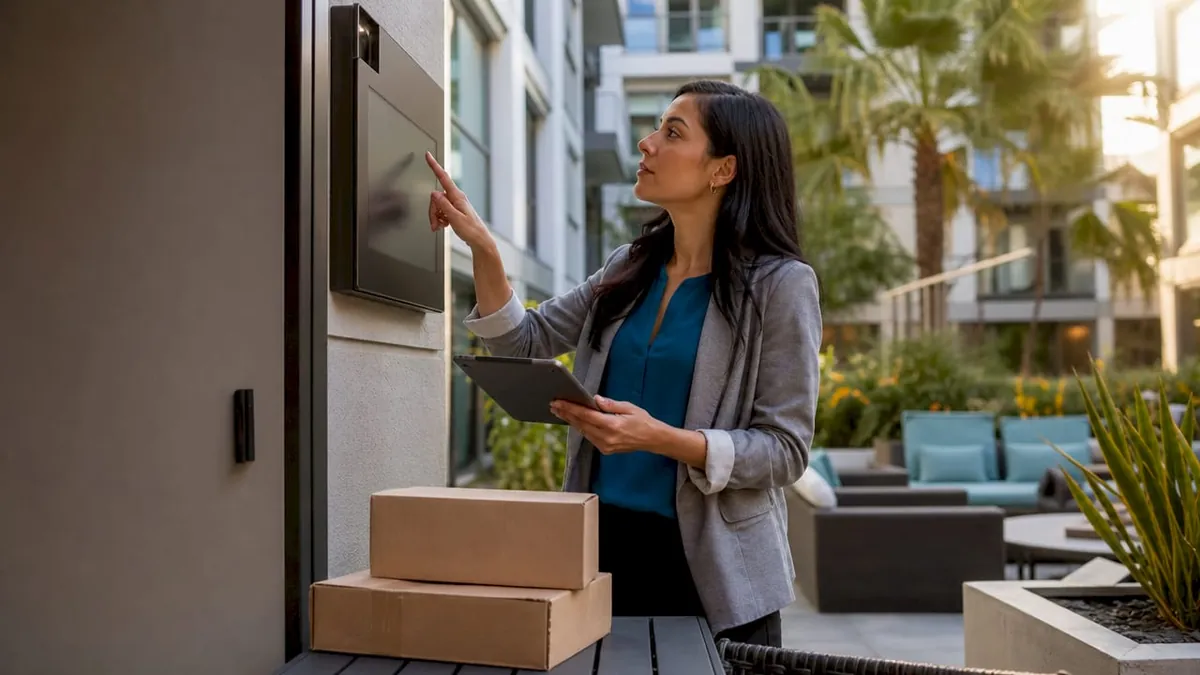
Effective package management in multifamily residential properties is defined as the combination of centralized tracking, standardized staff workflows, and technology-enabled locker systems that reduce manual handling and improve delivery accuracy. Property managers who get this right spend less time fielding resident complaints, lose fewer packages to theft, and free up leasing staff for higher-value work. Tools like Luxer One smart lockers, centralized tracking dashboards, and documented standard operating procedures (SOPs) form the operational backbone of any property that handles high package volume. This article walks you through how to improve package management at every stage, from choosing the right technology to locking down your workflows.
What tools and technologies are essential for streamlining package management?
The most effective way to optimize package delivery at a multifamily property starts with a centralized tracking dashboard that consolidates data from every carrier your residents use. Modern tracking platforms support over 1,700 carriers globally, which means your staff no longer needs to log into separate portals for UPS, FedEx, Amazon, or DHL. Automated carrier detection eliminates manual entry errors and delivers real-time status updates to both staff and residents. That single change alone removes a significant portion of daily front-desk interruptions.
Beyond tracking, the physical infrastructure matters just as much. Smart package lockers and automated package rooms improve security, reduce theft, and automate resident retrieval without requiring staff involvement at every step. Luxer One offers indoor, outdoor, and refrigerated locker configurations designed specifically for multifamily properties. Refrigerated lockers, in particular, address the growing volume of grocery and meal kit deliveries that standard lockers cannot accommodate.
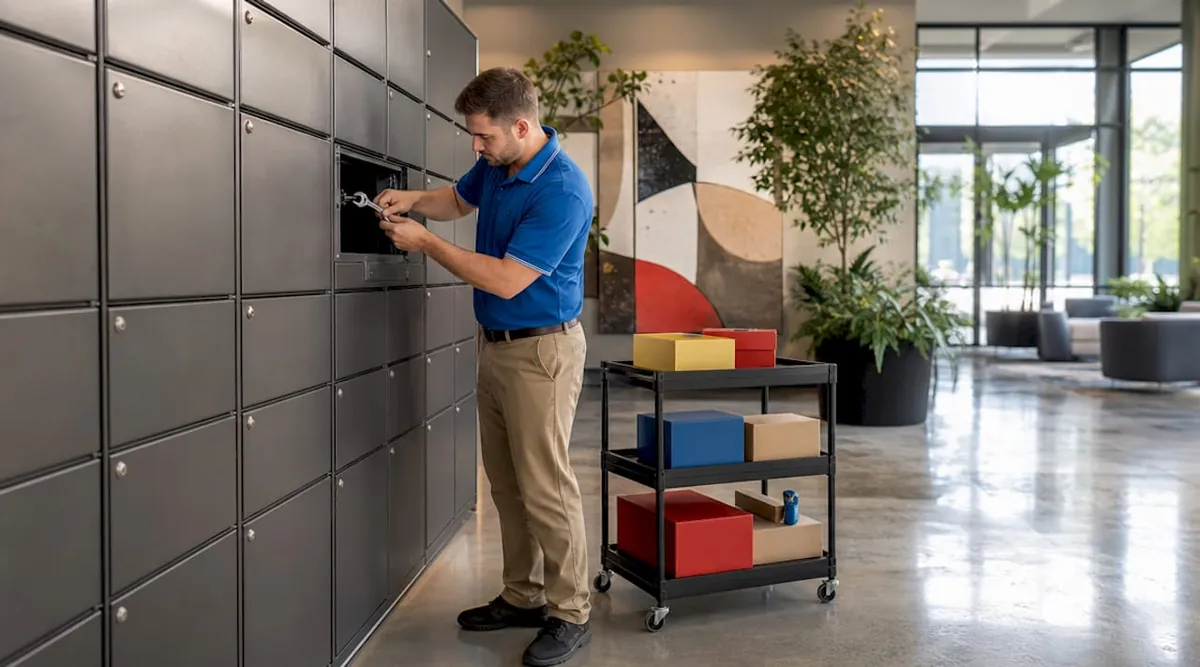
Here is a quick comparison of the primary tool categories available to property managers:
| Tool type | Primary benefit | Best for |
|---|---|---|
| Centralized tracking dashboard | Real-time multi-carrier visibility | Properties with high daily volume |
| Smart package lockers (indoor) | Secure, self-service resident pickup | Mid-rise and high-rise buildings |
| Smart package lockers (outdoor) | 24/7 access in any weather | Garden-style and suburban communities |
| Refrigerated lockers | Temperature-controlled storage | Properties with frequent grocery deliveries |
| Automated package rooms | High-capacity, camera-monitored storage | Large communities with 200+ units |
Pro Tip: Look for platforms that integrate data from 200+ delivery channels into a single dashboard. That unified view lets you spot delivery exceptions across multiple properties without switching screens.
The right combination of tools depends on your property’s volume, layout, and resident demographics. A 50-unit boutique building has different needs than a 400-unit suburban community. Start with tracking, then layer in physical infrastructure as volume justifies the investment.
How to standardize workflows to simplify package receiving and notifications
Standardized workflows are the single biggest efficiency gain available to property managers, and most teams underestimate how much inconsistency is costing them. When different staff members log packages differently, notify residents through different channels, or store packages in different locations, the result is what operations professionals call “dependency hell.” Mixed workflows cause minor changes to cascade into broader disruptions, turning a simple missed delivery into a multi-step recovery process.
The fix is a single, property-wide SOP that every staff member follows without exception. Think of it like a lockfile in software development. Documented workflows create deterministic, repeatable processes where each delivery session produces the same outcome regardless of who is on shift. Without that frozen record, each package intake risks unexpected behavior that disrupts both staff and residents.
Follow these steps to build a standardized package workflow at your property:
- Map your current process. Walk through every step from carrier arrival to resident pickup. Document what actually happens, not what you think happens.
- Identify failure points. Note where packages get misplaced, where notifications are delayed, and where residents most often call to follow up.
- Write a single SOP. Cover carrier check-in, package logging, locker assignment or storage location, resident notification method, and pickup confirmation.
- Schedule batch notification windows. Rather than sending alerts ad hoc, set two or three daily notification windows. This reduces noise and sets resident expectations.
- Train every staff member on the SOP. Run a 30-minute walkthrough with your team and post the SOP at the package intake station.
- Audit compliance monthly. Spot-check logs and ask residents for feedback to catch drift before it becomes a habit.
Pro Tip: Standardizing on one primary workflow prevents widespread failures caused by process conflicts. Resist the urge to let individual staff members “customize” their approach. Consistency is the product.
A well-documented SOP also makes onboarding faster. New hires can follow the process correctly from day one instead of learning by trial and error during peak delivery periods.
How to implement smart package lockers at your property
Installing smart lockers is not a plug-and-play process. Properties that treat it as one end up with underutilized hardware and frustrated residents. A structured implementation approach makes the difference between a system that runs itself and one that creates new problems.
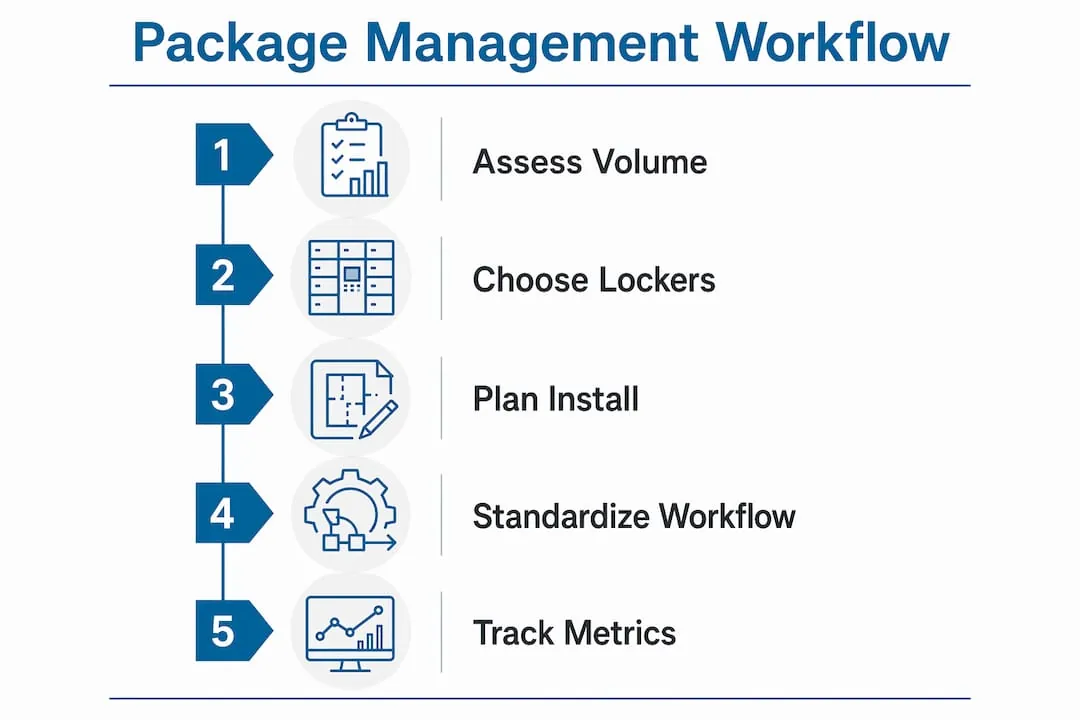
Step 1: Assess your package volume and space
Before selecting any hardware, pull three months of package intake logs and calculate your average daily volume. Identify your peak days, typically Monday and the day after a holiday. Your locker capacity should handle peak volume, not average volume. Walk your property and identify candidate locations with power access, adequate square footage, and visibility from a common area.
Step 2: Choose the right locker configuration
Selecting the right locker type is critical to matching your property’s specific needs. Indoor lockers work well for climate-controlled lobbies. Outdoor, weatherproof units serve properties where lobby space is limited. Refrigerated lockers are no longer optional for properties where residents regularly receive grocery deliveries from Instacart, Amazon Fresh, or similar services.
Step 3: Plan installation and communicate with residents
Coordinate installation timing to avoid peak delivery windows, typically mid-morning on weekdays. Send residents a notice at least two weeks before go-live that explains how the new system works, how they will receive pickup notifications, and what to do if a locker malfunctions. A short video walkthrough posted to your resident portal reduces first-week support calls dramatically.
Step 4: Track post-implementation metrics
After launch, monitor these four numbers weekly:
- Pickup rate within 24 hours: A healthy rate is above 85%. Low rates signal that notifications are not reaching residents.
- Locker occupancy at peak: If lockers hit 90% capacity regularly, you need more units.
- Staff time on package tasks: Compare hours logged before and after implementation.
- Resident satisfaction scores: Add one package-related question to your next resident survey.
Pro Tip: Run a dry-run audit alongside your existing manual system for two weeks before full cutover. This surfaces silent errors that your old workflow was masking, so you fix them before they affect residents.
How to vet and select package management platforms
Choosing the wrong platform creates technical debt that compounds over time. A formal vetting process covering at least six technical criteria reduces the operational risk of adopting new tools and prevents the “shiny object” problem that leads property managers to switch platforms every 18 months.
Use this checklist when evaluating any package management platform or locker vendor:
- Issue response time: How quickly does the vendor resolve reported bugs or outages? Ask for their average response SLA in writing.
- Maintenance status: Is the platform actively developed? Systems not updated for 24+ months should be replaced rather than patched.
- Integration depth: Does the platform connect with your property management software, such as Yardi, RealPage, or Entrata?
- Dependency count: Platforms with dozens of third-party integrations carry more failure risk than those with a focused feature set.
- Security posture: Ask vendors for their security audit history. Tools like the OpenSSF Scorecard provide objective security ratings for software platforms.
- Resident-facing UX: Test the resident notification and pickup flow yourself before signing a contract. A confusing pickup process drives calls to your front desk.
A useful parallel comes from vendor evaluation practices in property services, where scoring vendors across weighted criteria before signing contracts consistently reduces mid-contract disputes and service failures. The same discipline applies to package management technology.
Before committing to any platform, document the alternatives you evaluated, the integration risks you identified, and the specific problem the tool solves. That record protects you when a vendor raises prices or discontinues a feature, because you already know what your next option is.
Key takeaways
Effective multifamily package management requires centralized tracking, a single documented workflow, and locker technology sized to peak volume rather than average daily intake.
| Point | Details |
|---|---|
| Centralize tracking first | Use a dashboard supporting 1,700+ carriers to eliminate manual entry and reduce resident inquiries. |
| Document one SOP | A single, enforced workflow prevents the cascading errors that mixed processes create. |
| Size lockers to peak volume | Calculate capacity based on your busiest delivery days, not your daily average. |
| Vet vendors with six criteria | Evaluate issue response time, maintenance status, integrations, and security before signing. |
| Audit before you cut over | A dry-run period alongside your old system reveals hidden errors before they reach residents. |
What we have learned from properties that get this right
The properties that handle packages best share one trait: they treat package management as an operational system, not a daily task. That distinction sounds subtle, but it changes everything about how decisions get made.
At Luxer One, we have seen property managers invest in excellent locker hardware and then watch the system underperform because the workflow around it was never standardized. The lockers work. The process does not. Residents get inconsistent notifications, staff override the system when it feels inconvenient, and within six months the property is back to manual handling for a third of its volume.
The cautionary tale we repeat most often involves properties that adopted two or three package management tools simultaneously, thinking redundancy was a safety net. It was not. Each tool had its own notification logic, its own carrier integrations, and its own failure modes. Staff spent more time reconciling discrepancies between systems than they saved by having multiple options. One primary platform, one physical infrastructure solution, and one documented process is the formula that actually holds.
Technology is not a substitute for process discipline. A Luxer One locker system with a clear secure pickup workflow outperforms a more expensive system with no process behind it, every time. The transition period is also where most properties stumble. Running parallel systems for two weeks feels inefficient, but it is the only reliable way to catch the phantom errors that manual workflows have been quietly absorbing for years.
Residents notice the difference faster than most property managers expect. A property that sends accurate, timely pickup notifications and never loses a package becomes a genuine leasing advantage. That is worth the operational investment.
Upgrade your property’s package handling with Luxer One
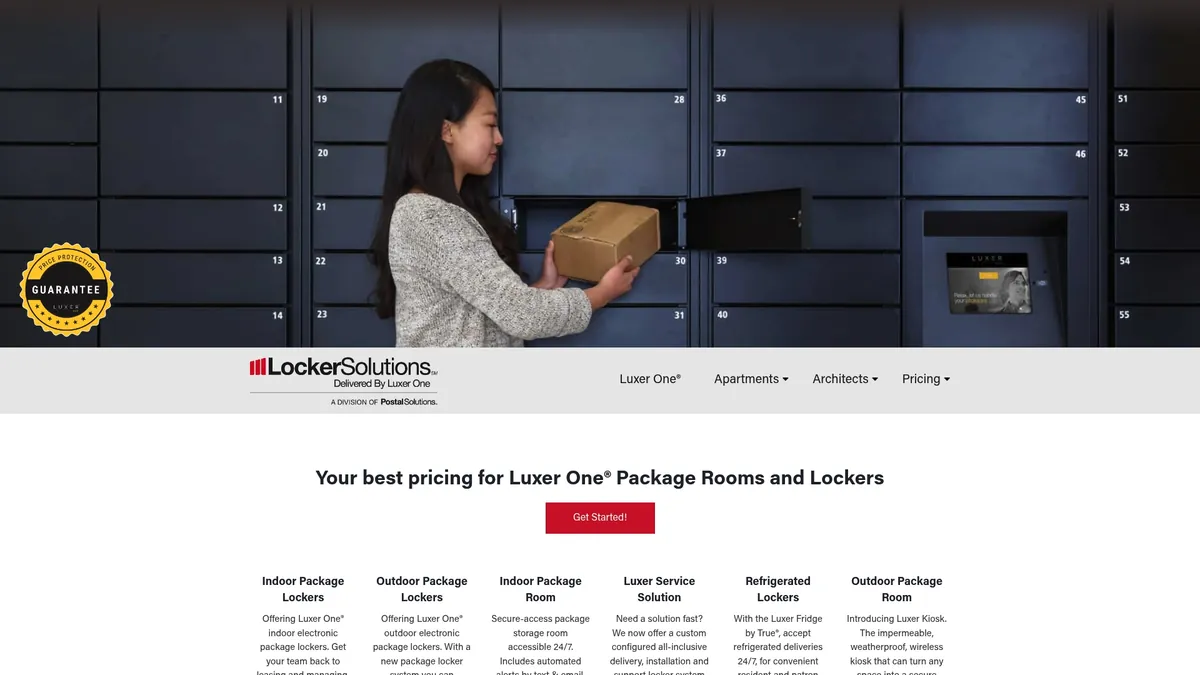
We specialize in Luxer One package management systems built specifically for multifamily residential properties. Whether your community needs indoor electronic lockers for a climate-controlled lobby, weatherproof outdoor units for a garden-style property, or refrigerated lockers for grocery deliveries, we offer configurations that match your volume and layout. Every system includes automated resident alerts, video surveillance, and secure access controls that remove the burden from your leasing staff. Explore the full range of apartment locker solutions to find the right fit for your property, or review the detailed guide to automated package rooms to see how high-capacity systems work in practice.
FAQ
What is the fastest way to reduce package-related staff workload?
Installing smart package lockers with automated resident notifications removes staff from the pickup process entirely. Properties using Luxer One systems report that leasing staff spend significantly less time on package-related tasks after implementation.
How many carriers should a package tracking platform support?
A tracking platform should support at least 1,700 carriers to cover the full range of carriers your residents receive deliveries from, including regional and international services. Platforms with automated carrier detection eliminate the need for manual entry on every package.
How do I know if my property needs refrigerated lockers?
If your residents regularly receive grocery deliveries from services like Amazon Fresh or Instacart, refrigerated lockers are worth the investment. Standard lockers cannot safely hold perishable items, and unclaimed grocery deliveries create both waste and resident complaints.
What metrics should I track after installing package lockers?
Track pickup rate within 24 hours, locker occupancy at peak delivery times, staff hours spent on package tasks, and resident satisfaction scores. A 24-hour pickup rate below 85% typically indicates a notification delivery problem rather than a locker problem.
How often should I review my package management platform?
Review your platform’s performance and vendor maintenance status at least once per year. Any system that has not received updates or improvements in 24 months should be evaluated for replacement rather than continued patching.
Recommended
Ready for a Luxer One® package locker quote?
Tell us your unit count and we'll send right-sized pricing with a fast response time.
Get my free quote