May 28, 2026
Multifamily Package Delivery Explained for Property Managers
Discover multifamily package delivery explained: streamline operations, enhance resident satisfaction, and choose the right solutions for your property.
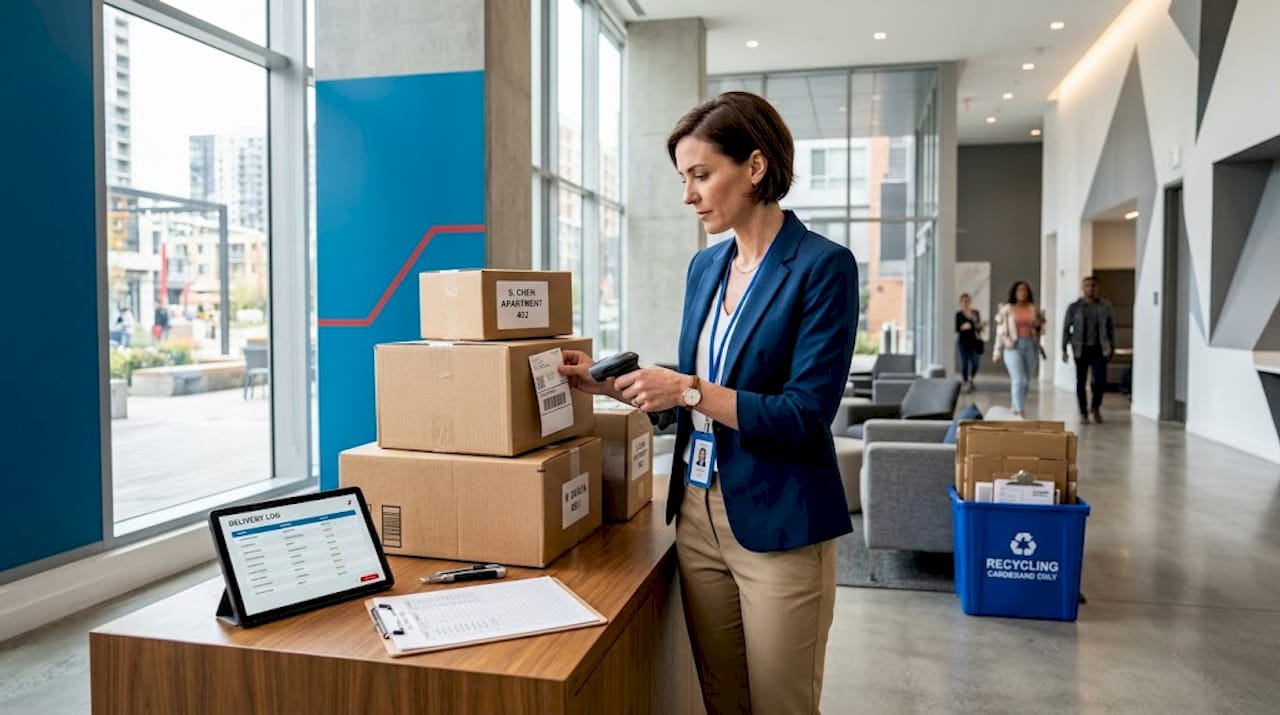
Package volume at apartment communities has crossed a threshold that most property teams weren’t built to handle. A 400-unit urban building now receives roughly 187 packages per day, and that number keeps climbing. Multifamily package delivery explained poorly leads to overwhelmed staff, frustrated residents, and liability exposure. Explained well, it becomes an operational asset. This article walks you through the full picture: how delivery workflows actually function, which solution models exist, how to choose the right one, and what separates systems that work from those that look good on paper.
Table of Contents
- Key takeaways
- Multifamily package delivery explained: how the workflow actually works
- Comparing the four main delivery solution models
- Best practices for managing package delivery operations
- Matching solutions to property types
- Technology and vendor accountability
- My take on what property managers get wrong
- See what Locker-solutions can do for your property
- FAQ
Key takeaways
| Point | Details |
|---|---|
| Package volume is a real operational load | A single large property can receive nearly 200 packages daily, making manual handling unsustainable at scale. |
| No single model fits every property | Solution effectiveness depends on unit count, space, staffing, and capital. Match the model to the asset. |
| Carrier compliance drives outcomes | The best hardware fails without enforced protocols for delivery drivers at intake. |
| Technology must include accountability tools | Vendor software should track driver behavior and intake workflows, not just send resident alerts. |
| Portfolio strategy beats reactive fixes | Standardizing evaluation criteria across properties saves time, money, and operational inconsistency. |
Multifamily package delivery explained: how the workflow actually works
Before comparing solutions, you need a clear picture of what multifamily package delivery actually involves. It is not just a package showing up at a door. It is a multi-step logistics chain with several stakeholders, any of which can break the process.
The journey starts when a carrier arrives at the property. That driver needs to know exactly where to take packages, how to access the intake area, and what to do when a compartment is full or a resident is unavailable. From there, the package enters an intake location. In multifamily housing, that typically means one of three places:
- Lobby or leasing office: Staff receive, log, and notify residents manually. High labor cost, limited after-hours access.
- Dedicated package room: A secured room where carriers deposit packages on shelving or in designated zones. Residents retrieve with a PIN or app access.
- Smart lockers: Carriers scan a code, place the package in an assigned compartment, and the resident gets an automated alert with a pickup code.
The core stakeholders in this system are carriers (UPS, FedEx, USPS, Amazon Logistics, and dozens of regional couriers), property staff, and residents. Each has different incentives and varying levels of accountability. That gap in accountability is where most systems fail.
Understanding this package delivery workflow matters before you spend a dollar on hardware. A locker system in the wrong location, or with no carrier training protocol, will create more problems than it solves.
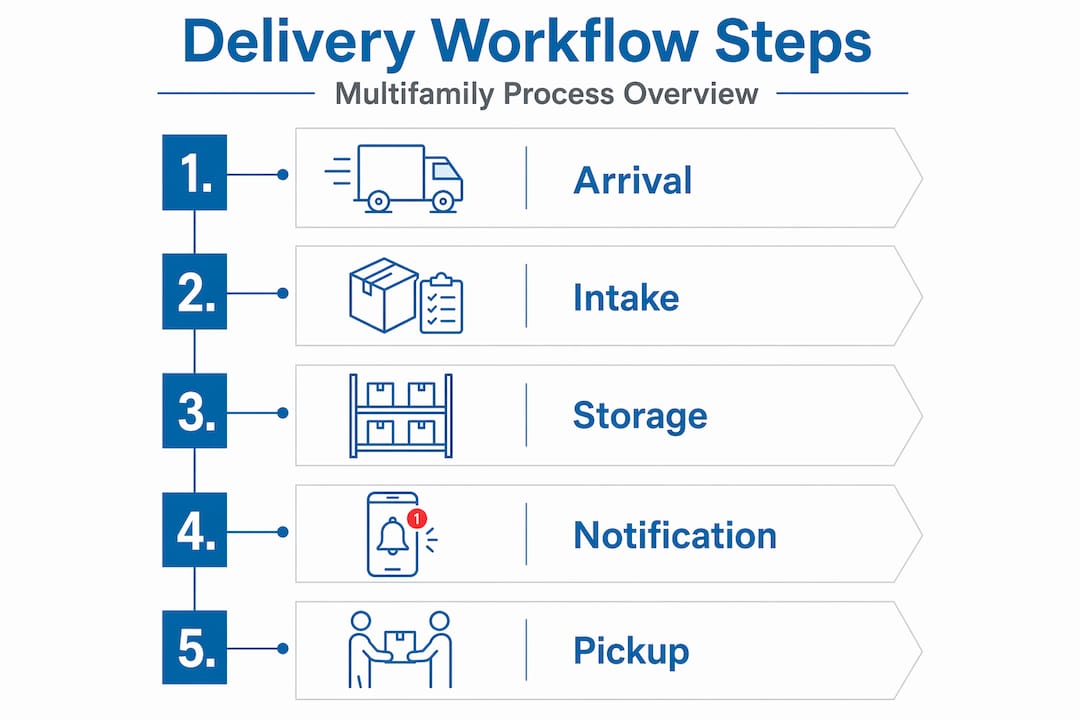
Pro Tip: Map your current delivery workflow before evaluating any product. Identify where packages sit untracked, where staff spend the most time, and where residents complain most often. That map tells you what you actually need.
Comparing the four main delivery solution models
No industry consensus exists on the single best model for multifamily package management. What works at a 600-unit high-rise in Chicago will not work at a 90-unit suburban garden-style community in Phoenix. Here is how the four dominant models compare:
| Solution model | Best for | Key advantage | Key limitation |
|---|---|---|---|
| Smart lockers | Mid-to-large properties with steady volume | Automated alerts, no staff required for pickup | Fixed compartments limit scalability; overflow with large packages |
| Smart package rooms | High-volume properties with space for a dedicated room | Open shelving triples capacity vs. lockers | Higher upfront build-out cost; requires vendor software |
| Off-site third-party delivery | Dense urban markets, minimal on-site space | Removes package handling from property entirely | Resident adoption friction; carrier routing dependency |
| Hybrid staff-based | Small properties or those in transition | Flexible, low capital cost | Labor-intensive; scales poorly; inconsistent after hours |
Smart lockers are the most recognized solution, but their limitations are real. That overflow typically ends up in a staff area, undercutting the automation entirely.
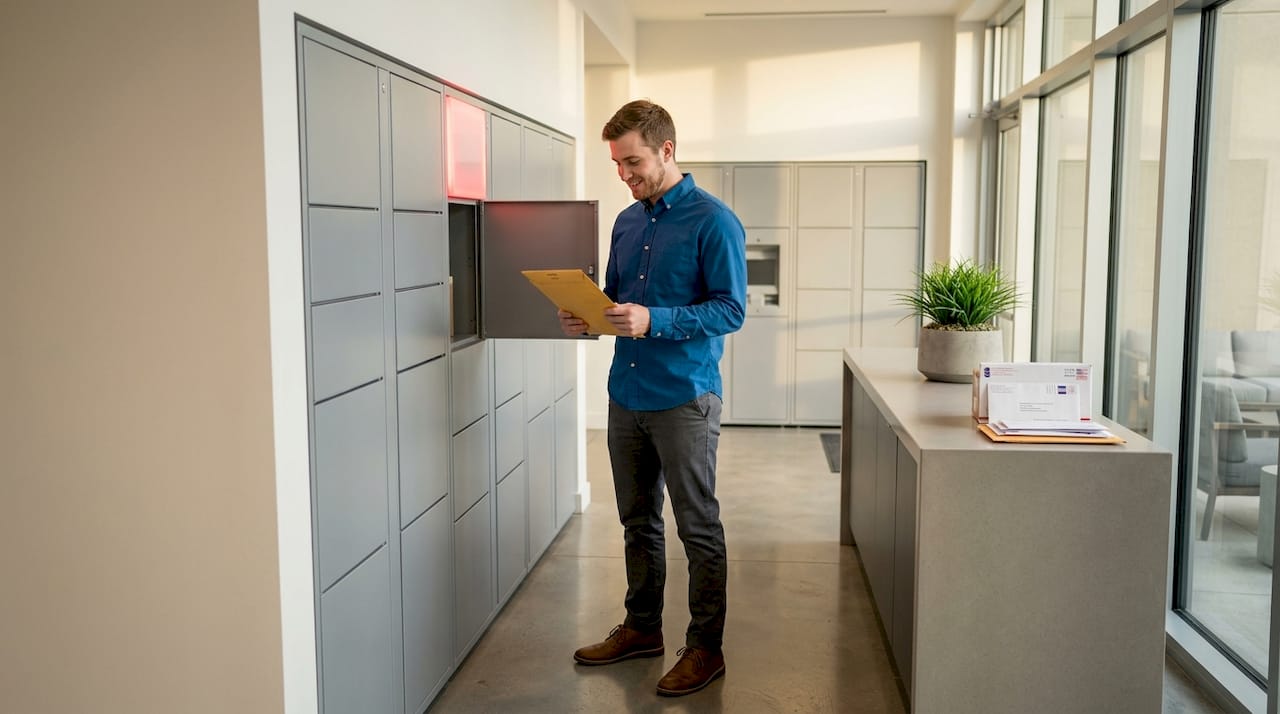
Smart package rooms address the capacity problem directly. AI-powered rooms using computer vision can reduce resident wait times from 30 minutes to seconds and require far less staff involvement. At Stuyvesant Town in New York City, staff managing packages dropped from 12 to 2 after implementation.
Off-site third-party delivery routes packages to a centralized warehouse before scheduled home delivery. One major provider in this space supports over 400,000 apartment homes across more than 1,100 communities in 25 U.S. markets. The trade-off is that you are adding a logistics step and depending on resident buy-in to change their delivery habits.
Pro Tip: Never evaluate a locker or package room vendor based solely on hardware specs. Ask specifically how their system handles carrier non-compliance. If they cannot describe an enforcement workflow, keep looking.
Best practices for managing package delivery operations
Operational excellence in multifamily package handling comes down to process discipline more than product selection. Here is a proven framework:
- Document and publish the intake process. Create a written delivery protocol that covers access instructions, package placement, and overflow procedures. Share it with every carrier service that delivers to your property.
- Train carriers at system launch. Carrier training established at deployment prevents recurring delivery problems before they become resident complaints. Do not wait for issues to emerge.
- Use pictorial SOPs and QR codes at intake points. Standardized carrier communication with visual guides and scannable codes increases compliance and reduces driver errors, especially during high-turnover periods.
- Automate resident notifications. Whether you use lockers or a package room, residents should receive an immediate alert with pickup instructions. Manual notification is a staff liability and a consistency problem.
- Plan for surge periods explicitly. Peak seasons like November and December can double or triple daily volume. Your overflow plan needs to be written, tested, and communicated before those weeks arrive.
- Track operational metrics. At minimum, monitor average daily intake volume, pickup lag time (how long packages sit), and overflow frequency. This data drives smarter decisions at renewal time.
Pro Tip: Set a 72-hour pickup window policy and enforce it with automated escalation reminders. Packages sitting for a week create congestion and become a resident relations issue. A reminder at 24, 48, and 72 hours costs nothing and clears most backlogs automatically.
Pair your operational protocols with the right physical setup. Read through parcel locker best practices for a property-manager-focused breakdown of how physical configuration affects daily operations.
Matching solutions to property types
Portfolio-level strategy consistently outperforms reactive, property-by-property decisions. The properties that struggle most are those that bought a locker system because a neighboring building had one, not because it matched their operational reality.
The key variables to evaluate before selecting any solution are:
- Unit count: Properties under 100 units rarely justify the capital cost of a smart locker array. Staff-assisted or a compact package room is usually more practical.
- Package volume per unit: High-volume markets with younger demographics generate more e-commerce deliveries per resident. If your average is above 0.5 packages per unit per day, automate.
- Available floor space: Smart lockers require dedicated square footage and often need weatherproofing for outdoor installs. Package rooms need more space but handle volume better per square foot.
- Staffing model: If your leasing office is unstaffed after 6 PM, manual intake is not viable. Your solution must work without a human in the loop.
- Property class and market position: Class A properties carry resident expectations for a premium experience. A basic locker meets functional need. A smart package room with refrigerated capacity signals genuine investment in amenity quality.
For a detailed breakdown of how costs and returns differ by property type, the locker cost and ROI guide at Locker-solutions covers the financial side with real figures.
Technology and vendor accountability
Here is where most evaluations go wrong. Property managers compare locker sizes and software dashboards, then sign a contract. What they should be evaluating is whether the vendor has a real answer to carrier non-compliance.
Carrier non-compliance is the leading cause of package system failure. A driver who drops packages in the lobby instead of using the locker is not a minor inconvenience. It is a system bypass that defeats the entire investment.
Technology features that matter when evaluating vendors:
- Driver workflow enforcement: Does the system require drivers to complete intake steps before moving on? Or can they bypass the process entirely?
- Dwell-time monitoring: Can you see how long a package sits before pickup? This data identifies recurring problems before residents escalate.
- Compliance audit trails: Does the system log carrier-level activity, or just package location?
- Escalation protocols: When a driver bypasses the system, does the platform alert your team automatically?
“Vendor systems lacking automated compliance tracking and enforcement usually result in expensive, underused locker clutter and operational failure.” (Source)
Beyond software, on-site systems need self-explanatory visual prompts that guide drivers through intake steps with minimal room for error. High driver turnover is a reality at every major carrier. Systems that depend on a trained driver remembering a procedure will fail regularly. Systems that walk drivers through the process at every visit perform consistently. When evaluating vendors, ask to see the driver-facing interface and intake workflow before anything else.
My take on what property managers get wrong
The hardware was fine. The process was nonexistent.
What I have found over years of working in this space is that the operators who get results fastest are not the ones with the best equipment. They are the ones who treat package delivery as a managed service with defined protocols, not as an amenity that runs itself.
The other pattern I see constantly is property-by-property thinking at portfolio companies. One building buys lockers because the manager attended a trade show. Another installs a package room because a vendor gave a good demo. No one is asking what the portfolio needs as a whole, what criteria apply across all assets, or how to standardize vendor accountability. That approach costs more and delivers less.
Driver turnover is also wildly underappreciated as an operational variable. Your carrier compliance rate is only as good as the last batch of new drivers who showed up this month. If your system is not self-guiding at the point of intake, you are training from scratch constantly.
The future of this space genuinely is smart package rooms with computer vision and automated retrieval. But the property managers who will get the most value from that technology are the ones who already have disciplined processes in place. Better tools amplify good operations. They do not replace them.
— Craig
See what Locker-solutions can do for your property
Managing package delivery at scale does not have to mean constant staff involvement or resident complaints. Locker-solutions specializes in Luxer One® secure lockers and package rooms built specifically for multifamily properties, with options covering indoor and outdoor electronic lockers, refrigerated units for grocery and meal deliveries, and fully automated package rooms.
Every system comes with software designed around carrier accountability, automated resident alerts, and video surveillance. Whether you manage 80 units or 8,000, Locker-solutions offers configurations that scale with your portfolio. Explore the full range of package rooms and lockers to find the right fit, or review indoor locker installation options for properties ready to move forward.
FAQ
What is multifamily package delivery?
Multifamily package delivery refers to the process of receiving, storing, and distributing parcels at apartment communities with multiple residential units. It involves carriers, on-site infrastructure, and resident retrieval systems working together.
How many packages does a large apartment building receive daily?
A 400-unit urban multifamily building receives about 187 packages per day on average. Volume is higher in dense markets and among younger renter demographics.
What is the biggest cause of package system failure?
Carrier non-compliance is the leading cause. Drivers bypassing intake systems defeat automation entirely, which is why vendor-level enforcement tools matter more than hardware features alone.
Smart lockers vs. package rooms: which is better?
Neither is universally better. Smart package rooms triple storage capacity within the same footprint compared to lockers and handle overflow better. Lockers are lower-cost and easier to deploy at smaller properties. See the full comparison for a side-by-side breakdown.
How should property managers choose a package delivery solution?
Match the solution to your property’s unit count, daily package volume, available space, staffing model, and capital budget. There is no single best model across all asset types, so evaluation criteria need to be specific to each property’s operational profile.
Recommended
- Package security for multifamily: Why it matters — Locker Solutions Blog
- Apartment package solutions terminology guide — Locker Solutions Blog
- Secure Package Pickup Workflow for Multifamily Properties — Locker Solutions Blog
- Workflow for Secure Parcel Handling in Multifamily Properties — Locker Solutions Blog
Ready for a Luxer One® package locker quote?
Tell us your unit count and we'll send right-sized pricing with a fast response time.
Get my free quote