May 19, 2026
Workflow for Secure Parcel Handling in Multifamily Properties
Discover an effective workflow for secure parcel handling in multifamily properties. Enhance resident satisfaction and minimize theft today!
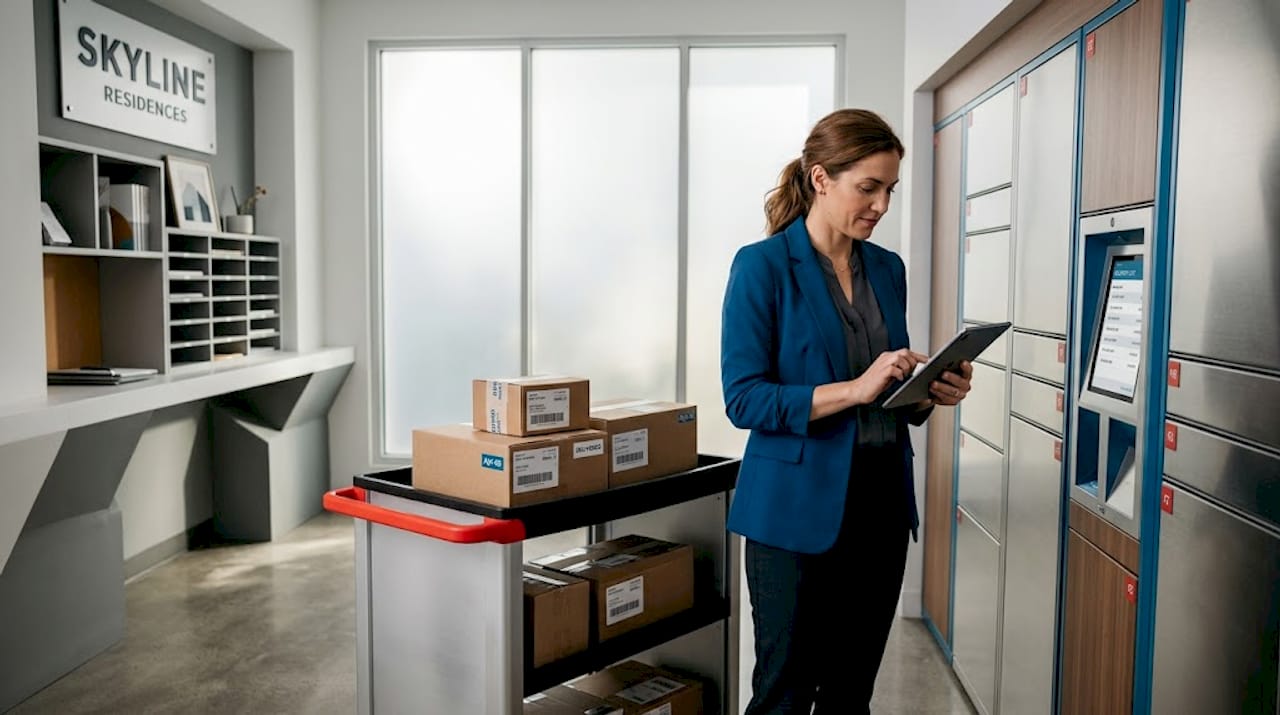
Package theft and delivery chaos are two of the most consistent complaints property managers hear from residents. The workflow for secure parcel handling at a multifamily property isn’t just a logistics problem. It’s a resident satisfaction problem, a liability problem, and increasingly a competitive differentiator. Properties that treat parcel management as an afterthought see the consequences: packages piling up in leasing offices, frustrated residents filing complaints, and staff spending hours each week triaging deliveries instead of managing the building. This guide covers the preparation, execution, and verification steps your team needs to get parcel security right.
Table of Contents
- Key takeaways
- Workflow for secure parcel handling: prerequisites and tools
- Step-by-step workflow from delivery to pickup
- Common challenges and how to troubleshoot them
- Verifying and maintaining your parcel workflow
- My take on technology vs. operational discipline
- How Locker-solutions can support your parcel workflow
- FAQ
Key takeaways
| Point | Details |
|---|---|
| SOPs matter as much as hardware | Technology without documented procedures leads to inconsistent execution and coverage gaps. |
| No-scan, no-accept is non-negotiable | Requiring verified scans at every handoff is the single most effective way to prevent lost packages. |
| Exceptions need assigned owners | Unclaimed, damaged, or misdelivered parcels must have a clear escalation path and a named point of accountability. |
| Daily checklists catch drift early | Verification routines at the shift level prevent security gaps from compounding into systemic failures. |
| Automated alerts reduce “where’s my package?” calls | Resident notifications triggered at intake and ready-for-pickup stages significantly lower staff inquiry volume. |
Workflow for secure parcel handling: prerequisites and tools
Before you can build a reliable secure parcel delivery process, you need the right foundation in place. That means physical infrastructure, digital tools, and documented human procedures working together.
Technology stack
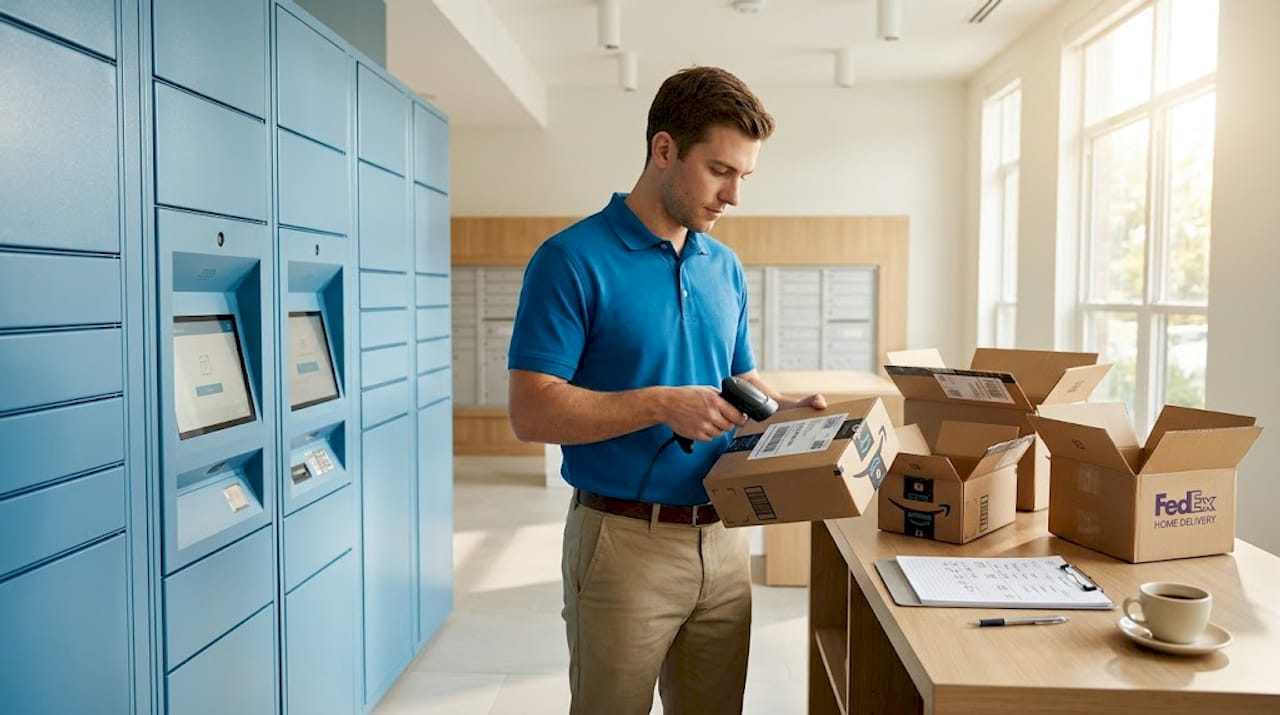
The core technology stack for most multifamily properties includes package lockers or a dedicated package room, barcode and QR scanning devices, and mailroom or parcel management software that logs timestamps and generates resident notifications. Integrated security systems combining access control, visitor management, and package tracking software create verifiable chains of custody and improve mailroom safety. Video surveillance at intake points is not optional at this level of volume. Properties receiving more than 30 packages per day need camera coverage at entry and storage points.
Written security plans and compliance
2026 GSA mail management guidance requires all facilities to maintain a written, site-specific mail security plan that includes risk assessment and annual status reporting to agency headquarters. While this applies directly to federal facilities, it reflects the standard that professional property management should hold itself to as well. A written plan documents who handles packages, what verification steps are required, and what happens when something goes wrong.
Roles and ownership
Every team member who touches a parcel needs a clearly defined role. This means naming a primary package handler per shift, a backup for exceptions, and a manager-level owner for escalations. Without ownership assignment, packages sit in limbo and no one takes responsibility.
| Tool or prerequisite | Function | Impact |
|---|---|---|
| Electronic package lockers | Secure, access-controlled storage | Eliminates unauthorized pickup and reduces staff handling |
| Parcel scanning devices | Logs intake and transfers with timestamps | Creates chain-of-custody documentation |
| Mailroom management software | Automates resident alerts and tracks status | Reduces “where’s my package?” calls |
| Site-specific mail security plan | Documents procedures and risk assessment | Establishes accountability and compliance baseline |
| Access-controlled package room | Restricts entry to authorized personnel and residents | Prevents unauthorized access and reduces theft |
Pro Tip: Before selecting technology, map your current parcel volume by day of week and time of day. Bottlenecks almost always occur during specific windows, and knowing exactly when they happen tells you how much capacity your lockers or package room needs to handle.
Step-by-step workflow from delivery to pickup
A clear, repeatable procedure is what separates properties that manage parcels well from those that manage crises. Here are the steps your team should follow every time.
-
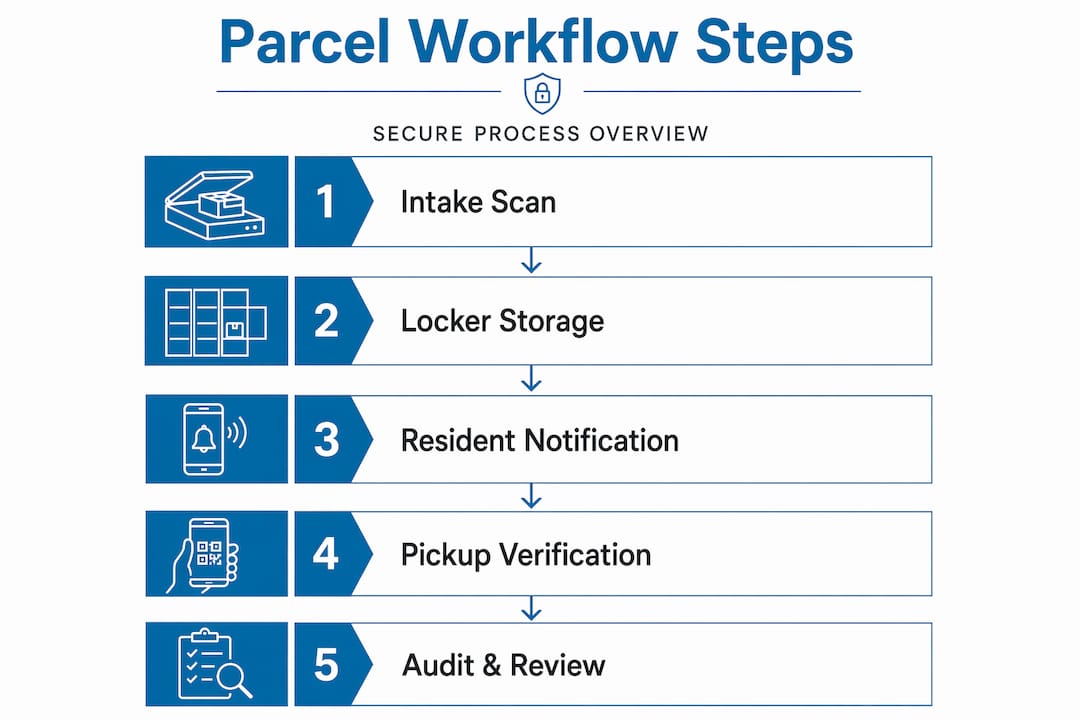
Receive and verify at the door. When a carrier arrives, staff or an automated system must log the delivery before accepting it. The most parcel losses originate from ambiguous handoffs without verified scans. A “no-scan, no-accept” policy means no package enters the building without a logged intake scan tied to a carrier name, timestamp, and recipient unit number.
-
Confirm recipient information. Cross-check the name and unit number on the label against your resident database. Security experts emphasize that adding a second verification layer for unusual delivery requests reduces social engineering and theft risks. If the label looks altered, the address doesn’t match, or the recipient is listed as a unit that’s currently vacant, flag it immediately.
-
Assign to secure storage. Place the parcel in the appropriate locker compartment or package room section based on size, temperature requirements, or fragility. Log the specific storage location in your parcel management software. This step creates the second point in your chain-of-custody record, connecting intake to storage.
-
Trigger automated resident notification. Once the package is logged and stored, the system should automatically send the resident a pickup notification with instructions. This should include the locker number or room access code, any pickup window restrictions, and a deadline for unclaimed packages. Manual notification via phone or email is a fallback, not a standard.
-
Document the pickup. When a resident retrieves their package, the system should log the pickup with a timestamp. If your system supports it, a resident-initiated scan or PIN entry at the locker creates a clean end point for the custody chain.
-
Handle exceptions with a defined protocol. Damaged parcels get photographed and flagged before storage. Unclaimed packages past your policy deadline get moved to a holding area and the resident receives a second alert. Misdelivered parcels get re-scanned under the correct recipient. Documented exception workflows with ownership assignment and escalation ladders improve resolution speed and resident satisfaction significantly.
Pro Tip: Run a live walkthrough of this process with new staff before they handle packages solo. Watching the steps once isn’t enough. Have them execute each step while you observe, then debrief on where they hesitated or skipped a check.
Common challenges and how to troubleshoot them
Even a well-documented process breaks down under pressure. Knowing where failures typically occur is half the battle when learning how to handle parcels securely at scale.
-
Ambiguous handoffs. When carriers drop packages without staff present and there’s no automated intake system, custody is undefined from the start. The fix is a locked drop zone with a camera and a physical log, or better yet, an automated locker system that captures carrier scans independently of staff presence.
-
Scan compliance gaps. Staff under time pressure skip scans. This is one of the most common paths to a lost package claim. Regular training supported by checklists, quizzes, and spot audits improves scan discipline and reduces errors. Run a weekly audit pulling scan logs and flagging any intake records without a corresponding storage location entry.
-
Ownership confusion on exceptions. When a damaged or misdelivered package lands in the holding area with no name attached to its resolution, it stays there. Assign a single team member to own every exception record in your system, with a resolution deadline and an escalation path to a manager if the deadline passes.
-
Resident inquiry overload. “Where is my order?” calls consume staff time and signal a notification gap. High-value parcel protection should combine reliable tracking, insurance, and repeatable checklists. Resident-facing tracking visibility, triggered at intake and pickup stages, cuts inquiry volume without adding staff workload.
-
Package room congestion. When lockers fill up and overflow to a general package room without a clear process, the entire system degrades. Set a capacity threshold, around 80% full, that triggers a review of unclaimed packages and a follow-up alert to residents who haven’t picked up within 48 hours.
Pro Tip: Build a simple dashboard in your property management software that shows open exceptions, scan compliance rate by day, and packages held past 48 hours. Reviewing it every morning takes three minutes and catches problems before residents notice them.
Verifying and maintaining your parcel workflow
A secure workflow isn’t a one-time setup. It requires ongoing verification to stay effective. Think of parcel handling like any other building system: it needs regular inspection and calibration to stay within spec.
A daily operational checklist that verifies equipment functionality, scan completeness, exception status, and policy compliance detects process drift early. Your package room security practices should be reviewed on a monthly basis to confirm that physical controls and digital logs are still aligned.
| Verification activity | Frequency | Responsible party |
|---|---|---|
| Scan log audit (intake vs. storage) | Daily | Package handler or shift lead |
| Exception review and ownership check | Daily | Designated exception owner |
| Locker and equipment function check | Daily | Facilities or package handler |
| Resident notification delivery check | Weekly | Property manager |
| Full policy and SOP review | Quarterly | Property manager with site team |
| Staff training refresher | Quarterly | Manager-led with quiz component |
Training methods matter as much as training frequency. A verbal walkthrough alone isn’t enough. Use a written checklist your team signs off on, follow it with a short scenario-based quiz, and then run a spot audit within two weeks of any training session to see whether the behavior actually changed. Document everything. When a package goes missing and a resident escalates, your documentation is your defense.
Pro Tip: Pair your quarterly SOP review with a short resident survey asking about their package pickup experience. Residents notice problems your logs don’t capture, and their feedback often points directly to a step in the process where execution is slipping.
My take on technology vs. operational discipline
I’ve worked with enough multifamily properties to know that the most expensive locker system in the world won’t fix a broken process. I’ve seen properties install Luxer One lockers and still deal with package complaints six months later because no one trained the staff properly, exceptions were handled inconsistently, and the “no-scan, no-accept” rule got quietly abandoned during busy mornings when carriers were stacking boxes at the door.
The uncomfortable truth I’ve seen play out repeatedly is that technology creates the conditions for security, but people and procedures determine whether those conditions actually hold. Most property managers focus heavily on equipment decisions but overlook the human-centric side: who owns an unclaimed package on day four, what happens when a carrier drops a parcel in the wrong locker, and how often are scan logs actually reviewed by someone with authority to act on them.
The properties I’ve seen handle parcels best are not the ones with the most sophisticated hardware. They are the ones where every team member can describe the secure parcel delivery process from memory, where exceptions get resolved within 24 hours, and where the property manager reviews the daily log before 10 a.m. Delivery volumes are not decreasing. Building a culture of parcel accountability now is what separates properties that residents want to stay in from those that lose lease renewals over something as avoidable as a lost box.
— Craig
How Locker-solutions can support your parcel workflow
If your current setup still relies on leasing office drop-offs, manual logs, or a general-purpose room without access controls, you are carrying more operational and liability risk than you need to.
Locker-solutions specializes in Luxer One® package rooms and electronic lockers designed specifically for multifamily properties. Their systems support every step of a secure parcel delivery process: carrier intake with automated scan logging, access-controlled storage, and resident pickup notifications that trigger the moment a package is registered. For properties with residents receiving grocery and meal kit deliveries, refrigerated lockers handle temperature-sensitive parcels without any staff involvement. For properties managing high delivery volumes or limited staff hours, their automated package rooms scale to meet demand around the clock. Explore the full range of Luxer One package solutions to find the configuration that fits your property’s size, layout, and volume.
FAQ
What is the most effective policy for preventing lost packages?
A “no-scan, no-accept” policy is the single most effective measure. Requiring a logged scan at intake before accepting any parcel eliminates the ambiguous handoffs that cause most package losses.
How often should a parcel handling safety checklist be reviewed?
Run a daily shift-level checklist for scan compliance and exception status, and conduct a full policy review quarterly. Spot audits within two weeks of any staff training session reinforce what was covered.
What should happen when a package goes unclaimed for more than 48 hours?
Send a second automated notification to the resident and move the parcel to a designated holding area. If the package remains unclaimed past your policy deadline, escalate to a named staff owner with a resolution deadline.
How do automated lockers reduce staff workload in parcel handling?
Automated lockers handle carrier intake, access-controlled storage, and resident notification without staff involvement. This removes the leasing office from the delivery chain and gives staff time back for higher-priority tasks.
What does chain-of-custody mean in a parcel handling workflow?
Chain of custody refers to a documented record of every point where a package changes hands, from carrier drop-off through storage to resident pickup. Each scan creates a timestamped entry that establishes accountability at every transfer point.
Recommended
Ready for a Luxer One® package locker quote?
Tell us your unit count and we'll send right-sized pricing with a fast response time.
Get my free quote