October 7, 2026
Section 179: 100% Bonus for Lockers, U.S. Storage & Multifamily Owners
A practical U.S. guide for storage and multifamily owners on claiming Section 179 for freestanding lockers: avoid classification pitfalls, use 100% bonus,...

Section 179: 100% Bonus for Lockers, U.S. Storage & Multifamily Owners
Yes, most freestanding lockers and relocatable storage units used in an active U.S. business can qualify for Section 179, as long as they count as tangible personal property and pass the business-use test. Because the details depend on your facts, confirm your specific situation with a CPA before filing.
TL;DR:
- Lockers and relocatable storage units qualify for Section 179 if they are portable and can be unbolted without structural damage, but fixed, built-in systems may not.
- The full deduction is available only in the year the lockers are installed and operational, provided the business use exceeds 50 percent and documentation is thorough.
- Bonus depreciation at 100% is permanently available for property acquired after January 19, 2025, and works alongside Section 179 for maximizing first-year deductions.
- Deduction limits depend on current-year caps, phased out at $4 million in total qualifying purchases, with proper timing and documentation critical to compliance.
- Leasing lockers generally disqualifies them from Section 179, while ownership through purchase or financing preserves eligibility; proper records and installer documentation are essential.
Table of Contents
- What qualifies as tangible personal property for locker systems
- How to claim Section 179 for locker purchases
- Section 179 and bonus depreciation after the 2025-2026 changes
- Dollar limits and timing rules that affect locker purchases
- Documentation that holds up if the IRS asks questions
- When cost segregation makes sense for storage and multifamily operators
- Storage lockers versus security lockers: which types qualify
- Common misconceptions about Section 179 eligibility for lockers
- A worked example of the Section 179 calculation for lockers
- Leasing versus buying lockers and what it means for your deduction
- Our take on applying these tax rules to real locker purchases
- How we support your CapEx planning and documentation
- FAQ
- Sources
What qualifies as tangible personal property for locker systems
Publication 946 defines Section 179 property broadly to include machinery, equipment, and other tangible personal property used in a trade or business. Freestanding locker banks, modular storage units, and relocatable kiosks generally fit this definition because they are manufactured items that can be moved, reconfigured, or removed without damaging the building they sit in. That portability is the key distinction tax law cares about.
Installation choices can change that classification, though. A locker system that gets permanently bolted into a foundation, wired directly into a building’s electrical and HVAC systems, or built with site-specific finishes starts to look more like a structural component than equipment, which can push it out of Section 179 eligibility and into longer depreciation schedules.
Factors that commonly affect classification include:
- Whether the unit can be unbolted and relocated without structural repair.
- Whether it relies on dedicated, building-integrated electrical or HVAC connections.
- Whether it was custom-built into the structure rather than delivered as a standalone product.
- Whether the property is used more than 50% for business purposes, since mixed personal and business use reduces or eliminates the deduction.
How to claim Section 179 for locker purchases
The Section 179 election lets you expense the full cost of qualifying property in the year it’s placed in service, rather than spreading the deduction over several years of depreciation. “Placed in service” means the locker system is installed, operational, and ready for its intended business use, not simply delivered or invoiced.
One limitation trips up a lot of small business owners: the deduction cannot exceed your business’s taxable income for the year, and it cannot be used to create a net operating loss. If your taxable income is lower than the cost of the lockers, the unused portion carries forward rather than creating an immediate write-off.
In practice, claiming the deduction involves a few steps:
- Confirm the lockers were purchased (not leased) and placed in service during the tax year.
- Verify total business-use percentage exceeds 50%, with records to back it up.
- Make the Section 179 election on the applicable tax form when filing your business return.
- Retain invoices, installation records, and business-use documentation in case of an IRS inquiry.
Pro Tip: Keep a dated photo of the installed locker system showing it’s freestanding and not built into the structure. It’s a small step that can save a lot of back-and-forth if your return is ever questioned.
As an illustration, picture a self-storage operator who places a bank of relocatable lockers in service in October, uses them entirely for paying tenants, and has taxable income comfortably above the cost of the units. In that scenario, the business can generally elect to expense the full qualifying cost that year, subject to the statutory dollar caps discussed below.
Section 179 and bonus depreciation after the 2025-2026 changes
Treasury and the IRS issued guidance on the One, Big, Beautiful Bill, which made additional first-year bonus depreciation permanent at 100% for qualified property acquired after January 19, 2025. That guidance, issued as interim rules in Notice 2026-11, gives businesses more certainty about which acquisitions qualify for the full write-off.
100% bonus depreciation now applies permanently to qualifying property acquired after January 19, 2025, according to IRS guidance on the OBBB changes. That timing matters for anyone finalizing locker purchase orders near that cutoff date.
The practical order of operations matters too. Section 179 is generally applied first, then bonus depreciation covers any remaining basis. For a business whose Section 179 deduction is limited by taxable income, bonus depreciation can still apply to the remainder, and in some cases, it can create or increase a net operating loss where Section 179 cannot.
Key points to weigh:
- Assets placed in service before January 19, 2025, may fall under different bonus percentages than those acquired after.
- If taxable income is tight, Section 179 may be constrained while bonus depreciation keeps working.
- Modeling both elections together, rather than picking one by default, usually produces a better result.
Dollar limits and timing rules that affect locker purchases
Section 179 has an annual dollar cap and a phase-out threshold that both change periodically, so always confirm the current-year figures before filing. For tax years beginning in 2025, Publication 946 lists a maximum deduction of $2,500,000 and a phase-out threshold of $4,000,000 in total qualifying purchases, figures that should be checked against the IRS site for your actual filing year.
A few other timing and eligibility notes apply to locker purchases specifically:
- Listed-property rules, which usually target vehicles and items with personal-use overlap, rarely apply to locker systems unless they’re also used outside the business.
- The deduction applies to the tax year in which the equipment was placed in service, not the year it was ordered or invoiced.
- Purchases late in the tax year still qualify if the lockers are fully installed and operational before year-end.
Because these thresholds shift from year to year, confirm the exact cap and phase-out figures in effect for your filing year directly with the IRS or your tax preparer.
Documentation that holds up if the IRS asks questions
Good recordkeeping is what turns a defensible Section 179 claim into an audit-proof one. Keep the paper trail tight from the moment of purchase through the date the lockers go into service.
- Save the original invoice, purchase order, and any financing agreement tied to the locker system.
- Log the delivery and installation dates, since the placed-in-service date determines which tax year the deduction applies to.
- Take dated photos showing the units are freestanding and not structurally integrated into the building.
- Record serial numbers and warranty documents for each locker bank or kiosk.
- Track business-use percentage with a simple log if the lockers see any non-business use.
Pro Tip: If your lockers are hardwired into building electrical systems rather than simply plugged in, document that wiring method clearly. It’s one of the first things that comes up if a classification gets questioned.
The most common red flag is treating a permanently affixed structure as equipment without proof it can be relocated. When site work, custom fixtures, or electrical integration make up a large share of the project cost, a cost segregation study may be the more defensible path than a straight Section 179 claim. Our guide to capital expenditure treatment for locker systems walks through that capitalization decision in more detail.
When cost segregation makes sense for storage and multifamily operators
Cost segregation studies break a property’s cost basis into components with different depreciable lives, pulling shorter-life assets like equipment and fixtures out of the 27.5 or 39-year building schedule. Industry benchmarking from RecoTseg’s analysis of self-storage tax benefits shows that cost-segregation studies commonly reclassify 34% to 44% of a self-storage facility’s depreciable basis into shorter-life categories, a meaningful share that opens the door to faster depreciation and bonus-depreciation eligibility on top of it.
Combining cost segregation with Section 179 and bonus depreciation can substantially increase a first-year deduction, but the right mix depends on your taxable income, acquisition timing, and how the lockers are installed. Before committing to a study, it helps to:
- Run the numbers with a CPA who understands both cost segregation and Section 179 limits.
- Request detailed vendor documentation showing installation method and component costs.
- Consider a formal study when site work, electrical integration, or custom fixtures represent a significant share of total project cost.
Storage lockers versus security lockers: which types qualify
Not every locker on a property gets the same tax treatment, and the labels “storage” and “security” don’t map neatly onto IRS categories. What matters is function and installation, not the marketing name on the product.
A freestanding package locker bank in a leasing office, delivered as a complete unit and simply plugged into standard power, almost always reads as tangible personal property. The same goes for relocatable storage lockers used by a self-storage operator to rent out additional units, since they’re designed to be moved or reconfigured as tenant needs change.
Security lockers present more of a gray area. A secure evidence locker bolted to a concrete floor with dedicated conduit for access-control wiring might still qualify if it can be removed without damaging the structure, but one built into a wall cavity with custom millwork starts to resemble a building component. Refrigerated lockers fall somewhere in between: most units are delivered as standalone appliances that plug into existing outlets, which supports equipment treatment, but any unit requiring new dedicated electrical or plumbing runs deserves a closer look.
The safest approach is to evaluate each locker type on its own installation facts rather than assuming a category-wide answer. A property with both standard package lockers and a hardwired access-control security locker bank may end up splitting those assets into different depreciation treatments on the same return.

Common misconceptions about Section 179 eligibility for lockers
The most persistent myth is that any locker purchase automatically qualifies simply because it’s furniture or equipment. Eligibility depends on actual use, not product category, so a locker system used for personal storage or installed in property that isn’t part of an active trade or business doesn’t qualify. LegalClarity’s explainer on storage unit deductions confirms that storage expenses are deductible only when tied to an active business, and personal storage costs stay nondeductible under existing tax code sections.
A second misconception is that Section 179 always beats bonus depreciation. That’s not automatic. Section 179 is capped by taxable income and cannot create a loss, while bonus depreciation has no such income limitation, so a business with thin margins in a given year may get more value leaning on bonus depreciation for part of the cost.
A third misunderstanding involves installation. Business owners sometimes assume that because a locker system was expensive or custom-configured, it must be capitalized as a building improvement. In reality, a high price tag doesn’t change the classification question. What matters is whether the unit is tangible personal property that can be removed or relocated, not how much it cost.
Finally, some owners assume the deduction applies the moment they sign a purchase agreement. It doesn’t. The clock starts when the lockers are actually placed in service, fully installed and ready for business use, which can be weeks or months after the order date depending on installation timelines.

A worked example of the Section 179 calculation for lockers
Say a self-storage operator places a bank of relocatable lockers in service in September, and the business has taxable income well above the total equipment cost for the year. Because the units are freestanding, used entirely for paying tenants, and placed in service before year-end, they generally qualify for a full Section 179 election up to the applicable annual cap, with any remaining basis eligible for bonus depreciation under current IRS guidance.
Now picture a different scenario: a small multifamily operator installs a package locker system in a leasing office late in the tax year, but the business reports modest taxable income after other deductions.
A third case: an operator buys a mixed set of assets, some lockers and some building improvements tied to the same renovation project. Only the freestanding, removable locker units qualify for Section 179 treatment, while structural improvements follow standard building depreciation schedules, which is why it helps to separate equipment costs from construction costs on the invoice from the start. Our guide on why suburban complexes invest in lockers covers how operators typically structure that kind of purchase.
Leasing versus buying lockers and what it means for your deduction
Section 179 only applies to property you own, which makes the lease-versus-buy decision a meaningful one for tax planning. A locker system you lease under a true operating lease generally isn’t eligible for Section 179 at all, since you don’t hold title to the equipment. Lease payments are typically deducted as ordinary business expenses instead, spread across the year rather than concentrated into a single first-year write-off.
Purchasing, whether paid outright or financed, puts ownership in your hands and opens the door to Section 179 and bonus depreciation, even if you’re still paying off a loan. The debt itself doesn’t disqualify the deduction. What matters is that you own the asset and placed it in service.
Some finance arrangements are structured as leases but function more like purchases for tax purposes, often called capital leases or finance leases. Those can sometimes qualify for Section 179 treatment depending on how the agreement is structured, which is exactly the kind of detail worth reviewing with a CPA before signing anything. For operators planning a larger rollout, our developer’s guide to space-efficient locker configuration is a useful starting point before working out the financing structure with a tax advisor.
Our take on applying these tax rules to real locker purchases
We see property owners get this wrong in both directions: assuming every locker qualifies, or assuming none do because the purchase felt like a capital project. The honest answer sits in the middle, and it depends on documentation as much as tax law. Confirm classification with a CPA before making any election, since the difference between a freestanding unit and a permanently integrated one can swing the outcome significantly. Installation choices and the records you keep from day one matter just as much as the purchase price itself.
— Locker Solutions
How we support your CapEx planning and documentation
We offer package locker solutions and package room management for multifamily properties, designed to support your CPA’s classification approach. 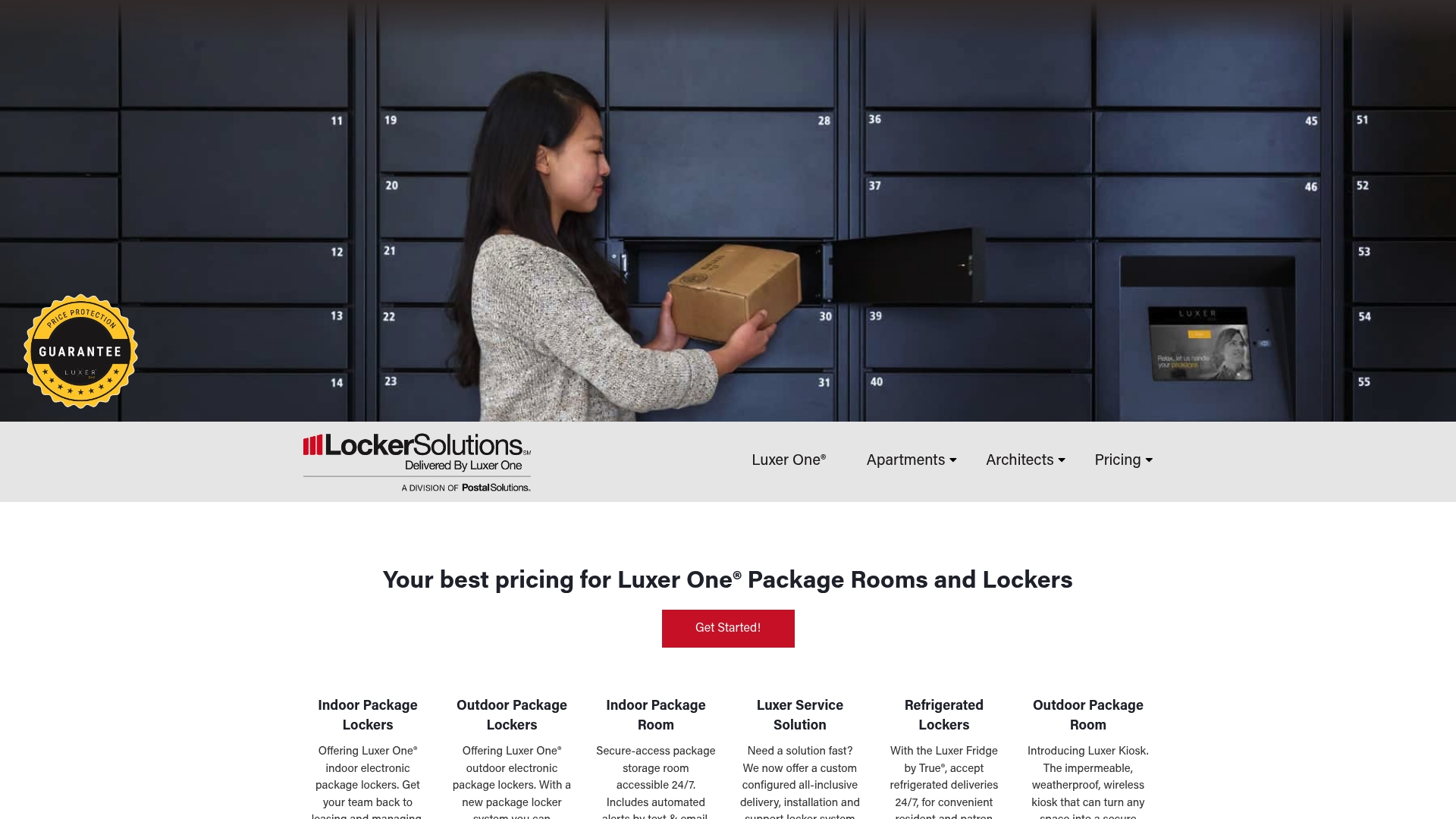
Because freestanding, relocatable equipment is central to a clean Section 179 claim, we document every install the way your tax advisor will want it documented.
- Delivery records, serial numbers, and installation photos provided for every project.
- Deployment timelines are structured to help keep your placed-in-service date predictable.
- Financing options are available to support ownership options for tax planning.
| What we provide | Why it matters for your records |
|---|---|
| Delivery and installation logs | Establishes the placed-in-service date |
| Serial numbers and warranty documents | Supports equipment classification |
| Installation photos | Shows freestanding, non-structural setup |
| Financing options | Preserves ownership for Section 179 eligibility |
Request a spec sheet or talk through your property’s locker needs on our parcel locker and package room solutions page.
This article is general information, not a substitute for advice from a qualified financial advisor. Consult a qualified financial professional about your own circumstances before acting on anything here.
FAQ
What is not eligible for Section 179?
Property used 50% or less for business, items held for investment, and real property like buildings and most structural components generally don’t qualify. Land and land improvements are also excluded under Publication 946.
What types of items can be deducted under Section 179?
Machinery, equipment, computers, office furniture, and other tangible personal property used in an active trade or business typically qualify, including freestanding locker systems. Certain qualified improvement property to nonresidential buildings can also qualify under specific conditions outlined in Publication 946.
Can you write off 100% of a heavy vehicle in 2026?
Vehicle deduction rules depend on weight class, business-use percentage, and current-year limits set by the IRS, and they’re separate from how lockers are treated. Check the vehicle-specific guidance in Publication 946 or with a CPA, since heavy vehicle rules change more often than general equipment rules.
What are the new rules for Section 179 deductions?
Recent Treasury and IRS guidance made 100% bonus depreciation permanent for qualifying property acquired after January 19, 2025, which works alongside Section 179 rather than replacing it. Section 179’s own dollar caps and phase-out thresholds still apply and should be confirmed for the current tax year directly with the IRS.
Does leasing lockers instead of buying affect the deduction?
Yes, Section 179 generally requires ownership, so a standard operating lease on locker equipment doesn’t qualify for the deduction. Purchasing outright or through financing, where you hold title to the equipment, keeps Section 179 and bonus depreciation available.
Sources
- Publication 946 (2025), How To Depreciate Property | Internal Revenue Service
- Estimate self-storage tax benefits | RecoTseg
- When Is a Storage Unit Tax Deductible? - LegalClarity
Recommended
Ready for a Luxer One® package locker quote?
Tell us your unit count and we'll send right-sized pricing with a fast response time.
Get my free quote