July 29, 2026
Locker System CapEx Explained for Facility Managers
Discover what is capital expenditure for locker systems and how it impacts your facility management budget. Get insights on costs and benefits!

For property and facility managers, capital expenditure for locker systems means the funds spent to acquire, install, or significantly upgrade locker assets that deliver economic benefits beyond one fiscal year. Those costs are capitalized on the balance sheet and depreciated over the asset’s useful life rather than expensed in the period they occur.
TL;DR, what you need to know before reading further:
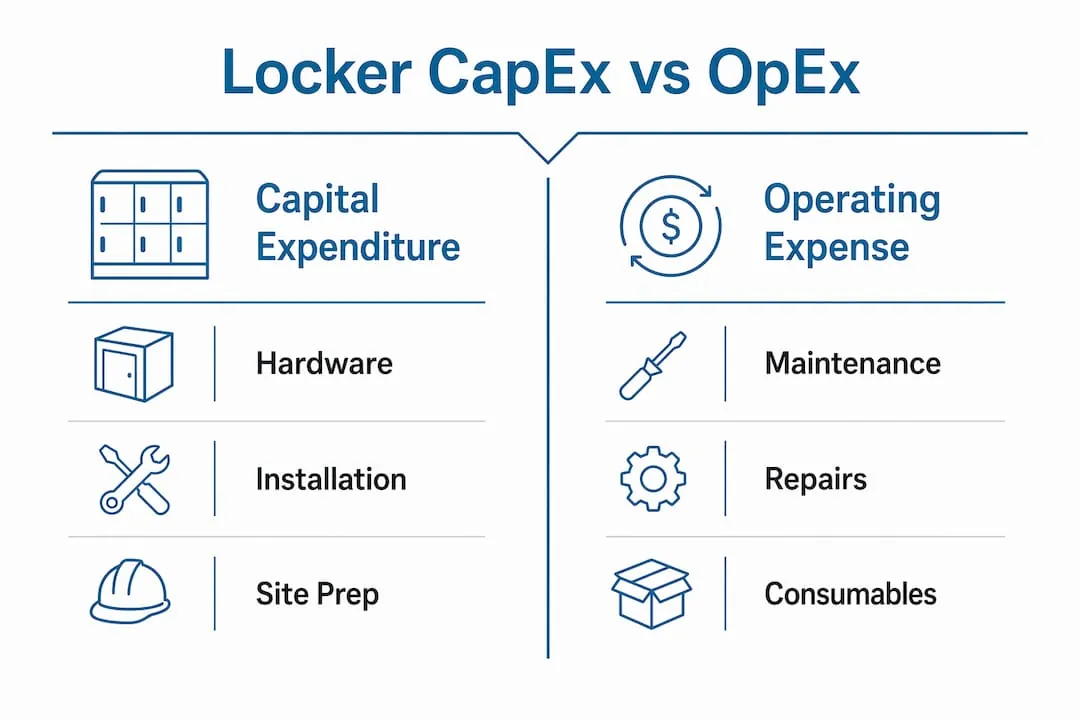
- What counts as CapEx: locker hardware (cabinets, frames, refrigeration modules), permanent electrical and data infrastructure, structural site modifications, capitalized installation labor, and firmware or software that meets capitalization criteria.
- What stays OpEx: monthly software subscriptions, routine repairs, consumables, and short-term service contracts.
- Typical first-year cost range: smart locker systems commonly represent a significant upfront investment depending on hardware, software, and deployment model.
- Depreciation: costs are spread over the asset’s useful life using straight-line or MACRS methods. Consult a CPA for your specific depreciation schedule and tax treatment.
- Worked example below uses Luxer One® as the illustrative solution for a 100-unit multifamily building.
Table of Contents
- What counts as capital expenditure for locker systems?
- How CapEx differs from OpEx for locker systems
- How do you calculate CapEx and depreciation for a locker system?
- Total cost of ownership: what facility managers usually miss
- How to budget, justify, and finance locker CapEx
- Procurement and deployment checklist for property and facility managers
- Sample CapEx budget for a 100-unit multifamily building using Luxer One®
- Key Takeaways
- A supplier’s perspective on where CapEx planning goes wrong
- We make CapEx planning straightforward
- Useful sources and further reading
What counts as capital expenditure for locker systems?
The clearest test: if the cost prepares a long-lived asset for its intended use, increases its value, or extends its useful life beyond one year, it is generally capitalized. Here are the line items that typically qualify.
Commonly capitalized items:
- Locker cabinets and frames: the physical hardware units, including built-in refrigeration modules for cold-storage lockers.
- Permanent electrical infrastructure: new circuits, panel upgrades, conduit runs, and dedicated outlets installed specifically to support the locker system.
- Data and network cabling: structured cabling, switches, or access points permanently installed as part of the locker deployment.
- Structural site modifications: wall cutouts, concrete pads, permanent framing, and built-in cabinetry that integrate the lockers into the building.
- Capitalized installation labor: labor that directly prepares the asset for use (anchoring, wiring, commissioning) is typically added to the asset’s cost basis.
- Capitalized software or firmware: software licenses that are integral to the locker hardware’s function and meet your organization’s capitalization policy threshold may qualify; cloud-based SaaS subscriptions generally do not.
- Major upgrades: a refrigeration module added to an existing locker bank, or a control system replacement that materially extends useful life, usually qualifies as a capital improvement.
Items that typically stay as operating expenses:
- Monthly or annual SaaS platform fees and cloud management subscriptions.
- Routine repairs, replacement locks, and small consumable parts.
- Temporary labor for signage, cleaning, or minor adjustments post-installation.
- Short-term software trials or pilot licenses.
The governance trigger is straightforward: useful life greater than one year, cost above your organization’s capitalization threshold (often a few thousand dollars for commercial properties), and the expenditure either creates a new asset or materially improves an existing one.
How CapEx differs from OpEx for locker systems
The accounting distinction matters more than most managers realize, because it affects cash-flow presentation, tax timing, and the approval pathway you need to follow.
CapEx is recorded on the balance sheet as a fixed asset and charged to expense gradually through depreciation. OpEx hits the income statement immediately in the period incurred. Buying a Luxer One® locker bank outright is CapEx. Paying a monthly managed-service fee for package room staffing is OpEx.
Depreciation and useful life, the basics:
- Straight-line depreciation spreads cost evenly over the useful life. A locker system with a 10-year useful life generates a consistent amount of depreciation expense per year.
- MACRS (Modified Accelerated Cost Recovery System) is the U.S. tax depreciation method. It front-loads deductions, which can improve near-term tax position. The IRS governs capitalization and MACRS rules; a CPA should confirm the correct asset class and recovery period for your specific installation.
- Useful life for locker systems is typically estimated at 7–15 years depending on hardware quality, environment, and your organization’s asset management policy.
Buy vs. subscribe, how each model affects your budget:
- Purchasing (CapEx model): higher upfront capital outlay, depreciated over time, requires board or finance approval above threshold, and you own the asset.
- Subscription/managed service (OpEx model): bundles hardware, software, and service into a predictable monthly fee, no large upfront approval needed, but you build no asset equity and costs continue indefinitely.
- Hybrid: some vendors offer lease-to-own structures that start as OpEx and convert to a capitalized asset at term end.
Key insight for finance conversations: CapEx and OpEx are not just accounting labels, they affect which budget line the expenditure draws from, when the tax deduction is realized, and whether the purchase requires a capital appropriation request. Aligning your locker procurement model with your organization’s capital governance policy, and coordinating with a CPA on tax strategy, prevents reclassification surprises at year-end.
How do you calculate CapEx and depreciation for a locker system?
Start with the asset cost basis, which is everything required to get the asset into service.

Asset cost basis formula:
From there, the CapEx calculation for financial reporting references changes in property, plant, and equipment (PP&E) balances plus depreciation:
For a new installation where beginning PP&E is zero, CapEx simply equals the total capitalized cost.
Straight-line depreciation formula:
Factors that change the schedule:
- Capitalized software or firmware added after initial deployment triggers a separate depreciation schedule.
- A major upgrade (e.g., adding refrigerated compartments) may require revaluing the asset and restarting depreciation on the improvement.
- Partial disposals, removing a locker module, require removing the proportional cost and accumulated depreciation from the books.
| Variable | Typical Range / Guidance |
|---|---|
| Useful life | 7–15 years (hardware quality and environment dependent) |
| Salvage value | Often a small percentage of cost basis for electronic assets |
| Depreciation method (book) | Straight-line most common for financial statements |
| Depreciation method (tax) | MACRS per IRS asset class; consult a CPA |
| Capitalization threshold | A few thousand dollars per item (organization policy dependent) |
Total cost of ownership: what facility managers usually miss
The hardware quote is rarely the final number. Total cost of ownership (TCO) for a locker system almost always exceeds the sticker price once you account for the full lifecycle.
Hidden costs that expand your budget:
- Freight and staging: large locker systems are heavy; lift-gate delivery, stair access, and on-site staging before installation add cost that vendors often quote separately.
- Installation change orders: unexpected electrical panel upgrades, concrete work, or structural reinforcement discovered during site prep are common sources of budget overrun.
- Network upgrades: if the building’s Wi-Fi or LAN infrastructure cannot support the locker system’s connectivity requirements, network upgrades become a capital line item.
- Integration fees: connecting lockers to property management software (PMS), access control, or carrier workflows often involves custom API work that is underestimated or omitted from initial quotes.
- Post-warranty repairs: once the manufacturer warranty expires (typically 1–3 years), repair costs for electronic components, screens, and readers fall to the owner.
- Software licensing evolution: a platform fee that starts as a small annual cost can increase at renewal; budget for multi-year escalation.
- Asset disposal: decommissioning and disposing of electronic locker hardware at end of life carries its own cost, including data wiping and recycling fees.
For preventive maintenance planning, budget roughly 1%–3% of hardware cost annually for physical inspections, lock and hinge servicing, and firmware updates.
Pro Tip: When submitting a CapEx request, add an explicit “allowance” line item for integration and site-prep contingencies, typically 10%–15% of the hardware subtotal. Finance teams are more likely to approve a well-documented contingency than to approve a change order mid-project.
How to budget, justify, and finance locker CapEx
Getting CapEx approved means presenting a business case, not just a quote. Finance teams and boards want to see lifecycle cost, payback, and governance compliance.
Step-by-step budgeting checklist:
- Prepare a line-item budget covering hardware, installation, electrical/data, site prep, software, integration, contingency, and a three-year maintenance reserve.
- Set a payback estimate: quantify staff time saved on package management, reduction in package loss incidents, and resident satisfaction impact on lease renewals.
- Model depreciation impact on the income statement so finance can see the annual expense run rate, not just the upfront outlay.
- Include financing options: CapEx financing, municipal leasing, or lease-to-own programs can spread the capital burden across budget cycles. Large CapEx projects typically require board or executive approval; knowing your organization’s threshold determines which approval path you need.
- Compare CapEx vs. OpEx models side by side, show the five-year total cost of purchasing versus a subscription model so decision-makers can see the crossover point.
- Consider a phased rollout: deploying lockers in the highest-traffic buildings first spreads capital burden over multiple budget cycles while delivering early operational wins.
Procurement questions to ask vendors and internal finance:
- What is the warranty term, and what does post-warranty support cost?
- Can software licenses be capitalized, or are they structured as SaaS subscriptions?
- Who is responsible for disposal at end of asset life?
- What upgrade path exists, and will a major upgrade require full asset replacement or a modular addition?
- Does the vendor provide itemized quotes separating hardware, freight, installation, and software?
For vendor selection criteria, the guide to choosing a locker company for multifamily properties covers the procurement questions that matter most.
Procurement and deployment checklist for property and facility managers
Procurement does not start when you sign a purchase order. It starts with a site survey, and every step between survey and handover has a cost implication.
Deployment timeline and checklist:
- Site survey: confirm locker placement, measure clearances, identify electrical panel capacity, and assess network coverage. Costs for this step are typically expensed.
- Design approval: finalize locker configuration, door count, module types (standard, refrigerated, oversized), and ADA-compliant placement. For space-efficient configuration, layout decisions made here directly affect capital cost.
- Electrical and data work: new circuits, conduit, and structured cabling are capital items; coordinate with a licensed electrician and confirm permit requirements with your local authority having jurisdiction (AHJ).
- Permitting: building permits may be required for structural modifications or new electrical work; permit fees and associated inspection costs are typically capitalized as part of site prep.
- Delivery and installation: confirm freight logistics, staging area, and installation crew scope. Anchor hardware, run wiring, and integrate with building systems.
- Commissioning: test all compartments, access credentials, carrier workflows, and alert notifications before handover.
- Training and handover: staff training is typically expensed; document the asset in your fixed-asset register at this point.
ADA and code compliance costs to budget for:
- ADA requires accessible locker heights and clear floor space; non-compliant placement may require additional site work.
- Fire codes govern locker placement in egress paths; confirm clearances with your fire marshal.
- For outdoor deployments in coastal or high-humidity environments, weatherproofing and corrosion-resistant materials add to capital cost. The outdoor locker performance guide covers the technical specifications that drive those capital allowances.
For older buildings, retrofit costs can be substantial. The legacy building retrofit guide walks through the capital items specific to integrating lockers into existing infrastructure.

Sample CapEx budget for a 100-unit multifamily building using Luxer One®
The following is an illustrative line-item budget for a mid-size multifamily property deploying a Luxer One® indoor package locker system. All figures are illustrative ranges based on published industry benchmarks; actual costs vary by location, building conditions, and vendor scope. Consult your CPA before finalizing capitalization treatment and depreciation schedules.
Assumptions: 100-unit building, approximately 40–50 locker compartments, indoor installation, existing electrical panel with capacity for new circuits, standard network infrastructure in place.
| Line Item | Illustrative Range | CapEx or OpEx |
|---|---|---|
| Locker hardware (cabinets, frames, control unit) | - | CapEx |
| Refrigerated module (optional add-on) | A significant upfront investment | CapEx |
| Electrical work (circuits, conduit, outlets) | A few thousand dollars | CapEx |
| Network/data cabling | - | CapEx |
| Installation labor (anchoring, wiring, commissioning) | A few thousand dollars | CapEx |
| Site prep (wall modifications, concrete, framing) | - | CapEx |
| Capitalized software/firmware (if applicable) | A modest amount | CapEx (if criteria met) |
| Contingency (10%–15% of hardware subtotal) | A few thousand dollars | CapEx |
| SaaS platform subscription (annual) | , /yr | OpEx |
| Preventive maintenance (annual) | - | OpEx |
Use the package locker cost calculator to build a property-specific estimate before going to finance.
Worked straight-line depreciation example:
Assume a capitalized cost basis reflecting a mid-range figure from the table above (excluding OpEx items), a 10-year useful life, and no salvage value.
Over the asset’s life, the full capitalized cost flows through the income statement as depreciation expense in equal annual amounts. For U.S. tax purposes, MACRS may allow faster deductions in early years; confirm the applicable asset class with your CPA.
Qualitative ROI justification points:
- Reduced leasing staff time spent on package management (typically several hours per week at larger properties).
- Decreased package loss and liability exposure from unsecured deliveries.
- Resident satisfaction improvement that supports lease renewal rates.
- 24/7 pickup availability reduces after-hours staff demands.
This example is illustrative only. Engage your CPA and internal finance team to confirm capitalization thresholds, depreciation methods, and tax treatment for your specific property and entity structure.
Key Takeaways
Capital expenditure for locker systems requires classifying hardware, installation, and site prep as capitalized assets depreciated over 7–15 years, while keeping subscriptions and routine maintenance as operating expenses.
| Point | Details |
|---|---|
| Capitalize the full cost basis | Include hardware, installation labor, electrical work, and site prep, not just the cabinet price. |
| TCO exceeds the hardware quote | Budget for freight, integration, post-warranty repairs, and disposal to avoid mid-project overruns. |
| CapEx vs. OpEx affects approvals | Purchasing requires capital approval; subscription models route through operating budgets with different governance thresholds. |
| Consult a CPA on depreciation | MACRS and straight-line methods produce different tax outcomes; useful life selection (7–15 years) materially affects annual expense. |
| We support CapEx planning | We provide site surveys, turnkey Luxer One® installation, and itemized budgets to support capital approval requests. |
A supplier’s perspective on where CapEx planning goes wrong
The most common mistake we see from property managers is treating the locker purchase as a single-line procurement rather than a lifecycle asset decision. A manager gets a hardware quote, submits it as the CapEx request, and then discovers mid-project that electrical upgrades, network provisioning, and integration fees add 30%–40% to the original figure. By that point, the capital budget is already committed and the change orders become painful.
The second mistake is underestimating how much the CapEx vs. OpEx framing matters to the approval process. A large capital request for Luxer One® hardware goes through a different governance pathway than a recurring managed-service contract. Neither is wrong, but choosing the wrong model for your organization’s budget cycle creates friction that delays deployment by months.
What actually works: start with a site survey, build a line-item budget that separates hardware from installation from software, and bring that document to finance before you approach vendors for final pricing. We offer pre-purchase site surveys and sample CapEx budgets specifically to help managers walk into that finance conversation with a defensible number. The case studies from multifamily Luxer One® deployments are available to support internal business cases.
We make CapEx planning straightforward
Property managers who treat locker procurement as a capital project from day one get faster approvals, fewer change orders, and systems that perform for a decade or more. We deliver exactly that: a turnkey path from site survey to commissioned Luxer One® installation, with itemized CapEx budgets, deployment timelines of 4-6 weeks, and preventive maintenance contracts that protect the asset’s value over its full useful life.
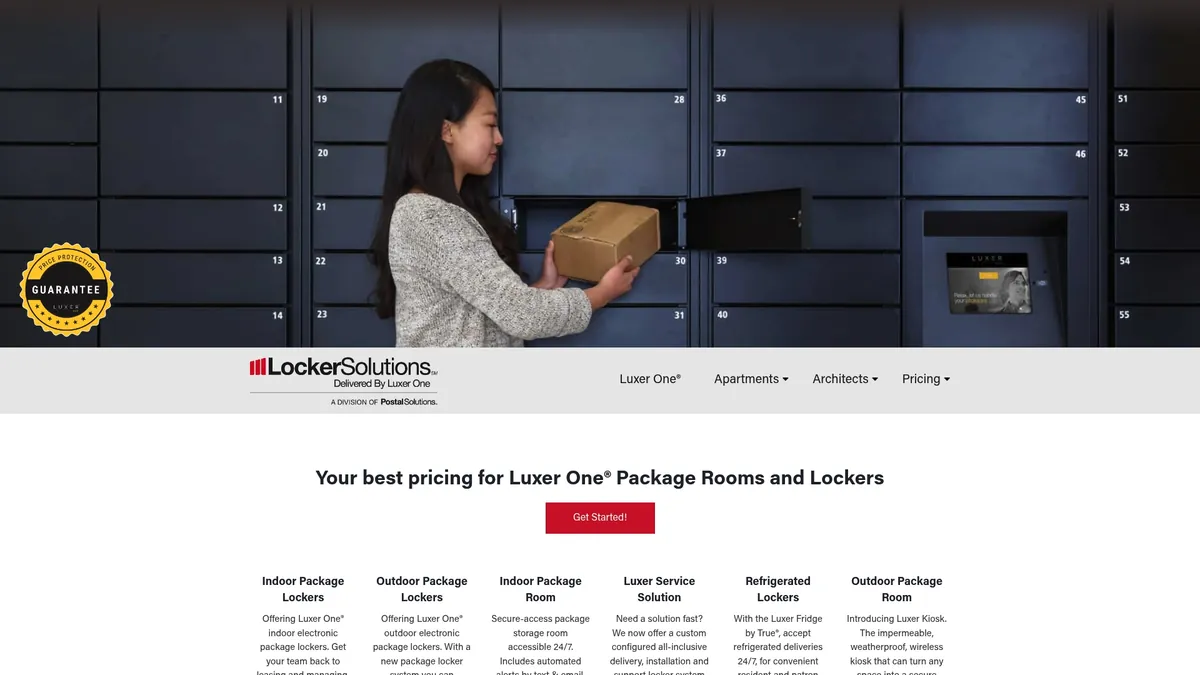
For managers weighing purchase against subscription, we offer both outright purchase and financing structures, including lease-to-own options that let you match the procurement model to your capital governance requirements. Refrigerated lockers, outdoor weatherproof units, and automated package rooms are all available with the same turnkey support. For capital investment programs that treat locker installs as part of a broader property improvement project, the Syndicate Build program offers a framework for thinking about construction-phase capital allocation.
Request a site survey and sample line-item CapEx budget from us to move from planning to approval.
Useful sources and further reading
These references support the accounting rules, formulas, and cost benchmarks in this article.
- AccountingTools, What Is a Capital Expenditure: Authoritative accounting reference covering capitalization triggers, asset cost basis, and depreciation treatment. Start here for the definitional foundation.
- Investopedia, Capital Expenditure (CapEx): Clear explanation of how CapEx differs from OpEx on financial statements, with examples relevant to fixed-asset management.
- IRS.gov: Primary source for U.S. tax capitalization rules, MACRS asset classes, and depreciation methods. Required reading before finalizing tax treatment with your CPA.
- Wall Street Prep, CapEx Formula and Calculations: Practical guide to the PP&E-based CapEx formula and depreciation modeling used by finance teams.
- Preventive Maintenance Guide: Covers maintenance schedules and records that support lifecycle CapEx requests and asset management plans.
- Package Locker Cost Calculator: Property-specific cost estimation tool to build a defensible CapEx figure before going to finance.
- Legacy Building Retrofit Guide: Capital cost guidance specific to integrating locker systems into older multifamily buildings.
- Smart Lockers for Property Managers: Operational detail and deployment considerations for managers ready to move from CapEx approval to procurement.
Recommended
Ready for a Luxer One® package locker quote?
Tell us your unit count and we'll send right-sized pricing with a fast response time.
Get my free quote