May 25, 2026
Choosing the Right Locker Company for Multifamily Properties
Discover how to choose the right locker company for multifamily properties. Maximize security, efficiency, and resident satisfaction today!
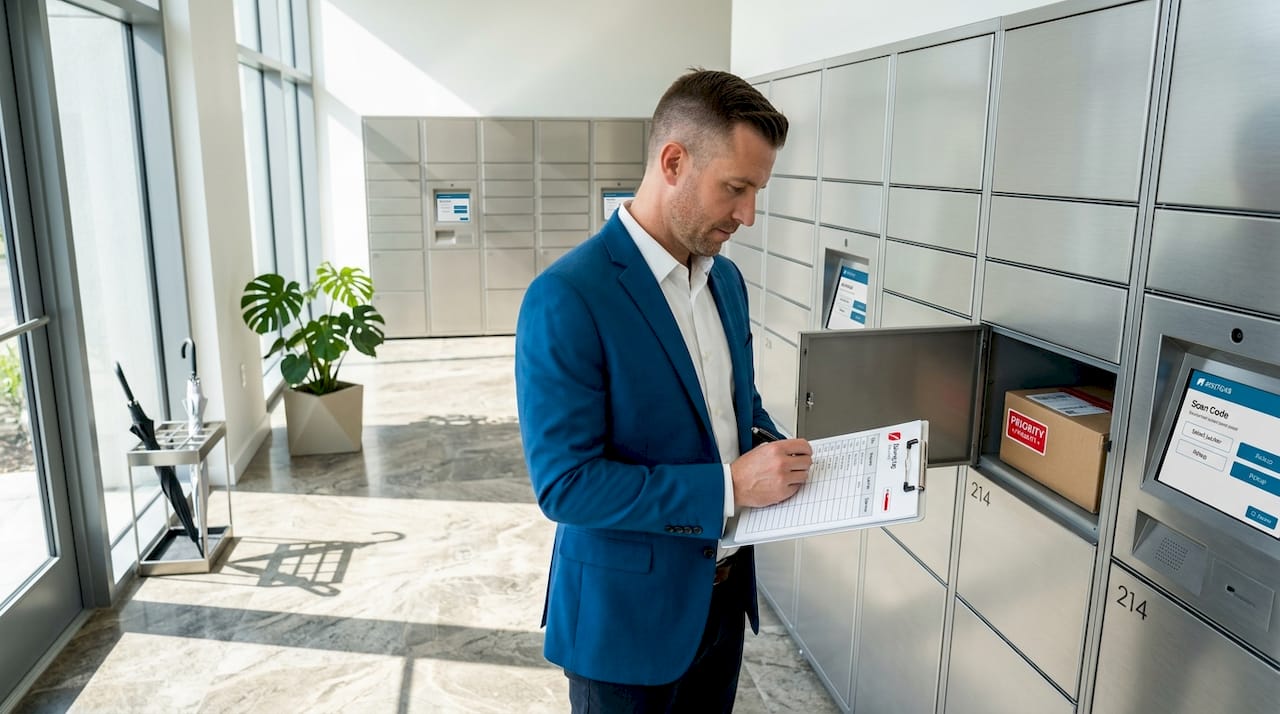
Package volume in multifamily residential buildings has reached a point where choosing the right locker company is no longer a nice-to-have decision. It’s a direct operational concern. Residents expect their deliveries to be secure, accessible at any hour, and never held hostage at the front desk. The locker company you select determines whether your property looks modern and well-managed or creates friction that drives up staff workload and resident complaints. This guide gives you a structured way to evaluate your options, compare the top providers, and make a confident decision.
Table of Contents
- Key takeaways
- 1. What to look for in a locker company
- 2. Luxer One
- 3. Parcel Pending
- 4. Package Concierge
- 5. Amazon Hub Locker+
- 6. Quadient (formerly Neopost)
- 7. Parcel Hive
- 8. Swiftlane
- 9. Sievert Larson Architects (SLA) Package Room Systems
- 10. Endurance Locker by Furniture Concepts
- 11. Comparison of top locker companies for multifamily properties
- 12. How to match a locker company to your property
- My honest take on where this market is heading
- Why Locker-solutions is worth a closer look
- FAQ
Key takeaways
| Point | Details |
|---|---|
| Security features matter most | Prioritize providers with keyless access, video surveillance, and automated alerts to protect resident packages. |
| Scalability prevents early obsolescence | Choose a locker company that can grow with your property and adapt to rising package volumes. |
| Placement and consultation are critical | Poor locker placement without resident input causes real failures and costly removals. |
| Hybrid solutions offer the most flexibility | Combining smart lockers with monitored package rooms meets diverse property needs effectively. |
| Total cost of ownership beats sticker price | Factor in installation, maintenance, and software fees before comparing provider pricing. |
1. What to look for in a locker company
Before you compare specific providers, you need a clear set of criteria. Not every locker company is built for multifamily residential use. Some specialize in schools and gyms. Others focus on retail or logistics. The ones worth your attention for apartment properties share a consistent set of qualities.

Security and technology integration sit at the top of the list. You want keyless access, resident notification systems, and video surveillance. Properties that have optimized their locker setup and placement see measurable reductions in staff handling time and stronger resident satisfaction scores.
Customization and scalability come next. A 60-unit property and a 400-unit property have very different volume demands. The right locker company offers configurations that fit your current footprint and expand as your needs grow.
- Installation speed and quality of ongoing maintenance support
- Resident-facing interface that requires no learning curve
- Transparent pricing with no hidden software subscription costs
- References or case studies from comparable multifamily properties
Pro Tip: Ask every vendor for their average installation timeline and what happens if a unit malfunctions. The quality of that answer tells you more about their support culture than any brochure will.
2. Luxer One
Luxer One is the most purpose-built option for multifamily residential package management on the market today. Their product line covers indoor and outdoor parcel lockers, refrigerated units for grocery deliveries, automated package rooms, and weatherproof kiosks designed for harsher climates.
The technology stack is built around the resident experience. Automated alerts notify residents the moment a package is deposited, and the system logs every access event with video documentation. For property managers, that means fewer calls to the leasing office and a clear audit trail if a dispute arises.
Luxer One works best for mid-to-large apartment communities, lease-up properties that want a premium amenity from day one, and portfolios where consistency across buildings matters. Their multifamily locker systems focus on security, convenience, and custom configurations tailored to the specific demands of residential properties.
3. Parcel Pending
Parcel Pending is a well-established name among commercial locker providers, with strong penetration in the multifamily sector. Their smart locker systems include both indoor and outdoor models, and they offer a straightforward carrier-agnostic design that works with every major delivery service.
Their management software provides real-time package tracking for both property staff and residents. One area where Parcel Pending stands out is its financing flexibility. They offer both purchase and subscription models, which gives smaller properties a lower barrier to entry.
The tradeoff is that their customization options are less extensive than some competitors. For properties with standard layouts and volume, that’s rarely a problem. For architects working on ground-up developments with specific spatial requirements, it can be a limiting factor.
4. Package Concierge
Package Concierge targets properties that want a hands-off, fully automated experience. Their lockers are carrier-neutral and integrate with most property management software platforms, which cuts down on manual data entry for leasing teams.
Their modular configuration means you can start small and add units without a full reinstallation. That’s a genuine advantage for developers who are phasing a project in stages. Customer support tends to receive strong marks from property managers in publicly available reviews, which matters because a locker system that goes down during peak delivery season is a real operational problem.
5. Amazon Hub Locker+
Amazon Hub Locker+ operates differently from most locker companies. Amazon installs and maintains the hardware at no direct cost to the property, with the understanding that the units primarily serve Amazon deliveries. For high-volume Amazon delivery buildings, this can make strong financial sense.
The limitation is obvious. If a resident receives a FedEx or UPS package, the Hub Locker won’t accept it. For properties where Amazon represents the vast majority of deliveries, it’s worth evaluating. For communities with a diverse mix of carrier traffic, a carrier-agnostic system serves residents better.
6. Quadient (formerly Neopost)
Quadient brings enterprise-grade technology to locker storage solutions. Their Parcel Pending by Quadient platform includes multi-carrier compatibility, open-architecture software, and strong data reporting tools. Property managers who want granular visibility into package volume trends and locker utilization will appreciate the analytics dashboard.
Quadient tends to be a stronger fit for large-scale or institutional properties where data-driven management decisions matter. Their pricing reflects that enterprise orientation, so smaller independent operators should weigh the cost against actual reporting needs before committing.
7. Parcel Hive
Parcel Hive is a newer entrant in the parcel locker space with a focus on affordability and fast deployment. Their modular outdoor units are designed for properties that need a quick solution without a lengthy procurement process.
The technology is functional but less feature-rich than top-tier providers. You get basic carrier notifications and secure access without some of the advanced video integration or analytics that more established systems offer. For value-add renovations where budget constraints are real, Parcel Hive offers a practical entry point.
8. Swiftlane
Swiftlane sits at the intersection of access control and package management. Their platform connects smart entry with locker access, so residents use a single app to manage both building entry and package pickup. For developers building properties with integrated smart home features, that unified experience is genuinely appealing.
Their locker hardware partners vary, so the specific unit quality depends on the configuration you select. The software integration story is strong. The hardware story requires more due diligence. Confirm which physical locker systems they currently support before signing a contract.
9. Sievert Larson Architects (SLA) Package Room Systems
Some locker companies don’t sell hardware at all. SLA and similar firms specialize in designing custom package room infrastructure into new construction. If you’re developing from the ground up, engaging a package room design consultant early in the architectural process can avoid the expensive retrofits that plague older buildings.
Package rooms combined with smart locker technology create hybrid solutions that handle overflow volume and special-size deliveries that standard lockers can’t accommodate. For large communities with diverse delivery types, this hybrid model is worth serious consideration.
10. Endurance Locker by Furniture Concepts
Endurance Locker takes a different angle. Rather than smart parcel systems, they specialize in physically durable personal storage lockers built from high-impact polyethylene with anti-ligature shelves and fire-resistant materials. Their products pass flammability tests and meet bacteria reduction standards.
These are not parcel lockers in the automated sense. They are built for resident personal storage in amenity rooms, gyms, or mail centers. For properties that want to offer secure personal storage as a separate amenity alongside a smart package locker system, Endurance Locker fills that niche well.
11. Comparison of top locker companies for multifamily properties
| Company | Carrier-agnostic | Refrigerated option | Software integration | Best property type | Pricing model |
|---|---|---|---|---|---|
| Luxer One | Yes | Yes | Advanced | Mid to large multifamily | Purchase/lease |
| Parcel Pending | Yes | No | Strong | Mid-size apartments | Purchase/subscription |
| Package Concierge | Yes | No | Strong | Phased developments | Modular purchase |
| Amazon Hub Locker+ | No (Amazon only) | No | Basic | High Amazon-volume buildings | Free (Amazon-funded) |
| Quadient | Yes | No | Enterprise-grade | Large institutional | Enterprise pricing |
| Parcel Hive | Yes | No | Basic | Budget renovations | Affordable purchase |
| Swiftlane | Yes | Varies | App-integrated | Smart home developments | Software plus hardware |
| Endurance Locker | N/A | No | None | Amenity/personal storage | Standard retail |
12. How to match a locker company to your property
The comparison table gives you a starting point, but the real decision comes down to three property-specific factors: scale, resident demographics, and budget horizon.
Scale is straightforward. Count your average daily inbound packages per unit across the year, not just during peak seasons. Effective locker design and placement reduces staff handling time significantly, but only if the locker count matches actual volume. Undersizing is the single most common mistake property managers make in the first deployment.
Resident demographics matter more than most vendors will tell you. A building with a high percentage of remote workers who receive regular grocery and meal kit deliveries needs refrigerated locker capacity. A student housing property with high package theft risk needs strong video integration and access logging. The best locker manufacturers are the ones who ask you these questions before they quote you a system.
When negotiating contracts, pay close attention to software subscription fees, warranty terms, and what constitutes a service-level agreement breach. Steel and metal locker pricing varies significantly by size, finish, and locking mechanism. The same principle applies to smart parcel systems. Demand itemized quotes.
Pro Tip: Ask vendors what their response time is for a complete unit failure during peak holiday delivery periods. If they don’t have a specific answer, that’s your answer.
My honest take on where this market is heading
I’ve watched the locker market shift dramatically over the past several years, and the single biggest mistake I see property managers make is treating locker selection as a one-time purchase decision rather than a long-term infrastructure choice. The properties that get this right early almost never revisit it. The ones that cut corners spend more money fixing the problem in year two or three than a better decision would have cost at the start.
The case that stands out most clearly to me is the solar-powered parcel locker removal that happened after installation without community consultation, resulting in zero deliveries and a full removal. That story isn’t unusual. It happens at smaller scales in apartment communities all the time when locker placement ignores how residents actually move through a building.
My advice is to prioritize vendors who bring a site assessment to the table before they quote you hardware. The technology matters, but placement, resident communication, and post-installation support are what separate a successful locker rollout from an expensive problem. The locker companies that invest in that process are worth the premium. The ones that drop equipment and disappear are not.
— Craig
Why Locker-solutions is worth a closer look
If you’ve worked through this comparison and want a partner with deep multifamily expertise, Locker-solutions specializes in exactly this space. They offer the full Luxer One® product line including indoor and outdoor electronic package lockers, refrigerated units, automated package rooms, and weatherproof kiosks built for properties in demanding climates.
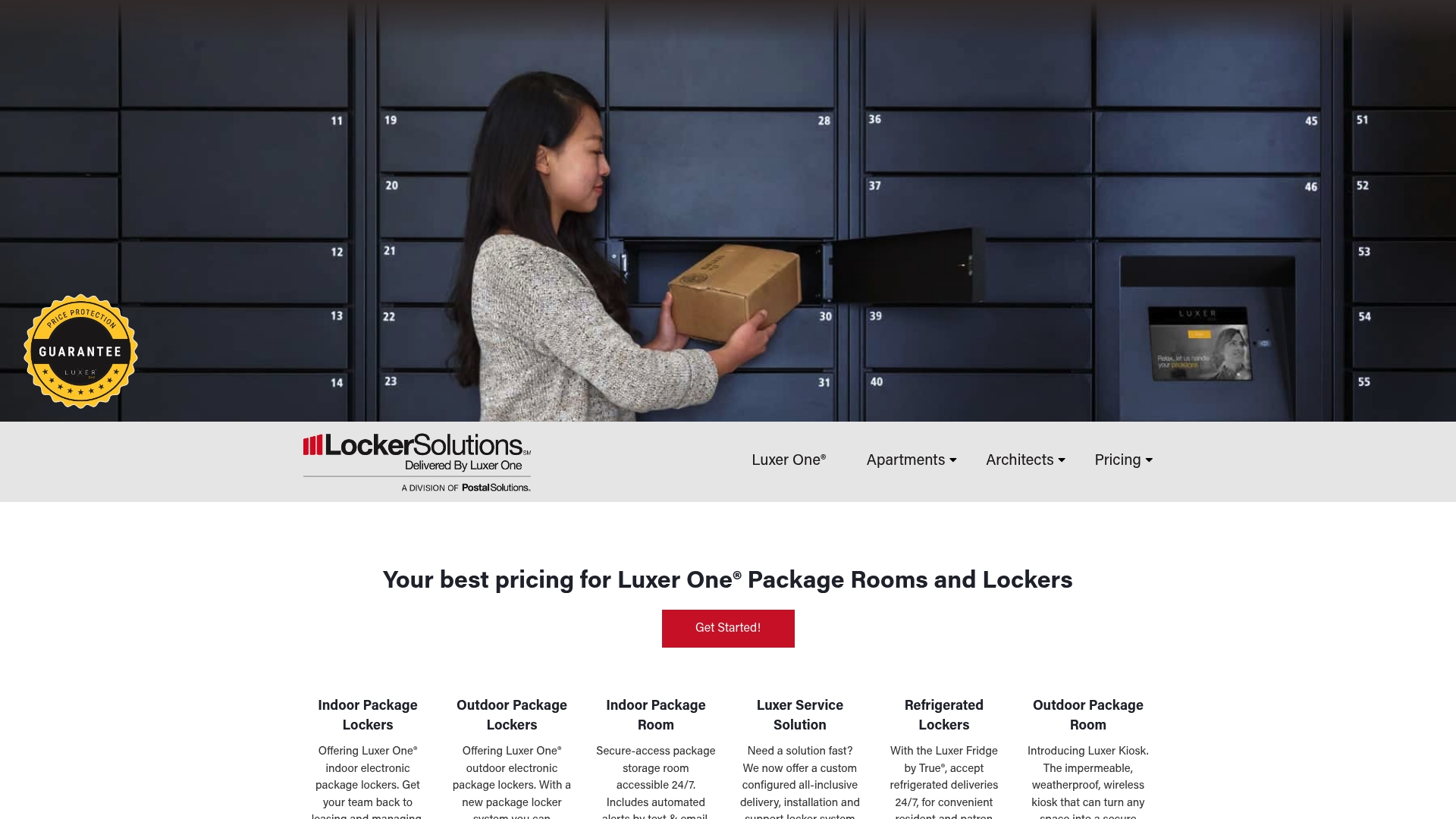
What sets them apart from generalist security locker suppliers is the focus on rapid deployment, custom configurations, and ongoing maintenance support. Whether you are managing a 50-unit property or a 500-unit portfolio, they can size and configure a system that fits. Explore their full locker and package room options or get specific on your building requirements with their automated package room guide to see which configuration makes the most sense before you make a call.
FAQ
What is a locker company in the context of multifamily housing?
A locker company in multifamily housing provides secure package delivery systems, including smart parcel lockers and package rooms, designed to handle resident deliveries without staff involvement.
How many lockers does a multifamily property typically need?
The general benchmark is one locker slot for every three to five units, though properties with high delivery volume or remote-work populations should lean toward the lower ratio for adequate capacity.
Are refrigerated lockers worth the added cost for apartment buildings?
Yes, particularly for communities where residents regularly receive grocery and meal kit deliveries. The refrigerated and specialized locker options from providers like Luxer One address this need directly and can become a meaningful leasing amenity.
What should I watch for in a locker service agreement?
Prioritize clarity on software subscription fees, hardware warranty coverage, response time guarantees for unit failures, and what triggers a service-level breach. These terms vary widely across commercial locker providers.
Can locker systems integrate with existing property management software?
Most leading providers offer API-based integration with common property management platforms. Confirm compatibility with your specific system before you finalize a vendor selection.
Recommended
Ready for a Luxer One® package locker quote?
Tell us your unit count and we'll send right-sized pricing with a fast response time.
Get my free quote