July 6, 2026
Locker Systems in Coastal Communities: A Practical Guide
Discover the vital role of locker systems in coastal communities. Enhance safety, boost tourism, and enjoy worry-free beach days with secure storage.
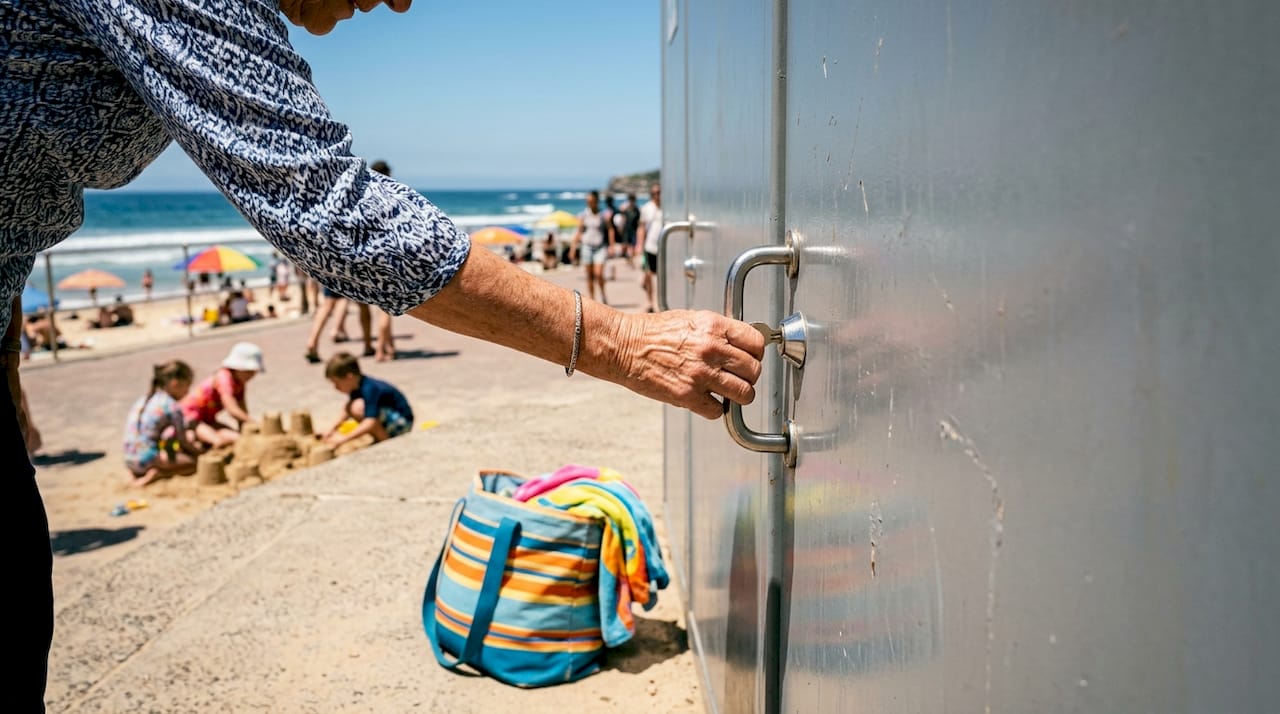
Locker systems are defined as secure, self-service storage units installed in public spaces to protect personal belongings during recreational or transit activities. The role of locker systems in coastal communities goes well beyond simple storage. These installations reduce theft, support local tourism economies, and free residents and visitors from carrying valuables onto beaches, docks, and promenades. Coastal municipalities that deploy package management infrastructure gain a measurable tool for improving public safety and visitor satisfaction. Locker Solutions, along with industry standards like ABS plastic construction and dynamic locker allocation, represents the current direction of this field.
What benefits do locker systems deliver to coastal communities?
Secure storage is the most direct benefit locker systems provide. Beachgoers and marina visitors routinely leave phones, wallets, and keys unattended while swimming or boating. A locker system eliminates that risk entirely by giving every visitor a private, lockable compartment.
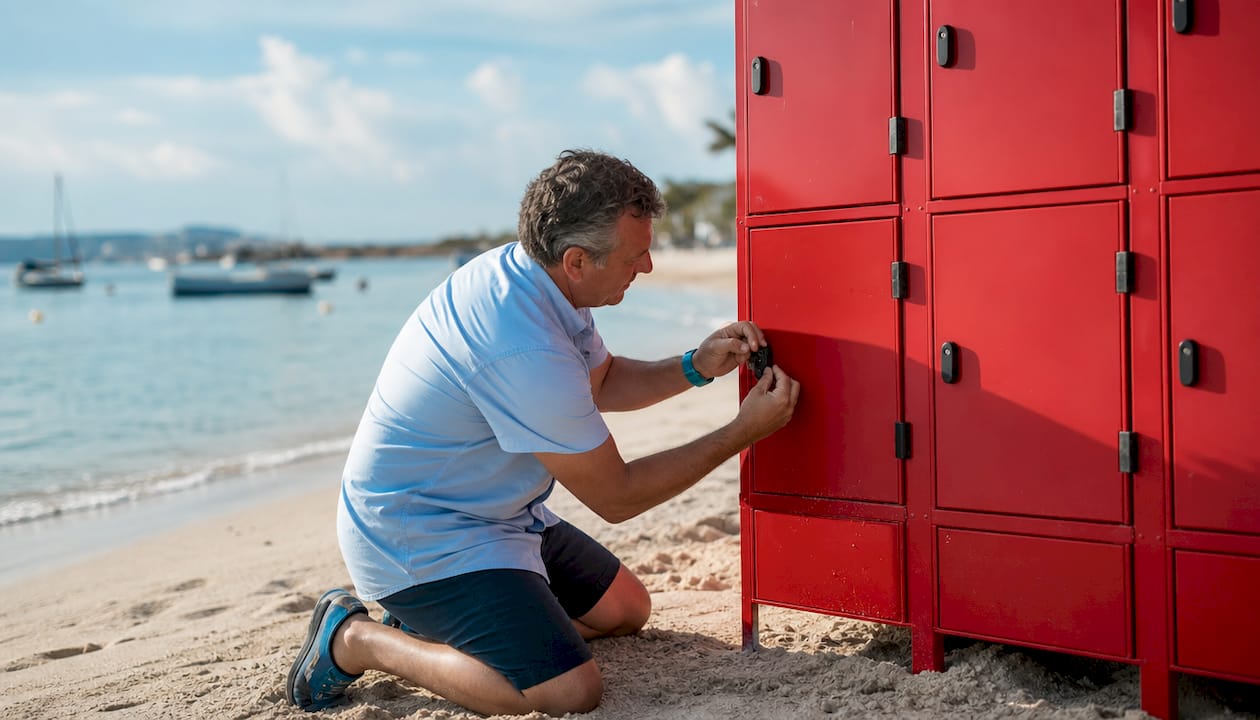
The economic case is equally strong. Smart locker installations in tourist-heavy coastal locations can generate between €1,500 and €3,500 in monthly revenue per 30-locker unit. That figure reflects rental frequencies of 10–30 uses per locker each day. For local governments managing tight budgets, that income stream is real and recurring.
Self-service and cashless operations reduce the staffing burden significantly. Modern locker systems require no attendant on site. Visitors rent, access, and return lockers through QR codes or passcodes, which means the municipality collects revenue without adding payroll.
The locker systems benefits for coastal towns extend to accessibility and inclusivity:
- Visitors with mobility limitations can store medical equipment or mobility aids securely near the beach entrance.
- Families with young children can lock strollers and diaper bags without hauling them across sand.
- Surfers and divers can secure gear between sessions without returning to a vehicle.
- Day-trippers arriving by public transit, with no car trunk to use, gain a practical storage option they would not otherwise have.
“Coastal municipalities that invest in secure public storage infrastructure see measurable gains in visitor dwell time and repeat visits. When people feel safe leaving their belongings, they stay longer and spend more at local businesses.”
The Puri Municipality in India demonstrated this directly. The city introduced its first beach locker system with tiered pricing ranging from ₹18 for small units to ₹118 for large units per hour. That pricing model made secure storage accessible at multiple budget levels while generating consistent municipal income.
How do coastal environmental factors influence locker design?
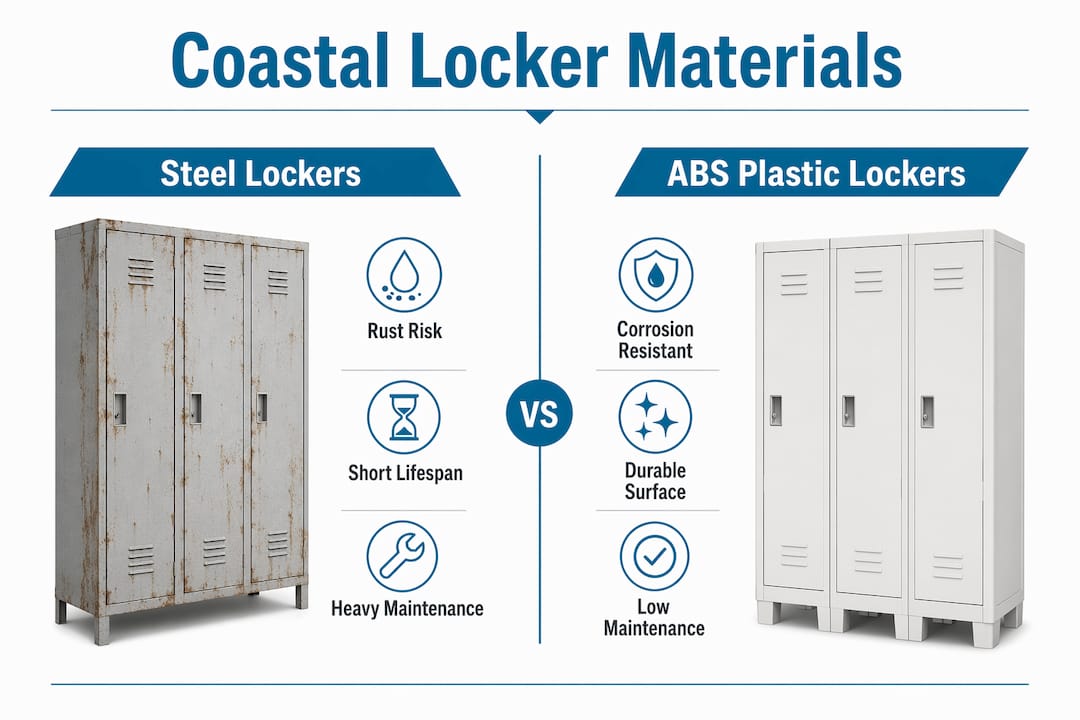
Salt air is the primary enemy of standard locker materials. Steel lockers placed near the ocean show hinge rust within six months. In the most aggressive salt air environments, lock cylinder failures can appear in as little as three months. That rate of deterioration creates security gaps and drives up maintenance costs faster than most municipalities anticipate.
ABS plastic lockers solve this problem directly. ABS, or acrylonitrile butadiene styrene, is a rigid thermoplastic that resists moisture, salt, and temperature swings without corroding. Coastal installations using ABS units avoid rust and condensation damage entirely, which extends the service life of the locker bank and reduces replacement costs.
The table below compares the two primary material options for coastal locker deployments:
| Feature | Steel lockers | ABS plastic lockers |
|---|---|---|
| Corrosion resistance | Low; rusts within months in salt air | High; no rust or oxidation |
| Maintenance frequency | High; hinges and locks need regular replacement | Low; minimal upkeep required |
| Weight | Heavy; harder to reposition | Lighter; easier to reconfigure |
| Longevity in coastal climate | 1–3 years before significant degradation | 5+ years with standard care |
| Security risk from material failure | High after corrosion sets in | Low; material integrity holds |
Design details matter beyond material choice. Raised bases keep locker bases above pooling rainwater and sand accumulation. Modular sizing lets facility managers configure banks that fit narrow boardwalks or irregular foreshore layouts. The outdoor locker humidity resistance guide from Locker Solutions covers these specifications in detail for facility managers planning coastal installations.
Pro Tip: When evaluating ABS lockers for a coastal site, request a salt spray test certification from the manufacturer. This test simulates years of coastal exposure in a controlled environment and gives you objective data on expected lifespan before you commit to a purchase.
Selecting the right material is not a minor procurement detail. It determines whether your locker system lasts three months or ten years. The coastal “greenhouse effect,” where heat and humidity combine inside a locker bank, accelerates material degradation even further. ABS plastic handles that internal environment far better than steel or standard laminate alternatives.
What smart locker technologies enhance coastal storage solutions?
Battery-powered smart lockers are the most significant operational advancement for coastal deployments. Traditional lockers require electrical conduit, wiring, and a grid connection. Beaches, promenades, and marina docks rarely have that infrastructure in place. Battery-operated smart lockers deploy without any electrical connection, which cuts installation time and project complexity dramatically.
The access technology has also matured. QR code and multi-digit passcode systems now handle the full rental cycle without a staff member present. Here is how a typical smart locker rental works at a coastal site:
- The visitor approaches the locker kiosk or scans a posted QR code with their phone.
- They select a locker size, pay via cashless interface, and receive a unique access code.
- The locker opens automatically. The visitor stores their items and closes the door.
- When ready to retrieve belongings, they enter the same code and the locker releases.
- The system logs the transaction, timestamps the access, and resets the locker for the next user.
That five-step process requires zero staff involvement. Digital audit trails give administrators a complete record of every access event, which supports both security investigations and usage reporting for budget justification.
Dynamic locker allocation is another technology worth understanding. Rather than assigning each user a fixed locker for a season or a day, dynamic systems assign the next available unit at the moment of rental. Dynamic allocation can reduce the total number of lockers needed by up to 50% compared to static assignment models. That efficiency matters enormously on a crowded beachfront where physical space is limited.
Pro Tip: For high-traffic coastal sites, choose a smart locker system with a cloud-based management dashboard. You can monitor occupancy rates, flag stuck doors, and adjust pricing remotely without sending staff to the location.
The Riga seaside deployment in Latvia illustrates what a well-configured smart locker bank looks like in practice. The installation offered sizes from XS to XL, ranging from 18 cm compartments for phones and wallets up to 90 cm units for bags and beach gear. That size range, combined with passcode access, met the storage needs of a diverse beach population without requiring a single on-site attendant.
How can local governments implement locker systems effectively?
Effective implementation starts before procurement. Local governments that skip the community engagement step often install locker banks in the wrong locations or with the wrong size mix. The Geraldton foreshore project in Western Australia shows what community input can accomplish. A petition of 112 signatures led directly to the completion of a new foreshore facility by june 2026. That outcome came from residents identifying a specific, unmet need and presenting it formally to local government.
A practical implementation checklist for coastal locker projects:
- Survey beachgoers and marina users to identify peak usage hours and preferred locker sizes.
- Map high-traffic zones such as main beach entrances, ferry terminals, and surf club areas for placement.
- Specify ABS plastic or equivalent corrosion-resistant materials in the procurement brief.
- Require battery-powered or solar-powered operation to avoid costly electrical infrastructure work.
- Include cashless payment capability as a baseline requirement, not an optional add-on.
- Build a maintenance schedule into the contract, covering quarterly inspections and battery replacement.
- Plan for a phased rollout, starting with a pilot bank of 20–30 lockers before scaling up.
Space efficiency is a common oversight. The space-efficient locker configuration guide from Locker Solutions walks through how modular banks can be arranged to maximize capacity within a constrained footprint. That guidance applies directly to foreshore and promenade environments where every square meter counts.
Pricing strategy also requires deliberate planning. Tiered pricing by locker size and rental duration maximizes both accessibility and revenue. Flat-rate daily pricing works well for family beach days, while hourly rates suit quick stops at a marina or ferry terminal.
Key Takeaways
Locker systems in coastal communities deliver the most value when material choice, technology, and community planning align from the start.
| Point | Details |
|---|---|
| Material selection is critical | ABS plastic resists salt air corrosion; steel lockers can fail within three months in coastal environments. |
| Smart lockers cut operating costs | Battery-powered, QR-code systems require no staff and generate digital audit trails for full administrative control. |
| Revenue potential is real | A 30-locker coastal installation can generate €1,500–€3,500 monthly, making lockers a viable municipal income source. |
| Community input shapes success | A petition of 112 signatures drove the Geraldton foreshore project to completion, proving that resident engagement produces results. |
| Dynamic allocation saves space | Flexible locker assignment reduces required inventory by up to 50%, a major advantage on crowded beachfronts. |
What we have learned from coastal locker deployments
Coastal locker projects teach lessons that no product spec sheet covers. The biggest one is this: the technology is rarely the hard part. The hard part is convincing local government that a locker bank is infrastructure, not a luxury amenity.
We have seen municipalities delay projects for years because they treated lockers as a discretionary spend. Then a community petition arrives, or a neighboring town installs a system and starts reporting revenue, and the conversation changes overnight. The Geraldton example is not unusual. It is the norm. Residents who experience the problem daily are almost always ahead of the officials who fund the solution.
The second lesson is that material choice determines whether a project succeeds or becomes a maintenance liability. We have watched steel locker banks corrode within a single summer season in high-humidity coastal zones. The replacement cost often exceeds the original installation budget. ABS plastic is not a premium option. It is the baseline requirement for any coastal deployment that needs to last.
Smart technology is where the real operational gains live. The shift from coin-operated to QR-code access is not just a convenience upgrade. It eliminates cash handling, removes the need for on-site staff, and gives administrators real-time data on usage patterns. That data is what justifies the next phase of expansion to a city council.
The future of coastal locker systems points toward solar-powered units with integrated occupancy sensors and dynamic pricing. Those features already exist in commercial deployments. The communities that adopt them early will run lower-cost, higher-revenue systems than those that wait.
— Locker Solutions
Locker Solutions for coastal and outdoor environments
Coastal communities need locker systems built to handle what the environment throws at them. Locker Solutions offers outdoor weatherproof lockers engineered for exactly these conditions, with corrosion-resistant materials, configurable sizing, and technology that operates without a fixed electrical connection.
Whether you are a local government official planning a foreshore installation or a property manager serving coastal residents, Locker Solutions provides the configuration support and deployment expertise to get the right system in the right place. From modular ABS units sized for beach gear to package management systems that serve coastal residential communities year-round, the product range covers the full spectrum of coastal storage needs. Contact Locker Solutions to discuss site requirements and get a configuration recommendation tailored to your location.
FAQ
What materials work best for coastal locker installations?
ABS plastic is the preferred material for coastal environments. Steel lockers corrode within months in salt air, while ABS units resist rust, moisture, and temperature extremes without degrading.
How do smart lockers reduce staffing costs at beaches?
Smart lockers use QR codes and passcodes to automate the full rental cycle. No attendant is needed on site, and digital audit trails give administrators remote oversight of every transaction.
Can locker systems generate revenue for local governments?
A 30-locker coastal installation can generate between €1,500 and €3,500 per month through rental fees. Tiered pricing by locker size and rental duration maximizes both accessibility and income.
How does dynamic locker allocation help coastal sites?
Dynamic allocation assigns the next available locker at the moment of rental rather than reserving fixed units. This approach can reduce the total number of lockers needed by up to 50%, freeing valuable space on crowded beachfronts.
What role does community input play in locker system implementation?
Community engagement identifies the right locations, sizes, and pricing before procurement begins. The Geraldton foreshore project shows that a petition of 112 signatures was enough to drive a full facility to completion.
Recommended
- Locker Systems for Multifamily Package Management — Locker Solutions Blog
- Package Locker Systems for Multifamily Properties: 2026 Guide — Locker Solutions Blog
- Secure Package Delivery for Multifamily Buildings: 2026 Guide — Locker Solutions Blog
- Space-Efficient Locker Configuration: A Developer’s Guide — Locker Solutions Blog
Ready for a Luxer One® package locker quote?
Tell us your unit count and we'll send right-sized pricing with a fast response time.
Get my free quote