June 26, 2026
Secure Package Delivery for Multifamily Buildings: 2026 Guide
Discover effective strategies for secure package delivery in multifamily buildings. Enhance resident satisfaction and reduce theft with our 2026 guide.
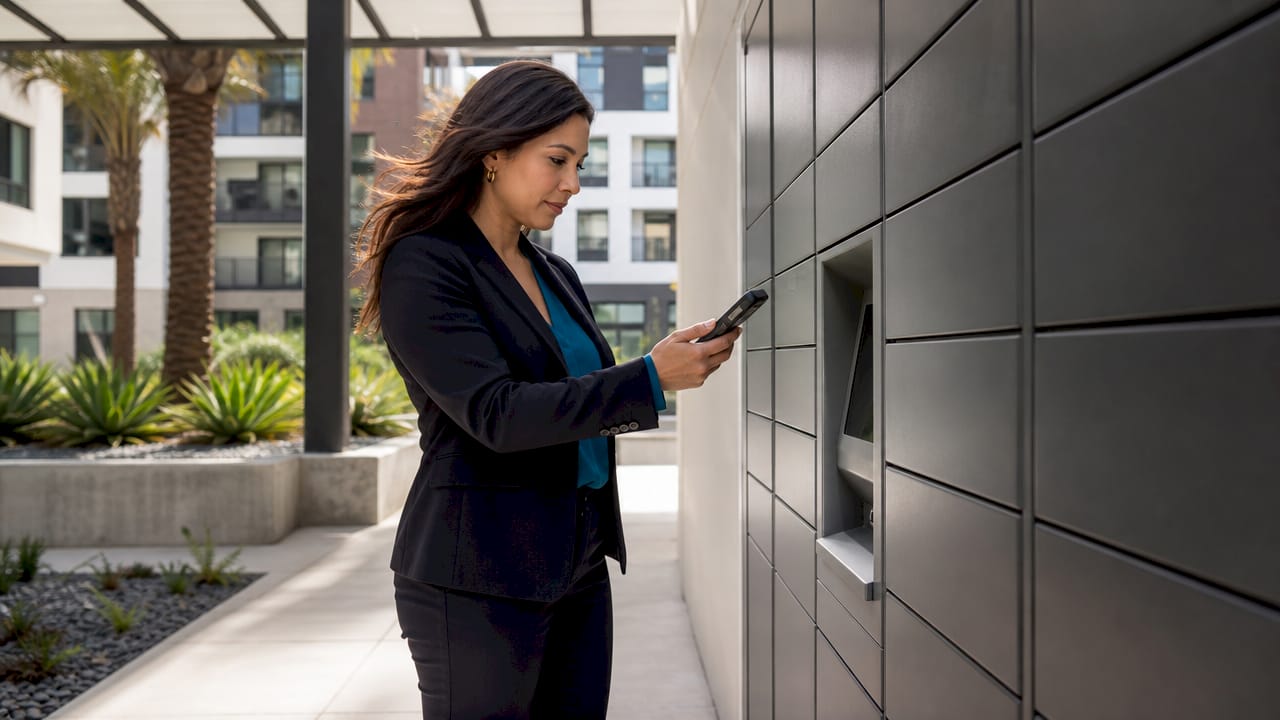
Secure package delivery is defined as an integrated system combining physical access control, electronic locker technology, and carrier compliance protocols to protect residents’ parcels in multifamily buildings. Property managers who treat package security as an afterthought pay for it in resident complaints, staff hours, and lease renewals lost to theft frustration. The volume of residential deliveries has made package management a core operational function, not a convenience feature. Luxer One® lockers, USPS Smart Package Lockers, and automated package rooms now represent the standard infrastructure for properties serious about protecting parcels. This guide covers the components, comparisons, and operational strategies that make the difference in 2026.
What makes a secure package delivery system work?
A functional secure package delivery system rests on three pillars: controlled physical access, electronic tracking, and carrier workflow compliance. Remove any one of them and the system develops gaps that thieves and operational failures exploit quickly.
The physical layer starts with access control. Key fobs and mobile readers restrict package room entry to residents only, which Bay Alarm identifies as a foundational measure for reducing apartment package theft. That restriction alone eliminates the most common theft scenario: an unauthorized person walking into an unsecured room.
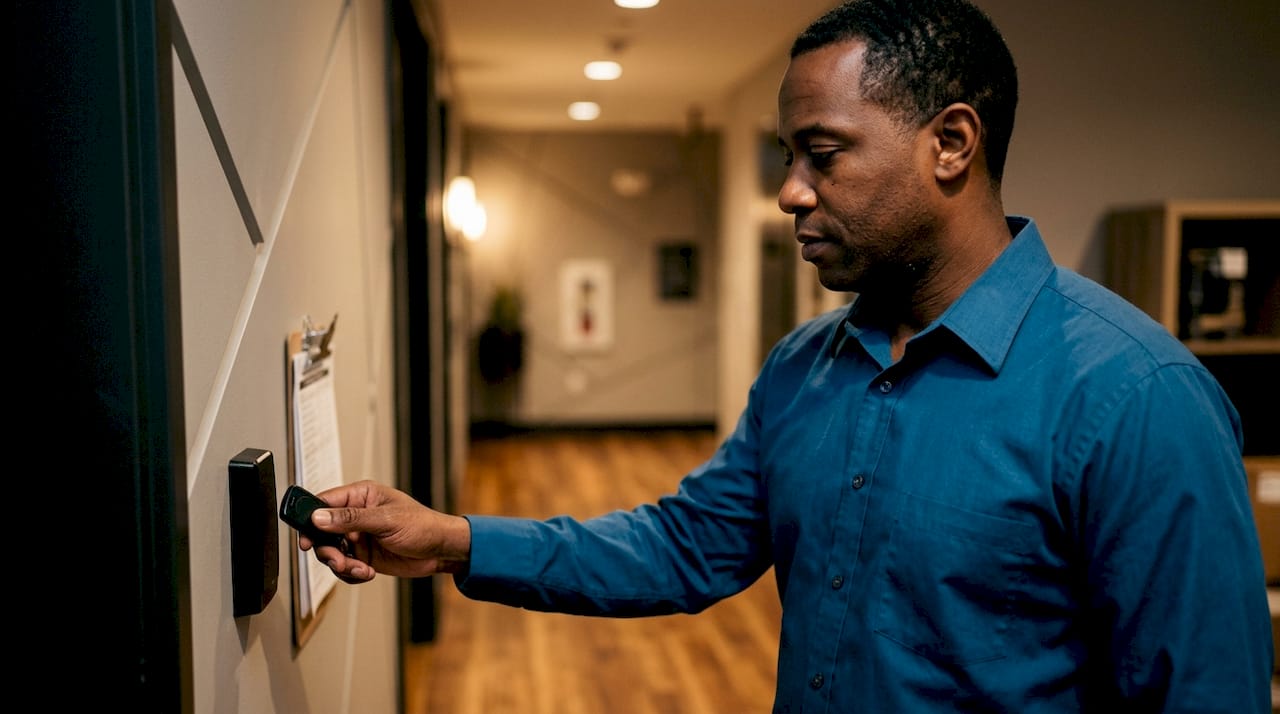
The technology layer adds electronic lockers with unique digital codes or keys assigned per delivery. USPS parcel lockers use metal compartments with self-locking mechanisms and require timely pickup, a model that Luxer One® has refined for high-volume apartment settings. Residents receive automated notifications the moment a package is deposited, which drives faster pickup and reduces locker congestion.
The compliance layer ties everything together. Carriers must follow the intake workflow every time. When they bypass it, the entire system fails regardless of how good the hardware is.
Key components every property manager should verify before selecting a system:
- Access control: Key fob, mobile app, or PIN entry that limits room access to residents and authorized carriers
- Smart lockers: Electronic compartments with unique codes per delivery and automated resident alerts
- Surveillance: Visible cameras in well-lit areas that deter theft and collect evidence when incidents occur
- Carrier protocols: Written standard operating procedures (SOPs) that every delivery driver must follow
- Notification workflows: Automated text or app alerts that prompt residents to pick up packages promptly
Pro Tip: Install cameras at eye level facing the locker or package room entrance, not just ceiling-mounted wide-angle views. Eye-level footage produces usable facial identification, which ceiling shots rarely do.
How do smart lockers compare to traditional package rooms?
Smart lockers and traditional package rooms solve the same problem through different approaches. The right choice depends on your building’s volume, layout, and budget.
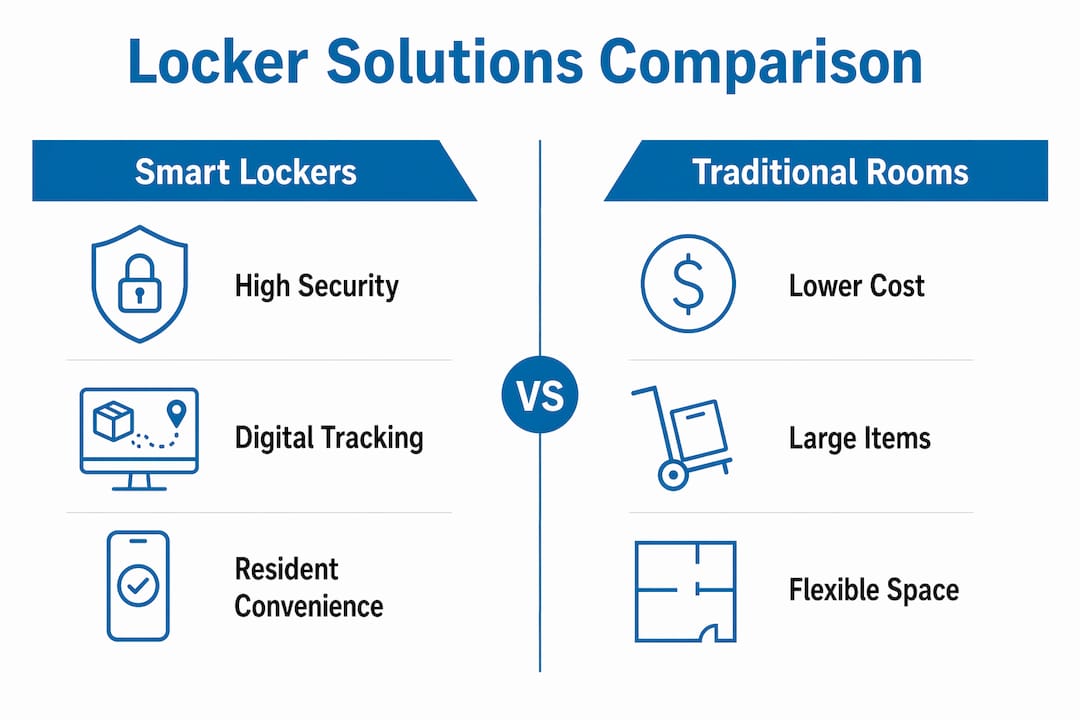
| Factor | Smart package lockers | Traditional package rooms |
|---|---|---|
| Security level | High: electronic access per compartment | Moderate: single-door access for all packages |
| Resident experience | Self-service 24/7 with unique code | Requires staff or key access during set hours |
| Scalability | Limited by fixed compartment count | Easier to expand with shelving and space |
| Oversized packages | Difficult: rigid size constraints cause overflow | Handles large items more flexibly |
| Cost | Higher upfront hardware investment | Lower initial cost, higher labor cost over time |
| Maintenance | Vendor-managed software and hardware | Property staff responsible for organization |
Smart lockers deliver a clear advantage in resident experience and per-package security. Each compartment is independently locked, so one resident’s package cannot be accessed when retrieving another. The tradeoff is that fixed-dimension lockers struggle during volume surges and cannot accommodate oversized deliveries, which increasingly make up a large share of e-commerce shipments.
Traditional package rooms offer more flexibility for large items and lower upfront costs. The security gap is real, though. A single access point means one compromised credential exposes every package in the room. Bay Alarm notes that organized, supervised package areas raise the perceived risk for thieves, but supervision requires staff time that most properties cannot sustain around the clock.
The hybrid model is gaining traction for this reason. Properties deploy smart lockers for standard-sized packages and a monitored package room for oversized items. This approach covers the full range of delivery types without forcing a compromise on either security or flexibility.
A few practical considerations when choosing between the two:
- Properties with more than 100 units typically see enough volume to justify smart locker infrastructure
- Buildings in climates with extreme weather benefit from weatherproof outdoor lockers that keep packages protected without requiring indoor space
- Refrigerated lockers address the growing category of grocery and meal kit deliveries that standard lockers cannot handle
What operational strategies improve carrier compliance?
Carrier non-compliance is the most common cause of multifamily package system failures. A 2026 framework from Insights by Blueprint advises property operators to demand vendor solutions that detect and respond to delivery driver bypass. The hardware means nothing if UPS, FedEx, or Amazon drivers leave packages at the front door instead of using the designated system.
Fixing compliance requires a procedural approach, not just better technology. Follow these steps to build a carrier compliance program that holds:
- Create written SOPs for every carrier. Document the exact steps a driver must follow: where to enter, how to access the locker or package room, what to do when a compartment is full. Ambiguity is the enemy of compliance.
- Post visual instructions at the delivery point. Laminated step-by-step guides with photos work better than text-only signs. Drivers are under time pressure and will not read a paragraph. A four-step visual takes seconds to follow.
- Designate an exception handling process. When a locker is full or a package is oversized, drivers need a clear alternative. Without one, they default to leaving the package wherever is convenient.
- Communicate directly with carrier dispatch. Building-level drivers change frequently. Sending updated SOPs to dispatch ensures new drivers receive instructions before their first delivery, not after the first incident.
- Track compliance metrics. Systems that log carrier activity let you identify which carriers bypass the workflow most often. That data gives you leverage when escalating to carrier management.
Pro Tip: Attach a QR code to your delivery entrance that links to a short video walkthrough of the intake process. Video instructions reduce driver errors more effectively than printed signs, and the QR code updates automatically if your process changes.
The impact of strong carrier compliance extends beyond theft prevention. Residents who receive consistent, timely notifications trust the system. That trust reduces the volume of “where is my package” calls to your leasing office and improves overall satisfaction scores.
What technologies are strengthening package security in 2026?
The technology layer of package security is advancing faster than most property managers realize. Several developments are directly relevant to multifamily operations right now.
- Autonomous delivery robotics: Major carriers including UPS, FedEx, and DHL are deploying autonomous mobile robots in warehouses to increase handling efficiency. This trend accelerates last-mile delivery speed, which means packages arrive at your building faster and in higher volumes than before.
- Mobile app integration: Real-time notifications via resident apps prompt faster pickup and reduce locker congestion. Mobile-controlled package security systems give residents visibility into their deliveries without requiring staff involvement.
- AI-enhanced surveillance: Camera systems now use AI to flag unusual behavior in package areas, such as someone accessing multiple compartments or lingering without retrieving a package. This moves surveillance from reactive evidence collection to active deterrence.
- Refrigerated lockers: Grocery delivery from Instacart, Amazon Fresh, and meal kit services like HelloFresh has created demand for temperature-controlled storage. Refrigerated locker units handle perishable deliveries that standard lockers cannot.
- Weatherproof kiosks: Properties in regions with harsh winters or heavy rain need outdoor units that function reliably year-round. Weatherproof designs eliminate the need to route all deliveries through interior spaces.
The common thread across these technologies is reducing the need for staff intervention. Every manual step in the package process is a point of failure. Automation removes those points systematically.
Key Takeaways
Secure package delivery in multifamily buildings requires controlled access, electronic locker technology, and enforced carrier compliance working together as a single system.
| Point | Details |
|---|---|
| Access control is foundational | Key fobs and mobile readers restrict package room entry to residents and authorized carriers only. |
| Carrier compliance drives outcomes | Standardized SOPs and visual instructions prevent driver bypass, the most common system failure. |
| Smart lockers vs. package rooms | Smart lockers win on per-package security; package rooms handle oversized items more flexibly. |
| Hybrid models cover more scenarios | Combining lockers with a monitored package room addresses the full range of delivery types and sizes. |
| Emerging tech reduces staff burden | AI surveillance, mobile alerts, and refrigerated lockers automate security and expand delivery coverage. |
What property managers often get wrong about package security
The properties that struggle most with package management share one pattern: they invest in hardware and ignore the human layer. A Luxer One® locker bank installed without carrier training is just expensive furniture. The system only works when every delivery driver knows exactly what to do and has no reason to bypass it.
The second mistake is treating package security as a one-time setup. Carrier rosters change constantly. New drivers arrive without any knowledge of your building’s protocols. Properties that send updated SOPs to carrier dispatch on a quarterly basis see far fewer compliance failures than those that set up the system once and assume it runs itself.
The ROI case for getting this right is stronger than most operators expect. Residents who experience package theft or chronic delivery problems cite it as a top reason for not renewing their lease. Fixing the package system does not just reduce theft. It directly affects occupancy. That connection between package room setup quality and resident retention is the argument that converts skeptical ownership groups faster than any security statistic.
The properties I have seen execute this best treat their package system the same way they treat their access control system: with a defined vendor relationship, a maintenance schedule, and a clear escalation path when something breaks. That operational discipline is what separates buildings with zero package complaints from those fielding calls every week.
— Locker Solutions
Locker Solutions for multifamily package management
Locker Solutions provides Luxer One® package infrastructure built specifically for multifamily residential properties, from small apartment communities to large mixed-use developments.
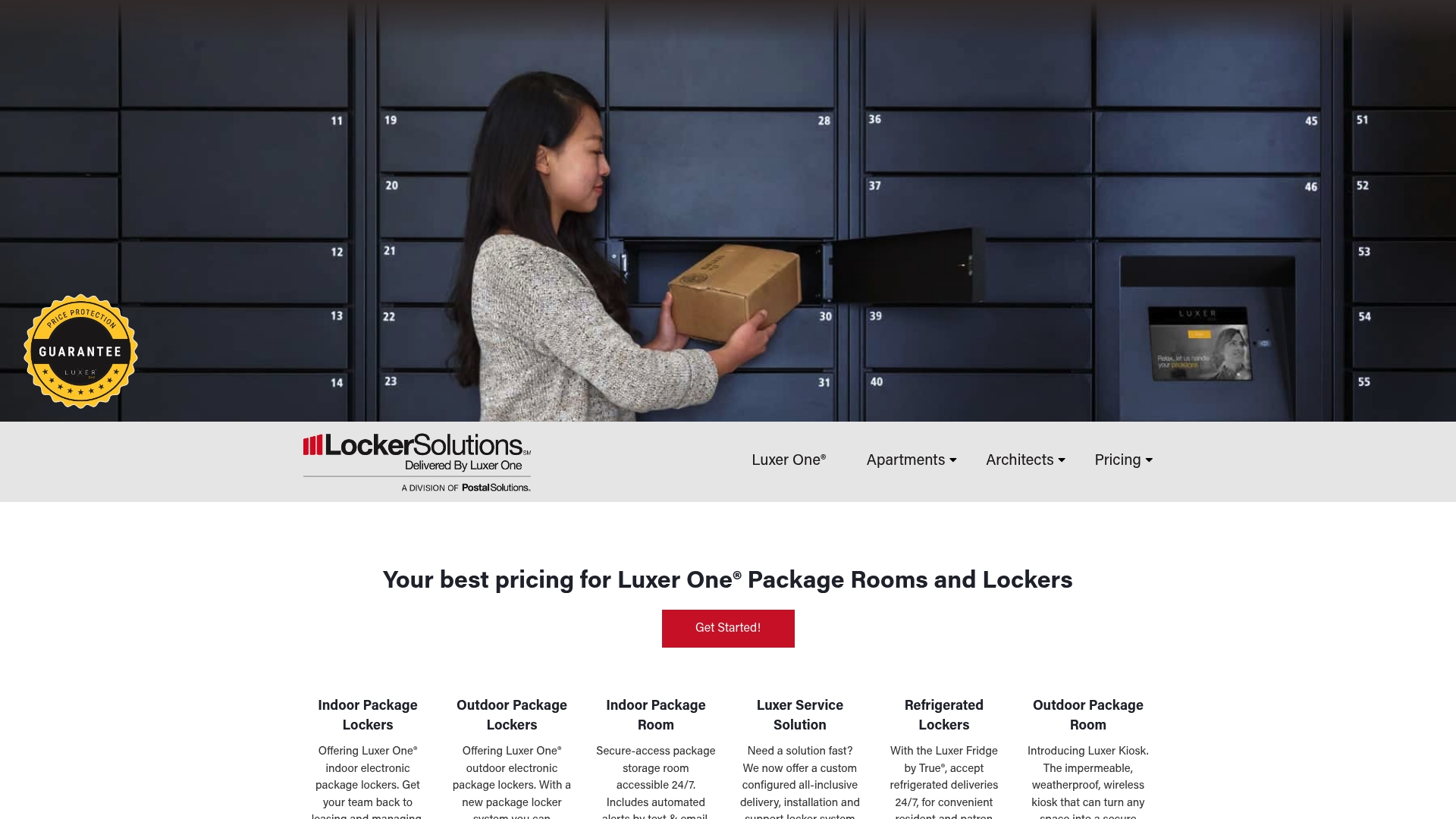
The product line covers every delivery scenario property managers face: indoor locker systems for high-traffic lobbies, outdoor weatherproof units for properties without dedicated package rooms, refrigerated lockers for perishable deliveries, and automated package rooms with real-time monitoring and video surveillance. Each system includes automated resident notifications, carrier access management, and vendor support for compliance exceptions. Locker Solutions also offers national installation and ongoing maintenance, so property managers are not left managing hardware problems on their own. For properties evaluating their options, the full apartment package solution catalog covers configurations for every building size and climate.
FAQ
What is secure package delivery in multifamily buildings?
Secure package delivery is an integrated system of controlled access, electronic lockers, and carrier compliance protocols that protects residents’ parcels from theft and misdelivery. It combines physical barriers, technology, and operational procedures into a single workflow.
Why does carrier compliance matter so much?
Carrier non-compliance, such as drivers bypassing the intake workflow, is the most common cause of package system failures in multifamily properties. Without enforced SOPs and driver training, even the best locker hardware cannot prevent theft or lost packages.
How do smart lockers handle oversized packages?
Smart lockers with fixed compartment dimensions struggle with oversized items and volume surges. Most properties address this with a hybrid model that pairs smart lockers for standard packages with a monitored package room for large deliveries.
What role do security cameras play in package protection?
Visible cameras in well-lit package areas act as both a theft deterrent and an evidence source when incidents occur. Bay Alarm recommends camera placement in package areas as a core component of any apartment package security program.
Are refrigerated lockers worth the investment for apartments?
Refrigerated lockers are worth the investment for properties where residents regularly receive grocery or meal kit deliveries from services like Instacart or Amazon Fresh. Standard lockers cannot maintain temperature, making perishable packages a liability without a dedicated cold-storage solution.
Recommended
- Secure package delivery for multifamily properties - Luxer One Locker Solutions
- Package security for multifamily: Why it matters — Locker Solutions Blog
- Secure Package Pickup Workflow for Multifamily Properties — Locker Solutions Blog
- Workflow for Secure Parcel Handling in Multifamily Properties — Locker Solutions Blog
Ready for a Luxer One® package locker quote?
Tell us your unit count and we'll send right-sized pricing with a fast response time.
Get my free quote