October 4, 2026
Hit USPS 1:5 Ratio: Parking Lot Package Lockers for Property Managers
Actionable planning checklist for parking lot and garage parcel lockers. Covers placement, power, ADA and USPS compliance, setup and ROI.

For most multifamily properties, weather-rated smart lockers installed in covered garage bays or sheltered curbside kiosks deliver the fastest reduction in lost packages and the largest staff-time savings. They cut theft exposure, speed up resident pickups, and take hours of desk work off your team’s plate every week. The next step is a site survey to confirm power, network access, your ADA route, and parking clearances before you commit to a location.
TL;DR:
- Proper site planning ensures lockers are placed on accessible routes and avoid obstructing fire lanes or emergency access, which is crucial for both safety and carrier usage.
- Lockers should be located along carrier habitual routes, with clear signage, lighting, and enough staging space to facilitate efficient deliveries during peak hours.
- The locker system must be sized based on property volume, with most compartments being small or medium, and include overflow capacity for peak seasons and heavy oversize deliveries.
- Outdoor and garage lockers require weatherproofing, dedicated power with surge protection, secure network connections, and integrated CCTV for security and durability.
- Compliance with ADA standards, including proper reach ranges and accessible routes, significantly influences locker siting and interface design to meet legal and practical requirements.
Table of Contents
- Site planning first: choosing the right location in lots and parking garages
- Placement and carrier access: carrier paths, drop-off flow, and security considerations
- Sizing and compartment strategy: estimating counts and mix of compartment sizes
- Technical specs for outdoor and garage installs: weatherproofing, power, network, and security
- ADA and parking requirements that affect locker siting and kiosk interfaces
- USPS and delivery planning: mailbox standards, parcel locker ratios, and coordinating with the post office
- ROI and operational impact: what to measure and how lockers change workflows
- Installation checklist and timeline: site survey, permits, mounting, and commissioning
- Locker Solutions perspective and proof points
- How we help with site planning, installation, and maintenance
- FAQ
- Sources
Site planning first: choosing the right location in lots and parking garages
Where you put parking lot package lockers determines whether carriers actually use them. A covered bay near a camera and a light pole sees far higher carrier adoption than an exposed spot at the back of a lot, since drivers gravitate toward locations that feel secure and are easy to find on repeat visits.

The locker bank also needs to sit on the shortest accessible route from building entries, elevators, and resident parking. A detour around a curb or through a gravel strip discourages pickups and creates an accessibility problem.
Before locking in a spot, facilities teams should walk the site and confirm:
- The location does not block fire lanes, loading zones, or emergency vehicle access.
- CCTV sightlines reach the full locker face without obstruction from columns or landscaping.
- Surface grade allows drainage away from the unit, not toward it.
- There is enough turning radius for delivery vans and handcarts to approach without reversing blind.
Placement and carrier access: carrier paths, drop-off flow, and security considerations
Carriers follow habits, not maps. Walk your property during peak delivery windows (typically late morning through early evening) and note where UPS, FedEx, Amazon, and USPS vehicles actually stop. Placing lockers directly on those paths, rather than at a location that looks convenient on a site plan, is what gets them used daily.
Design for the realities of a delivery van, not just a resident on foot:
- Leave a short staging area in front of the bank for oversized totes and dollies.
- Keep clearance wide enough for a two-wheel cart to pass without scraping a bumper.
- Pair lighting and camera coverage with visible signage so both carriers and residents can find the bank at night.
Pro Tip: Send a one-page locker map and access instructions to your regional UPS, FedEx, Amazon, and local post office contacts before go-live so new carriers are not guessing on day one.
Sizing and compartment strategy: estimating counts and mix of compartment sizes
Start with unit count and your property’s historical package volume, then check that figure against USPS guidance on apartment parcel locker ratios, which moved toward a 1:5 locker-to-unit baseline under Postal Operations Manual section 632.622a as package volume climbed.
- Calculate a baseline compartment count using the 1:5 ratio as a starting point, then adjust up for properties with heavy e-commerce traffic.
- Mix compartment sizes so small and medium units make up most of the bank, with a smaller share of large and oversize bays for furniture-box deliveries and bulk orders.
- Add refrigerated compartments only where grocery or meal-kit delivery volume justifies the extra footprint and power draw.
- Build in overflow capacity for peak season, since holiday weeks can double normal volume in a matter of days.
- Consider a staffed package room instead of lockers alone for smaller communities or properties with heavy oversize and grocery volume that a locker bank cannot absorb.
Technical specs for outdoor and garage installs: weatherproofing, power, network, and security
Outdoor and garage installs face conditions indoor lockers never see: rain, temperature swings, road salt, and exhaust residue. Before procurement, confirm the unit specifications match the environment.
- Outdoor kiosks need a weather-rated enclosure, corrosion-resistant finish, and a drainage path that channels water away from the base rather than pooling under it.
- Electrical plans should include a dedicated circuit with surge protection, plus a backup power strategy for properties in areas prone to outages.
- Network connections should run wired Ethernet wherever garage conduit allows, with cellular as a fallback and a VPN or firewall segment isolating locker traffic from the rest of the property network.
- Security should include CCTV integration, tamper sensors on each compartment, and an access log for audit trails.
Pro Tip: Confirm conduit routing and panel capacity during the first site visit, since adding a dedicated circuit after concrete or asphalt work is finished costs far more than planning it in advance.
ADA and parking requirements that affect locker siting and kiosk interfaces
ADA compliance is not optional, and it shapes where a locker bank can go and how its interface is built. Operable parts, including card readers and screen controls, generally need to sit within a reach range of 15 to 48 inches and avoid controls that require tight grasping, pinching, or twisting.
- The locker bank must sit on an accessible route connecting it to building entrances and elevators, with no curbs or steps in the way.
- Accessible parking spaces are calculated separately for each parking facility, and at least one of every six accessible spaces must be van-accessible according to Access Board parking guidance, a ratio that affects how many spaces you lose or relocate when a locker bank reshapes a lot.
- If restriping is part of the install, the work must follow the 2010 ADA Standards, which set minimum accessible space counts by facility size.
- A low-voltage contractor can confirm reader height against the 48-inch reach limit before mounting, which avoids a costly callback later.
USPS and delivery planning: mailbox standards, parcel locker ratios, and coordinating with the post office
USPS has moved its guidance toward a 1:5 parcel locker to unit ratio under POM standard STD-4C, replacing the older 10:1 baseline as package volume grew. For new construction and major retrofits, USPS generally favors centralized delivery equipment, and local approval is part of the process rather than an afterthought.
- Contact the local postmaster or growth manager early in planning, before equipment is ordered.
- Confirm compartment counts and mailbox integration meet the ratio USPS expects for your unit count.
- Document the approval in writing so it is available if a later inspection or expansion comes up.
ROI and operational impact: what to measure and how lockers change workflows
A locker program earns its keep when you track the right numbers from day one. Staff hours spent logging and handing out packages, average resident pickup time, and locker utilization rate are the three metrics that show whether the system is working as intended.
- Push adoption with clear signage, a short onboarding email, and a heads-up to carriers about the new drop-off point.
- Set a hold-time limit so unclaimed packages get flagged and cleared instead of clogging compartments.
- Define oversized-item rules and refrigerated pickup windows so residents know what to expect before they order.
Installation checklist and timeline: site survey, permits, mounting, and commissioning
A clean install depends on sequencing the work correctly, not just picking good equipment.
- Run a site survey covering surface condition, drainage slope, clearance for carts and vans, lighting, and CCTV sightlines.
- Schedule power and data runs alongside any mounting or leveling work so trades are not duplicating trips.
- Apply weather sealing around the base and any wall penetrations before final inspection.
- Commission the system with test deliveries from your major carriers, train on-site staff on overrides and alerts, and send residents their access instructions.
Pro Tip: The most common pitfalls are poor drainage, underestimated clearance for delivery vans, and kiosks mounted outside ADA reach ranges, all of which are cheaper to fix on paper than after the concrete sets.
Locker Solutions perspective and proof points
We supply and install parcel and refrigerated lockers along with unified access control, built for the outdoor and garage conditions covered in this guide. Properties that plan placement, power, and network readiness before installation typically see faster rollouts and less desk time spent chasing packages once the system goes live.
— Locker Solutions
How we help with site planning, installation, and maintenance
We handle the parts of a locker rollout that property teams rarely have time for: a site survey to confirm power, network, and ADA routing, a configuration suited to your unit count and package volume, white-glove installation, and local maintenance support after go-live.
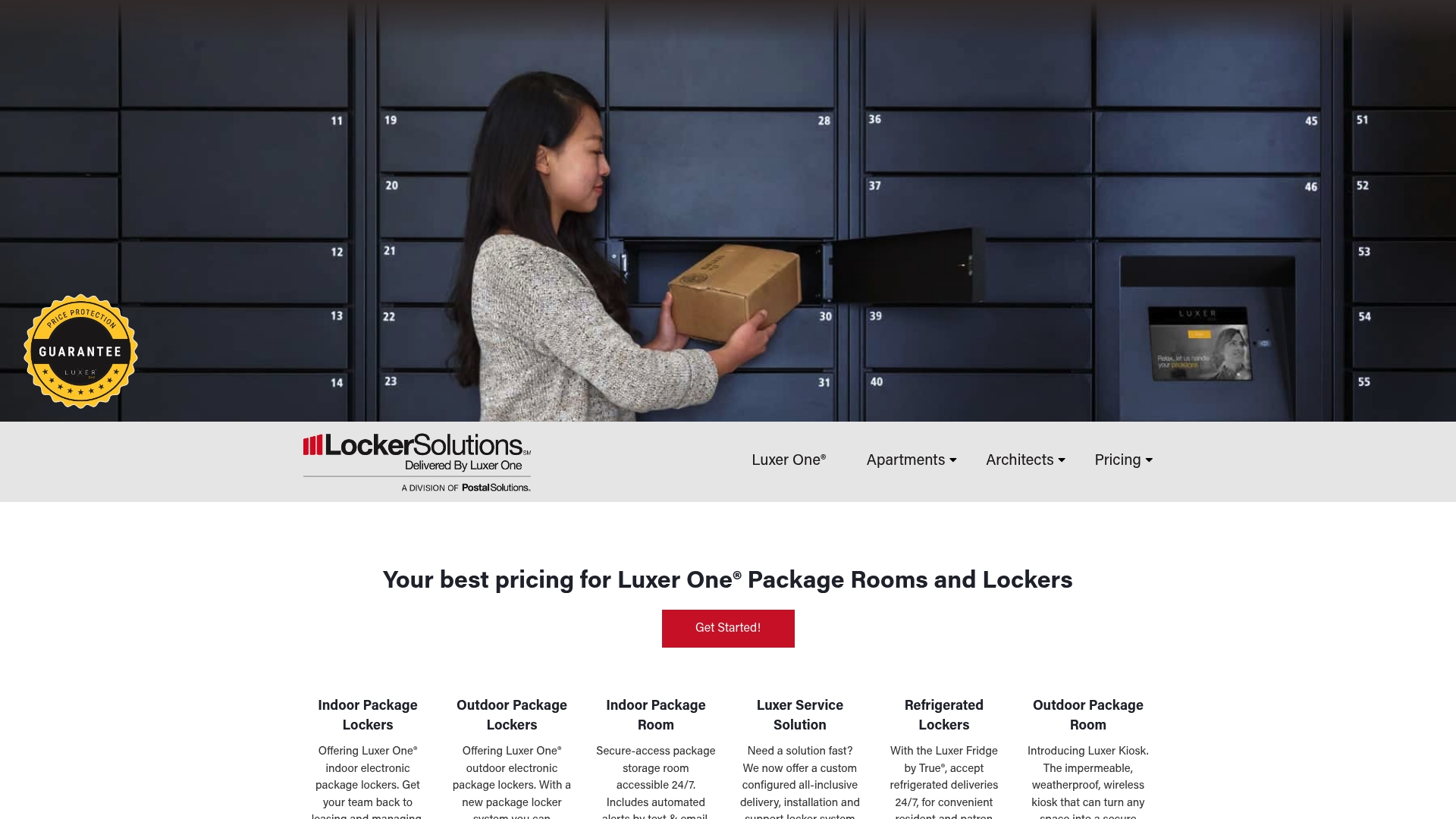
- We assess your lot or garage for carrier access, drainage, and accessible routing before equipment ships.
- We configure compartment mix and sizing, including outdoor parcel kiosks and refrigerated units, to match your property’s delivery pattern.
- We pair locker systems with Luxer Access for unified credentialing across packages and building entry.
A site survey does not commit you to a configuration. Visit our solutions overview to request a survey and talk through what a covered-bay or kiosk install looks like for your property.
FAQ
How much does a parcel locker system cost?
Pricing depends on compartment count, size mix, and whether refrigerated units or access control are included, so an exact figure comes from a property-specific quote. We do not publish pricing publicly because configurations vary too much property to property; contact our solutions team for a quote based on your site survey.
How long can a package stay in a locker?
Hold-time limits are set by the property, not by a universal standard, and most managers choose a policy that balances resident convenience with compartment turnover. A clear hold-time policy, paired with automated reminders, keeps compartments available during peak delivery weeks.
What are those package lockers called?
They go by several names, including smart lockers, parcel lockers, and automated package lockers, and the term often depends on whether they are indoor, outdoor, or refrigerated units. Outdoor versions installed in lots or garages are sometimes called parking lot package lockers or kiosks.
Can I get a package delivered to a parcel locker?
Yes, once a property has a locker system installed, carriers deliver directly to the bank and residents get a notification with an access code or app link to retrieve their item. Delivery to a locker depends on the property offering the system, not on an individual resident request.
Sources
- Chapter 5: Parking Spaces — U.S. Access Board (ADA guidance)
- Ada
- Notice of Changes to Postal Service Standard 4C — Federal Register
Recommended
Ready for a Luxer One® package locker quote?
Tell us your unit count and we'll send right-sized pricing with a fast response time.
Get my free quote