September 30, 2026
Multifamily Managers: 24–72 Hour Response to Apartment Package Theft
Multifamily managers: reduce apartment package theft with lockers, carrier coordination, clear delivery rules, and quick 24–72 hour actions after a loss.

The most effective way to stop apartment package theft is a layered approach led by secure drop infrastructure, such as lockers or an automated package room paired with clear delivery policies, carrier coordination, and smart resident habits. The USPS Office of Inspector General recommends exactly this kind of multilayered response. If a package goes missing, the first moves are checking Informed Delivery for proof of drop-off, contacting the carrier, and filing a police report.
TL;DR:
- The most effective prevention combines secure locker or package room infrastructure with clear delivery policies and carrier coordination, especially during peak seasons.
- Acting within the first 24 to 72 hours after a theft by confirming delivery, preserving evidence, and filing police reports increases chances of recovery and supports claims.
- Proper sizing of parcel lockers for peak demand, system integration, and resident communication are key to reducing overflow and ensuring infrastructure effectiveness.
- Liability usually ends with proof of delivery, so property owners should document incidents and clarify responsibilities in lease agreements to limit exposure.
- Community involvement and resident education, such as reporting suspicious activity and using secure delivery instructions, significantly enhance overall theft prevention efforts.
Table of Contents
- What to do in the first 24 to 72 hours after a theft
- Low-cost tactics residents can use starting today
- Building-level fixes that cut theft and staff workload
- How the technology actually works, and where it falls short
- Who is liable, and what the law actually says
- Getting the whole community working against theft
- Teaching residents to protect their own deliveries
- Coordinating with carriers on safer delivery
- What most rollouts get wrong
- How Locker Solutions helps properties cut theft and staff workload
- Sources
- FAQ
What to do in the first 24 to 72 hours after a theft
Speed matters here. Evidence disappears, delivery windows close, and claims departments move faster when you act within the first few days.
- Confirm the delivery status through tracking or Informed Delivery and request delivery proof, such as a drop photo, from the carrier.
- Preserve evidence immediately: pull doorbell camera footage, photograph the scene, and note timestamps and any witnesses before memories fade or footage rolls over.
- File a police report and keep the case number. Seattle Police Department guidance treats package theft as a reportable crime, and reporting helps departments map hotspots even for low-value items.
- Log every communication with the retailer, carrier, and property management, including dates and names.
- File claims where they apply: most retailers replace stolen items reported quickly, some carriers offer limited protection, and renters insurance or a credit card’s purchase protection may cover the loss depending on the policy.
Property management should be looped in early, since building-level records and any hallway or entry camera footage often fill gaps that a resident’s own doorbell camera cannot, making coordination easier with services like Linq Immobilier | Gestion d’immeubles locatifs.
Low-cost tactics residents can use starting today
Most theft prevention does not require new hardware. It requires better habits and a few small purchases.
- Require a signature on higher-value deliveries so the package cannot be left unattended.
- Use Informed Delivery to know exactly when a package is arriving and confirm it landed safely.
- Request an alternate delivery address (a workplace, a relative’s home, or a retail pickup point) for anything valuable.
- Coordinate with a trusted neighbor who can grab a package within an hour of delivery.
- Ask for a hidden drop spot, like a side door or a covered nook, in delivery instructions.
A doorbell camera or motion-activated porch light is one of the cheapest deterrents available, and it also becomes your evidence file if something does go missing. NPR’s reporting on porch piracy recommends concealing packaging, routing deliveries to alternate pickup points, and avoiding any direct confrontation with a suspected thief. For ground-floor units especially, a parcel lockbox or a tamper-evident drop bag adds a physical barrier which a camera alone does not provide.
Pro Tip: Set delivery notifications to arrive by text, not just email, so you can react within minutes rather than finding out hours later.
When thefts repeat, that is the signal to escalate to property management with a written incident log, since a pattern is far more persuasive than a single report and often justifies a policy or infrastructure change.
Building-level fixes that cut theft and staff workload
Individual habits help, but the biggest reduction in theft comes from changing where packages land in the first place. Managers weighing infrastructure choices are really weighing three questions: capacity, flexibility, and staffing cost.
- Fixed lockers hold a set number of units in defined sizes, work well for predictable volume, and require little daily staff attention.
- Automated package rooms use flexible shelving and AI label reading to handle irregular box sizes and seasonal surges, which is why industry reporting notes many managers are shifting away from rigid locker banks toward these systems.
- Staffed intake offers the most flexibility but carries the highest ongoing labor cost and the most exposure if a staff member mishandles or misplaces a package.
Beyond hardware, policy levers matter just as much: designating one accepted delivery location building-wide, putting that requirement in writing with major carriers, posting clear signage, and sending residents a short explainer when they move in.
A pilot locker installation studied by the Metrans research program showed a large drop in manager package-handling workload alongside high resident satisfaction, which is the kind of operational payoff that makes the capital cost easier to justify.
Procurement checklists should account for peak-season sizing (holiday volume can spike well past a typical week), integration with existing access control, defined maintenance response times, and clarity on who, vendor or property, handles jammed units or software issues.
How the technology actually works, and where it falls short
Understanding the mechanics helps managers ask sharper vendor questions instead of buying on marketing alone.
- Parcel lockers assign a compartment on delivery, text or email the resident a code, and release the package on entry. They work well until package volume exceeds locker count, at which point overflow lands in an unsecured hallway or leasing office, undermining the whole point of the system.
- Automated package rooms skip fixed compartments in favor of open shelving read by AI label scanners, so an oddly shaped box or a mattress-sized delivery does not break the system the way it would with a locker bank.
- Surveillance cameras deter some opportunistic theft and provide evidence after the fact, but retention policies and resident privacy expectations need to be spelled out in writing, not assumed.
- Carrier tools like Informed Delivery and third-party tracking add visibility but do not physically stop anyone from taking a package off a porch.
Research from the University of Washington’s Urban Freight Lab found that a common carrier locker eliminated failed deliveries in the pilot building and cut in-building delivery time significantly, a strong argument for lockers when volume is predictable.
| Solution | Best fit | Main limit |
|---|---|---|
| Fixed parcel lockers | Predictable volume, uniform box sizes | Overflow when demand exceeds compartments |
| Automated package room | Variable package sizes, seasonal spikes | Higher upfront setup than simple lockers |
| Staffed intake | Properties needing high flexibility | Highest ongoing labor cost |
| Cameras alone | Deterrence and evidence collection | No physical barrier to theft |
Before signing with any vendor, confirm integration points with your existing access control, the service-level agreement for repairs, and a written plan for seasonal overflow.
Who is liable, and what the law actually says
Liability in package theft cases is narrower than most residents assume. A carrier’s responsibility typically ends once a package is marked delivered, and a landlord is generally exposed only when there is evidence of gross negligence, such as ignoring a known broken lock on a package room for months. Seattle Police Department’s guidance confirms that carrier responsibility usually stops at the point of delivery, which is why documentation matters so much on the resident side.
Anti-porch-piracy laws vary by state, and several have moved toward stronger penalties in recent years, so managers should check local statutes rather than assume a uniform national rule.
Practical steps that protect everyone:
- Keep a running incident log with dates, unit numbers, and carrier names.
- Save surveillance stills tied to each reported theft.
- File and retain police report numbers for every incident, even minor ones.
- Add lease or handbook language naming the accepted delivery location and clarifying that the property is not the insurer of last resort for stolen packages.
Clear expectations set upfront reduce disputes later and give management a paper trail if a pattern points to an inside job or a recurring outside offender.
Getting the whole community working against theft
A building with one attentive resident is safer than one with none, but a building with an organized watch is safer still. Simple steps make a real difference: a group chat or bulletin board post asking neighbors to flag suspicious loitering near entrances, a shared expectation that residents grab a neighbor’s package if they see it sitting exposed, and a habit of reporting anything odd to management or police rather than assuming someone else will.
Some properties formalize this with a resident safety committee that meets occasionally to review recent incidents and suggest fixes, like better lighting near a side entrance or a camera blind spot near the mailroom. This works best when it is paired with actual reporting data. If management shares a simple monthly count of reported thefts, residents can see whether a new locker system or a lighting fix is actually working, which keeps the group engaged instead of just anxious.
The Metrans pilot research on locker deployments found that visible improvements to delivery security also raised general resident satisfaction, suggesting that community trust and physical security reinforce each other. A property where residents feel informed and involved tends to report problems faster, which gives management the pattern data needed to justify further investment.
None of this requires a formal program to start working. A five-minute conversation at a leasing office or a pinned note in a resident portal about watching for loitering near the package area often does more good than an unread 12-page policy document.

Teaching residents to protect their own deliveries
Most theft prevention advice never reaches the people who need it, because it arrives as a dense policy memo nobody reads. Short, specific messaging works better than a comprehensive one.
Effective resident education tends to share three traits. It is timed to move-in, when residents are actively setting delivery preferences for the first time. It uses plain, specific language rather than generic warnings, telling residents exactly where the accepted delivery point is and how to set up Informed Delivery rather than just saying to be careful. And it repeats at predictable moments, particularly before the holiday shipping surge when volume and theft risk both climb.
A short move-in card works better than a long handbook page: three or four bullet points covering the designated delivery location, how to set delivery alerts, and who to contact if something goes missing. Following up with a seasonal reminder each November, right before package volume peaks, catches residents when the advice is most relevant.
Properties that use locker systems or package rooms have a built-in advantage here, since the notification a resident gets on pickup day is itself a teaching moment: it reinforces that packages go to one secure location, not the doorstep, every single time.

Coordinating with carriers on safer delivery
Carriers are a resource most managers underuse. A written agreement designating one accepted delivery location for the whole property, shared with the major carriers serving the building, cuts down on packages left at random doors or in open lobbies. The USPS OIG report specifically calls out carrier coordination and data-sharing as part of an effective response to last-mile theft.
Beyond a standing agreement, managers can request that drivers use a specific building entrance, confirm delivery instructions are updated in each carrier’s system, and set up a direct contact line with the local delivery station for recurring problems rather than relying on a general customer service queue every time. Residents benefit from the same coordination on their end: setting delivery preferences in Informed Delivery, requesting signature confirmation for valuable items, and rerouting expensive purchases to a retail pickup point when they know they will not be home.
None of this replaces physical infrastructure, but it reduces the number of packages that end up sitting exposed in the first place, which is the whole goal.
What most rollouts get wrong
Most locker or package room rollouts fail on sizing, not technology. Managers install for average volume, then get buried in overflow every holiday season. A workable rollout runs through a site assessment, sizing for peak (not average) volume, a carrier notification process, resident communications before go-live, and staff training on overflow handling. Track incidents reported, pickup times, and manager hours saved to know if it is working.
— Locker Solutions
How Locker Solutions helps properties cut theft and staff workload
Once a property decides infrastructure is the fix, the next question is who builds and runs it. Locker Solutions works as a Luxer One® partner offering installation, white-glove setup, and maintenance support after go-live.
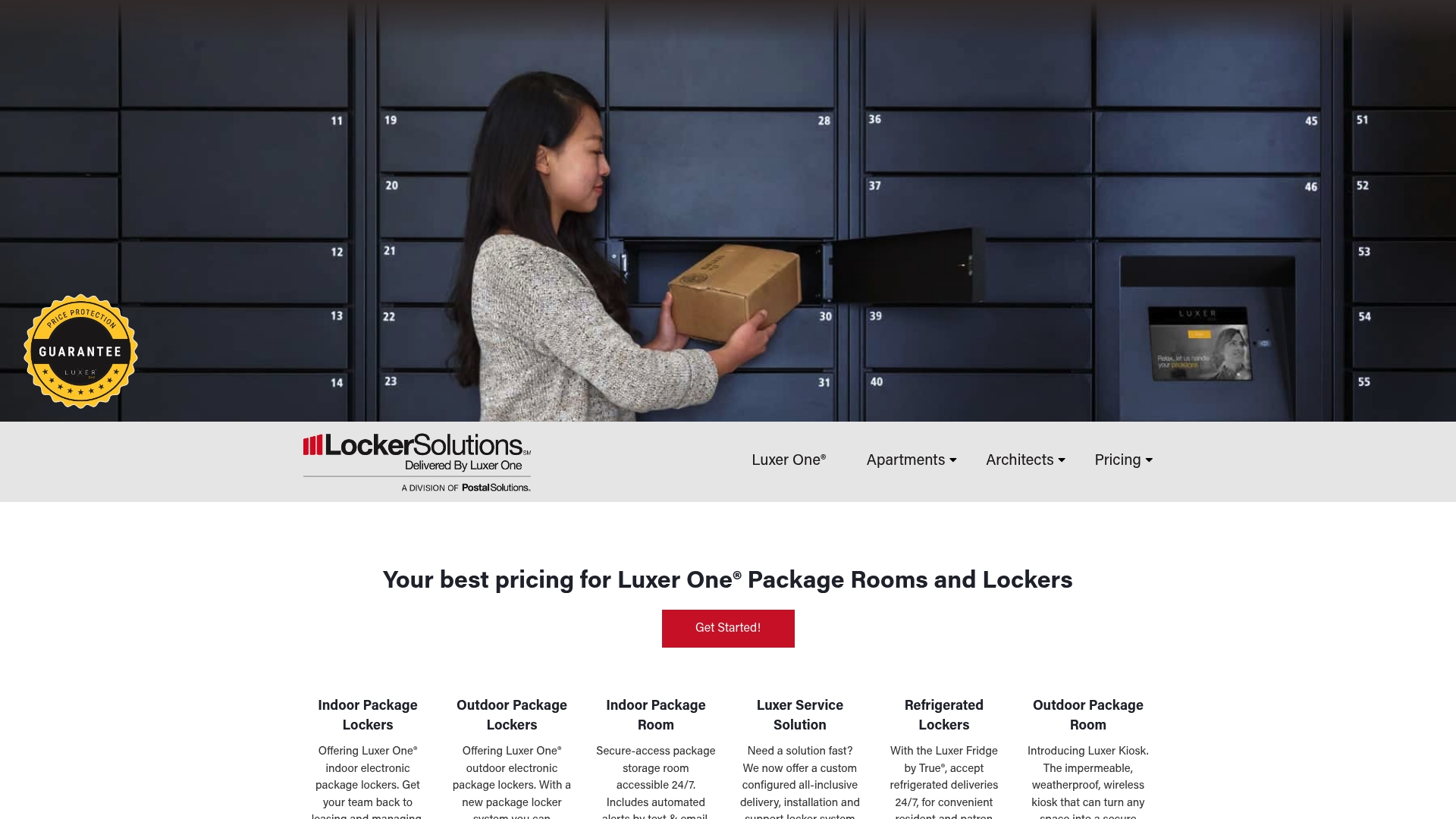
The product lineup covers the range most multifamily properties need:
- Indoor and outdoor parcel lockers, sized to fit lobbies, mailrooms, or open-air kiosks.
- Smart package rooms for properties with irregular package sizes or heavy seasonal swings.
- Refrigerated lockers for grocery and meal-kit deliveries that can’t sit in a standard compartment.
- Luxer Access for unified credentialing across building entry and package pickup.
- On-site package management, a done-for-you service for properties that would rather hand off daily handling entirely.
Managers who don’t want to run the day-to-day intake themselves can lean on the On-site Package Management service rather than adding it to leasing staff’s workload. For properties ready to size a system for their own delivery volume, the parcel locker and package room lineup is the starting point, with white-glove installation detailed on the Luxer One setup page. Request a site assessment to see what fits your building’s volume and layout.
Sources
- Package Theft in the United States. Report Number RISC-WP-25-002.
- Understanding common carrier parcel lockers — pilot study (Metrans)
- Examining the Effects of Common Carrier Lockers on Residential Delivery (Urban Freight Lab)
- Seattle Police Department — Package theft prevention guidance
- Porch pirates stole 120 million packages last year. Here’s how you can protect yours : NPR
FAQ
Are apartments responsible for stolen packages?
Generally, no, unless there is evidence of gross negligence on the property’s part, such as ignoring a known broken door lock for months. Carrier responsibility typically ends once a package shows as delivered, according to Seattle Police Department guidance.
What should I do if someone in my apartment steals my package?
Report it to property management immediately and file a police report, since theft by another resident is still a crime regardless of where it happens. Preserve any camera footage from hallways or entry points before it gets overwritten, and keep the police case number for any retailer or carrier claim.
Can a tenant be evicted for stealing packages?
It depends on the lease terms and local landlord-tenant law, since most leases include clauses against criminal activity on the property. A documented police report and clear evidence typically strengthen a management’s case, but eviction procedures vary by state and require following the correct legal process.
How can I keep packages from being stolen at my apartment?
Use Informed Delivery to track arrivals, request signature confirmation on valuable items, and ask the property to designate one secure delivery point rather than leaving packages at individual doors. Buildings with secured lockers or automated package rooms see far fewer theft incidents than those relying on open porch drop-offs.
Recommended
Ready for a Luxer One® package locker quote?
Tell us your unit count and we'll send right-sized pricing with a fast response time.
Get my free quote