September 28, 2026
U.S. Multifamily: Resolve Locker Accessibility Complaints in 72 Hours
A U.S.-focused, compliance-first playbook for multifamily teams. Triage locker accessibility complaints within 24–72 hours, audit to Access Board and HUD...

A resident who cannot reach, open, or read the package locker is usually flagging one of two things: a single broken control or fixture, or a deeper flaw in how the site was routed and built. When a complaint lands, offer temporary assisted pickup right away, schedule a full accessibility audit within days, and log the request as a possible reasonable accommodation. Every one of those steps ties back to standards from the U.S. Access Board and HUD’s fair housing guidance for multifamily properties.
TL;DR:
- Offering an immediate staff-assisted pickup or alternative delivery option is crucial within the first 24 hours to stabilize service for the resident.
- Site walk-throughs on the same day should address obstructions, reroute deliveries if needed, and add signage or ramps only if safety is maintained.
- Conducting a full accessibility audit involves measuring reach ranges, assessing approach paths, and prioritizing fixes based on urgency, with documented records supporting legal compliance.
- Lockers must meet reach range guidelines of 15 to 48 inches and be placed in accessible locations, with design considerations including adjustable compartments and low-force hardware.
- Proper communication and documentation, including timely acknowledgment and thorough records, help prevent escalation and reduce legal exposure from unresolved accessibility complaints.
Table of Contents
- Triage checklist: what to do in the first 24 to 72 hours
- Quick regulatory primer: reach ranges, operable parts, and HUD scope
- Operational audit and remediation workflow property teams can follow
- How to prevent accessibility complaints when you spec, buy, or design lockers
- How to communicate with residents and document requests and fixes
- Accessibility complaints are a resident experience KPI
- How Locker Solutions can help: audit, retrofit, and ongoing support
- Sources
- FAQ
Triage checklist: what to do in the first 24 to 72 hours
The first move is to stabilize service for the resident, not to diagnose the root cause. That comes later.
- Offer an interim fix immediately: staff-assisted pickup, a reserved ground-floor compartment, or delivery to the leasing office, and write down exactly what was offered and when.
- Walk the site the same day. Clear anything blocking the approach path, temporarily reroute deliveries if one bank of lockers is the problem, and add signage or a temporary ramp only if it can be done without creating a new trip hazard.
- Decide whether this is a one-off fixable issue or a sign of a wider problem. A single stuck door is different from a control mounted too high for every unit on that wall.
- Loop in whoever owns maintenance and compliance decisions on the property, and set a date for a full audit if the interim fix will not hold.
- Start a written file: the resident’s original request, the date, what was offered, and what happens next.
That file matters more than most managers expect. If the complaint escalates, a documented, prompt response is often the difference between a quick resolution and a longer dispute.
Pro Tip: Never close out a complaint file the same day you offer an interim fix. Keep it open until the permanent remediation is verified and the resident confirms it works for them.
Quick regulatory primer: reach ranges, operable parts, and HUD scope
Two federal frameworks govern most of what shows up in a locker accessibility complaint: technical reach requirements and fair housing scoping rules.
- The Access Board’s operable parts guidance sets unobstructed forward or side reach ranges generally between about one and four feet above the finished floor for controls, buttons, keypads, and handles.
- When a control sits behind an obstruction, such as a counter or ledge, the maximum high reach can drop, in some cases to 46 inches depending on obstruction depth, so a locker bank installed behind a low wall or shelf needs its own measurement, not a generic assumption.
- “Operable parts” covers anything a resident has to activate or manipulate to get a package: touchscreens, keypads, door handles, and release buttons all count.
- HUD’s fair housing guidance for multifamily dwellings requires that covered buildings, generally those with four or more units and an elevator that were first occupied after March 13, 1991, provide accessible and usable public and common-use areas, which includes package rooms and locker banks.
A locker that measures correctly in isolation can still fail in practice if the approach path, clear floor space, or obstruction depth makes the reach unusable for the resident actually standing in front of it.
The enforcement stakes are real. DOJ settlement records show that a single accessibility complaint has, in past cases, led to remedial obligations covering routes, doors, parking, and other common areas well beyond the original issue.

Operational audit and remediation workflow property teams can follow
A structured audit turns a vague complaint into a fixable work order. Start with intake, then move to a physical inspection, then prioritize what gets fixed and when.
- Intake. Collect photos of the locker and the approach, precise measurements of reach height and clear floor space, a written statement from the resident, and any accessibility needs they are comfortable sharing.
- On-site inspection. Check the full task, not just the control panel: the accessible route to the lockers, clear floor space in front of the unit, approach direction (forward or side), reach heights, door swing and threshold height, lighting and screen glare, and the force needed to operate handles or buttons.
- Prioritize. Sort findings into immediate usability fixes, engineered retrofits that need a contractor, and individual reasonable accommodations that may not require a physical change at all.
- Remediate and verify. Assign the work, set a completion date, and do an acceptance walk-through before closing the file.
| Finding type | Example | Typical fix | Who signs off |
|---|---|---|---|
| Immediate usability | Obstruction blocking approach | Remove or relocate obstruction | Property manager |
| Engineered retrofit | Control mounted above 48 inches | Reposition unit or add reachable compartment | Contractor plus manager |
| Reasonable accommodation | Resident needs assisted retrieval | Staff pickup or reserved compartment | Property manager |
Acceptance testing should mirror real use: a resident carrying a large box or using a mobility device, not just a tape measure against a wall. A locker system that passes a static measurement can still fail the actual pickup workflow if the door swing or threshold gets in the way.
How to prevent accessibility complaints when you spec, buy, or design lockers
Most locker complaints trace back to a procurement decision made months or years earlier. Treating accessibility as a task flow, approach, operate, retrieve, catches problems that a single height spec misses.
- Require vendors to document operable-part compliance in writing, not just verbally confirm it during a sales call.
- Coordinate locker placement with the property’s accessible route rather than picking a spot for delivery convenience alone.
- Ask for mixed-height compartments or adjustable modules so more residents can reach a usable unit without staff help.
- Specify low-force hardware on doors and release mechanisms, since a compliant reach height still fails if the door needs excessive force to open.
- Request alternative credentialing options, remote assist capability, and surveillance coverage that helps resolve disputes when a resident and staff disagree about what happened.
Pro Tip: Ask any locker vendor for a site-plan review before installation, not after. Fixing an approach path after concrete is poured costs far more than adjusting a layout on paper.
Locker Solutions works from this same principle on every deployment: rapid installation timelines, custom configuration by property size, and locally supported maintenance are built around getting the approach and the hardware right the first time, which is covered in more depth in our terminology guide.
How to communicate with residents and document requests and fixes
A fast, clear response protects the resident’s experience and the property’s paper trail at the same time.
- Acknowledge the complaint within 24 hours, in writing, and describe the interim assistance being offered.
- Treat any request tied to a disability as a potential reasonable accommodation: ask only what is needed to evaluate the request, and keep the resident’s medical information private.
- Save every remediation record, including photos, measurements, contractor invoices, and the resident’s confirmation that the fix works, for as long as the property’s records retention policy requires.
- Bring in legal counsel or an accessibility consultant when a complaint involves a formal accommodation request, a pattern across multiple units, or any hint of a fair housing claim.
Accessibility complaints are a resident experience KPI
A locker accessibility complaint rarely stays isolated. If one resident cannot reach the control, others likely cannot either, and the property absorbs repeated service calls, staff time, and legal exposure until someone fixes the underlying design. Tracking these complaints as an operational metric, not a one-off ticket, surfaces the pattern early and keeps the cost of fixing it low.
— Locker Solutions
How Locker Solutions can help: audit, retrofit, and ongoing support
Fixing an accessibility gap after a complaint is more expensive than designing it out from the start, and Locker Solutions builds that principle into every deployment rather than treating it as an afterthought.
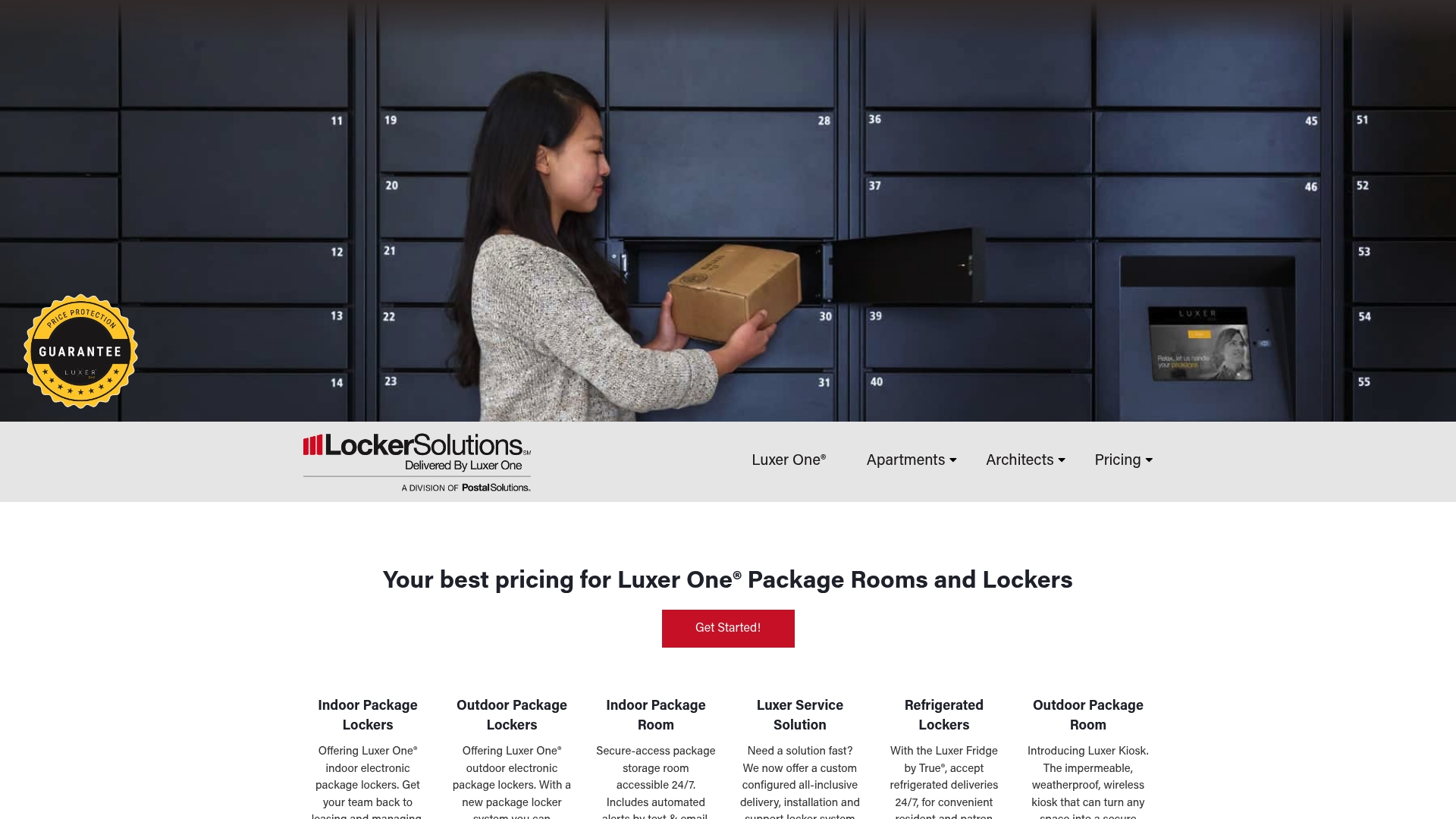
- Custom configurations, including indoor lockers, outdoor kiosks, and refrigerated units, sized to fit accessible route requirements on your property.
- On-site package management that can provide staff-assisted retrieval as an interim or ongoing fix while a permanent solution is planned.
- White-glove installation with local support teams handling setup and acceptance testing.
- Unified access control that simplifies credentialing across packages and building entry.
If a recent complaint has you rethinking your current setup, request an accessibility-focused deployment quote through our locker solutions page and get a plan built around your site’s actual approach paths and traffic.
Sources
- Chapter 3: Operable parts — U.S. Access Board
- Accessibility (Design and construction) requirements for covered multifamily dwellings — HUD
- Justice Department obtains $113 million settlement for disability-based housing discrimination — U.S. Department of Justice
FAQ
What counts as an accessible reach range for locker controls?
Federal guidance from the Access Board sets unobstructed forward or side reach between 15 inches and 48 inches above the finished floor. When a control sits behind an obstruction, the allowable high reach can be lower depending on obstruction depth.
Do package lockers count as common-use areas under fair housing law?
Yes, in covered multifamily dwellings. HUD guidance treats package rooms and locker areas as public or common-use space that must be accessible in buildings with four or more units and an elevator, first occupied after March 13, 1991.
How fast should a property respond to an accessibility complaint?
Acknowledge the complaint and offer an interim fix, such as staff-assisted pickup, within 24 hours. A full audit and permanent remediation plan should follow within days, with the timeline documented in writing.
What happens if a property ignores a locker accessibility complaint?
Unresolved complaints carry legal risk. Past DOJ settlements show that a single accessibility issue can expand into remedial obligations covering routes, doors, and other common areas.
Can Locker Solutions help fix an existing accessibility complaint?
Locker Solutions offers custom locker configurations, white-glove installation, and on-site package management that properties can use to remediate or prevent accessibility issues. Availability and scope depend on the property’s site plan and current setup.
Recommended
Ready for a Luxer One® package locker quote?
Tell us your unit count and we'll send right-sized pricing with a fast response time.
Get my free quote