September 26, 2026
Intercom Integrated Lockers: RFP Questions Property Managers Need
Practical guide for property managers on intercom integrated lockers: compare three integration patterns, retrofit timelines, and the exact RFP questions...

Yes, modern intercom systems integrate with smart lockers to enable remote unlocks, unified credentials, and automated carrier workflows. The connection typically runs through SIP-based video intercoms, REST APIs, or shared credential databases, letting a resident’s fob or app also open their locker. For property managers, that means fewer missed deliveries, fewer front-desk interruptions, and a documented audit trail for every access event. Getting there does require a site survey and some coordination between hardware, network capacity, and carrier habits, which is where a vendor like Locker Solutions typically steps in to run the deployment end to end.
TL;DR:
- Compatibility issues may arise if the intercom system does not expose an API or SIP functions, requiring verification during the vendor selection stage.
- Network infrastructure must support Power over Ethernet and redundant connectivity to ensure reliable access control, especially in older buildings.
- Properties with high parcel volume, no 24/7 staff, or seasonal surges benefit most from locker integration, reducing theft, missed deliveries, and front-desk workload.
- Implementing the system typically involves a phased process, with power and network upgrades often the longest part of retrofitting older structures.
- Starting with a single locker bank on a pilot basis helps validate carrier behavior and resident adoption before a full property rollout.
Table of Contents
- How Intercom Integration Lockers Actually Connect Behind the Scenes
- What Property Managers Actually Gain From the Integration
- Technical Requirements: What Your Hardware Needs to Support
- Retrofitting an Older Building: Timeline and Sizing Guidance
- Running the System Day to Day: Carriers, Residents, and Overflow
- What to Ask Any Vendor Before You Sign a Contract
- Real Deployments: Where Integration Actually Delivers
- What We’d Tell a Property Manager Weighing This Decision
- How to Get an Intercom-Integrated Locker System Installed
- Where to Go for Deeper Data
- Sources
- FAQ
How Intercom Integration Lockers Actually Connect Behind the Scenes
There’s no single wiring diagram for intercom integration lockers, because the connection depends on what hardware is already installed and how much control the property wants to hand to residents versus staff. Three patterns dominate the field.
The first is a SIP-based video intercom paired with a remote unlock command. A resident sees a carrier at the door, video-calls with the intercom, and taps unlock. That same relay logic extends to locker banks, so a single credential can open both the building entry and a locker face. This works well for smaller buildings that already run a video intercom and want to add lockers without ripping out the entry system.
The second pattern is API and webhook driven. When a carrier scans a package at intake, a webhook fires to the locker’s assignment engine, which reserves a compartment and pushes a notification to the resident’s phone. Intercom manufacturers increasingly expose this kind of interface directly. Device manufacturer guidance for intercom APIs shows a common structure: a GET endpoint lists connected intercoms, and a POST endpoint issues a temporary unlock with an unlock_time parameter that auto-expires the access window.
The third is temporary PIN or QR issuance, most useful for carriers who don’t carry a company app. A courier gets a six-digit code valid for one drop-off, tied to a specific locker or bank.
Developers integrating any of these should expect:
- JSON payloads for device status and unlock confirmations
- Standard HTTP status codes for success, timeout, and denied-access events
- An offline fallback (usually a physical keypad override) if the network drops mid-delivery
What Property Managers Actually Gain From the Integration
The business case comes down to volume and friction. U.S. parcel volume is projected to grow 36% by 2030, according to Pitney Bowes, meaning the package load your property handles today is likely a third lighter than what it will handle in a few years. Layer that against the fact that package theft and missed deliveries remain one of the most common resident complaints nationwide, and the incentive to automate becomes obvious.
The properties that see the biggest return share a few traits:
- No 24/7 staffing. Overnight and weekend deliveries stop being a liability once residents can retrieve packages without a leasing office open.
- High-density or student housing. Turnover season and back-to-school shipping spikes overwhelm a front desk fast; lockers absorb the volume automatically.
- Seasonal retail surges. Properties near heavy holiday shipping see multi-day backlogs without automated capacity.
A realistic KPI target: buildings that pair lockers with intercom-based access typically report fewer front-desk tickets tied to “where’s my package” calls. Leasing teams also use the feature as a marketing point during tours, since prospective residents increasingly expect it as a baseline amenity rather than a bonus.
Technical Requirements: What Your Hardware Needs to Support
Before signing any contract, run this compatibility checklist against the vendor’s spec sheet and your building’s existing infrastructure.
- Network capacity. Locker banks and intercoms are networked devices; plan for Power over Ethernet (PoE) drops or dedicated circuits and redundant connectivity so a single router failure doesn’t take down access control. Broader technology-integration planning guidance from the Department of Energy makes the same point for any facility adding multiple connected devices: infrastructure comes first, hardware second.
- Door and relay wiring. Electronic strikes need to interface cleanly with the locker controller’s relay outputs; mismatched voltage or wiring gauge is a common install-day surprise.
- SIP support and unlock endpoints. Confirm the intercom vendor exposes a documented unlock API, not just a proprietary app with no external hooks.
- Time-limited credentialing. Carrier PINs and guest codes should expire automatically, not require manual deactivation.
- PMS and directory integration. Ask whether the locker system can sync resident rosters from your property management software or requires manual entry.
- Security controls. Look for encrypted transmission, timestamped audit logs, and video capture tied to each unlock event.
Pro Tip: Ask any vendor for their intercom API documentation before the contract, not after. If they can’t produce a spec sheet showing unlock endpoints and credential expiration logic, assume the “integration” is really two separate systems bolted together.
Retrofitting an Older Building: Timeline and Sizing Guidance
Most retrofit projects follow the same five phases, though the calendar time varies by property size and how much electrical or network work is needed.
- Site survey. A technician walks the property to assess power access, network drops, and physical space for locker banks.
- Design and layout. Locker count and placement get mapped against mail room traffic patterns and entry points.
- Power and network prep. This is usually the longest phase in older buildings, since many were never wired for PoE devices at the mailroom.
- Hardware install. Physical placement, bolting, and wiring of locker banks and any new intercom hardware.
- Commissioning and training. Staff and a sample group of residents test the system before full rollout, and carrier-facing instructions get posted.
For sizing, a rough starting point is around one locker compartment per several units, adjusted upward for properties with heavy e-commerce demographics or minimal on-site staff. Properties with unusually high parcel volume, or a mix of oversized furniture and grocery deliveries, often do better with a hybrid setup: standard lockers for typical parcels and a staffed or automated package room for anything oversized. Cost drivers to flag early include electrical panel capacity, whether the property needs new conduit runs, permitting timelines with the local building department, and landlord or HOA approval processes that can add weeks before installation even starts.
Running the System Day to Day: Carriers, Residents, and Overflow
Once installed, the system runs on a small number of repeatable workflows.
- Carrier onboarding. Post clear signage at the delivery point explaining scan-to-locker or PIN entry, and give the most frequent carriers (UPS, FedEx, Amazon, USPS) a one-page reference sheet during the first weeks of operation to cut down on fumbled first attempts.
- Resident notifications. A text or push alert should fire the moment a package lands in a locker, with a second reminder if the unit sits unclaimed for 48 to 72 hours.
- Overflow handling. Oversized or refrigerated items that don’t fit standard compartments should route automatically to a package room or leasing office, with the notification specifying the alternate pickup point.
- Monitoring and reporting. Property teams should pull weekly reports on dwell time, failed unlock attempts, and carrier drop-off volume, using those to spot bottlenecks before they become resident complaints.
A reasonable service target is same-day or next-day resolution for any locker access issue reported to staff. Systems that combine lockers with access control and video-based verification tend to produce the most predictable version of this workflow, since every event gets logged automatically rather than relying on staff memory.
What to Ask Any Vendor Before You Sign a Contract
Locker Solutions works as a Luxer One® partner, offering indoor and outdoor electronic package lockers, refrigerated units, automated package rooms, and unified access control, all installed with white-glove service. That combination matters here because intercom integration lockers rarely succeed as a hardware purchase alone. They succeed when installation, credentialing, and carrier onboarding are handled by a team that has done it before.
Whatever vendor you talk to, put these on the table during procurement:
- Scope of the site survey: does it cover electrical, network, and physical layout, or just placement?
- Lead time from signed contract to commissioning, and what causes delays
- Financing terms and whether a written price guarantee is offered
- Warranty length and what’s covered versus billed separately
- Service level agreements for repair response times
- Carrier onboarding support, including signage and staff training
Ask for references or documented case studies from similarly sized properties, and find out whether a smaller pilot deployment is available before committing to a full-building rollout.
Real Deployments: Where Integration Actually Delivers
The clearest wins show up in properties that had a specific, named pain point before installation rather than a general desire to modernize. A garden-style community with no overnight staff and a recurring theft problem at its open mail cluster is a textbook case: swapping unsecured cubbies for intercom-linked lockers removes the theft vector and the after-hours access problem in one move, since residents unlock compartments with the same credential they use at the gate.
Student housing tells a different story. The problem there isn’t day-to-day volume, it’s the two or three weeks each semester when move-in shipping and textbook deliveries spike past what any front desk can process by hand. Properties that size their locker bank for that peak, rather than average daily volume, avoid the pileup that otherwise turns move-in week into a logistics crisis.

Mixed-income and workforce housing properties tend to get the most mileage out of the notification piece specifically. Residents working irregular shifts can’t always retrieve a package during office hours, and a locker that texts them the moment it’s loaded, with a pickup window that doesn’t depend on staff availability, solves a problem that a traditional mail room simply can’t. In each case, the technology mattered less than matching the configuration, whether that’s locker count, hybrid package room, or notification cadence, to the actual failure mode the property was experiencing.
What We’d Tell a Property Manager Weighing This Decision
Start with one locker bank, not a building-wide rollout. Validate carrier behavior and resident adoption on a pilot scale before committing capital to every mail cluster on the property. Automation genuinely cuts labor, but it trades that savings for upfront hardware cost and dependence on network uptime that older buildings sometimes underestimate. The single most common install-day failure is mismatched expectations between what the intercom can actually unlock and what the RFP assumed, so put network and intercom compatibility checks directly into any request for proposal before a vendor quotes a number.
— Locker Solutions
How to Get an Intercom-Integrated Locker System Installed
Some vendors handle installation as a full deployment rather than a hardware drop-off, providing indoor and outdoor electronic lockers, refrigerated units, automated package rooms, and unified access control, often with white-glove installation and locally supported maintenance after commissioning.
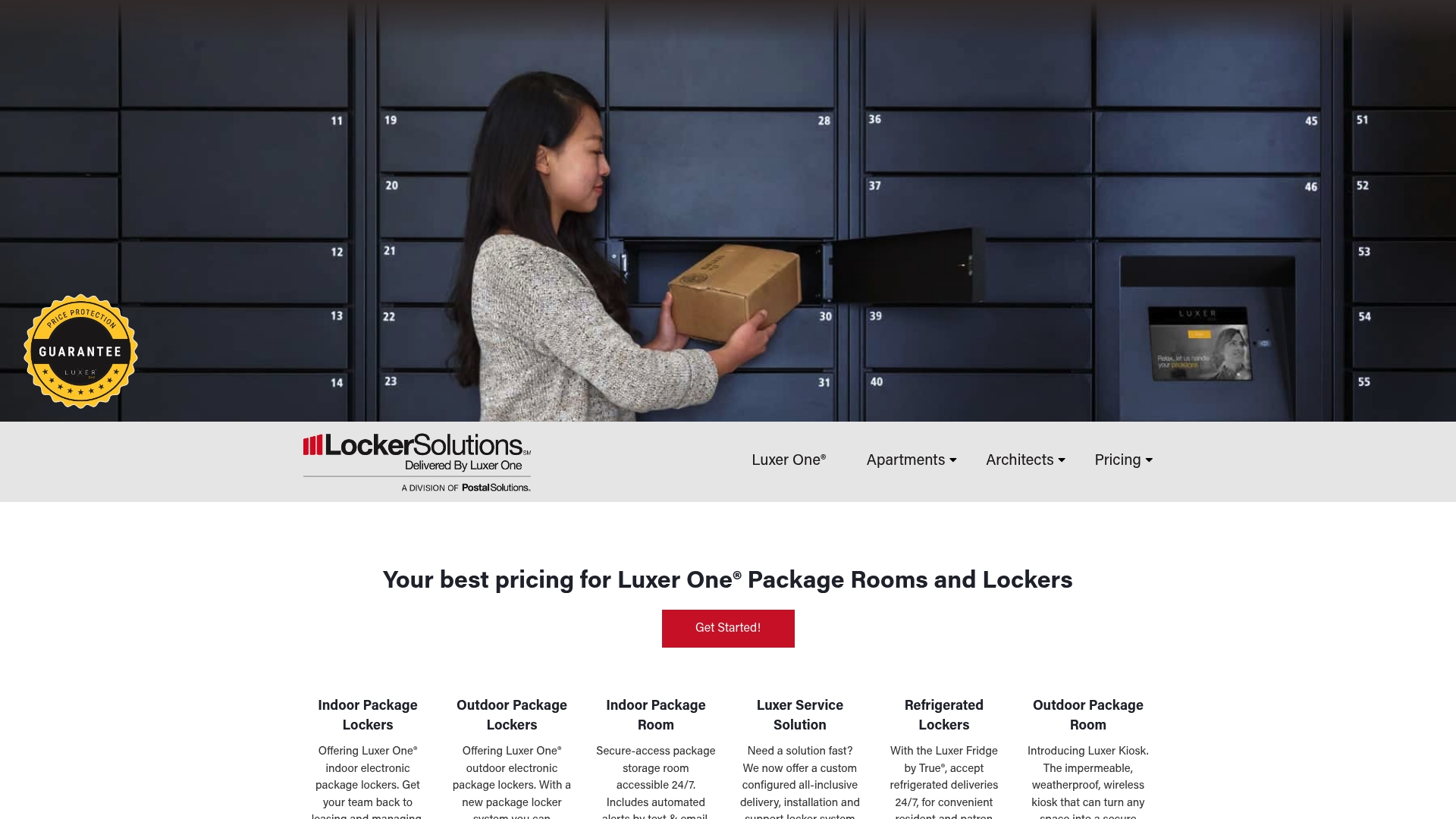
If you’re comparing vendors, request the same package from each: a site survey scope that covers electrical and network readiness, a firm installation timeline, financing terms, and the service SLA that governs repairs after your warranty period starts. Properties that want to offload day-to-day operations entirely can also add on-site package management rather than running carrier onboarding and overflow handling with in-house staff. Start by reviewing the current locker and kiosk lineup and requesting a site assessment. That single step tells you locker count, network readiness, and a realistic install date before you commit to anything.
Where to Go for Deeper Data

For parcel volume trends, FreightWaves’ coverage of Pitney Bowes’ growth projections is a solid starting point. For the theft and delivery-friction data behind the business case, see Security.org’s annual package theft report. For a technical look at intercom API structure, review the device manufacturer integration guidance. To see how locker workflows function step by step, read how parcel lockers work.
Sources
- U.S. parcel market to grow 36% by 2030, Pitney Bowes says — FreightWaves
- Security
- Intercom CRUD endpoints — Seam device manufacturer guidance
- Package Lockers for Apartments: A Playbook for Security, Scale, and Resident Experience (2026)
- Energy
FAQ
Can Any Intercom Brand Connect to a Smart Locker?
Not automatically. The intercom needs to expose a documented API or SIP-based unlock function, which not every legacy system supports. Confirm API access during the vendor conversation, not after signing.
How Long Does an Intercom-Locker Retrofit Take?
Timelines vary with how much electrical and network prep an older building needs, but the phases run from site survey through commissioning and staff training. Buildings with existing PoE wiring move faster than those needing new conduit runs or panel upgrades.
Do Residents Need a Separate App for Lockers and Building Entry?
Best practice is a single unified credential for both, reducing resident confusion and giving property staff one audit trail instead of two. Access control offerings are often built around this kind of shared credentialing.
What Happens When a Package Doesn’t Fit in a Locker?
Oversized or refrigerated items route to a package room or leasing office as an overflow step, with the resident notification specifying the alternate pickup location. Hybrid locker-plus-room setups are the standard fix for properties with a mix of parcel sizes.
How Much Does an Intercom-Integrated Locker System Cost?
Pricing depends on locker count, site conditions, and whether access control or package room management is bundled in, so current pricing is available directly through Locker Solutions after a site assessment. Financing options are also part of that conversation.
Recommended
Ready for a Luxer One® package locker quote?
Tell us your unit count and we'll send right-sized pricing with a fast response time.
Get my free quote