September 21, 2026
Plan Smarter: Outdoor Locker Pros and Cons, Hybrid Planning for Multifamily
Site-first guidance for multifamily teams weighing outdoor lockers: installation and weatherproofing needs, hybrid locker and package room planning,...
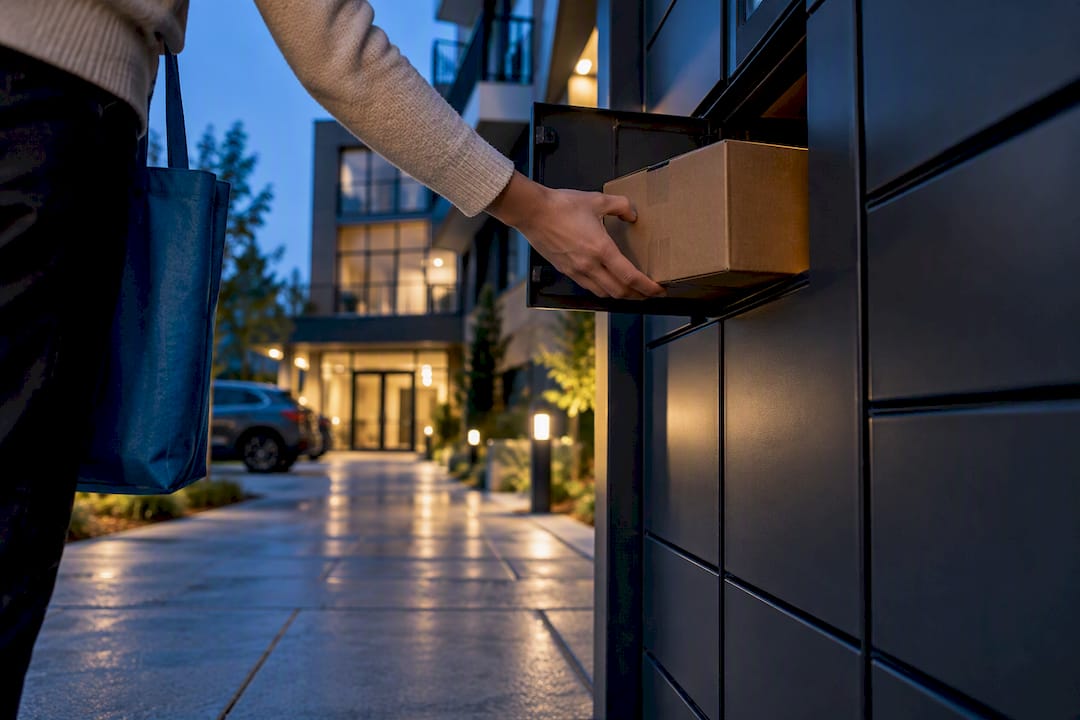
Outdoor parcel lockers are worth it for properties with high delivery volume, limited lobby space, or a need for 24/7 pickup, but only if you budget for site prep and weatherproofing up front. The trade-off is straightforward: you gain accessibility and staff-time recovery, and you take on installation costs and ongoing maintenance. Which side wins depends on your delivery volume and how much lobby space you actually have.
TL;DR:
- Outdoor lockers are most cost-effective for high delivery volumes, but require upfront site prep and weatherproofing, which can increase initial costs.
- Proper placement and planning for weather conditions are crucial, especially in coastal or industrial areas with higher corrosion risks.
- Lockers need to be sized based on delivery volume and peak demand, not just total units, and should include refrigerated compartments if grocery delivery is common.
- Vendors should be evaluated on security, weather durability, manageability, and service response, not just hardware features.
- A site assessment and pilot program are recommended before full deployment to ensure optimal layout, size, and integrated overflow solutions.
Table of Contents
- Pros: What Outdoor Lockers Solve for Operations and Residents
- Cons: Operational, Technical, and Lifecycle Downsides
- What Site Conditions Determine a Reliable Installation?
- How Should You Size Compartments and Plan for Peaks?
- What Should You Require From a Locker Vendor?
- Locker Solutions’ Perspective and Recommended Next Steps
- How Locker Solutions Handles Outdoor Deployments
- Sources
- FAQ
Pros: What Outdoor Lockers Solve for Operations and Residents
The case for outdoor lockers starts with access. Residents pick up packages any hour, carriers drop off without ever entering the building, and your leasing staff stops playing package concierge. That last point matters more than it sounds: front-desk teams at high-volume properties can lose hours a week to sorting, texting residents, and manually logging deliveries.
Outdoor kiosks placed near the parking lot or entrance let carriers make deliveries faster because they never need building access, which shortens the delivery window and reduces missed-scan errors. It also frees the actual square footage lobbies used to burn on package shelving, turning that space into something leasing can show off instead of apologize for.
Security improves too. Electronic locks paired with automated notifications and delivery logs create an audit trail that speeds up dispute resolution when a resident claims a package went missing. That paper trail protects your staff as much as it protects residents.
Pro Tip: Refrigerated compartments aren’t a luxury add-on anymore. Grocery and meal-kit delivery volume has grown enough that a handful of cold compartments can become one of the most-used features in the bank.
The financial case holds up too. Package lockers recover measurable staff hours weekly and tend to improve resident satisfaction and retention, a trend that tracks with the fact that Americans now ship a high number of packages per person annually. That volume isn’t slowing down, which makes the staff-time argument stronger every renewal cycle. A closer look at how that math plays out over a lease term is worth reading in Locker Solutions’ breakdown of package locker cost and ROI.
Benefits property teams typically see within the first year:
- Fewer front-desk interruptions for package handling and resident inquiries
- Faster carrier turnaround since drivers don’t need lobby access
- Lower theft and “lost package” disputes thanks to automated audit logs
- Reclaimed leasing-office square footage previously used for package storage
Cons: Operational, Technical, and Lifecycle Downsides
Outdoor lockers cost more upfront than indoor units, and that gap comes almost entirely from site work. Running a dedicated electrical circuit, trenching for network cable, pouring a concrete pad, and pulling permits can add weeks and real dollars before the locker bank ever powers on.
Weather is the second issue, and it’s not evenly distributed. A locker bank in a coastal climate faces salt-air corrosion that an inland property never sees, while a unit near an industrial site deals with different airborne contaminants entirely. Outdoor deployments demand more planning around materials, sealing, and gasket durability than indoor systems, because a failed seal doesn’t just look bad, it lets moisture into the electronics.
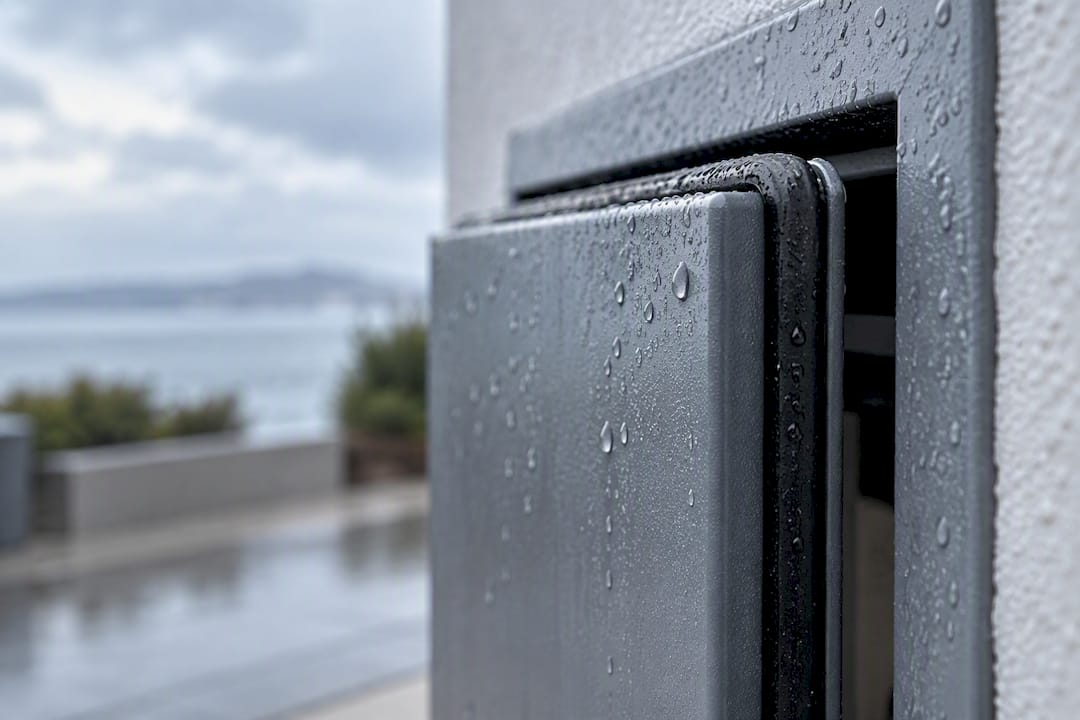
Vandalism risk climbs without the deterrents that indoor lockers get for free, like staffed lobbies and controlled entry. Skip the lighting and camera coverage, and an outdoor bank in a low-traffic corner becomes a target.
Pro Tip: Never onboard carriers as an afterthought. A locker bank that confuses delivery drivers during the first two weeks generates more resident complaints than any hardware failure will.
Common failure points worth budgeting around:
- Higher capital cost from electrical, network, and concrete site work
- Corrosion or seal failure in coastal or industrial-adjacent locations
- Vandalism when lighting and camera coverage are skipped
- Capacity shortfalls during move-in season or holiday peaks
- Firmware updates, part replacement, and vendor service delays over time
What Site Conditions Determine a Reliable Installation?
Placement decides more than aesthetics. A locker bank needs to sit somewhere carriers can see and reach easily, residents pass by naturally, and nothing blocks a fire exit or ADA-compliant path. Get this wrong and you’ll be relocating hardware within a year.
- Placement: prioritize visibility, foot traffic, and unobstructed carrier access; confirm the location doesn’t interfere with egress routes or ADA path requirements.
- Power: run a dedicated circuit with a UPS backup for short outages, and confirm cellular fallback connectivity in case the property’s network drops.
- Lighting and cameras: pair every locker bank with adequate lighting and camera coverage, both to deter tampering and to document delivery disputes.
- Weatherproofing: check drainage, freeze protection in cold climates, gasket integrity, and corrosion-resistant finishes suited to your specific site conditions.
- Permitting and prep: budget time for permit approval and concrete work before locking in a delivery date; this is usually the longest lead item, not the hardware itself.
Locker Solutions covers each of these in more depth in its outdoor locker installation guide, which is worth reading before you finalize a site plan.
How Should You Size Compartments and Plan for Peaks?
Sizing by unit count is the single most common mistake teams make. What actually matters is delivery volume, average dwell time before pickup, and how sharply demand spikes around holidays and move-in weeks. A 200-unit property with heavy online-grocery use needs a different compartment mix than a 200-unit property where most residents pick up same-day.
A workable starting ratio leans toward medium compartments, since that’s where most parcels land, with enough small compartments for envelopes and a handful of large ones for bulky orders. Add refrigerated compartments if grocery delivery is common in your market.
Overflow planning matters just as much as sizing. Lockers alone don’t automatically handle oversized packages, so properties need a fallback, whether that’s a monitored package room, a concierge desk, or scheduled pickup windows during peak weeks.
- Size compartments using turnover data and dwell time, not raw unit count
- Weight the mix toward medium compartments with refrigerated options where relevant
- Build a monitored package room as overflow for oversized or peak-period volume
- Treat the hybrid locker-and-package-room model as the default for larger properties, not an exception
What Should You Require From a Locker Vendor?
Hardware specs only tell part of the story. Evaluating outdoor lockers means weighing physical security, environmental durability, user flow, manageability, and total operating cost together, not any one of them in isolation.
On the physical side, ask about IP and IK ratings, lock cycle life, anti-pry hardware, and how the gaskets hold up over years of weather exposure. On the software side, require audit logs, alerts for forced entry or offline units, role-based admin access, and exportable delivery records for dispute resolution.
- Camera pairing and access control integration for a unified security layer
- Local service response windows and accessible spare parts, not a mail-in repair model
- Clear firmware update policy and warranty terms in writing
- Unified resident credentials across package pickup and building access
Track locker occupancy rate, average pickup lag, and service ticket frequency monthly. Properties that skip this reporting tend to discover capacity problems only after residents complain, which is the expensive way to find out.
Locker Solutions’ Perspective and Recommended Next Steps
Run a site assessment before you commit to a bank size. Check foot traffic patterns, carrier routes, and lobby constraints, then pilot a mixed-size configuration with a monitored package room as overflow. That combination handles both routine deliveries and the oversized-package surprises that pure locker banks struggle with.
When comparing vendors, ask about deployment timeline, financing terms, and who handles service calls after year one. The installation model is built around rapid deployment, typically two to six weeks from signed agreement to live system, which shortens the gap between decision and resident benefit.
— Locker Solutions
How Locker Solutions Handles Outdoor Deployments
Locker Solutions specializes in exactly this kind of deployment: weatherproof outdoor parcel kiosks, refrigerated compartments for grocery-heavy communities, and white-glove installation that gets a working system live in weeks rather than months.
Where hardware alone isn’t enough, Locker Solutions also offers on-site package management for properties that want a staffed overflow solution instead of leaving oversized packages to chance. For a property comparing the economics of a locker deployment against other capital projects, this kind of property-level cost analysis is a useful companion step before signing anything.
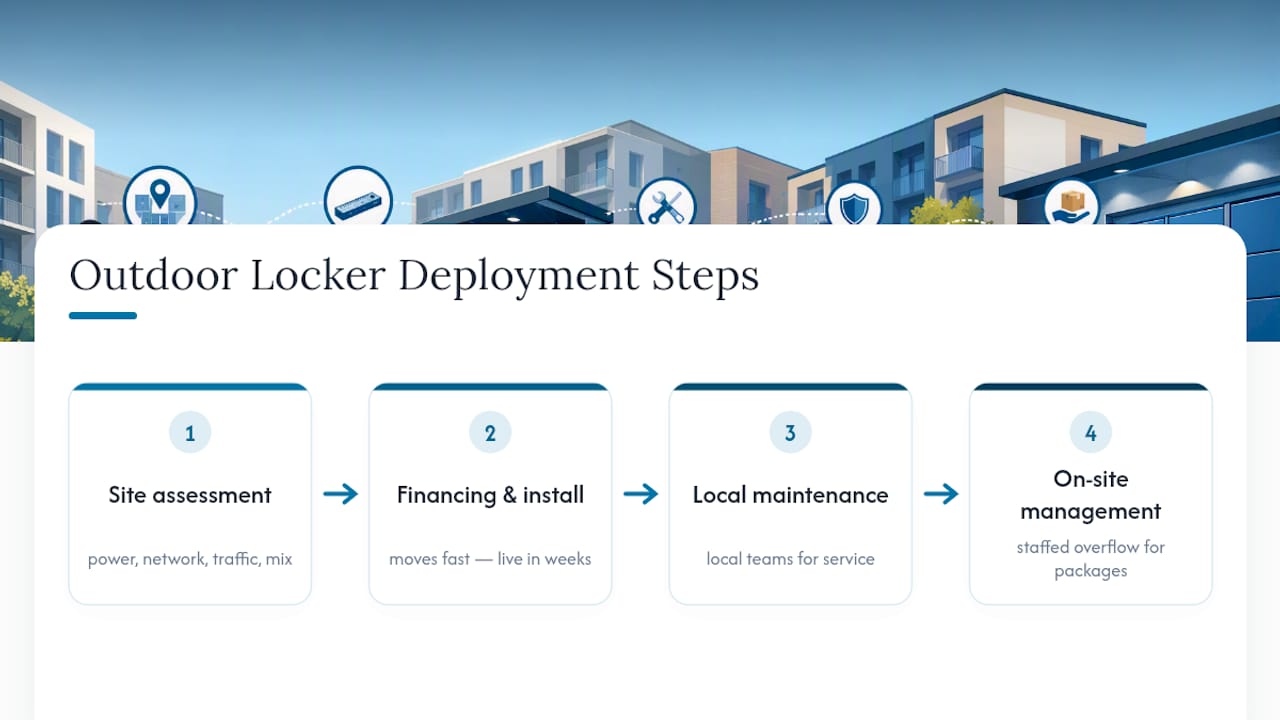
Every deployment starts with a site assessment: power, network, foot traffic, and compartment mix, mapped against actual delivery volume rather than a generic sizing chart. From there, financing and installation move fast, and local teams stay on for maintenance instead of routing every service call through a central queue.
Request a site assessment for your outdoor locker system to see what compartment mix and layout fit your property before you commit to a hardware order.
Sources
For deeper installation planning, see Locker Solutions’ outdoor installation guide and smart locker buyer’s guide for vendor selection criteria.
- Outdoor vs. Indoor Package Lockers: What’s the Difference and What Should You Choose?
- Package Lockers for Apartments: A Playbook for Security, Scale, and Resident Experience (2026)
- Outdoor Smart Parcel Lockers for Apartments & Retail
- Package lockers have become a real amenity in multi-family. Here’s what to know.
FAQ
Are Outdoor Parcel Lockers Secure Enough for Public Use?
Yes, when paired with adequate lighting, camera coverage, and electronic locks with audit logging. Automated delivery logs and notifications reduce theft disputes significantly compared to unsecured package rooms.
How Much Does an Outdoor Locker Installation Typically Cost?
Costs vary based on site prep needs like electrical work, network trenching, and concrete pads, with current pricing available on provider websites. A full cost and ROI breakdown is available in Locker Solutions’ pricing guide.
Can Outdoor Lockers Handle Oversized Packages?
Not reliably on their own. Lockers alone don’t automatically manage oversized items, so most properties pair them with a monitored package room or concierge fallback for bulky deliveries.
How Long Does Installation Take From Order to Live System?
Locker Solutions’ installation model typically runs two to six weeks from signed agreement to a fully operational system, depending on site prep needs like permitting and electrical work.
What’s the Biggest Mistake Properties Make When Sizing a Locker Bank?
Sizing by total unit count instead of actual delivery volume and compartment turnover. Properties that size lockers based on parcel mix and peak-day estimates avoid the capacity shortfalls that come with a purely unit-count approach.
Recommended
Ready for a Luxer One® package locker quote?
Tell us your unit count and we'll send right-sized pricing with a fast response time.
Get my free quote