September 15, 2026
3 Package Room Fire Code Triggers U.S. Property Managers Must Fix
U.S. property managers: apply IFC, NFPA, and OSHA rules, address the federal HAZMAT packaging change, and fix three code triggers that prompt inspections.

There’s no single document called the “package room fire code.” Most requirements come from the International Fire Code (IFC) as adopted and amended locally, with NFPA 72 governing alarms and detection, and OSHA governing staff safety. Before changing anything, isolate suspicious packages, confirm your sprinkler and smoke coverage, and call your local fire marshal. Some companies build engineered package rooms designed around these same requirements.
TL;DR:
- Fire code requirements for package rooms vary by local amendments to the International Fire Code and NFPA standards, making jurisdiction-specific consultation essential.
- Lithium-ion batteries pose a significant fire hazard due to thermal runaway, requiring strict packaging, isolation, and tracking protocols to prevent incidents.
- Converting a space into a package room can trigger additional sprinkler, detection, and occupancy classification requirements, often demanding permits and fire marshal approval.
- OSHA rules mandate staff training, hazard reporting, and strict procedures for handling suspect packages, with emergency protocols in place for battery fires.
- Using engineered locker systems improves fire safety by compartmentalizing parcels and streamlining documentation, reducing risks associated with open shelving and loose cardboard.
Table of Contents
- What Codes Actually Govern Your Package Room
- The Real Hazards Hiding in Your Package Room
- Building Requirements That Trigger Permits and Inspections
- OSHA Rules Your Package Room Staff Need to Follow
- A Retrofit Checklist for Converting a Room
- Signage That Helps Responders, Not Just Residents
- Ventilation Rules That Limit Fire and Fume Spread
- Inspection and Maintenance Protocols for Package Storage
- Storage Height and Stacking Limits You Should Know
- How Fire Code Shapes Access Control and Evacuation Routes
- Why Engineered Package Rooms Matter for Fire Risk
- Get Your Package Room Compliance-Ready
- Sources
- FAQ
What Codes Actually Govern Your Package Room
Start with the International Fire Code, the model code most U.S. jurisdictions adopt as their fire safety baseline. The word “model” matters here. The International Code Council writes the IFC, but your city or county picks an edition, often a version several years old, then layers on its own amendments. A building in Dallas and one in Denver can both cite “the IFC” and still face different rules for the same package room.
NFPA documents fill in the technical detail the IFC references. NFPA 72, the National Fire Alarm and Signaling Code, spells out detection and notification requirements. That distinction between a code and a standard trips up a lot of property teams: a code sets enforceable minimum requirements adopted into law, while a standard details how a specific system or component should be designed and installed. NFPA 72 is a code. Other NFPA documents, like NFPA 20 for fire pump installation, are standards that get referenced by codes rather than adopted wholesale.
Federal rules add another layer. A 2025 Federal Register notice tightened outer-packaging strength requirements for small hazardous material shipments, which changes what’s arriving at your package room even if it never touches your local fire code.
Skip the guesswork and go straight to the source:
- Call your local building or fire code office and ask which IFC edition and amendments apply to your address.
- Request the fire marshal’s contact information before you submit any renovation plans.
- Ask specifically about occupancy classification for your package storage space, since that answer drives almost everything else.
The Real Hazards Hiding in Your Package Room
Lithium-ion batteries are the hazard that keeps fire officials up at night, and for good reason. A single damaged cell can enter thermal runaway, a chain reaction that generates intense heat and reignites even after it appears extinguished. The U.S. Department of Energy flags these batteries as a distinct transport and storage hazard, not just a generic fire risk, because standard suppression methods often struggle to fully knock down a battery fire once it starts.
Packaging changes made this risk more visible, not less. Shipments containing hazardous materials up to 20 pounds now must meet a burst test or edge crush test with minimum strength requirements that increase for shipments heavier than 20 pounds, according to the 2025 federal notice.
Combustible cardboard stacked tightly compounds the problem. Dense stacking limits airflow and lets a small ignition spread fast between boxes.
A few controls matter more than the rest:
- Isolate any package that’s warm, swollen, leaking, or smells unusual, and never open it.
- Keep spacing between stacks instead of packing shelves floor to ceiling.
- Track carrier HAZMAT notices so staff recognize flagged shipment types.
- Consider refrigerated or monitored lockers for categories prone to battery content, like electronics and e-bike accessories.
Building Requirements That Trigger Permits and Inspections
Package rooms usually fall under “accessory storage” or “incidental use” classifications, and code chapters governing fire-resistance-rated construction set the wall and door ratings for those spaces. The specific hour rating depends on the surrounding occupancy and square footage, which is exactly why a phone call to your local code office beats guessing from a national commentary.
Doors cause more failed inspections than almost anything else in this category. NFPA 80 treats a fire-rated door as a complete listed assembly, not just a slab of metal. Drill a hole for an electronic access reader or resize the opening for a new locker bank, and you can void that listing without realizing it until an inspector notices.
Three triggers commonly force additional sprinkler or detection work:
- Occupancy reclassification. Converting a mail closet into an automated package room often prompts a fresh look at occupancy type, sometimes requiring detection that wasn’t previously mandated.
- Added combustible load. Stacking more packages, or storing categories like bulk retail returns, can push a space past thresholds that trigger sprinkler requirements.
- Increased occupant load. More foot traffic through the room, especially with self-service kiosks, can shift code requirements around egress and detection.
Pro Tip: Before signing off on any locker installation, pull the door’s listing label and confirm the installer used fire stopping rated for that specific penetration. A mismatched fire-stop material is invisible until inspection day.
OSHA Rules Your Package Room Staff Need to Follow
Fire code covers the building. OSHA’s 29 CFR 1910 Subpart L covers the people working inside it, and property managers frequently overlook this half of the equation.
Three OSHA provisions apply directly to package-room staff. Section 1910.38 requires a written emergency action plan covering evacuation routes and procedures. Section 1910.39 requires a fire prevention plan addressing how combustible materials are stored and handled. Section 1910.157 sets requirements for fire extinguisher placement, spacing, and maintenance, which matters in a room stacked with cardboard and battery-powered devices.
Build these habits into daily operations:
- Screen incoming packages for damage or hazard signs before shelving them.
- Document any suspect package, including photos and time received.
- Establish a clear rule: staff never open a package flagged as damaged, warm, or leaking.
- Coordinate with carriers so drivers know your protocol for flagged shipments.
Pro Tip: Call 911 first for any suspected battery fire or smoke, then notify the carrier and building security. Sequence matters when a battery event escalates in minutes, not hours.
Keep training records and inspection logs on file. Inspectors ask for documentation almost as often as they ask about physical conditions, and a property with a paper trail moves through review faster than one without.
A Retrofit Checklist for Converting a Room
Converting a closet, storage room, or unused office into a package room is one of the most common projects that catches property teams off guard on compliance. Local fire marshals and code amendments are often the deciding authority here, and no national guide can substitute for that conversation.
- Identify your adopted code edition. Call the local fire marshal’s office with your building address and ask which IFC edition and local amendments apply.
- Assess existing coverage. Check whether current sprinkler and smoke detection systems extend into the proposed space, and get door ratings verified against NFPA 80 listing requirements.
- Gather equipment specifications. Collect spec sheets for any lockers, refrigerated units, or access control hardware you plan to install, since permit reviewers will want dimensions, power loads, and materials.
- Submit plans and schedule inspection. File permit applications where required, implement fixes in priority order, and document every completed item with photos and dates for your records.
A package room setup guide can help you map equipment needs before you’re deep into permit paperwork.
Signage That Helps Responders, Not Just Residents
Fire code signage requirements exist for one primary audience: the fire crew that shows up during an emergency, not the resident picking up a box. A package room storing electronics or bulk goods should carry clear identification of its use so responders can assess risk before opening the door.
Signage priorities usually include:
- Room identification at the entrance stating its function (package storage, parcel room).
- Hazard indicators if the room routinely stores flagged categories like lithium batteries or bulk retail electronics.
- Fire extinguisher location markers visible from the doorway, consistent with OSHA’s 1910.157 placement rules.
- Exit and egress path markings if the room connects to a corridor used for evacuation.
Local fire marshals sometimes require specific placard formats or NFPA hazard diamond systems for rooms holding certain material categories, so this is another item worth confirming before your inspection rather than after. A room that looks like ordinary storage from the hallway gives responders no information when seconds count, and that gap is one of the easier fixes on this entire list.
Ventilation Rules That Limit Fire and Fume Spread
Ventilation in a package room does double duty: it limits the buildup of combustible off-gassing from damaged batteries or aerosol products, and it slows smoke migration if a fire does start. Most jurisdictions apply general mechanical ventilation standards under their adopted building code rather than a package-room-specific rule, but the practical implications are still concrete.
A sealed, poorly ventilated room concentrates heat and fumes from any battery event, making conditions worse before anyone notices a problem. Rooms with mechanical exhaust, even a basic system tied to the building’s HVAC, dilute those fumes and buy time. Where package rooms share HVAC ductwork with occupied spaces, dampers rated for smoke control may be required to prevent fire and smoke from traveling through the duct system into corridors or units.
Ask your local code office two specific questions: whether your package room’s ventilation shares ductwork with occupied units, and whether that connection requires smoke dampers under your adopted mechanical code. If your room stores refrigerated lockers or units with their own compressors, confirm that equipment ventilation is separate from general room airflow, since compressor heat adds another variable inspectors will check.
Inspection and Maintenance Protocols for Package Storage
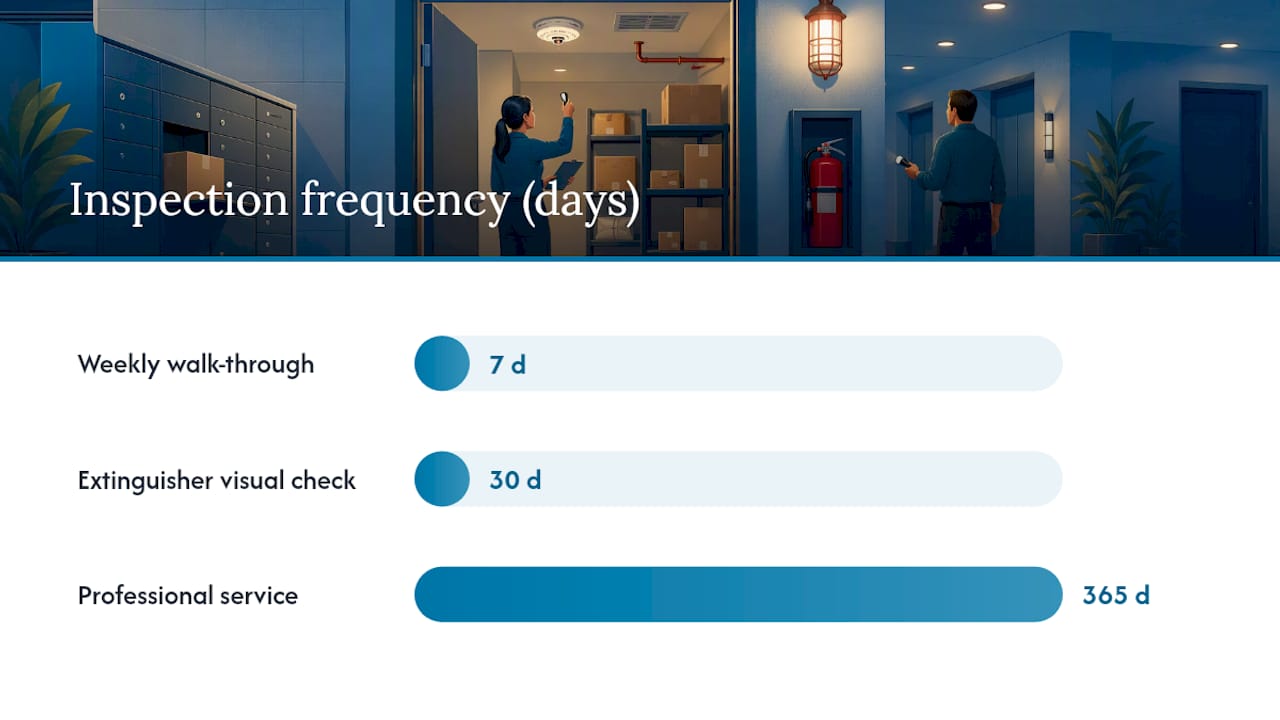
Routine fire safety inspections for package rooms typically follow the same cycle as the rest of the building. Fire extinguishers need monthly visual checks and annual professional service under OSHA’s 1910.157 requirements. Smoke detectors and alarm components need testing on the schedule set by NFPA 72, which varies by device type and system age.
What’s specific to package rooms is the storage inspection layer on top of the standard fire system checks. Stacking patterns, spacing between shelving units, and clear access to extinguishers and exits change week to week as delivery volume fluctuates, so a system that passed inspection in January can drift out of compliance by March if nobody’s watching. Build a recurring walk-through, weekly if delivery volume is high, that checks:
- Extinguisher access is not blocked by package stacks.
- Aisle spacing still meets the clearance your fire marshal specified.
- No packages are stored against sprinkler heads or within required clearance zones.
- Door closers and hardware on fire-rated doors still function properly.
Document each walk-through with a date and initials. When the fire marshal shows up for the annual inspection, a maintenance log demonstrating consistent oversight makes the visit shorter and the outcome more predictable.
Storage Height and Stacking Limits You Should Know
Fire codes generally require clearance below sprinkler heads, commonly 18 inches, to allow water distribution to work as designed. Stack packages too close to a sprinkler head and you can defeat the system’s coverage pattern even though the sprinkler itself is functioning correctly.
Beyond sprinkler clearance, most jurisdictions apply general storage height limits tied to ceiling height and the room’s fire-resistance rating rather than a package-specific number, which means the right figure for your room comes from your local code official, not a blanket rule. What holds everywhere is the underlying logic: taller, denser stacks burn hotter and spread faster, and they block sightlines that staff need to spot a smoking or leaking package before it escalates.
Practical stacking discipline matters as much as the code minimum. Keep aisles wide enough for a staff member to walk through without climbing over boxes, store heavier and bulkier packages on lower shelves, and never let stacks lean against walls in a way that blocks fire-rated door swing or extinguisher cabinets. A secure package delivery guide covers additional handling practices that reduce density-related risk during high-volume periods like the holiday shipping season.
How Fire Code Shapes Access Control and Evacuation Routes
Access control and egress requirements collide most often in package rooms because property managers want to restrict who can enter, while fire code demands that anyone inside can get out fast. Electronic locks, keypad entries, and card readers are common in modern package rooms, but any locking mechanism on a designated egress path has to meet fail-safe requirements: a fire alarm activation or power loss must release the lock automatically.
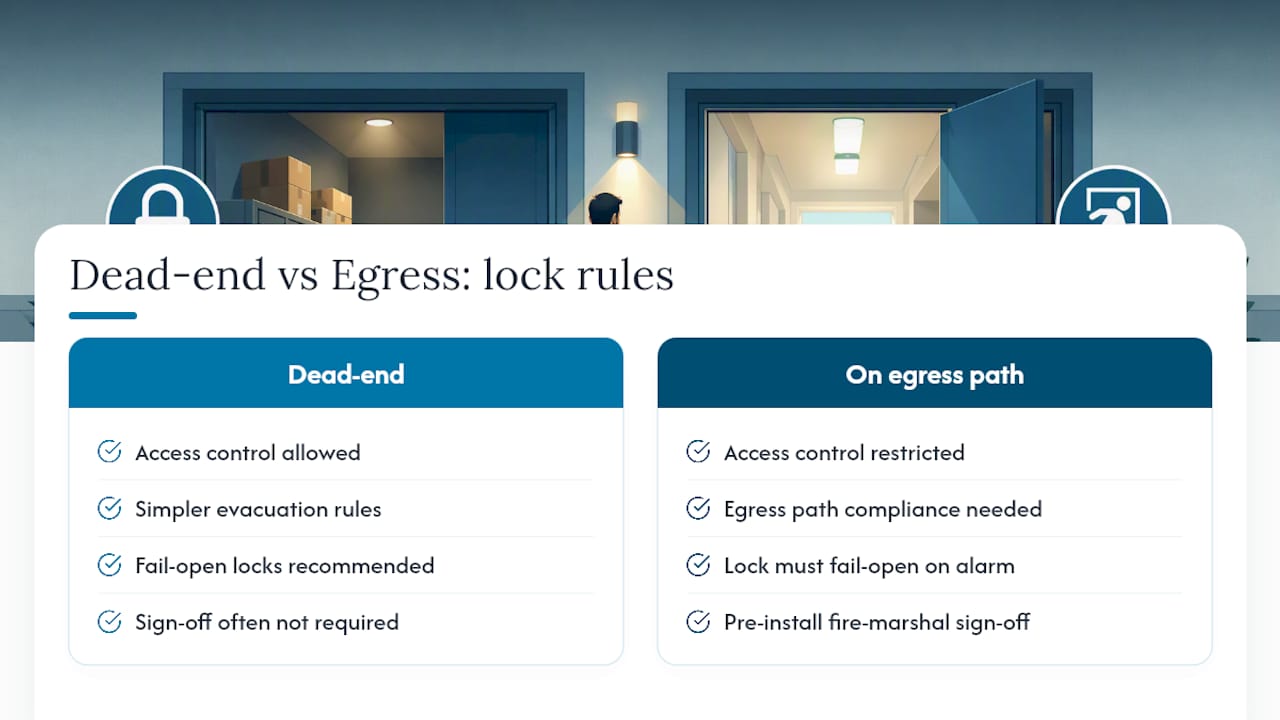
This is where retrofits go wrong most often. Adding an access-controlled door to a room that also serves as part of a corridor’s egress path can turn a compliant space into a code violation overnight if the lock doesn’t fail open during an alarm condition. If your package room is a dead-end space accessed only from a common corridor, evacuation requirements are simpler. If it’s positioned along an actual path of egress, the access control hardware needs sign-off from your local fire marshal before installation, not after.
Coordinate with whoever installs your access hardware, whether that’s an access control system integrated with your package lockers or a standalone keypad, to confirm fail-safe operation is built in from day one. This is also where working with a reputable commercial door specifier pays off, since door and frame choices interact directly with both the locking hardware and the fire-rating requirements covered earlier.
Why Engineered Package Rooms Matter for Fire Risk
Loose cardboard piled on open shelving is where package-room fires start and spread fastest. Organized locker systems change that equation by compartmentalizing individual parcels instead of letting hundreds of boxes stack against each other in open air. Less density, less handling by untrained staff, and a clearer log of what’s in the room at any given time all reduce the odds that a damaged battery or a leaking container turns into an incident.
Property teams using monitored package rooms often report better documentation trails and fewer moments where a staff member has to make an on-the-spot judgment call about a suspicious box. None of this replaces a fire marshal’s sign-off. Any locker or package-room installation should still go through local code review before equipment arrives on-site, not after.
— Locker Solutions
Get Your Package Room Compliance-Ready
Guesswork is expensive when it involves fire code, permit delays, and a room full of holiday packages. Locker Solutions builds toward compliance from the start, offering automated package rooms engineered with compartmentalized storage instead of open shelving, along with indoor lockers, outdoor kiosks, and refrigerated units for properties that need temperature-controlled parcel storage.
Beyond hardware, Locker Solutions offers on-site package room management so trained staff, not overextended leasing teams, handle daily screening and documentation. Before any installation, plan a walkthrough with your local fire marshal alongside a site assessment, so equipment placement, door hardware, and detection coverage get addressed together instead of in separate, conflicting rounds of permitting. Reach out to discuss which configuration fits your building’s occupancy and code requirements.
Sources
- INDEX - 2018 INTERNATIONAL FIRE CODE (IFC)
- OSHA fire safety standards (29 CFR 1910 Subpart L)
- Federal Register notice on HAZMAT packaging (2025)
FAQ
Is NFPA 72 a code or a standard?
NFPA 72, the National Fire Alarm and Signaling Code, is a code, meaning jurisdictions adopt it as an enforceable set of minimum requirements for fire alarm and detection systems.
Is NFPA 20 a code or a standard?
NFPA 20 is a standard, specifically covering the installation of stationary fire pumps, and it gets referenced by adopted codes rather than adopted as law on its own.
What fire codes are used in the US?
Most U.S. jurisdictions base their requirements on the International Fire Code, with some regions using NFPA 1 instead, and both get modified with local amendments that vary by city and county.
Does my package room need a fire marshal inspection?
Any conversion or significant retrofit of a storage space into a package room typically triggers fire marshal review, especially if it changes occupancy classification or adds combustible storage load.
Can I install electronic lockers without a fire code review?
Installing lockers or access control hardware without a pre-installation code check risks voiding door listings or creating egress violations, so a review with your local fire marshal before installation is the safer path, and providers like Locker Solutions coordinate that step as part of deployment.
Recommended
Ready for a Luxer One® package locker quote?
Tell us your unit count and we'll send right-sized pricing with a fast response time.
Get my free quote