September 13, 2026
Property Managers: Stop Smart Locker Warranty Gaps Before They Cost You
A property-manager checklist to preserve smart locker warranty coverage: register units, use authorized installers, log maintenance, and avoid excluded...
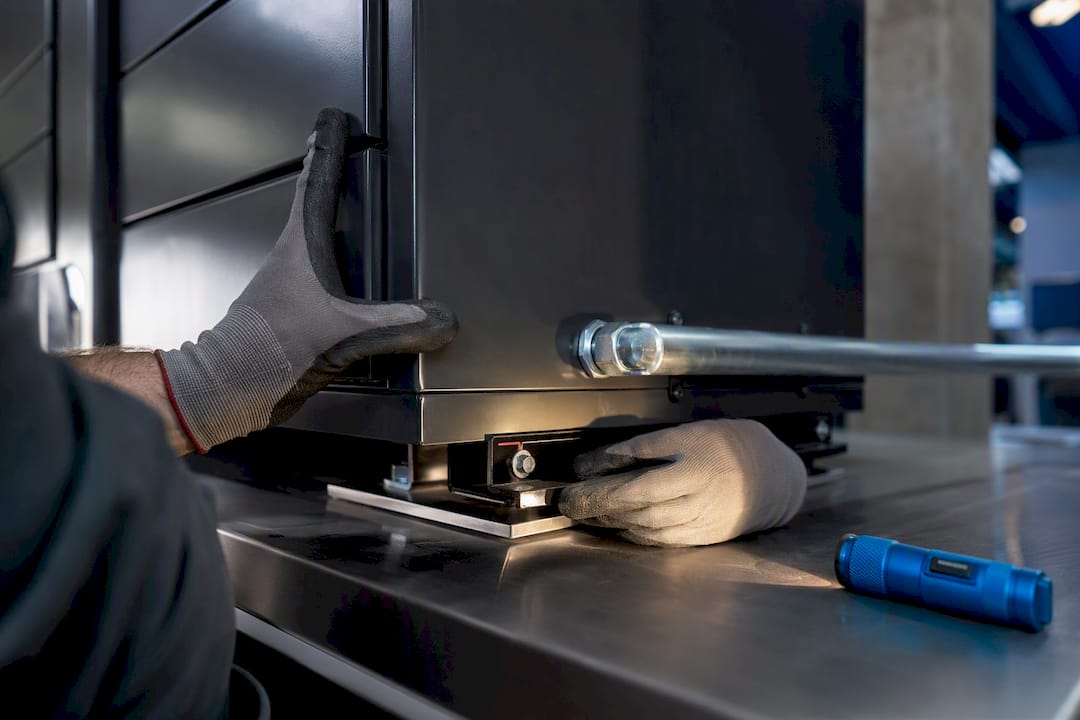
Most smart locker warranties typically cover the structural frame, locking mechanisms, and electronic control boards against defects, with coverage periods varying by component, and repair or replacement as the standard remedy. To keep that coverage intact, register the unit immediately, keep the invoice or purchase order on file, and confirm an authorized installer commissioned the system with documented sign-off.
TL;DR:
- Warranties typically cover structural frames for several years, locking mechanisms for one to three years, and electronic control boards for one year, with repair or replacement as the common remedy.
- Exclusions often include vandalism, environmental damage, normal wear, unauthorized repairs, and labor or shipping costs, which property managers often underestimate.
- Proper installation by an authorized installer and documented commissioning are crucial, as skipped steps can void warranty coverage regardless of defect existence.
- Routine maintenance, including firmware updates and inspections with timestamped photos, is essential to preserve warranty validity and streamline claim processes.
- Supporting services like managed maintenance and service agreements can protect uptime beyond the hardware warranty, especially in high-traffic or critical property environments.
Table of Contents
- What Does a Smart Locker Warranty Typically Cover?
- What’s Usually Excluded from Locker Warranty Coverage?
- How Do Installation and Maintenance Affect Warranty Validity?
- How Do You File a Smart Locker Warranty Claim?
- Should You Buy an Extended Warranty or Service Agreement?
- Warranty vs. Support: What’s the Real Difference?
- Locker Solutions’ Install and Warranty Checklist for Property Teams
- Balancing Warranty Coverage With Operational Resilience
- Locker Solutions: How We Help With Warranty-Compliant Installs
- Where to Verify Warranty Rules and Installation Standards
- Sources
- FAQ
What Does a Smart Locker Warranty Typically Cover?
Coverage almost always splits by component rather than applying one blanket term to the whole unit. That distinction matters when you’re comparing quotes, because a vendor advertising “5 year warranty” may only mean the steel frame.
Manufacturers commonly cover:
- Structural frame and finish: dents, coating failures, or fabrication defects under normal use.
- Locking mechanisms: motorized locks, latches, and hinges that fail outside of forced entry or misuse.
- Electronic control boards and wiring: circuit boards, touchscreens, and internal wiring that malfunction without external damage.
American Locker’s published warranty illustrates the pattern well: mechanical components often carry multi-year coverage while electrical components get a shorter term, sometimes just one year. The remedy is usually repair or replacement of the defective part, not a full unit swap.
The “start date” trips up a lot of buyers. Some vendors count from the invoice date, others from shipment, and a smaller number from activation at the property. If your locker sits in a warehouse for two months before installation, that gap can quietly eat into your coverage window. Always ask for this in writing before signing.
What’s Usually Excluded from Locker Warranty Coverage?
Exclusions are where most disputes start, and they’re rarely a surprise once you read the fine print.
- Vandalism, misuse, and accidental damage — forced entry, impact damage, or resident tampering falls outside standard coverage.
- Environmental exposure — water intrusion, flooding, and extreme temperature swings beyond the unit’s rated tolerance.
- Normal wear and consumables — batteries, door seals, and gaskets degrade on a schedule, not a defect timeline.
- Unauthorized repairs or modifications — opening the control board or rewiring without vendor sign-off typically voids the whole warranty, not just the affected part.
- Labor, shipping, and consequential damages — manufacturer warranty documentation for metal lockers shows this exclusion is close to universal: the part gets replaced, but you often pay for removal, reinstallation, and freight.
That last category is the one property managers underestimate most. A “free” replacement part can still cost several hundred dollars in labor if your contract doesn’t specify otherwise.
How Do Installation and Maintenance Affect Warranty Validity?
Warranty terms are conditional, not automatic. Skip a required step and the manufacturer has grounds to deny a claim even when the defect itself is legitimate.
Before installation, confirm:
- The installer is factory-authorized, and get that authorization in writing using construction management software for accurate documentation.
- Power supply, network connectivity, and IP rating match the vendor’s site specifications, especially for outdoor units.
- Drainage and weather shelter meet the exposure the unit is rated for.
- Commissioning ends with a signed acceptance report, not a verbal handoff.
OSHA’s equipment and installation guidance reinforces why this matters beyond warranty paperwork: improper electrical or lift work during installation creates real safety exposure, not just a coverage gap.
Once the unit is live, a basic maintenance cadence protects your claim rights: firmware updates as released, quarterly visual inspections, periodic lubrication of locking mechanisms, and routine cleaning of touchscreens and sensors. Keep every log, every invoice, and every inspection report in one file. Our own locker installation requirements guide walks through the site-readiness checks that most commonly get skipped.
Pro Tip: Take timestamped photos during commissioning, not just at the end. A dated photo log showing correct mounting, sealed conduit entries, and clear drainage is often the single fastest way to get a disputed claim approved without a site visit.
How Do You File a Smart Locker Warranty Claim?
Filing a claim goes faster when you front-load the documentation instead of scrambling after the fact.
- Confirm the coverage window for the specific component involved, and check that you followed the installation and maintenance conditions the contract requires.
- Gather evidence: serial number, dated photos of the defect, the original invoice or PO, the installation sign-off, and recent maintenance logs.
- Contact support to run initial troubleshooting first. Most manufacturers require this before issuing an RMA or service ticket.
- Request a dispatch or replacement part, and get a written timeline. Standard turnaround for parts is typically one to two weeks; on-site dispatch can take longer depending on your region.
- Escalate in writing if you hear nothing after the quoted window. A dated email trail matters if you need to invoke FTC warranty protections later.
Property teams that keep a standing maintenance log rarely hit delays at this stage. It’s the ones scrambling to find a two-year-old invoice who lose weeks.
Should You Buy an Extended Warranty or Service Agreement?
Extended warranties and service level agreements solve different problems, and conflating them leads to overpaying for the wrong thing.
An extended warranty typically adds:
- A longer defect-coverage term, sometimes with parts-and-labor bundled in.
- Expedited replacement shipping instead of standard freight.
An SLA adds something different: guaranteed response windows, scheduled preventive maintenance visits, and often on-site labor that a base warranty excludes entirely. If your property can’t tolerate a locker bank being down for a week, that’s an SLA problem, not a warranty problem.
Weigh capex against opex before deciding: a bundled multi-year service contract folded into your installation deal is often cheaper than buying warranty extensions and maintenance separately later.
Warranty vs. Support: What’s the Real Difference?
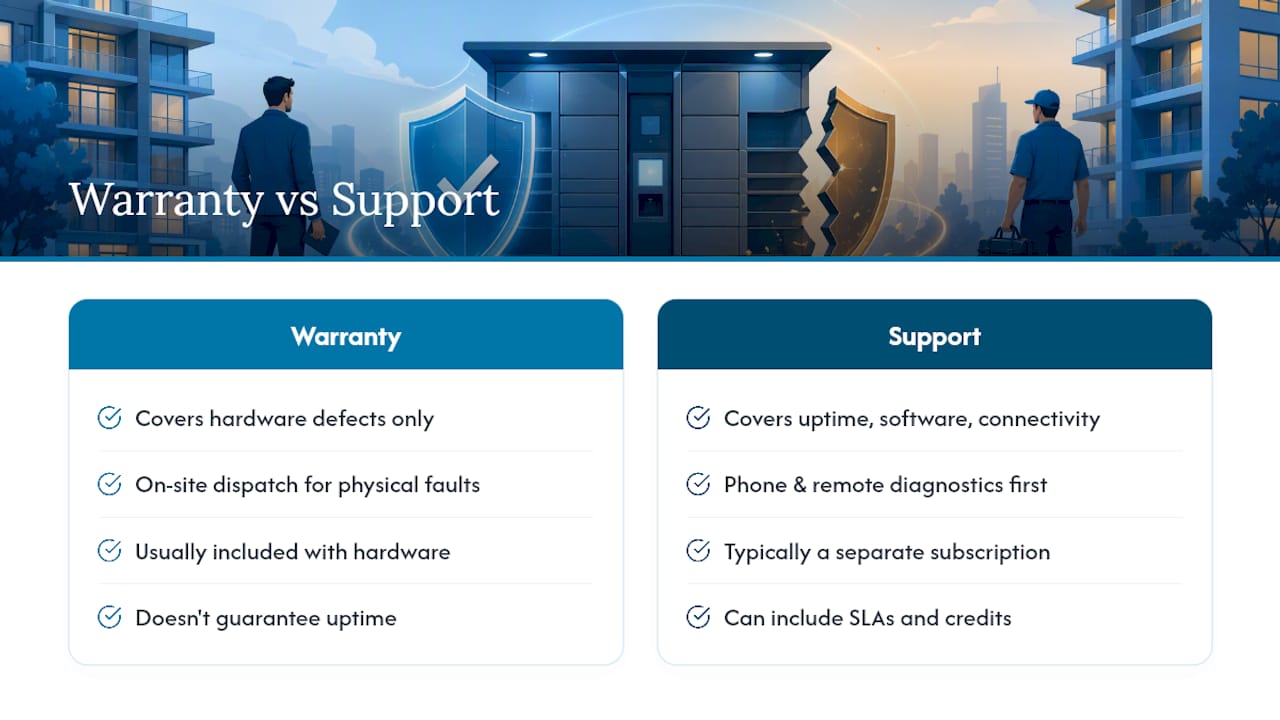
Warranty covers defects. Support covers uptime. Manufacturers increasingly draw a hard line between the two, and buyers who blur that line end up frustrated when a warranty claim doesn’t resolve an operational problem fast enough.
Phone and remote diagnostics handle software glitches and connectivity issues, usually under a separate support subscription rather than the hardware warranty. On-site dispatch is reserved for physical defects. When negotiating a contract, ask specifically for response time commitments, parts availability guarantees, and an escalation path, and push for service credits if uptime falls below an agreed threshold.
Locker Solutions’ Install and Warranty Checklist for Property Teams
Preserving coverage comes down to a handful of disciplined habits, not a legal exercise. Facility teams that get this right treat it as part of the punch list, not an afterthought:
- Confirm an authorized installer completed the job and photograph the site during commissioning.
- Test power and network connections before final sign-off, not after residents start using the units.
- Set a maintenance calendar with a named responsible party and a firmware update policy.
- Keep proof-of-purchase and maintenance responsibilities spelled out in your service contract, including who supplies spare parts.
Our preventive maintenance guide for facility managers breaks this cadence down task by task.
Balancing Warranty Coverage With Operational Resilience
Base warranty plus a disciplined internal maintenance log is enough for smaller properties with in-house facilities staff and low package volume. Larger or high-traffic sites, where a dead locker bank means a lobby full of frustrated residents, usually justify the premium for a managed SLA. The warranty protects the hardware. Only a service agreement protects your uptime.
— Locker Solutions
Locker Solutions: How We Help With Warranty-Compliant Installs
We remove two common warranty risks: unauthorized installation and inconsistent maintenance. Deployments use trained installers who document commissioning on-site, and managed package room services keep firmware, cleaning, and inspection logs current without pulling your staff off other work.
Before requesting a proposal, have your site plan, average parcel volume, and any compartment sizing needs (including cold storage) ready. That’s usually all we need to scope a system correctly the first time, which avoids the retrofit issues that cause exclusion disputes later. If you’re weighing outdoor exposure requirements, our weatherproof outdoor locker page covers the IP ratings that keep environmental damage claims from becoming a fight. Ready to see what fits your property? Request a site assessment and get a proposal built around your actual parcel volume, not a generic package.
Where to Verify Warranty Rules and Installation Standards
Check the FTC’s federal warranty law guide for disclosure rules, and review manufacturer pages like American Locker’s warranty terms for clause examples.
Sources
- Businessperson’s guide to federal warranty law — FTC
- Occupational Safety and Health Administration (OSHA)
- Warranty – Metal Lockers (AJW)
FAQ
How long does a typical smart locker warranty last?
Coverage usually runs from one to five years depending on the component, with mechanical parts like frames often covered longer than electronics or control boards, as shown on American Locker’s warranty page.
Does a smart locker warranty cover installation labor?
Rarely. Most manufacturer warranties, including examples in published metal locker warranty terms, cover the replacement part itself but exclude labor, removal, and shipping costs.
What voids a smart locker warranty?
Unauthorized repairs, improper installation, vandalism, and environmental exposure beyond the unit’s rated tolerance are the most common reasons manufacturers deny claims.
Is a service agreement the same as a warranty?
No. A warranty covers manufacturing defects through repair or replacement, while a service agreement or SLA covers uptime, guaranteed response times, and scheduled maintenance labor.
Does Locker Solutions offer managed maintenance to help preserve warranty coverage?
Yes. Locker Solutions provides authorized installation and an ongoing package room management service that keeps maintenance documentation current, which is one of the most common gaps that delays warranty claims.
Recommended
Ready for a Luxer One® package locker quote?
Tell us your unit count and we'll send right-sized pricing with a fast response time.
Get my free quote