July 28, 2026
Heat-Resistant Locker Technology: A Property Manager's Guide
Discover what heat-resistant locker technology means for property managers. Learn how to protect residents and ensure safety before contracting.

Heat-resistant locker technology refers to materials, design features, and active systems that keep locker surfaces safe to touch, protect internal electronics from thermal damage, and reduce fire risk in high-ambient-heat environments. For property managers evaluating package lockers, the single most important next step is to request third-party thermal test reports and UL listings from every vendor before signing a contract.
Table of Contents
- What “heat-resistant” actually means for multifamily properties
- Core materials and active systems that make lockers thermally tolerant
- How fire and thermal ratings translate to real-world decisions
- Why lithium-ion batteries change the risk equation
- Site placement, ventilation, and maintenance planning
- Vendor checklist: questions to ask before you buy
- A compact spec example: outdoor locker for a hot coastal property
- What to do this week
- Key Takeaways
- The spec that actually protects your property
- Luxer One lockers for thermally tolerant multifamily deployments
- Useful resources and documents to request from vendors
What “heat-resistant” actually means for multifamily properties
“Heat-resistant” and “fire-resistant” are not the same spec, and confusing them leads to either overspending or under-protecting your residents.
Heat-resistant means the enclosure materials and design keep surface temperatures within safe limits, protect internal electronics from warping or failure, and hold structural integrity under sustained ambient heat. Think of a black steel locker baking in direct Arizona sun: the surface can exceed 140°F, enough to burn a child’s hand and degrade the control board inside.
Fire-resistant (or fire-rated) means the locker is engineered to protect its contents from direct fire for a stated duration. Fire-resistant lockers combine reinforced steel, fire-resistant insulation, and sealed doors to hold interior temperatures below critical thresholds while flames are actively present. Many also carry water-resistance to protect contents from firefighting efforts.
For most multifamily package lockers, the practical priorities break down like this:
- Specify heat-resistant materials when lockers are outdoors, in sun-exposed lobbies, or in climates with sustained high temperatures. The goal is resident touch safety and electronics longevity.
- Add fire-rated construction when lockers store high-value items, are located near combustible storage, or when your insurance carrier or local authority having jurisdiction requires it.
- Combine both when lockers will be used for device charging, where internal lithium-ion risk creates a different threat than ambient heat alone.
Core materials and active systems that make lockers thermally tolerant
Passive materials
HPL (high-pressure laminate) is engineered to withstand temperatures from -30°C to 150°C, resists UV-driven fading and warping, and carries flame-retardant classifications that standard painted steel cannot match. For outdoor or coastal installations, HPL lockers deliver structural stability and chemical resistance that extend service life significantly in harsh environments. Phenolic resin panels offer similar benefits with even higher moisture resistance, making them the preferred choice for humid coastal sites.
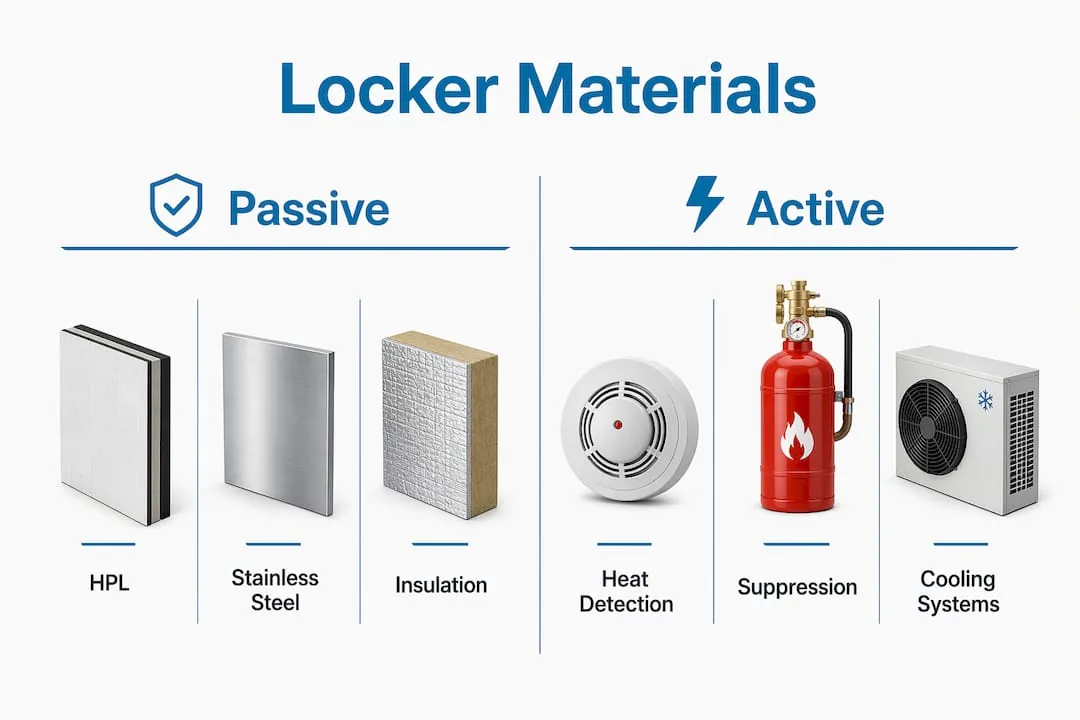
Stainless steel grades (typically 304 or 316) resist corrosion and handle wide temperature swings without losing structural integrity. Grade 316 adds molybdenum for superior salt-air resistance, which matters on coastal properties.
Thermal management design
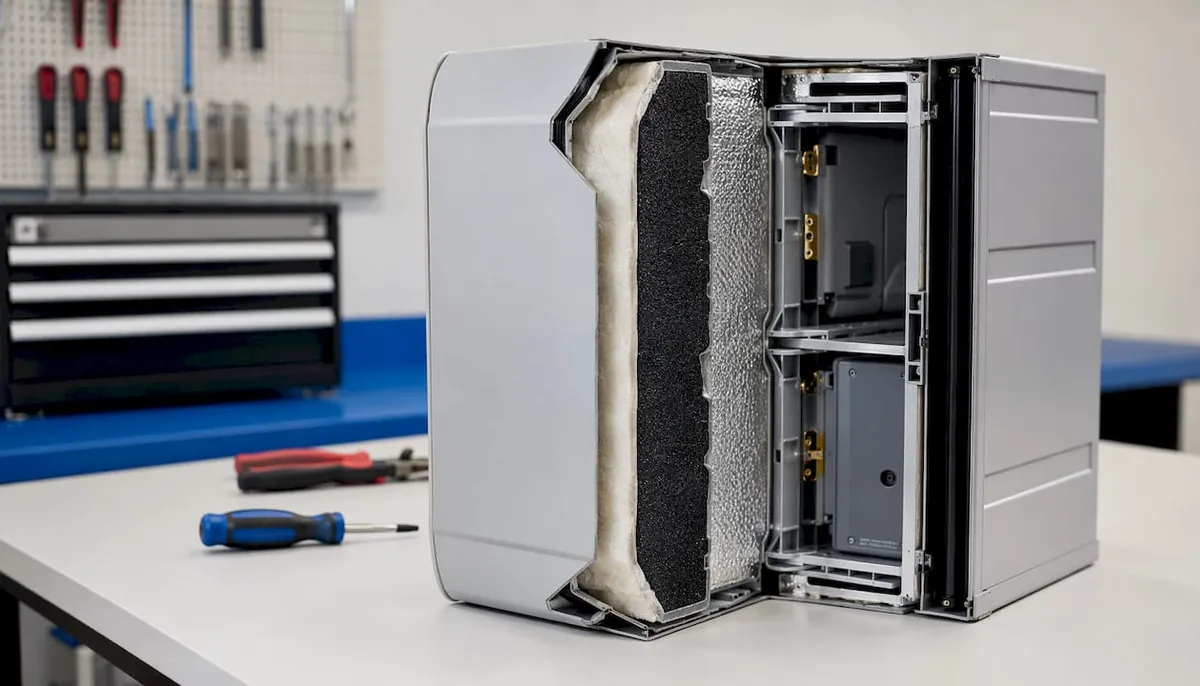
Insulation layers between the outer shell and internal electronics compartment buffer against ambient heat spikes. Heat-expanding seals around door frames close gaps when temperatures rise, limiting smoke and hot air infiltration. Passive venting channels direct heat away from control boards; on high-exposure sites, a periodic forced-ventilation cycle can drop internal temperatures by a meaningful margin. We publish detailed guidance on insulated locker cabinet technology that covers these design choices specifically for multifamily deployments.
Active detection and suppression
When lockers store or charge devices with lithium-ion batteries, passive materials alone are not enough. Linear heat detection cables run through each compartment and identify early thermal-runaway signatures before a fire fully develops. Aerosol-based suppression systems then extinguish the fire with minimal collateral damage to surrounding compartments and electronics, a critical advantage over water-based systems in electronics-dense enclosures.
Pro Tip: The single most cost-effective passive upgrade for hot-climate properties is switching from painted steel to HPL or phenolic panels. The material cost difference is modest; the reduction in warping, repainting cycles, and electronics replacements pays back within the first two summers.
How fire and thermal ratings translate to real-world decisions
Fire-resistant lockers can protect contents for varying durations depending on construction quality. That range matters more than most managers realize.
A 30-minute rating is sufficient for most standard package lockers in multifamily lobbies. It gives residents and emergency responders time to evacuate and for suppression systems to activate before contents are compromised. A 60-minute rating makes sense when lockers are positioned near mechanical rooms or parking structures. The jump to 2-hour or 4-hour ratings is rarely justified for package lockers. Per fire-rated storage guidance, that selection should be driven by site exposure and risk profile, not by defaulting to the highest available spec.
| Rating Duration | Practical Use Case | Typical Multifamily Need |
|---|---|---|
| 30 minutes | Standard lobby or covered outdoor lockers | Yes, baseline |
| 60 minutes | Near mechanical rooms, parking decks | Often appropriate |
| 2 hours | High-value storage, insurance requirements | Selective |
| 4 hours | Hazardous material storage, industrial | Rarely needed |
One critical distinction: a locker rated for surface heat tolerance at 150°C ambient is not the same as a locker rated to protect contents during a 60-minute structural fire. Never let a vendor use thermal-tolerance data to imply fire-rating compliance. Ask for separate documentation for each.
Certifications to request: UL listings for fire-rated construction, third-party lab test reports (not just manufacturer self-certification), and documentation of NFPA and ICC code alignment for your jurisdiction. For building-level context on how these ratings interact with broader fire-safety requirements, the key fire rating standards guide is a useful procurement reference.
Why lithium-ion batteries change the risk equation
A locker full of resident packages is a low thermal-risk environment. A locker where residents charge e-bikes, scooters, or power tools is a different situation entirely. Lithium-ion thermal runaway can escalate from a warm cell to an uncontrollable fire in under two minutes, and it generates its own oxygen, making conventional suppression less effective.
Active detection and waterless aerosol suppression are the practical standard for mitigating this risk inside compartments. Linear heat detection identifies the early temperature spike; aerosol suppression activates at the compartment level, containing the event before it spreads. This approach limits water damage to adjacent electronics, which matters when the locker bank also handles non-charging packages.
Pro Tip: When evaluating vendors for charging lockers, require the suppression system datasheet showing detection trigger temperature, suppression activation time, and compartment-level isolation. A vendor who cannot produce this document has not engineered for lithium-ion risk.
Operational controls matter as much as hardware. A written charging policy, posted at the locker bank and included in the lease addendum, limits what devices residents may charge and at what wattage. Staff inspection cadence should include a monthly visual check of compartment seals and a quarterly functional test of detection sensors.
Site placement, ventilation, and maintenance planning
Where you put the lockers shapes how hard the thermal-management systems have to work.
| Placement Factor | Recommended Approach | Risk if Ignored |
|---|---|---|
| Direct sun exposure | Shade structure or north/east-facing wall | Surface temps exceed safe-touch limits |
| Near combustible storage | Minimum 10-foot separation | Fire spread risk |
| Vehicle traffic proximity | Physical barrier or bollards | Impact damage, exhaust heat |
| Air intake proximity | Avoid placement near HVAC intakes | Recirculated hot air raises internal temps |
Ventilation strategy depends on climate. Passive venting works well in moderate climates; properties in the Sun Belt or coastal Southeast should specify a forced-ventilation option with a thermostat-triggered cycle. Route exhaust away from occupied walkways and building air intakes.
For weatherproof outdoor locker installations, maintenance schedules should include electronics cooling checks every six months, seal integrity inspection annually, and a functional test of any detection or suppression system per the manufacturer’s SLA. Integration with the building fire alarm panel is not optional when active suppression is installed. Coordinate with your fire alarm contractor before installation, and confirm that the locker system’s suppression trigger will send a signal to the panel and to your monitoring service.
Vendor checklist: questions to ask before you buy
Before signing any proposal, get written answers to these:
- Material certificates: HPL grade, phenolic spec, or stainless steel grade (304 vs. 316) with manufacturer data sheets
- Thermal tolerance data: maximum rated ambient operating temperature for electronics and surface materials
- Fire-rating documentation: UL listing number, third-party lab report (not self-certification), and rated duration
- Active system specs: suppression/detection datasheet with trigger temperature, activation time, and compartment isolation method
- Warranty and SLA: on-site repair response time, spare-part availability, and whether thermal checks are included in preventive maintenance visits
- NFPA/ICC alignment: written confirmation that the installation meets local building code requirements, with reference to the applicable standard
- Integration capability: documentation that the suppression system can interface with your building fire alarm panel
- Lifecycle cost analysis: total cost of ownership over 10 years, including maintenance, not just purchase price
For smart locker procurement in multifamily settings, the vendors who can answer all of these questions in writing are the ones worth shortlisting.
A compact spec example: outdoor locker for a hot coastal property
Scenario: 120-unit coastal property in Florida. Direct sun exposure on the south-facing package station. Residents have requested e-bike charging access. High humidity, salt air, occasional hurricane-force winds.
- Enclosure material: phenolic or HPL panels (not painted steel). Phenolic and HPL options resist warping, UV damage, and corrosion far better than standard painted steel in coastal conditions.
- Frame: 316 stainless steel for salt-air resistance
- Thermal management: passive venting channels plus a thermostat-triggered forced-ventilation cycle activating above 95°F ambient
- Active systems: linear heat detection and aerosol suppression in all charging compartments
- Placement: east-facing wall with a shade canopy; minimum 15 feet from the parking structure
- Charging policy: posted limit of 250W per compartment; no overnight unattended charging without staff sign-off
- Inspection cadence: monthly visual seal check, quarterly sensor functional test, annual full maintenance visit per SLA
- Emergency procedure: suppression activation triggers building fire alarm panel and sends automated alert to property manager’s phone
What to do this week
The right spec for most multifamily properties is thermally tolerant materials plus targeted active detection for any locker that allows charging. Reserve fire-rated construction for high-risk storage scenarios or where your insurer or local code requires it.
Immediate actions:
- Request third-party thermal test reports and UL listings from every locker vendor currently on your shortlist
- Schedule a site heat-mapping walk to identify sun exposure and proximity risks at your planned installation location
- Add thermal checks and seal inspections to your existing maintenance plan, even for currently installed lockers
- If charging is permitted, require suppression system datasheets before approving any vendor
- Contact us to discuss outdoor locker configurations and Luxer Access integration options for your property
Key Takeaways
Heat-resistant locker technology is a system decision, not a single product spec: materials, placement, ventilation, active detection, and operational procedures all work together to protect residents and equipment.
| Point | Details |
|---|---|
| Heat-resistant vs. fire-rated | These are separate specs; request documentation for each, never let one substitute for the other. |
| Material selection matters | HPL and phenolic panels outperform painted steel in hot, humid, or coastal conditions and reduce long-term maintenance. |
| Lithium-ion risk requires active systems | Charging lockers need linear heat detection and aerosol suppression, not just thermally tolerant enclosures. |
| Avoid overspecification | A 30-minute fire rating covers most standard multifamily package locker scenarios, while a 60-minute rating is often appropriate for lockers near higher-risk areas such as mechanical rooms or parking decks; 4-hour ratings are rarely justified. |
| Luxer One | Offers outdoor, weatherproof, and Luxer Access-integrated configurations with vendor documentation to support procurement. |
The spec that actually protects your property
The most common procurement mistake is treating thermal protection as a checkbox rather than a system. A property team buys a locker with an HPL shell, installs it in full afternoon sun next to the parking structure, allows e-bike charging with no written policy, and then wonders why the control board fails in summer two. The material was right. Everything around it was not.
The teams that get this right treat heat-resistance as an operational commitment: they map sun exposure before installation, they write a charging policy before the lockers go live, and they schedule thermal checks the same way they schedule HVAC filter changes. When Luxer Access integration is part of the deployment, the access control layer also gives staff real-time visibility into compartment activity, which makes enforcing charging policies far less manual.
The vendors worth working with are the ones who hand you a suppression system datasheet unprompted and who include thermal checks in their maintenance SLA by default. That is the signal that they have engineered for the actual risk, not just the marketing spec.
Luxer One lockers for thermally tolerant multifamily deployments
Property teams that need outdoor, weatherproof package lockers built for real climate conditions have a direct path with us. The product line covers outdoor parcel lockers engineered for sun, humidity, and coastal exposure, plus Luxer Access for unified access control that integrates with building fire alarm and emergency response systems.
We provide vendor documentation including thermal tolerance data, maintenance SLAs with thermal checks, and configuration support for properties that allow device charging. The next step is straightforward: request a site assessment and ask for the full vendor documentation package. Contact us at locker-solutions.com to get started.
Useful resources and documents to request from vendors
When evaluating proposals, collect and keep copies of:
- Third-party fire and thermal test reports (not manufacturer self-certification)
- UL listing numbers with rated duration and scope
- Material data sheets: HPL grade, phenolic spec, or stainless steel grade
- Suppression and detection system datasheets with trigger temperature and activation time
- Maintenance SLA documentation confirming thermal checks are included
- Written confirmation of NFPA and local ICC code alignment
Authoritative references for procurement teams:
- NFPA standards and codes for fire protection in residential occupancies
- Fire safety features for buildings covering building-level integration considerations
- Our insulated locker guide for thermal management design detail
- Manufacturer datasheets for any aerosol suppression system installed in charging compartments
Keep operational procedure documents and staff training records on file. If a suppression event occurs, your insurer and local fire marshal will ask for them.
Recommended
Ready for a Luxer One® package locker quote?
Tell us your unit count and we'll send right-sized pricing with a fast response time.
Get my free quote