July 25, 2026
How Locker Access Drives Community Satisfaction
Discover the role of locker access in community satisfaction. Uncover how this key amenity boosts convenience, security, and resident retention.
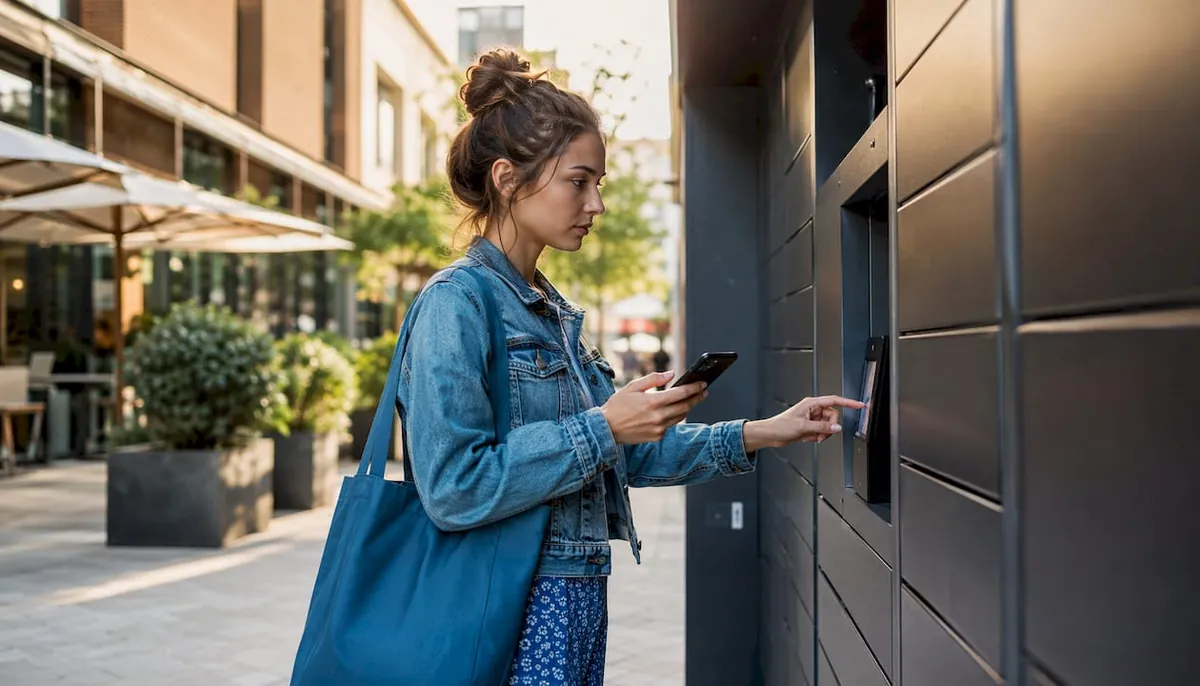
Locker access is now the top-ranked amenity in multifamily housing, and the data behind that ranking is hard to argue with. Over 90% of residents who have access to smart lockers use them weekly, and 78% prefer lockers as their primary method for package retrieval over direct-to-door delivery, scheduled services, or leasing office pickup. The role of locker access in community satisfaction is no longer a soft, anecdotal claim. It is measurable, repeatable, and tied directly to renewal rates, referrals, and resident retention.
Table of Contents
- How locker access directly shapes community satisfaction
- What residents actually gain from locker access
- How locker integration makes your job easier as a community manager
- What the research says about locker access and resident preferences
- What locker access actually costs, and what it returns
- Luxer One lockers: purpose-built package management for multifamily properties
- Key Takeaways
How locker access directly shapes community satisfaction
The connection between locker access and resident satisfaction runs through three concrete drivers: convenience, security, and reliability. Research using structural equation modeling on 442 smart locker users confirms that all three factors significantly predict satisfaction outcomes. Remove any one of them and the experience falls apart.
Convenience means residents can retrieve packages at 11 PM on a Tuesday without involving staff. Security means a package does not disappear between the delivery truck and the front door. Reliability means the system works the same way every time, regardless of which carrier dropped the parcel or which staff member is on shift. Together, these three factors explain why lockers have moved from a premium differentiator to a baseline expectation in modern multifamily properties.
The shift happened fast. Package theft concerns affected 50% of residents by 2025, a 354% increase from 2024. That kind of spike does not just hurt satisfaction scores. It drives non-renewals and negative reviews. Lockers address the problem at the source.
Core impacts of locker access on community satisfaction:
- Residents gain 24/7 self-service access that removes dependency on office hours
- Package theft risk drops sharply with controlled, individual-compartment storage
- Predictable retrieval reduces the anxiety of uncertain delivery outcomes
- High usage rates translate directly into positive amenity perception scores
- Lockers support return shipping, with nearly 90% of residents interested in using lockers for carrier pickups
What residents actually gain from locker access
The convenience argument is obvious, but the depth of it is worth unpacking. A resident who works a non-standard schedule, say a nurse on night shifts or a remote worker who leaves the building during delivery windows, gets the same reliable pickup experience as anyone else. That consistency is what converts a good amenity into a community storage solution residents genuinely depend on.
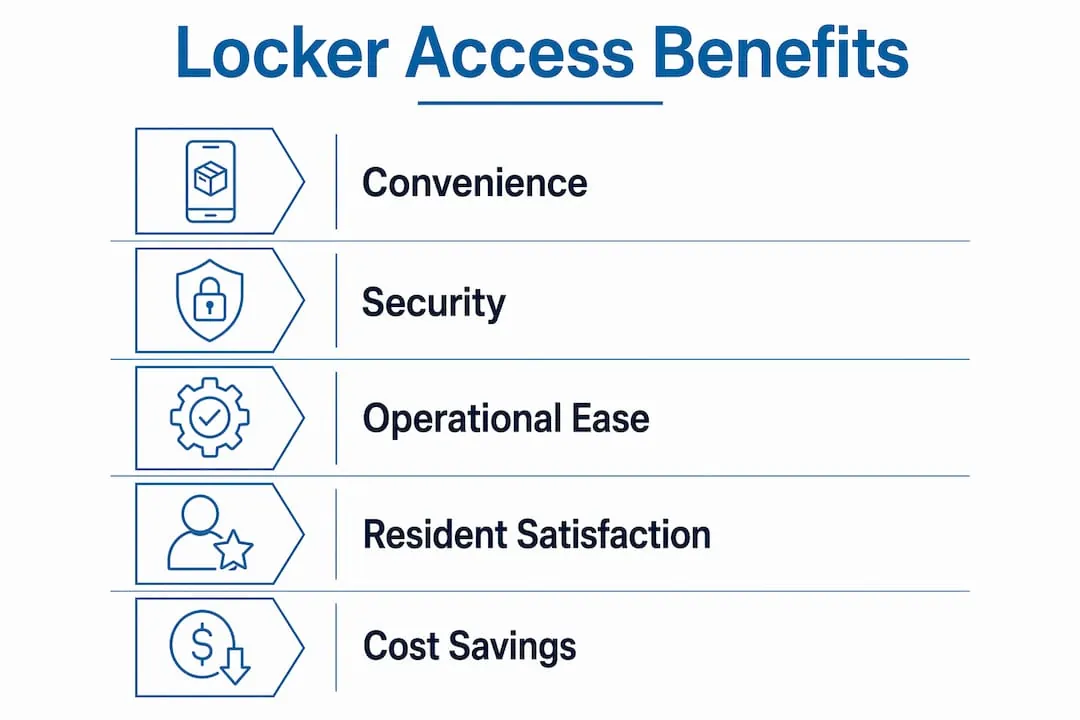
Security and privacy go further than just preventing theft. Controlled access means no neighbor, maintenance worker, or delivery driver can access a resident’s compartment. For residents receiving medical supplies, high-value electronics, or personal items, that matters. The psychological benefit is real: a dedicated, locked space reduces the low-grade anxiety that comes with uncertain package status.
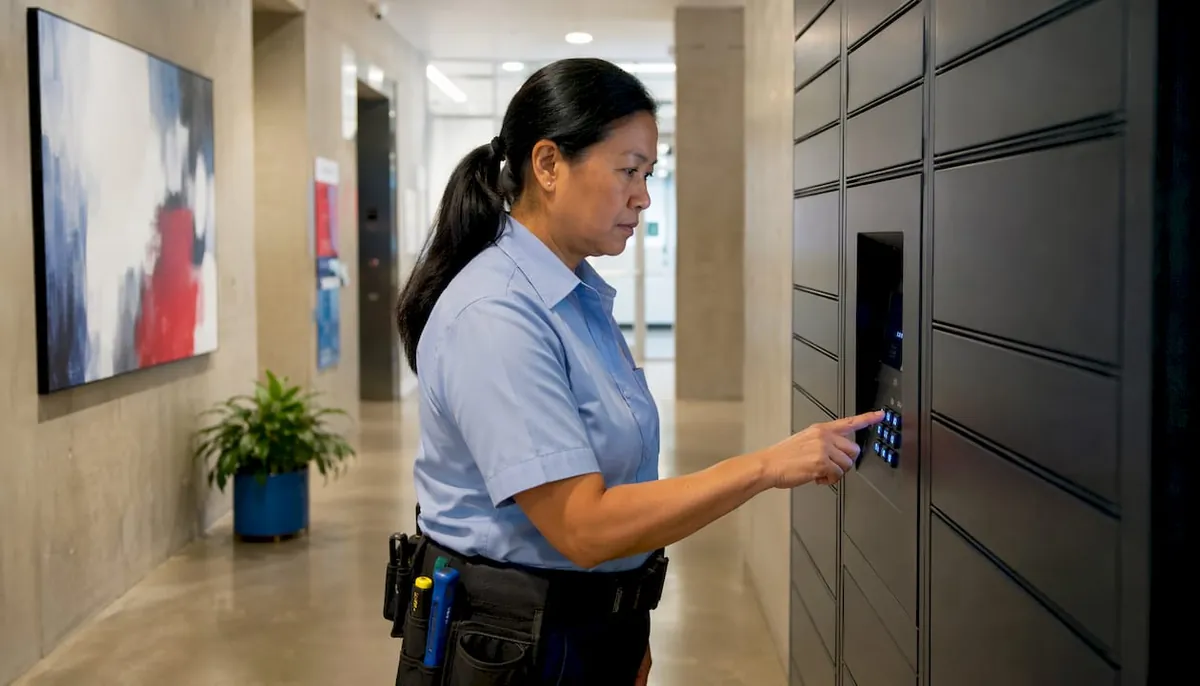
Demographic data adds another layer. Millennial residents prioritize security, speed, and cost when evaluating package management. Gen Z residents rank speed, security, and accessibility as their top three concerns, with less emphasis on cost savings. Both groups expect a digital-first experience, and a locker system with automated alerts and app-based access fits that expectation directly.
Major resident benefits of locker access:
- 24/7 availability decouples pickup from staff schedules entirely
- Individual compartments protect privacy and prevent unauthorized access
- Automated notifications eliminate the need to check on delivery status
- Return shipping capability adds a layer of convenience most residents do not expect
- Consistent experience across carriers removes the unpredictability of direct delivery
Stat callout: 78% of residents with prior locker experience prefer lockers as their primary method for package retrieval, ahead of direct-to-door delivery, scheduled services, or leasing office pickup.
Pro Tip: If your property serves a high share of Gen Z residents, prioritize mobile app integration and accessibility features when selecting a locker system. Speed of access and ease of use rank above cost for this group.
How locker integration makes your job easier as a community manager
The operational case for lockers is as strong as the resident satisfaction case, just less visible. Before digital locker management, package handling consumed staff time at every step: signing for deliveries, logging arrivals, notifying residents, managing pickups, and dealing with complaints when something went missing. Digital locker management replaces that reactive cycle with a system that handles most of it automatically.
Audit trails are one of the underappreciated gains. Every access event is logged with a timestamp and user ID. When a resident claims a package was never delivered or went missing, you have a verifiable record. That accountability protects the property and resolves disputes faster than any manual process could.
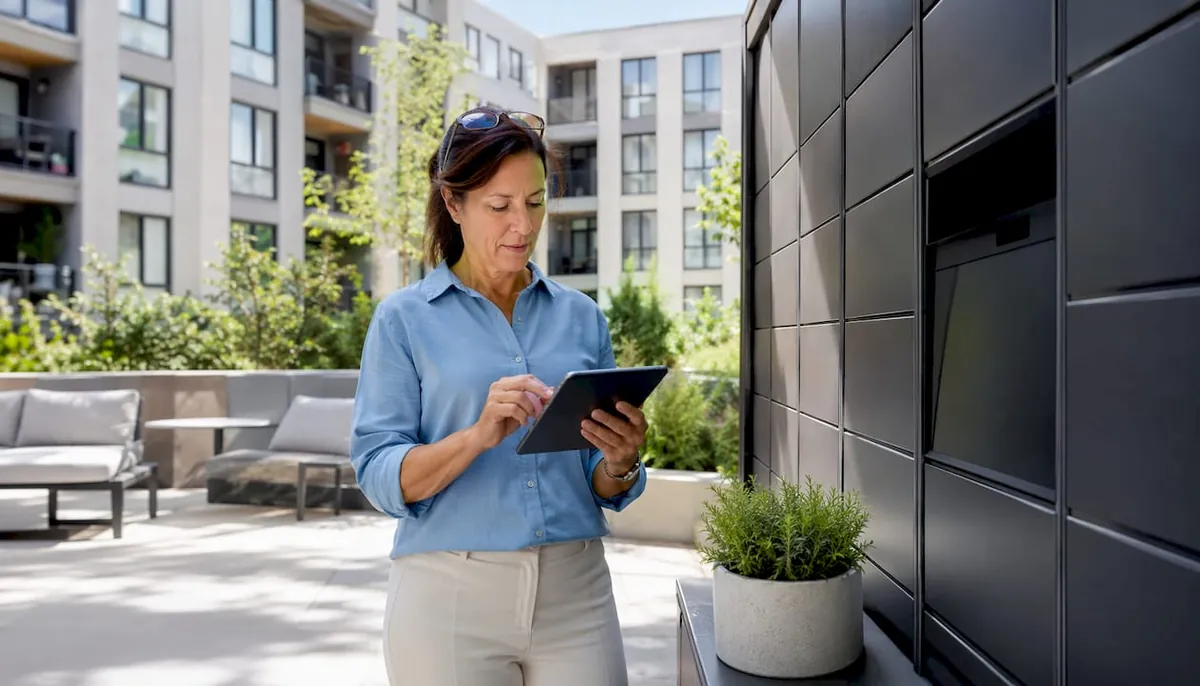
Integration with broader facility systems matters too. A locker platform that connects to your access control infrastructure, property management software, or building security setup creates a unified operational picture. You are not managing a separate system. You are extending the one you already have. For properties exploring door security best practices, locker access fits naturally into a layered security approach.
Operational advantages for community managers:
- Automated resident notifications eliminate manual package tracking and follow-up
- Digital audit trails create accountability without additional staff monitoring
- Reduced staff time on package handling frees capacity for higher-value tasks
- Software-managed access removes the cost and friction of mechanical key replacement
- Integration with property management systems centralizes operational data
- Fewer lost package complaints directly reduce resident dissatisfaction incidents
What the research says about locker access and resident preferences
The 2025 resident preference data from the National Apartment Association makes the satisfaction link concrete. Lockers rank as the top amenity, ahead of business centers, clubhouses, pools, and spas. That ranking is not based on novelty. It is based on actual usage patterns and the degree to which the amenity solves a real daily problem.
Research on parcel locker logistics adds a supply-chain dimension that property managers rarely see. Parcel lockers consolidate deliveries, which reduces failed delivery attempts and lowers vehicle dwell times at the property. Fewer delivery vehicles idling at the entrance, fewer missed deliveries requiring redelivery, and fewer resident complaints about packages left in unsecured locations. The efficiency gain runs in both directions.
Global sustainability research projects that parcel locker adoption could reduce delivery costs by 2–12% and cut emissions by 5–18% by 2030. For properties with sustainability certifications or ESG commitments, that data point belongs in the amenity justification conversation.
| Research finding | Data point | Source |
|---|---|---|
| Resident locker usage rate | Over 90% use lockers weekly | 2025 Resident Preferences Report |
| Preferred delivery method | 78% prefer lockers over alternatives | 2025 Resident Preferences Report |
| Package theft dissatisfaction | Affects 50% of residents; up 354% from 2024 | 2025 Resident Preferences Report |
| Return shipping interest | Nearly 90% want to use lockers for returns | 2025 Resident Preferences Report |
| Delivery cost reduction potential | 2–12% by 2030 via locker adoption | World Economic Forum, 2025 |
| Emissions reduction potential | 5–18% by 2030 via locker adoption | World Economic Forum, 2025 |
| Satisfaction drivers confirmed | Convenience, privacy, reliability (n=442) | PubMed structural equation study |
Stat callout: Package loss concerns jumped 354% in a single year, making theft mitigation the fastest-growing driver of locker adoption in multifamily housing.
Facilities management research reinforces the software side of the equation. Smart locker systems that integrate with hybrid facility management platforms provide remote control, real-time occupancy data, and flexible access assignment. For a community manager overseeing multiple buildings or a large property, that visibility changes how you allocate resources and respond to issues.
Locker access also carries a psychological dimension that satisfaction surveys do not always capture directly. A dedicated, consistent storage space reduces the ambient stress of uncertain package outcomes. Residents who know exactly where their deliveries go, and that no one else can access them, report a stronger sense of order in their living environment. That perception feeds into how residents describe the property to prospective renters, which is where the referral value shows up.
What locker access actually costs, and what it returns
The cost picture for locker access varies by system type, property size, and installation complexity. Indoor electronic lockers, outdoor weatherproof units, refrigerated compartments, and automated package rooms each carry different price points. A space-efficient configuration designed for a 100-unit building looks very different from a system built for a 400-unit community with high package volume.
The return side of the equation is where the numbers get interesting. Reduced staff time on package handling, fewer lost package liability claims, and lower turnover driven by higher satisfaction all contribute to the financial case. Properties that treat lockers as a line item rather than an investment tend to underestimate those downstream savings. A detailed breakdown of locker cost and ROI factors in hardware, installation, software licensing, and ongoing maintenance against the operational and retention gains.
For existing properties, retrofit installation is a real option. Legacy buildings can add locker access without a full renovation, and the retrofit process has become more standardized as demand has grown. The key variables are available square footage, electrical access, and whether the property needs indoor units, outdoor units, or a combination. Refrigerated lockers add another layer of cost but open the door to grocery delivery and meal kit acceptance, which is a growing resident expectation in urban markets.
Ongoing maintenance costs are often lower with digital systems than with mechanical alternatives. Software updates deploy remotely. Access credentials reset without a locksmith. Audit logs surface problems before they escalate. The shift from reactive key management to proactive software management, as facilities research consistently shows, reduces both direct costs and the staff time spent managing exceptions.
Luxer One lockers: purpose-built package management for multifamily properties
Property managers who have worked through the satisfaction data and operational case for locker access eventually face the same question: which system actually delivers on all of it? We provide Luxer One® package lockers and automated package rooms built specifically for multifamily residential properties, with configurations ranging from indoor electronic lockers to outdoor weatherproof units and refrigerated compartments for temperature-sensitive deliveries.
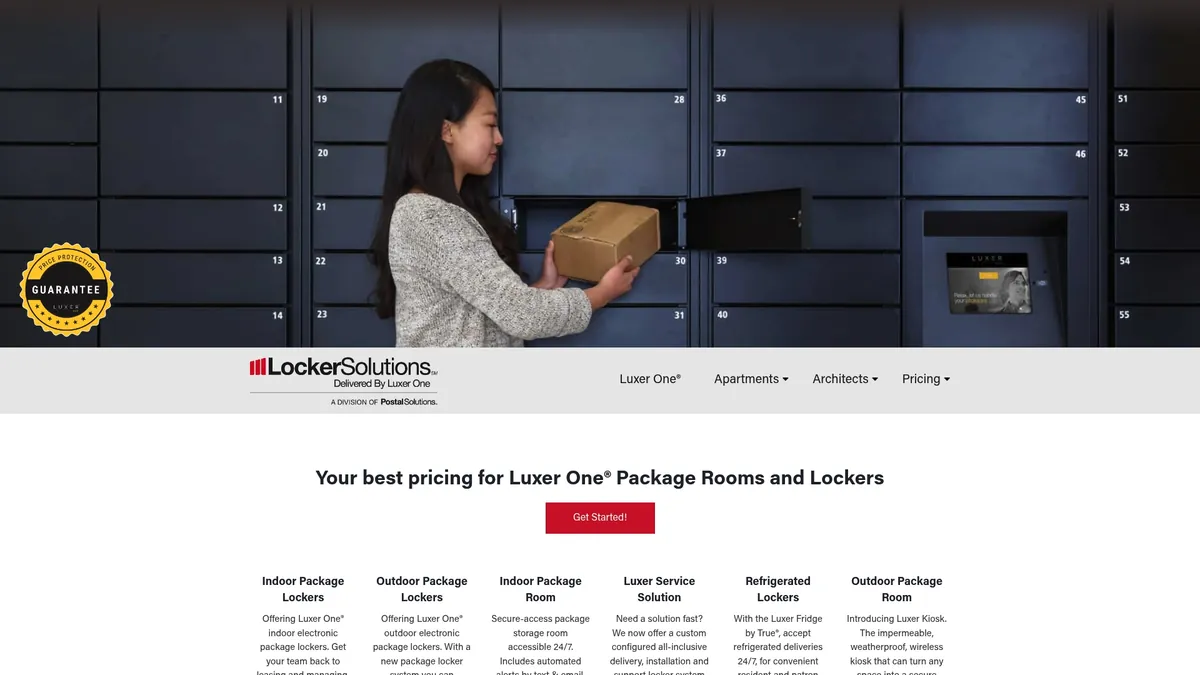
The practical difference from a generic locker vendor is the depth of support. We offer deployment in 4-6 weeks from signed agreement, custom configurations for properties of any size, and ongoing maintenance coverage. Automated resident alerts, video surveillance integration, and software-managed access come standard, which means the audit trail and accountability features that facilities managers rely on are built in, not bolted on. For properties evaluating access control integration, Luxer One® systems connect with existing building infrastructure rather than requiring a parallel setup.
If your property is ready to move from evaluating the case to implementing a solution, the Luxer One apartment package page covers the full product range with configuration options and next steps for getting a quote.
Key Takeaways
Locker access is the highest-impact amenity in multifamily housing, with usage rates and satisfaction data that no other amenity category matches.
| Point | Details |
|---|---|
| Top-ranked amenity | Over 90% of residents use lockers weekly, and 78% prefer lockers as their primary package retrieval method over any alternative, making them the most utilized and preferred amenity in multifamily properties. |
| Satisfaction drivers | Convenience, security, and reliability are the three confirmed factors that predict resident satisfaction with locker access. |
| Theft risk is rising fast | Package loss concerns affected 50% of residents in 2025, a 354% increase from 2024, making lockers a retention tool, not just a convenience. |
| Operational efficiency | Digital locker management replaces manual package handling with automated alerts, audit trails, and remote access control. |
| Luxer One fit | We provide Luxer One® systems with indoor, outdoor, and refrigerated configurations built for multifamily properties of any size. |
Recommended
Ready for a Luxer One® package locker quote?
Tell us your unit count and we'll send right-sized pricing with a fast response time.
Get my free quote