July 16, 2026
3rd Party Delivery Service Guide for Apartments
Discover how a 3rd party delivery service can enhance resident satisfaction and streamline operations for apartment managers. Read more now!

A 3rd party delivery service is an external provider that handles last-mile logistics, moving packages from a distribution hub directly to residents without adding burden to property staff. For property managers and apartment developers, these services have shifted from a convenience to a core operational need. Package volume in multifamily buildings keeps climbing, and residents now expect fast, secure, and trackable deliveries as a standard amenity. Choosing the right delivery service provider shapes resident satisfaction, staff workload, and your property’s competitive position in 2026.
1. What is a 3rd party delivery service in multifamily housing?
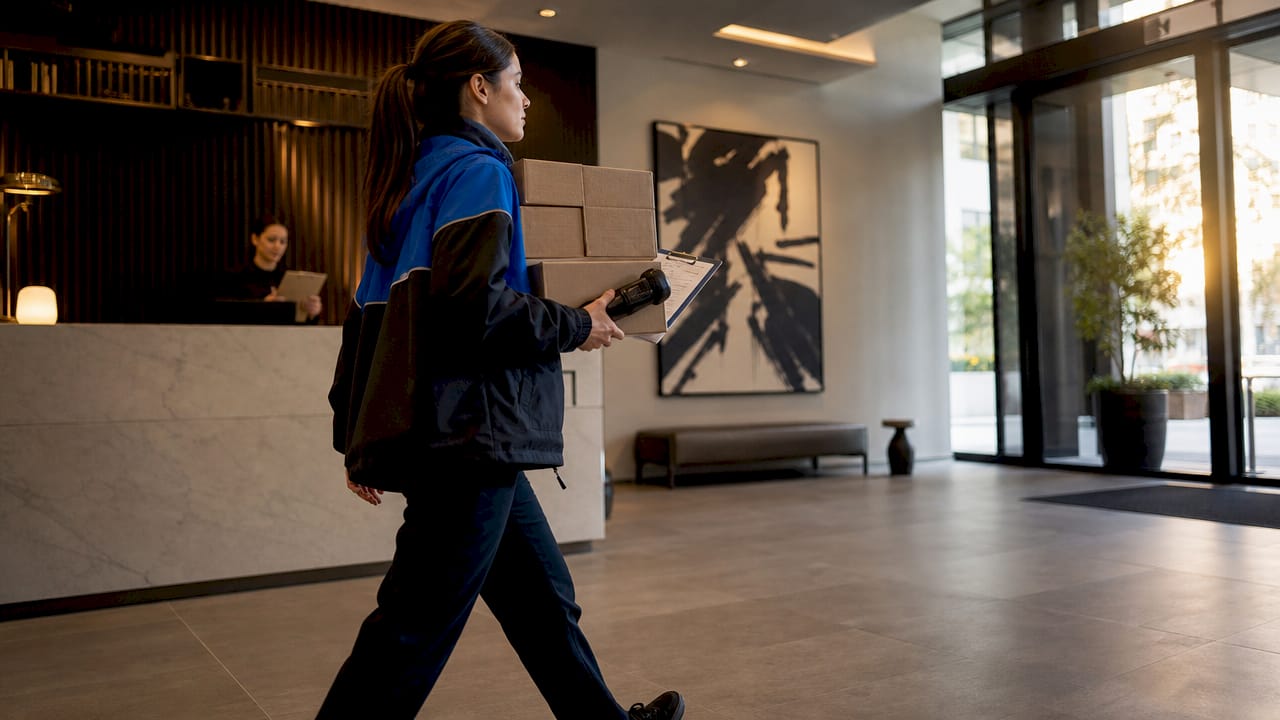
A 3rd party delivery service, known in the industry as a third party logistics (3PL) or last-mile delivery provider, is any company that handles package delivery on behalf of a retailer or sender without being the property’s own staff or the original shipper. The term “last-mile delivery” refers specifically to the final leg of a shipment’s journey from a local hub to the recipient’s door. For multifamily properties, this distinction matters because the “door” is often a shared lobby, a package room, or a locker bank rather than a private residence.
These providers range from national carriers operating scheduled routes to on-demand delivery solutions that dispatch a courier within minutes. The right category depends on your building’s volume, resident demographics, and the level of integration you need with your existing property tech stack.
2. Top types of 3rd party delivery services for multifamily properties
Understanding the main categories helps you match the right service to your building’s needs.
On-demand same-day services prioritize speed above all else. These platforms offer 30–60 minute delivery windows, which is a dramatic improvement over traditional 24-hour courier timelines. They work best for high-end properties where residents expect near-instant fulfillment.
Scheduled or planned delivery services operate on fixed daily or weekly routes. They cost less per delivery and suit properties with predictable package volumes. The tradeoff is less flexibility for urgent or after-hours deliveries.
Delivery orchestration platforms sit above individual couriers. They connect multiple carrier networks through APIs, automatically routing each delivery to the best available courier. This category reduces downtime risk because no single carrier failure disrupts the entire flow. API-native orchestration platforms improve reliability and give property managers a single point of contact for all delivery activity.
API-native services with property tech integration go one step further. They connect directly to your access control system, package room software, or resident app. A courier can receive a time-limited digital key, drop a package in a secure locker, and trigger an automated resident notification, all without staff involvement.
Each category serves a different operational profile. Larger properties with high daily volume benefit most from orchestration platforms. Smaller buildings with lower budgets often find scheduled services sufficient.
3. Essential features to evaluate when choosing a delivery service
The best delivery service for a multifamily property is not always the fastest or the cheapest. It is the one that fits your workflow and keeps residents informed.
Real-time tracking and visibility top the list. Residents who can track a package in real time generate fewer inquiries at the leasing office. Live tracking integration with resident-facing apps turns logistics into a valued amenity rather than a source of frustration.
Integration with package management systems determines how much manual work your staff handles. A delivery service that cannot communicate with your access control or locker system creates gaps. Every gap means a staff member filling it manually.
Transparent pricing protects your budget. Ask every provider for a full fee schedule before signing. Hidden accessorial fees, including liftgate charges, after-hours surcharges, and wait time penalties, can raise your actual delivery costs by 15–25% above the base rate. That figure adds up fast in a high-volume building.
On-time delivery performance is a measurable metric every serious provider should share. Specialized 3PL services have shown that 95% of clients report fewer delivery delays after switching from older courier methods. Ask for documented performance data, not just marketing claims.
After-hours and unmanned delivery support is non-negotiable for most apartment buildings. Residents work varied schedules. A delivery service that cannot access a secure package room or locker bank after 6:00 PM will generate complaints and missed deliveries.
Pro Tip: Request a 30-day pilot period before committing to a long-term contract. Real-world volume and your building’s access setup will reveal integration gaps that no sales demo can replicate.
4. Common challenges with 3rd party delivery services in apartments
Every delivery service comes with operational friction. Knowing the pitfalls in advance lets you budget and plan for them.
Hidden fees are the most common budget surprise. Accessorial charges for liftgate service, residential surcharges, or extended wait times are rarely highlighted in initial quotes. Property managers who skip a detailed cost of third party delivery analysis often find their monthly invoices 20% higher than expected.
Data fragmentation slows your team down. When you use three carriers with three separate tracking portals, your leasing staff spends hours cross-referencing package statuses. Consolidating carrier data into a single dashboard is the most direct fix for this problem.
Security and access management require clear protocols. Giving a courier access to a secure building without a controlled, time-limited credential creates liability. Properties without automated access control often resort to leaving doors propped open, which defeats the purpose of a secure building.
Resident communication gaps create complaints. When a delivery fails or a package sits unclaimed, residents blame the property before they blame the carrier. A delivery service that sends automated status updates to residents reduces the volume of calls your leasing office receives.
Regulatory compliance adds another layer. Cities like New York have implemented mandatory fee caps on certain delivery services through agencies like the NYC Department of Consumer and Worker Protection. Local delivery fee regulations vary by market, and property managers operating in regulated cities need to verify that their chosen provider complies.
Pro Tip: Build a 20% buffer into your delivery service budget to cover accessorial fees. If you don’t use it, you’ve saved money. If you do, you won’t be caught short.
5. How delivery services integrate with multifamily package management systems
Integration is where a good delivery service becomes a great one. Without it, you have two separate systems that your staff must manually connect.
The most effective integrations follow a four-step flow:
- Courier dispatch: The delivery orchestration platform selects the best available carrier and dispatches the courier with a time-limited digital access credential.
- Automated building access: The courier uses the credential to enter the package room or locker area without staff assistance. Access logs record the entry automatically.
- Package check-in: The system scans or logs the package upon placement in a locker or package room, creating a chain of custody record.
- Resident notification: The platform sends an automated alert to the resident via SMS or app, including a pickup code or locker number.
This flow eliminates four manual touchpoints that would otherwise fall on your leasing team. Unified tracking dashboards that consolidate data from multiple carriers reduce the time staff spend answering “where is my package?” questions.
The table below shows the key integration features to request from any delivery service provider.
| Feature | What to ask the provider |
|---|---|
| API availability | Does the platform offer a documented API for property tech integration? |
| Access control compatibility | Can couriers receive time-limited digital credentials automatically? |
| Resident notification | Does the system send automated alerts upon delivery? |
| Unified tracking dashboard | Can all carrier data appear in one interface? |
| Package room or locker support | Does the service support delivery to unmanned secure locations? |
Properties that implement full integration report measurable reductions in staff workload and resident complaints. The technology exists. The question is whether your chosen delivery provider supports it.
6. Matching delivery service types to your property’s needs
Not every building needs the same solution. The right fit depends on building size, resident expectations, and your operating budget.
On-demand same-day delivery makes sense for luxury properties where residents pay a premium and expect near-instant service. The convenience premium is real, and so is the cost. Per-delivery fees run higher, and accessorial charges are more common. Budget accordingly.
Scheduled delivery services work well for mid-range properties with predictable daily volume. They cost less per delivery and are easier to plan around. The limitation is inflexibility. If a resident needs a delivery at 9:00 PM on a Saturday, a scheduled service likely cannot help.
Orchestration platforms are the right choice for larger properties managing 50 or more deliveries per day. They reduce the risk of a single carrier failure disrupting your entire delivery operation. They also give you the data visibility to identify which carriers perform best on your routes.
Budget-focused properties can start with a single scheduled carrier and add orchestration later as volume grows. The key is choosing a carrier that offers an API from day one, so the upgrade path is clean.
The delivery facility options you build into your property, whether lockers, package rooms, or kiosks, also shape which delivery services can serve you effectively. A building with no secure drop point limits what any delivery provider can offer.
Key takeaways
The most effective 3rd party delivery service for multifamily properties combines reliable last-mile logistics with direct integration into your package management and access control systems.
| Point | Details |
|---|---|
| Match service type to building size | On-demand suits luxury properties; scheduled services fit mid-range buildings with predictable volume. |
| Budget for hidden fees | Accessorial charges can raise base delivery costs by 15–25%; build a buffer into every contract. |
| Prioritize integration | API-native services that connect to your access control and locker systems eliminate manual staff work. |
| Track performance data | Ask providers for documented on-time delivery rates before signing any agreement. |
| Consolidate carrier data | A unified dashboard reduces staff time spent on resident package inquiries across multiple carriers. |
What we’ve learned from working with multifamily delivery at scale
The economic tradeoff between convenience and cost is the conversation most property managers avoid until it’s too late. A delivery service that looks affordable at the contract stage often looks very different by month three, once accessorial fees, after-hours surcharges, and integration workarounds add up. We’ve seen budgets absorb 20% overruns simply because no one asked for a complete fee schedule upfront.
The more important shift, though, is how residents now think about delivery. It is no longer a logistics function. It is an amenity. When a resident can track a package in real time, receive an automated pickup notification, and retrieve a delivery from a secure locker at midnight, that experience reflects on the property, not just the carrier. Properties that treat delivery as infrastructure rather than a resident service are leaving satisfaction scores on the table.
Our strongest recommendation is to start with integration requirements and work backward to the carrier. If a delivery service cannot connect to your access control system or package room, no amount of speed or pricing will compensate for the manual work it creates. The right package management setup is what makes any third-party delivery service actually work for your building.
— Locker Solutions
How Locker Solutions supports third-party delivery at your property
Locker Solutions builds the physical and digital infrastructure that makes third-party delivery services work in multifamily buildings.
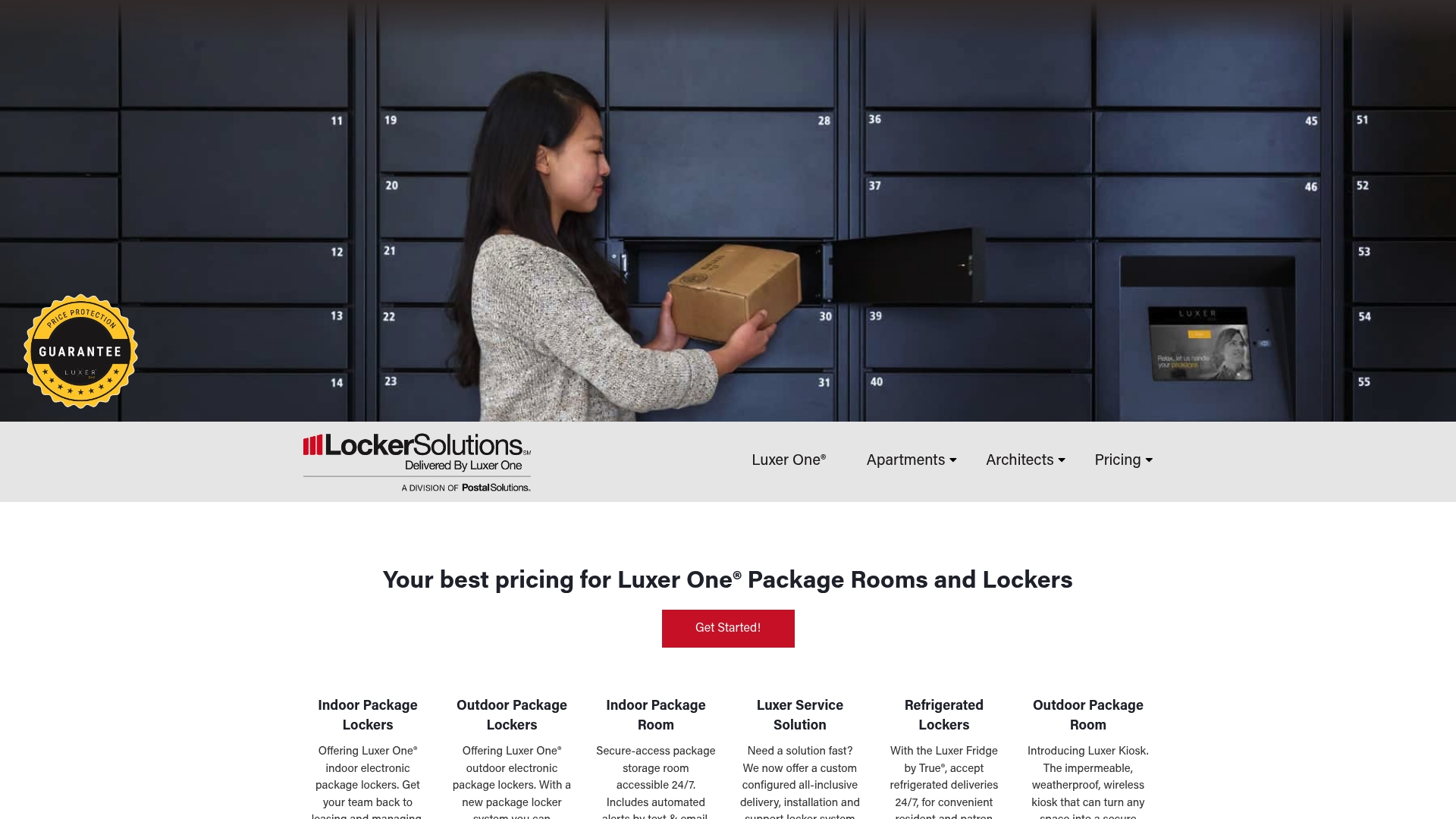
Luxer One® automated package rooms and outdoor parcel lockers give couriers a secure, unmanned drop point at any hour. The Luxer Access unified access control system issues time-limited digital credentials to couriers automatically, so no staff member needs to be present. These systems connect directly to delivery orchestration platforms via API, creating the end-to-end integration that turns a good delivery service into a great resident experience. Property managers who want to reduce leasing office workload and increase resident satisfaction can explore package room options or review the full range of apartment locker solutions to find the right fit for their building.
FAQ
What is a 3rd party delivery service?
A 3rd party delivery service is an external logistics provider that handles last-mile package delivery on behalf of a retailer or sender, without using the property’s own staff. In multifamily housing, these services deliver packages directly to residents, package rooms, or secure lockers.
How do I choose a delivery service for my apartment building?
Evaluate providers on real-time tracking, API integration with your access control or locker system, transparent pricing, and documented on-time delivery performance. Ask for a full fee schedule to avoid accessorial charges that inflate costs above the base rate.
What are the advantages of third-party delivery for property managers?
Third-party delivery services reduce the burden on leasing staff, give residents faster and more trackable deliveries, and can integrate with automated package management systems to eliminate manual package handling entirely.
What hidden costs should I watch for with local delivery services?
Accessorial fees such as liftgate charges, after-hours surcharges, and wait time penalties can raise actual delivery costs by 15–25% above the quoted base rate. Always request a complete fee schedule before signing a contract.
Can third-party delivery services work with package lockers?
Yes. API-native delivery services and orchestration platforms can integrate directly with electronic package lockers and automated package rooms, allowing couriers to receive time-limited access credentials and complete deliveries without staff involvement.
Recommended
- Multifamily Package Delivery Explained for Property Managers — Locker Solutions Blog
- Resident Deliveries: A Property Manager’s 2026 Guide — Locker Solutions Blog
- What Is Electronic Package Delivery for Apartments? — Locker Solutions Blog
- Delivery Facility Options for Multifamily Properties — Locker Solutions Blog
Ready for a Luxer One® package locker quote?
Tell us your unit count and we'll send right-sized pricing with a fast response time.
Get my free quote