May 30, 2026
What Is Electronic Package Delivery for Apartments?
Discover what electronic package delivery is and how it transforms apartment management. Enhance security, efficiency, and resident satisfaction today!
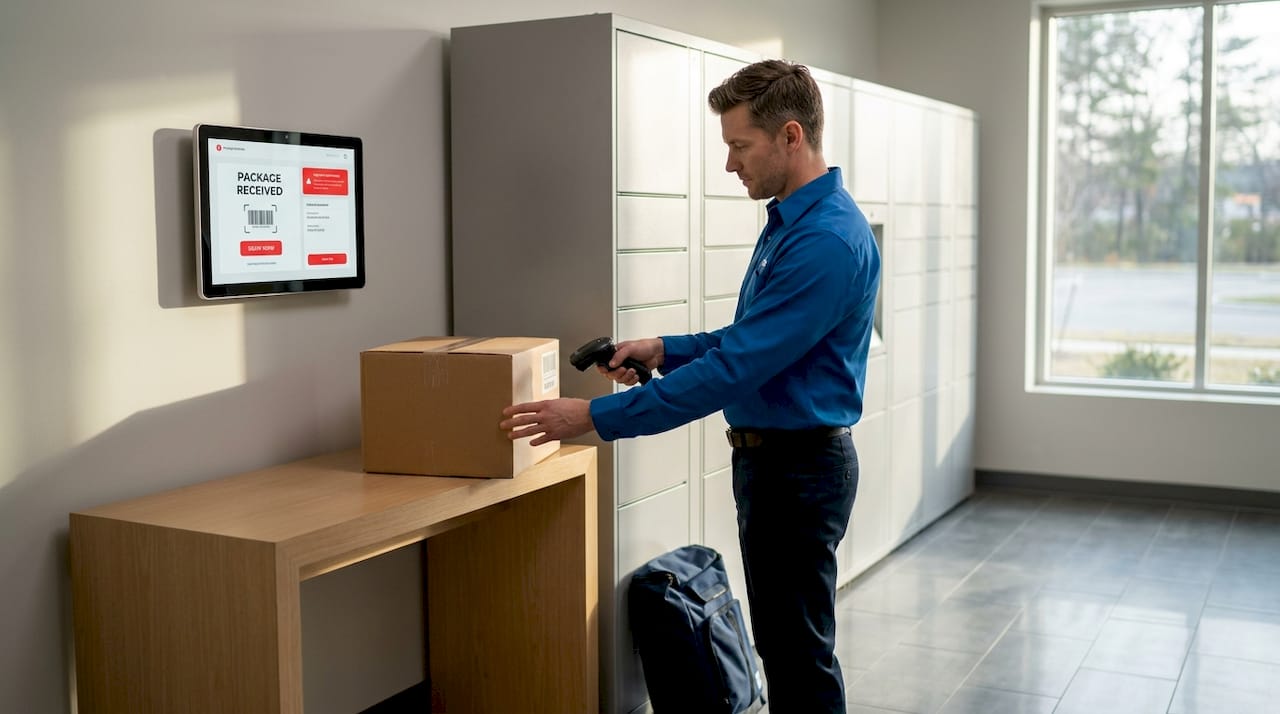
Package volume in multifamily properties has hit a breaking point. What is electronic package delivery, and why does it matter to you as a property manager or leasing agent? Simply put, it refers to automated, technology-driven systems that manage the receipt, storage, and retrieval of physical parcels at residential properties. Often called automated package management in industry circles, this approach replaces the old clipboard-and-closet method with secure digital lockers, real-time notifications, and verifiable access controls. Global parcel volume reached 161 billion in 2023 and is projected to climb to 256 billion by 2027. The pressure is real, and it is landing directly on your front desk.
Table of Contents
- Key takeaways
- What is electronic package delivery in multifamily settings?
- Benefits for property managers and residents
- Legal and technology considerations
- Implementing a system at your property
- My take on what actually drives adoption
- See how Locker-solutions handles this for apartment properties
- FAQ
Key takeaways
| Point | Details |
|---|---|
| Automated package management defined | Electronic package delivery uses digital lockers, access controls, and notifications to handle parcels at multifamily properties. |
| Security and theft reduction | Secure locker systems protect parcels 24/7 and significantly reduce porch piracy and staff liability. |
| Legal compliance matters | Valid electronic delivery requires documented consent and verifiable proof of receipt to hold up in any dispute. |
| Tracking has real limitations | Carrier tracking is checkpoint-based and stops at your door; inbound building tracking picks up from there. |
| Implementation requires planning | Choosing the right system means assessing parcel volume, property layout, and driver access before committing. |
What is electronic package delivery in multifamily settings?
Electronic package delivery, or automated package management, is a system in which physical parcels are deposited by carriers into a networked locker or secure package room, and residents retrieve them using a unique digital code, key fob, or mobile app authentication. No staff member needs to sign for anything. No package sits unattended in a lobby. The entire handoff is logged, timestamped, and traceable.
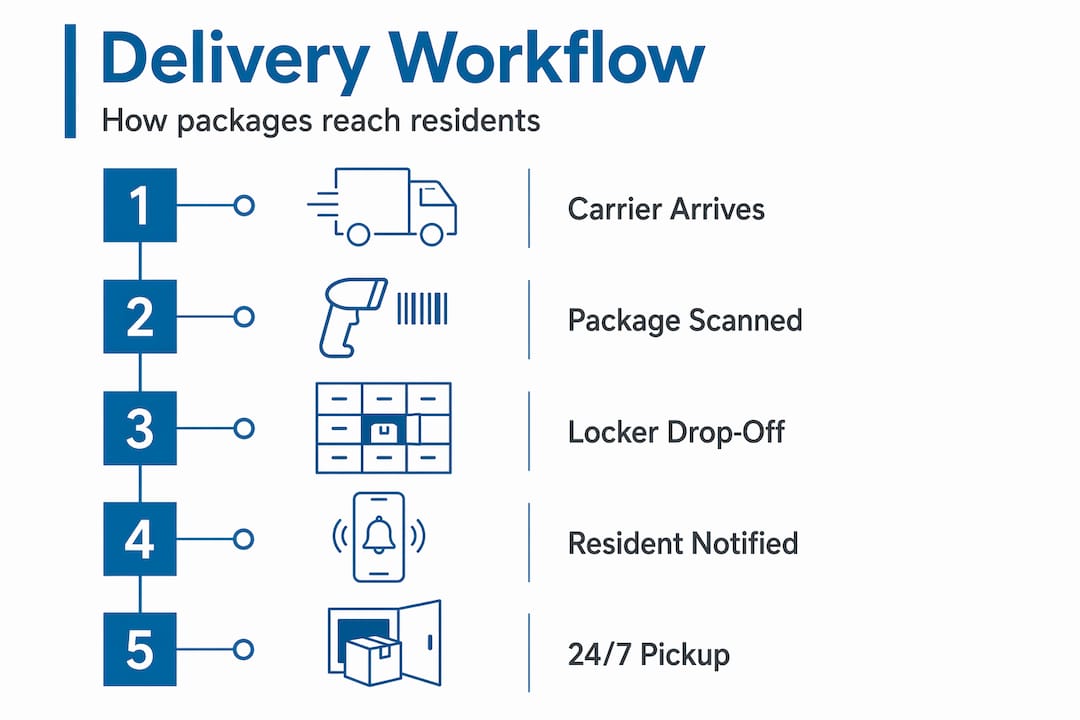
Here is how the mechanics work in practice. A carrier arrives at your property and scans the outgoing barcode on a package. The locker system assigns an available compartment and opens it. Once the carrier deposits the parcel and closes the door, the system automatically sends the resident an alert by text or email with their unique retrieval code. The resident arrives at any hour, enters the code, and collects their package. Every step is logged.
Compare that to traditional delivery methods:
| Method | Staff involvement | Security | Resident access hours | Tracking within building |
|---|---|---|---|---|
| Manual front-desk sign-in | High | Moderate | Limited to office hours | None |
| Unsecured lobby drop | None | Low | 24/7 | None |
| Electronic locker system | Minimal | High | 24/7 | Full digital log |
| Automated package room | Minimal | High | 24/7 | Full digital log |
Understanding e-commerce fulfillment logistics helps explain why this matters. The last mile, meaning the final delivery leg from a carrier hub to your resident’s door, is the most expensive and error-prone part of the entire shipping process. Your property sits right at that endpoint. Electronic package delivery systems take ownership of that last segment and manage it through digital infrastructure rather than human improvisation.
Key operational components of these systems include:
- Digital access control: Unique codes, QR scans, or mobile app authentication for each retrieval
- Automated resident notifications: Instant alerts sent the moment a package is deposited
- Delivery log and audit trail: Time-stamped records of every carrier drop and resident pickup
- Carrier-agnostic compatibility: Works with UPS, FedEx, USPS, Amazon, and virtually any delivery service
- Scalable compartment configurations: From a handful of lockers to full package rooms handling hundreds of daily parcels
Benefits for property managers and residents
The most obvious benefit is theft reduction. Inbound package tracking systems log recipient, time, and authentication at every step, meaning accountability is built into the infrastructure. Packages do not sit exposed in a lobby waiting to disappear. That alone is worth the investment for many properties.
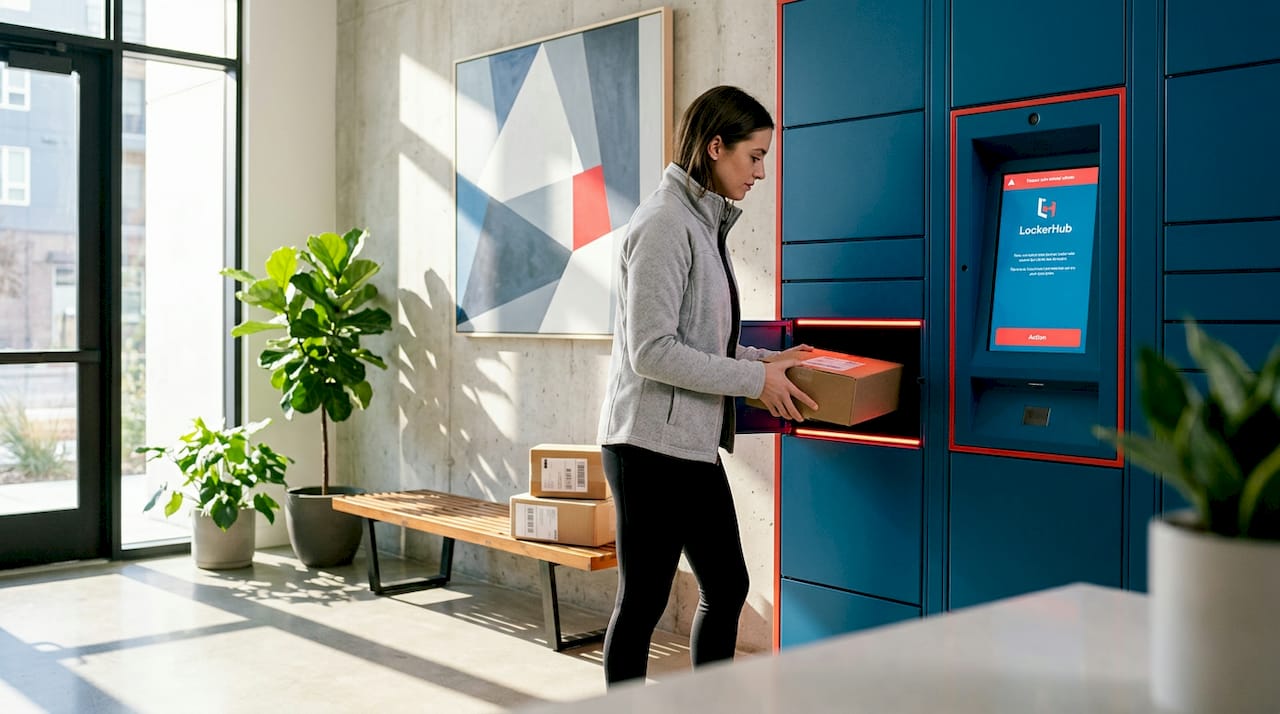
Beyond theft prevention, the operational lift for your staff is significant. Instead of signing for 40 parcels a day, chasing down residents to pick up their boxes, or fielding angry calls about missing deliveries, your front desk team is free to focus on actual property management. That is not a trivial gain. Properties handling high parcel volumes often report that package management has become a part-time job in itself.
For residents, the 24/7 contactless pickup option is a genuine quality-of-life upgrade. Consumer delivery expectations have shrunk to 2.5 days, down more than 56% from five years ago. Residents are used to fast. They also want convenient. A system that lets them retrieve a package at 11 PM on a Sunday, without bothering anyone, matches how people actually live.
The advantages of electronic shipping systems for multifamily properties extend into leasing too. A property with a modern, secure package solution is simply more attractive to prospective residents. It is an amenity that directly addresses a daily friction point. Properties with no reliable system are losing lease renewals to buildings that solved the problem.
Pro Tip: When evaluating systems, ask vendors for real average daily parcel volume data from comparable properties in your market. Your current volume is likely lower than what you will handle in two years. Size up.
Additional benefits worth noting:
- Reduced liability exposure for staff handling high-value items
- Built-in video surveillance on many locker systems adds a secondary security layer
- Refrigerated locker options handle grocery and meal kit deliveries, which are growing fast
- Digital records make resolving delivery disputes fast and factual
Legal and technology considerations
This is the part most property managers miss entirely, and it creates real risk. Electronic delivery services carry specific legal obligations, particularly when they intersect with official correspondence, legal notices, or regulated communications.
Courts have confirmed that electronic delivery requires explicit consent and a verifiable proof of receipt to be legally valid. A simple email with an attachment does not clear that bar. For property managers using electronic systems to send notices, lease renewals, or violation letters, that distinction is critical.
For official legal correspondence, the relevant standard is the Electronic Registered Delivery Service, or ERDS. ERDS legally verifies data origin, content integrity, and delivery time in ways that standard email cannot. If your jurisdiction is moving toward mandatory e-delivery for business correspondence, understanding ERDS standards is not optional.
There is also a common misconception about package tracking worth clearing up. Most residents assume carrier tracking gives real-time location data. It does not. Delivery tracking is checkpoint-based, triggered only when a package is scanned at a node. When the package is moving between scan points, no tracking event fires. Residents see “in transit” and assume something went wrong. Understanding this gap helps you set accurate expectations and reduce inbound complaint calls.
“Inbound package tracking within your building is a separate system from carrier tracking. It picks up exactly where the carrier drops off, logging every handoff, authentication event, and retrieval inside your property.”
Here is what a sound technology and compliance approach looks like for property managers:
- Document resident consent before switching to electronic-only notices
- Use ERDS-compliant tools for any legally sensitive correspondence
- Treat building-level parcel tracking as a distinct system from carrier tracking
- Assign a dedicated staff member to manage the electronic delivery inbox and audit trail
- Review your state’s laws on electronic notice requirements before assuming email is sufficient
The compliance landscape is changing quickly. Several jurisdictions are already moving toward mandatory electronic mailboxes for business correspondence. Staying ahead of that curve protects your property from disputes and keeps your delivery records court-ready.
Implementing a system at your property
Getting this right takes more than picking a locker catalog and placing an order. Here is a practical sequence that works for most multifamily properties:
- Audit your current parcel volume. Count average daily deliveries for at least two weeks. Factor in peak periods like the holidays. This number drives everything else.
- Map your physical space. Indoor versus outdoor installation, available square footage, weather exposure, and proximity to building entrances all shape which system fits.
- Choose the right solution type. Small properties may do well with a bank of smart lockers. Larger buildings often benefit from a full automated package room that handles unlimited package sizes with no compartment constraints.
- Address driver access. Centralized lockers reduce delivery friction for drivers dealing with tight parking and complex building layouts. Make sure your chosen system gives carriers a simple, repeatable access method.
- Plan your resident communication. Roll out with clear instructions, a short demo video if possible, and a direct contact for questions. First-week adoption rates are critical.
Pro Tip: Outdoor and weatherproof locker systems are worth the premium in climates with significant rain or snow. A locker that fails after one winter causes more damage to resident trust than no locker at all.
Key features to prioritize during evaluation include real-time notification reliability, carrier-agnostic access, package room security for multifamily properties, and vendor support for maintenance. Scalability matters too. A system that handles your current volume but cannot grow with the building will cost you more in the long run.
My take on what actually drives adoption
I have worked with enough property teams to say this with confidence: the technology is rarely the hard part. The hard part is behavior change.
In my experience, the properties that get the most out of electronic package delivery systems are the ones that invest just as much in onboarding residents as they do in choosing the hardware. A beautiful locker bank that residents do not know how to use, or do not trust, sits underutilized. And an underutilized system does not justify its cost or solve the staff workload problem.
What I have found actually works is counterintuitive. Instead of sending a mass email on installation day, the properties with the best adoption rates stage the rollout. They introduce the system to a small cohort of early-adopter residents first, collect feedback, fix friction points, then expand. By the time the full building gets onboarded, the system has already proven itself through word of mouth.
I have also seen properties underestimate the importance of driver training. If carriers are confused by the access method or the locker interface, they will default to lobby drops or missed delivery notices. That undoes the whole point. Coordinating a brief carrier orientation, even just a one-page laminated guide near the locker entrance, makes a measurable difference.
The future of these systems is moving toward predictive capacity management, where the software anticipates high-volume days and adjusts resident notifications accordingly. We are not far from locker systems that flag when compartments are running low and alert management before a backup occurs.
— Craig
See how Locker-solutions handles this for apartment properties
If you are evaluating package management solutions for your property, Locker-solutions provides the full range of options built specifically for multifamily residential buildings.
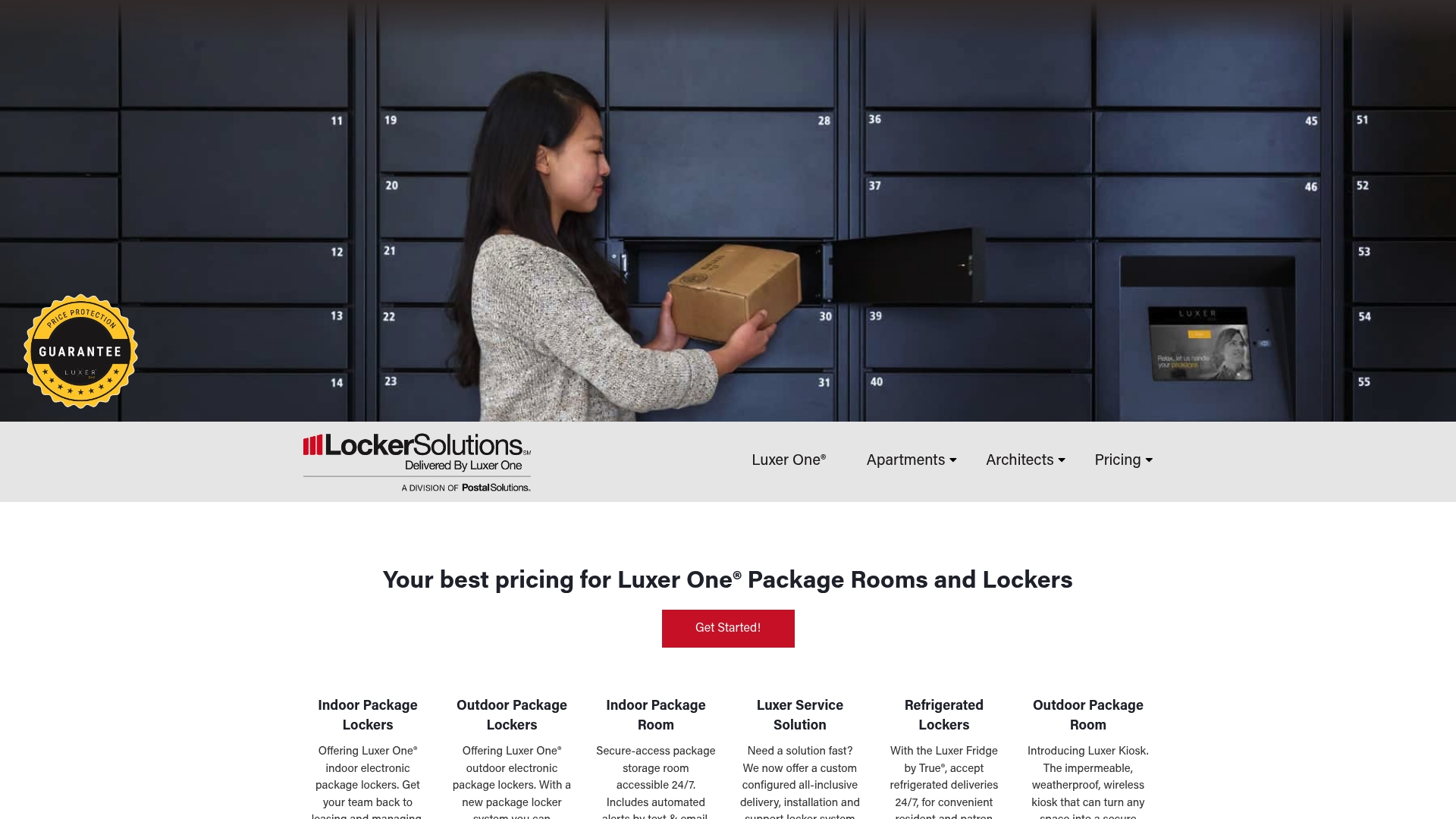
Locker-solutions specializes in Luxer One® secure lockers and package rooms, including indoor and outdoor configurations, refrigerated units for grocery deliveries, and weatherproof kiosks built for harsh climates. Every system includes automated resident alerts, video surveillance, and secure carrier access, all backed by installation support and ongoing maintenance. Whether you manage a 30-unit building or a 500-unit community, the team can configure a system that fits your layout and parcel volume today and scales as your property grows. Explore the full lineup of Luxer One lockers and package rooms to find the right fit for your community, or review the package room management service for a hands-off operational model that reduces staff burden from day one.
FAQ
What is electronic package delivery in simple terms?
Electronic package delivery is an automated system where parcels are deposited into secure digital lockers or package rooms at a property, and residents retrieve them using unique codes or app authentication. No staff sign-in is required, and every transaction is logged.
How does electronic package delivery work for apartment buildings?
A carrier deposits a package into an assigned locker compartment, the system sends the resident an automated notification with a retrieval code, and the resident picks up the package at any time. The entire process is tracked with time-stamped digital records.
What are the main benefits of electronic package delivery?
The core benefits include reduced package theft, 24/7 contactless resident access, significant staff time savings, and a detailed digital audit trail for resolving any delivery disputes. Properties also report improved resident satisfaction and higher lease renewal rates.
Is carrier tracking the same as building-level package tracking?
No. Carrier tracking is checkpoint-based and ends when the package is dropped at your property. Building-level inbound tracking logs every handoff and authentication event inside the building, giving you a complete internal record that carrier systems do not provide.
Do electronic delivery systems require resident consent?
For physical parcel lockers, residents simply need access credentials. For electronic correspondence delivered digitally, courts have confirmed that valid e-delivery requires explicit consent and verifiable proof of receipt to be legally enforceable.
Recommended
Ready for a Luxer One® package locker quote?
Tell us your unit count and we'll send right-sized pricing with a fast response time.
Get my free quote