May 23, 2026
Delivery Facility Options for Multifamily Properties
Discover top delivery facility options for multifamily properties to boost resident satisfaction and streamline package management. Learn more!
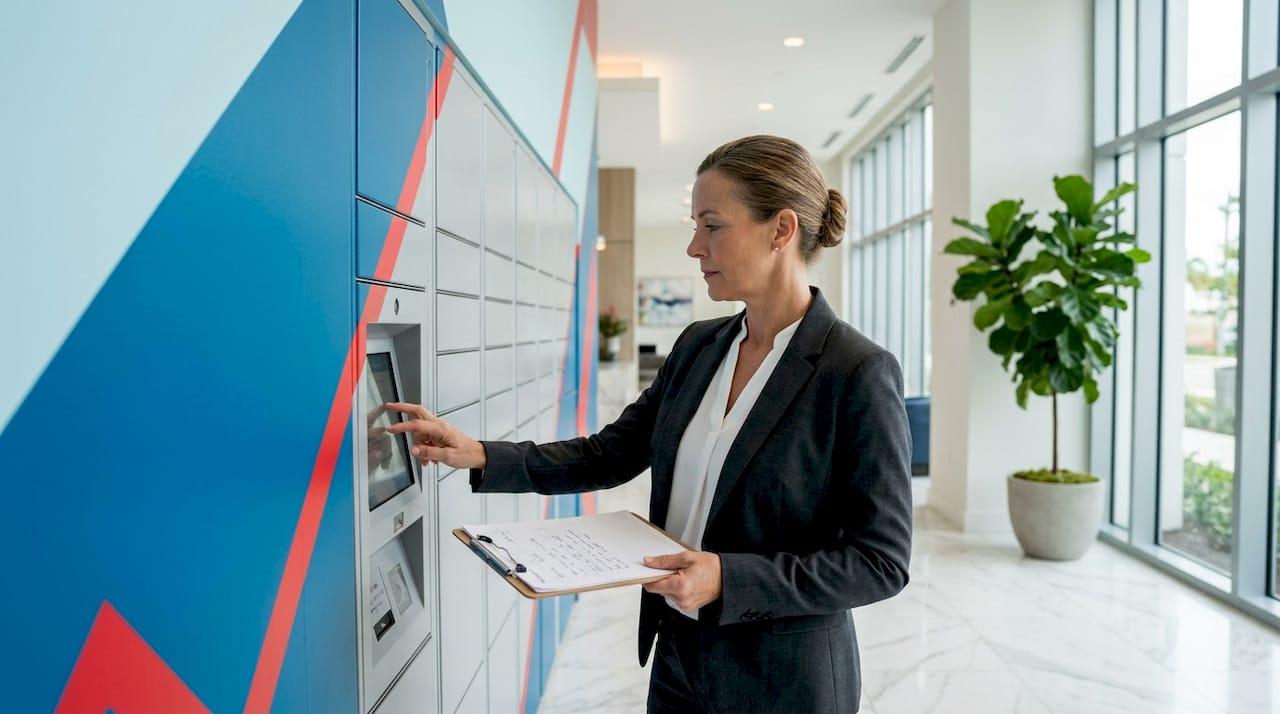
Parcel volumes have outpaced what most multifamily properties were ever designed to handle. When residents expect their packages to be secure, accessible, and tracked, your lobby floor and a staffed front desk simply don’t cut it anymore. Choosing the right delivery facility setup for your property affects everything from resident satisfaction scores to leasing renewals to how many hours your team spends sorting boxes. This guide lays out the top 10 delivery facility solutions, what separates them, and how to pick the right fit for your specific property.
Table of Contents
- Key Takeaways
- Key criteria for selecting a delivery facility
- 10 delivery facility solutions for multifamily properties
- Comparing delivery facility solutions side by side
- Matching the right solution to your property profile
- My take on where delivery facilities are actually heading
- See what Locker-solutions can do for your property
- FAQ
Key Takeaways
| Point | Details |
|---|---|
| Volume is the starting point | Assess your current and peak parcel throughput before selecting any delivery facility type. |
| Tech integration matters | Automated sorting and digital access control reduce staff workload and resident complaints. |
| One size does not fit all | Urban high-rises, suburban mid-rises, and affordable housing each have different facility needs. |
| Resident experience drives ROI | Properties with secure, convenient delivery solutions report stronger satisfaction and retention. |
| Scalability protects your investment | Choose a solution that can grow with parcel volumes instead of one you’ll replace in three years. |
Key criteria for selecting a delivery facility
Before comparing specific solutions, you need a clear set of evaluation criteria. Buying the wrong system because it looked good in a brochure is an expensive lesson.
The factors that matter most for multifamily properties:
- Capacity and throughput. How many parcels can the facility process and store per day? Amazon’s Weston delivery facility hit 31,500 packages daily at peak season. Your property won’t see those numbers, but that example shows how fast volume spikes during the holidays. Size your system for peak load, not average load.
- Security. Access control, surveillance cameras, resident privacy, and theft prevention should all be non-negotiable features. A delivery facility that lets packages walk out the door destroys resident trust fast.
- Technology integration. Can the facility connect with your property management software? Does it send automated delivery alerts? Delivery management software that integrates with your existing systems cuts manual work significantly.
- Carrier access and resident accessibility. Carriers need to drop packages without staff assistance around the clock. Residents need to retrieve packages on their schedule, not yours.
- Scalability. If you’re adding 50 units next year, will your delivery facility grow with you? Modular systems beat fixed installations when your property is expanding.
- Total cost of ownership. Installation costs get the attention, but ongoing maintenance, software subscriptions, and support contracts add up over time. Factor in all of it.
Pro Tip: Ask vendors for a cost-per-package figure over a five-year period. That number tells you far more than the sticker price.
10 delivery facility solutions for multifamily properties
Here are the top solutions worth evaluating, each with a clear-eyed look at what they do well and where they fall short.
1. Modular electronic package lockers
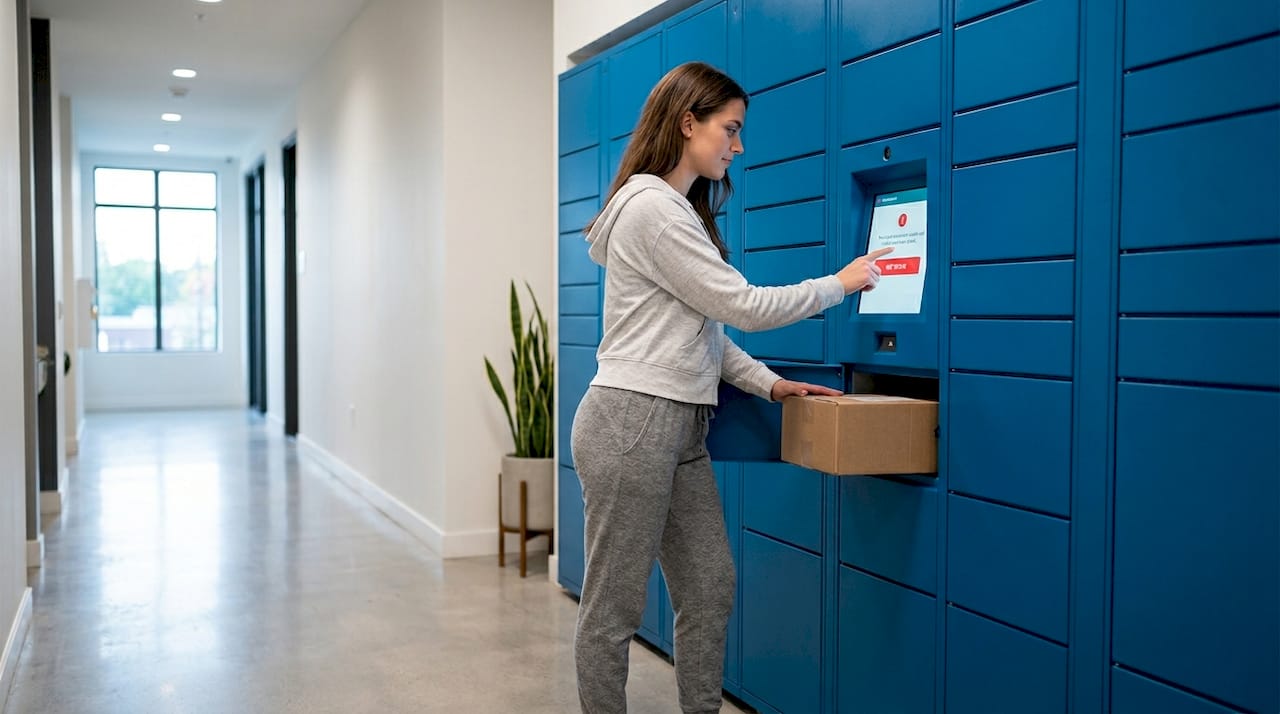
The most widely deployed solution in multifamily today. Electronic lockers assign a compartment to each delivery, notify the resident via text or email, and release the locker with a PIN or app. They work 24/7 without staff involvement, which is their biggest operational advantage. Carriers familiar with parcel delivery services appreciate the one-scan drop-off process. The limitation is capacity: once all compartments are full, overflow becomes a problem.
2. Refrigerated package lockers
A growing category driven by grocery delivery and meal kit subscriptions. Refrigerated lockers handle temperature-sensitive deliveries without requiring a staff member to accept and store them. If your resident demographic trends younger and urban, cold-storage delivery is already an expectation, not a perk. These lockers require more power and planning than standard units, so factor in electrical load during installation.
3. Parcel rooms with electronic access control
Parcel rooms convert an existing storage space into a secured delivery area. Carriers enter using a code or key fob, deposit packages, and leave. Residents retrieve their packages using their own access credentials. This approach scales well for properties with high parcel volume since there’s no individual compartment size limit. The trade-off is that packages aren’t individually secured inside the room, which can create disputes about theft or misdelivery.
4. Automated package rooms
Automated package rooms take the parcel room concept and add mechanical sorting. Automated package rooms sort and secure packages individually, meaning residents can only access their own items. The system logs every transaction, which is invaluable for resolving disputes. These are the closest equivalent to an on-site order fulfillment center for residential use, and they work well in high-density properties where volume would overwhelm standard lockers.
5. Outdoor weatherproof kiosk lockers
For properties where interior space is limited, outdoor kiosks deliver much of the same functionality as indoor units. They’re built to handle temperature extremes, rain, and UV exposure. Placement near a parking area or building entrance reduces friction for both carriers and residents. Installation is generally faster than a full parcel room build-out, and modular designs make it easy to add capacity later.
Pro Tip: In climates with freezing winters, confirm that the electronic locking mechanisms are rated for sustained sub-zero temperatures before you commit to an outdoor unit.
6. Contactless delivery solutions
Contactless delivery via smart lockers removes every human touch point from the delivery and retrieval process. This approach improves resident satisfaction by enabling 24/7 package access while also cutting staffing costs. During periods when front desk coverage is reduced, contactless systems keep the delivery process running without interruption. The system becomes critical in luxury properties where residents expect self-service options at every point.
7. On-demand staffed and concierge package rooms
Some luxury properties intentionally keep a human element in the delivery process. Concierge-staffed package areas offer white-glove service: staff inspect packages, notify residents personally, and handle exceptions. The experience is unmatched for high-end properties, but the operating cost is significant. This solution only makes financial sense when the property’s positioning and rent rates support the labor expense.
8. Third-party local delivery hubs
Rather than managing a delivery facility on-site, some property operators use third-party local delivery solutions. A nearby hub receives all packages, then delivers them to residents on a scheduled basis. This works for properties that lack physical space for lockers or parcel rooms. The downside is that same-day delivery logistics become complicated since residents have less control over pickup timing and depend on the hub’s schedule.
9. Dedicated carrier facilities within the building
Larger multifamily developments, particularly mixed-use properties with ground-floor retail, sometimes dedicate a portion of the building to carrier operations. This functions like a mini sorting hub that processes packages before last-mile delivery to individual units. It requires significant square footage and negotiated carrier agreements, but it creates an extremely efficient delivery pipeline for communities with hundreds of units.
10. Hybrid and multi-modal delivery facilities
The most forward-looking approach combines multiple solutions: standard lockers for most deliveries, refrigerated compartments for food, an automated parcel room for oversize packages, and a carrier access point for bulk drop-off. USPS has taken a similar approach at scale, with 14 new sorting centers opening in 2026, each equipped with advanced package sortation equipment. A hybrid facility at the property level mirrors that logic by matching the tool to the delivery type.
Comparing delivery facility solutions side by side
Use this table to size up the options against the criteria that matter most to your operation.
| Solution | Capacity | Cost level | Tech integration | Security | Best for |
|---|---|---|---|---|---|
| Modular lockers | Medium | Low to medium | High | High | Most multifamily sizes |
| Refrigerated lockers | Low to medium | Medium | High | High | Urban, younger demographics |
| Parcel room (access control) | High | Low | Medium | Medium | High volume, limited staff |
| Automated package room | High | Medium to high | Very high | Very high | Dense urban properties |
| Outdoor kiosk lockers | Medium | Medium | High | High | Space-constrained sites |
| Contactless delivery system | Medium | Medium | Very high | High | Luxury and tech-forward |
| Staffed concierge room | Variable | High | Low to medium | High | High-end luxury properties |
| Third-party local hub | High | Variable | Medium | Medium | Properties with no space |
| Dedicated carrier facility | Very high | Very high | High | High | Large mixed-use communities |
| Hybrid multi-modal system | Very high | High | Very high | Very high | Large, diverse properties |
Automated solutions consistently beat staffed ones on cost efficiency over a three-year horizon. USPS’s investments back this up: their new sorting centers process 2,500 parcels per hour using automated equipment. You’re not running a national postal network, but the principle holds. Automation reduces errors, reduces labor, and scales without proportional cost increases.
Pro Tip: Before choosing between an automated room and a locker bank, count your current daily parcel volume and multiply by 1.5. That’s a reasonable proxy for three-year growth, and it’ll tell you quickly whether you’re sizing up correctly.
High-density urban properties benefit most from automated rooms and hybrid systems. Suburban properties with lower parcel volumes and more available space can often operate efficiently with modular lockers or a secured parcel room.
Matching the right solution to your property profile
Decision-making gets cleaner when you filter by your actual situation instead of treating every solution as equally applicable.
- Small buildings under 50 units. A single bank of modular lockers handles most delivery needs without overbuilding. Keep installation simple and use the savings elsewhere.
- Mid-size buildings of 50 to 200 units. A parcel room with electronic access or a modular locker array with an overflow section works well. Budget for automated alerts in whatever system you choose.
- Large properties over 200 units. Automated package rooms or hybrid systems are worth the investment. The staff hours saved justify the cost within 18 to 24 months in most cases.
- Luxury properties at any size. Prioritize contactless delivery, refrigerated options, and polished hardware. Residents will notice if the delivery facility looks like an afterthought.
- Affordable housing communities. Reliability and simplicity beat complexity. Choose a well-supported modular system with a strong maintenance contract over a technically advanced system that requires specialized repairs.
- Urban properties with delivery volume spikes. Hybrid systems and automated rooms handle peak shipping and handling options far better than fixed locker banks that max out during the holiday season.
- Properties integrating a delivery tracking system. Make sure whatever facility you install connects to your delivery management software or property platform. Residents who get real-time notifications have significantly fewer complaints about lost packages.
My take on where delivery facilities are actually heading
I’ve spent years watching property managers make the same two mistakes. The first is underbuilding: installing a locker bank sized for today’s volume and watching it overwhelm within 18 months. The second is overcomplicating: choosing a system with features nobody uses because it looked impressive in a demo.
What I’ve found actually works is starting from the resident’s experience and working backward. If a resident can pick up their package at 11pm without calling anyone, without confusion, and without worrying about theft, your delivery facility is doing its job. Everything else is secondary.
The technology is genuinely getting better. USPS’s deployment of APSS and DBCS sorting technology to reduce mis-sort rates signals where the industry is going. That precision is filtering down to property-level systems too. Delivery management software is getting smarter about capacity prediction, carrier scheduling, and resident communication.
My honest advice: don’t overbuild for technology’s sake, but don’t underbuild for budget’s sake either. The properties that get this right treat their delivery facility like core infrastructure, not an amenity add-on.
— Craig
See what Locker-solutions can do for your property
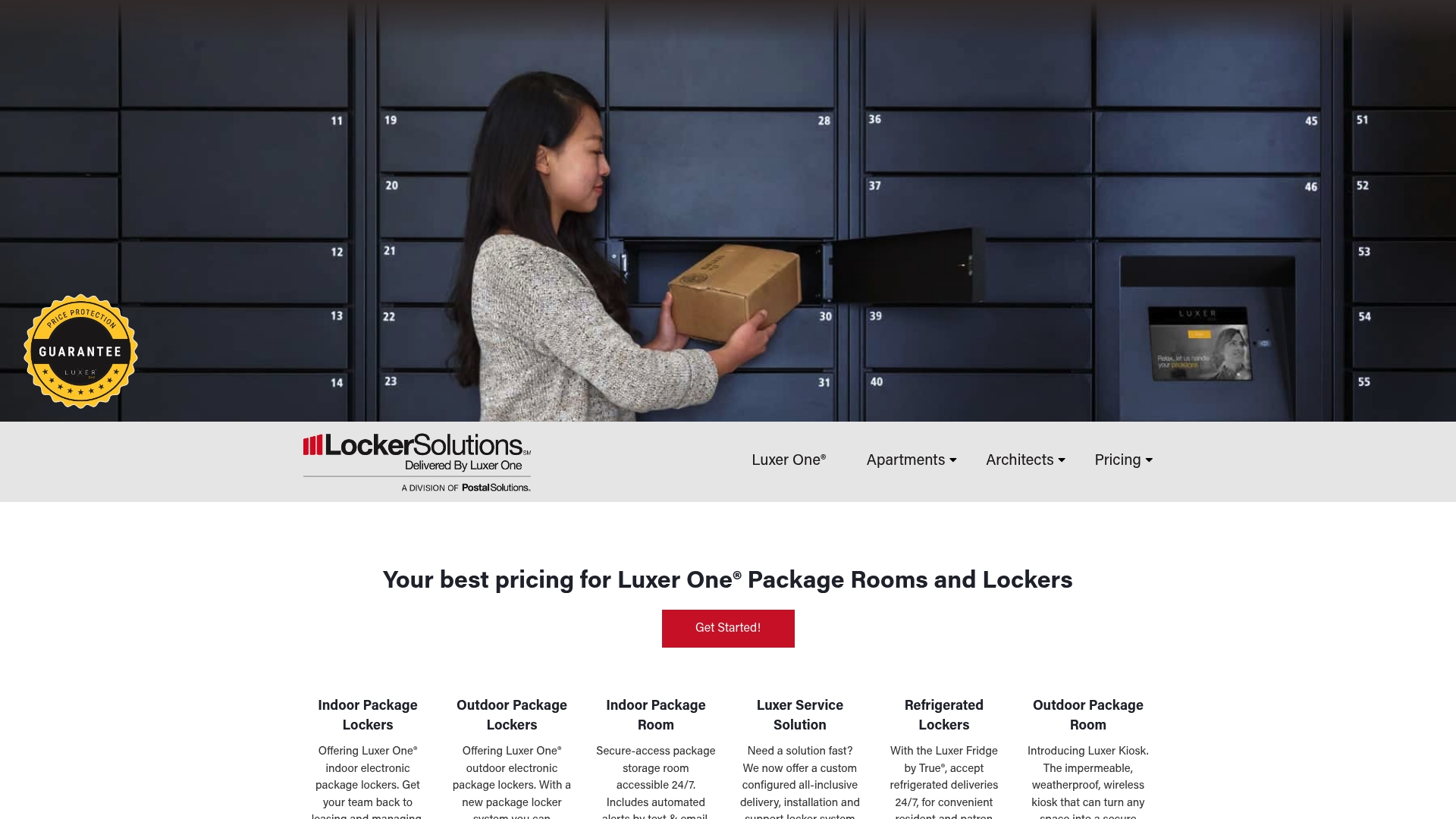
Locker-solutions specializes in Luxer One® package management systems built specifically for multifamily properties. Whether you need a modular locker bank for a 60-unit building or a full automated package room for a 400-unit community, the product range covers every scenario. Systems include indoor and outdoor electronic lockers, refrigerated units, automated rooms, and weatherproof kiosks, all with delivery tracking integration and automated resident notifications. Explore the full range of Luxer One package solutions to see configurations, capacity specs, and technology features. For properties ready to move forward, professional installation services are available nationwide with custom configuration support from the Locker-solutions team.
FAQ
What is a delivery facility in multifamily housing?
A delivery facility in multifamily housing is any secured system or space where carriers drop off packages and residents retrieve them, including lockers, parcel rooms, and automated sorting rooms.
How many package lockers does a multifamily property need?
A general rule is one locker compartment for every three to five units, but properties with high parcel volume or frequent grocery deliveries should size up to one per two units.
What is the best delivery facility solution for large apartment complexes?
Automated package rooms or hybrid multi-modal systems work best for large properties over 200 units, offering high capacity, individual package security, and delivery tracking without requiring staff.
How does a delivery tracking system improve resident satisfaction?
A delivery tracking system sends automated notifications when a package arrives and when it’s picked up, reducing “where is my package” inquiries and giving residents full visibility into their deliveries.
Can outdoor delivery lockers handle extreme weather?
Yes. Purpose-built outdoor locker kiosks are rated for temperature extremes, moisture, and UV exposure, making them a reliable option for properties where interior installation space is limited.
Recommended
- Your essential multifamily amenities checklist for 2026 — Locker Solutions Blog
- Secure package delivery for multifamily properties — Locker Solutions Blog
- Efficient package room solutions for multifamily properties — Locker Solutions Blog
- Design efficient package rooms for multifamily properties — Locker Solutions Blog
Ready for a Luxer One® package locker quote?
Tell us your unit count and we'll send right-sized pricing with a fast response time.
Get my free quote