July 15, 2026
Sustainability-Rated Locker Systems for Multifamily Properties
Discover what a sustainability-rated locker system is and how it improves package management for multifamily properties, reduces costs, and enhances green...
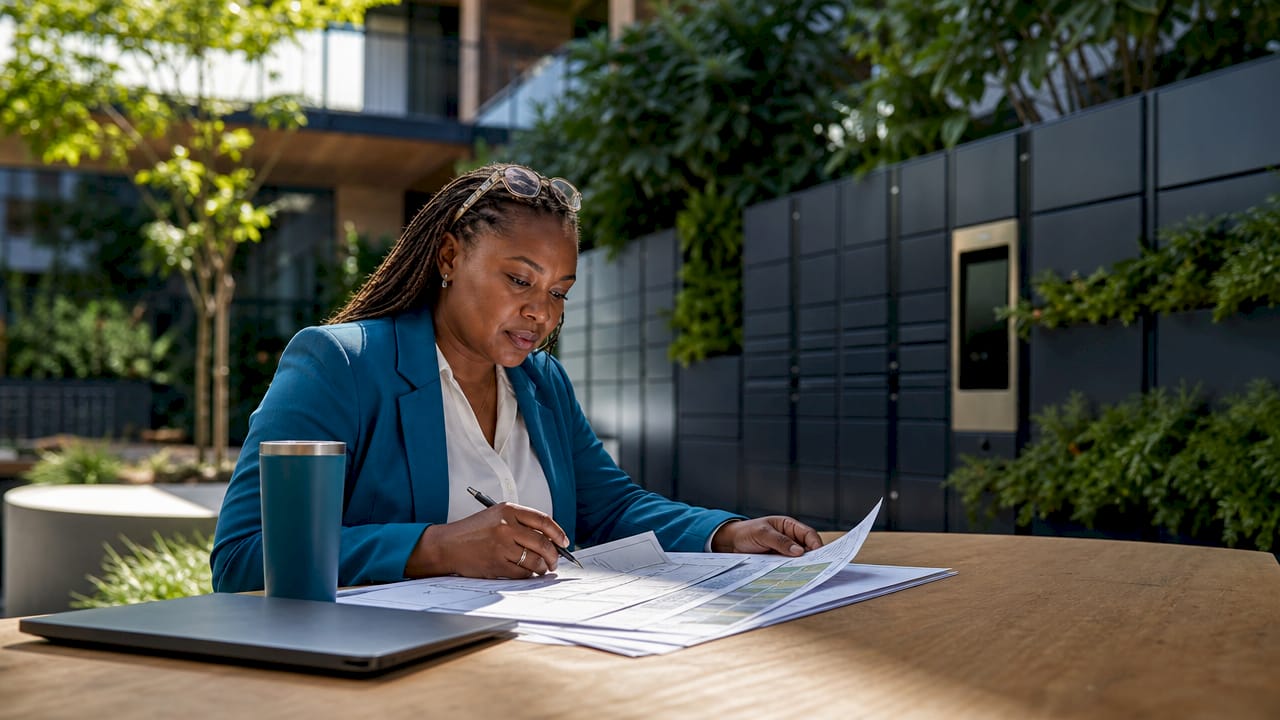
A sustainability-rated locker system is a package management solution engineered to minimize environmental impact through recycled materials, energy-aware operation, and adaptive software design. For property developers and managers, understanding what is a sustainability-rated locker system matters because it directly affects green building certification scores, long-term operating costs, and resident satisfaction. These systems go well beyond conventional metal boxes. They consolidate deliveries, reduce wasted space, and support certifications like LEED and BREEAM by meeting measurable manufacturing and operational standards.
What is a sustainability-rated locker system, and what qualifies one?
A sustainability-rated locker system is not a single universal label. It is a suite of manufacturing and operational features that, together, contribute to verified environmental performance. Transparent Environmental Product Declarations provide credible third-party verification of these claims, giving property developers a reliable benchmark when evaluating products.
The features that qualify a locker system for a sustainability rating fall into four clear categories:
- Recycled and low-impact materials. Manufacturers meeting 2026 carbon zero standards use recycled steel, antibacterial powder coatings, and modular designs that are 100% recyclable at end of life. This eliminates virgin material extraction and reduces manufacturing emissions.
- Modular and reconfigurable design. Modularity and adaptability are more impactful than recyclability alone, because reconfigurable systems prevent premature disposal and reduce lifecycle carbon footprint. A locker bank that can be resized or repurposed avoids landfill years before a fixed unit would.
- Energy-efficient operation. Solar modules and Bluetooth Low Energy protocols support net-zero or off-grid building goals. Solar-powered outdoor lockers can operate entirely without grid connection, which matters for properties pursuing net-zero certification.
- Software-driven utilization. Dynamic utilization software optimizes active compartments based on real-time demand, reducing the number of physical units a property needs. Fewer units means less material, less manufacturing energy, and a smaller footprint.
Pro Tip: Ask vendors for an Environmental Product Declaration before purchasing. It is the clearest proof that sustainability claims are independently verified rather than self-reported marketing.
How do sustainability-rated lockers reduce environmental impact?
The environmental case for eco-friendly locker systems rests on four concrete mechanisms, each of which reduces a property’s carbon footprint in a measurable way.
-
Delivery consolidation cuts last-mile emissions. Smart locker systems reduce last-mile delivery greenhouse gas emissions by consolidating stops into high-density drop-off points. Instead of a driver making 20 individual apartment stops, one stop serves the entire building. That reduction compounds across hundreds of deliveries per week.
-
Space efficiency reduces material and energy consumption. The same research shows that smart lockers reduce storage footprint by 20–40% compared to traditional lockers. A smaller physical footprint means less steel, less concrete for installation pads, and less conditioned floor space consumed in a building’s common areas.
-
Adaptive software avoids excess hardware. Software that adjusts active compartments to real-time demand means a property does not overbuy locker capacity. Overbuying is one of the most common sources of unnecessary manufacturing emissions in package management infrastructure.
-
Retrofit options extend lifecycle sustainability. Retrofitting existing lockers with battery-operated smart locks is a sustainable and cost-effective modernization approach that avoids full replacements. For a property manager with a functioning locker bank, retrofitting is almost always the lower-carbon choice compared to full removal and reinstallation.
Green building certifications like LEED and BREEAM reward all four of these mechanisms. Sustainability ratings contribute to green building certifications through features, manufacturing practices, and operational impacts combined. A well-specified locker system can support multiple credit categories within a single certification framework.
Sustainability-rated vs. conventional locker systems
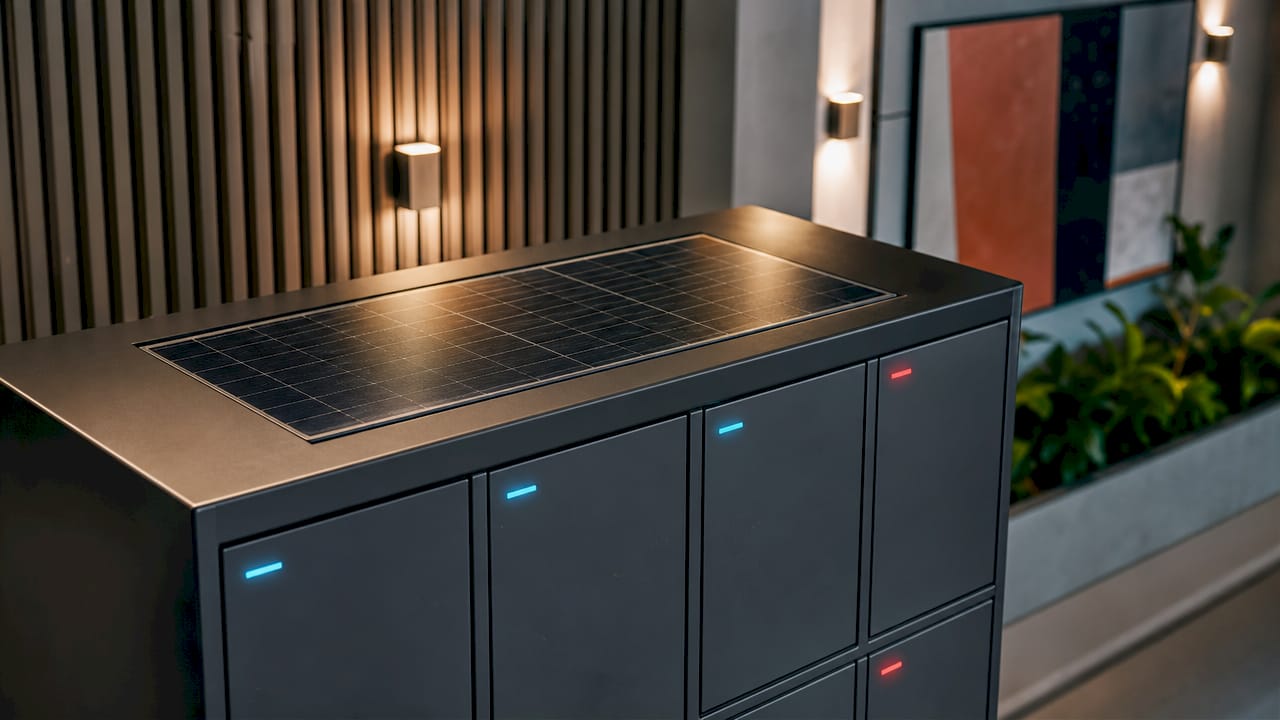
The differences between sustainability-rated and conventional lockers show up across materials, energy use, software capability, and certification value. The table below compares the two categories on the criteria that matter most to property developers and managers.
| Evaluation criterion | Conventional lockers | Sustainability-rated lockers |
|---|---|---|
| Primary materials | Virgin steel, standard paint finishes | Recycled steel, antibacterial powder coatings |
| Recyclability at end of life | Partial, varies by manufacturer | 100% recyclable modular components |
| Energy source | Grid-dependent, always-on | Solar-capable, Bluetooth Low Energy protocols |
| Software adaptability | Fixed configuration, manual updates | Dynamic utilization, over-the-air updates |
| Green building contribution | Minimal or none | Supports LEED, BREEAM credit categories |
| Retrofit capability | Rarely supported | Battery-operated smart lock retrofits available |
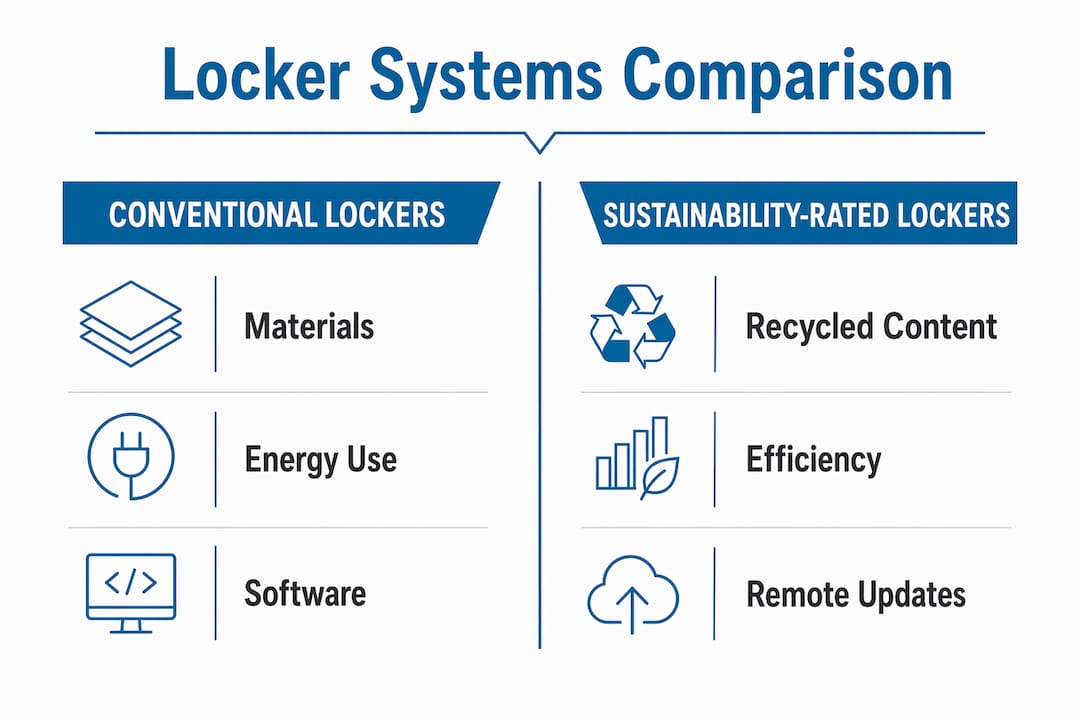
The software gap is particularly significant. Remote software update capability is essential for sustainability because it minimizes maintenance visits and extends the system’s useful lifecycle. A conventional locker that requires a technician on-site for every firmware change generates travel emissions and labor costs that a remotely managed system eliminates entirely.
Implementation considerations for property developers and managers
Selecting and installing a sustainability-rated locker system requires planning across four areas. Getting these right from the start prevents costly retrofits and certification gaps later.
- Assess locker density against actual package volume. Overprovisioning is the most common mistake. Use historical delivery data or industry benchmarks for your property size to size the system accurately. Dynamic utilization software can then right-size active compartments as volume fluctuates seasonally.
- Prioritize over-the-air update capability. Systems that receive software updates remotely extend their useful life without technician visits. Lifecycle sustainability depends on lockers that adapt to changing usage over a decade or more, reducing replacement frequency. This is the single most underrated feature in long-term property management.
- Plan your energy source early. Solar-powered smart lockers reduce installation labor costs by up to 70%, eliminate utility fees, and support off-grid operation for outdoor environments. For outdoor installations at multifamily properties, solar is often the most practical and lowest-carbon choice. A space-efficient locker configuration also reduces the surface area that needs to be powered.
- Evaluate retrofit potential before specifying new units. If your property already has a locker bank, retrofitting with smart locks preserves the existing structure and avoids manufacturing a replacement system. This is the fastest path to a sustainability upgrade without a full capital expenditure.
- Verify certification alignment before purchase. Confirm that the manufacturer provides documentation showing how the product contributes to LEED or BREEAM credits. Self-reported claims without third-party verification carry no weight in a formal certification submission.
Pro Tip: For energy-efficient package lockers in outdoor settings, specify Bluetooth Low Energy communication as a baseline requirement. It dramatically reduces standby power draw compared to Wi-Fi-dependent systems.
Outdoor installations add another layer of planning. Weatherproofing, corrosion resistance, and solar panel orientation all affect long-term performance. Properties in coastal or high-humidity environments should review material specifications carefully, since powder coating quality varies significantly between manufacturers.
The lifecycle view is the only view that matters
At Locker Solutions, we have seen property developers focus almost entirely on upfront cost and certification checkboxes when evaluating sustainable locker solutions. That focus misses the point. The real environmental value of a sustainability-rated system shows up over 10 to 15 years, not at installation.
A locker bank that cannot be reconfigured as your resident mix changes will be replaced early. Early replacement means manufacturing emissions, disposal waste, and reinstallation labor. A modular system that can be resized, retrofitted with updated hardware, and managed remotely through software updates avoids all of that. We have watched properties extend locker lifecycles well beyond what conventional systems allow, simply by choosing modular designs and prioritizing over-the-air update capability from day one.
The other thing we have learned is that energy source decisions made at installation are very hard to reverse. A property that installs grid-dependent lockers in an outdoor location and later pursues net-zero certification faces a significant retrofit cost. Specifying solar-capable or Bluetooth Low Energy systems from the start costs little more upfront and removes a major barrier to future certification. The smart lockers for property managers who think in decades rather than quarters are the ones that consistently outperform on both sustainability and resident satisfaction metrics.
— Locker Solutions
Sustainable package management solutions from Locker Solutions
Locker Solutions offers a full range of eco-friendly locker systems designed specifically for multifamily residential properties. The Luxer One® product line includes indoor and outdoor electronic package lockers, refrigerated lockers, and automated package rooms, all built with energy efficiency and modular design as core specifications.
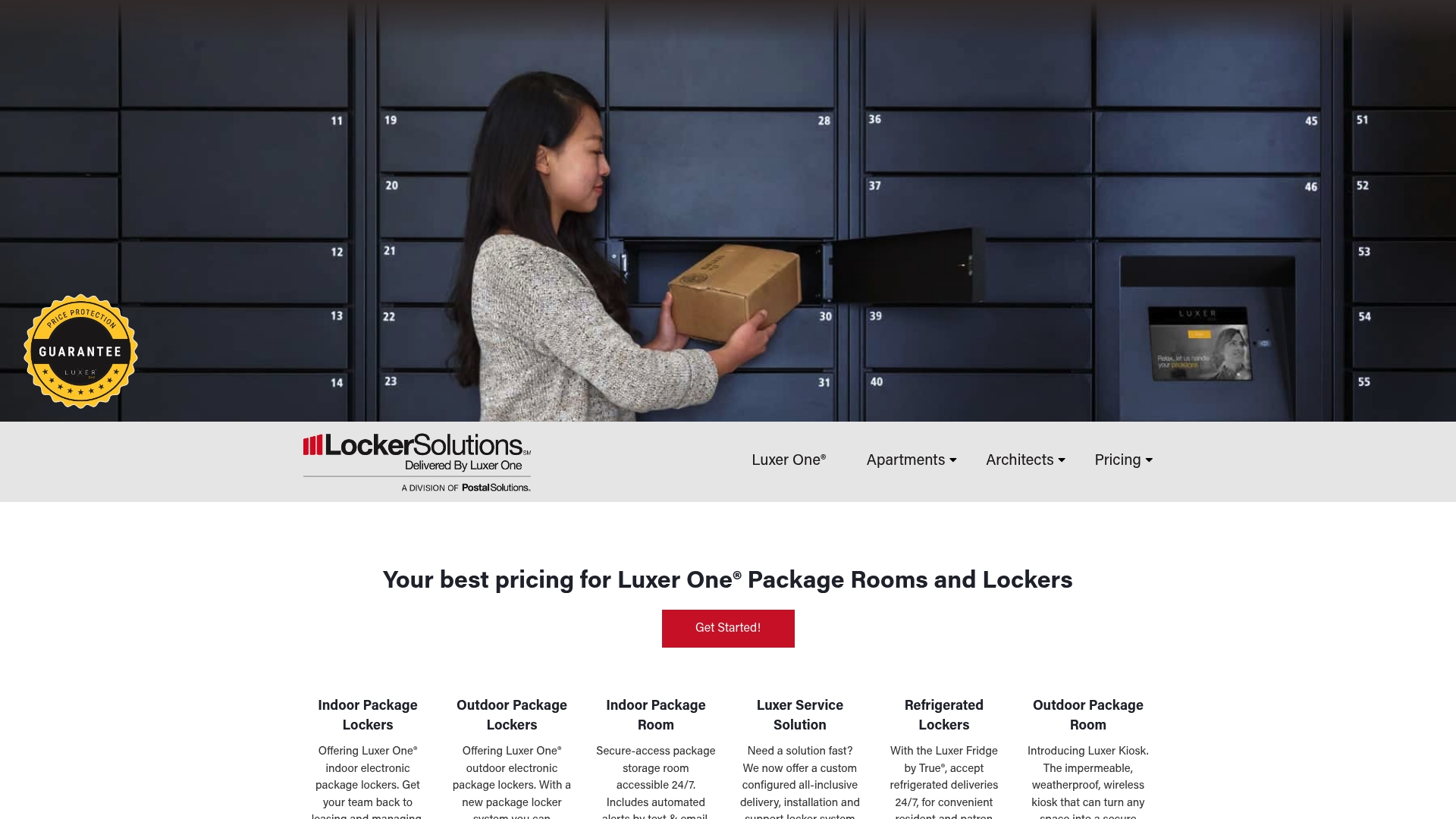
Whether you are specifying a new development or upgrading an existing property, Locker Solutions can match a configuration to your sustainability goals and package volume. Systems are available with solar-compatible power options and remote management software that supports over-the-air updates. Contact Locker Solutions to request a consultation or learn more about the package locker systems best suited to your property’s green building targets.
Key takeaways
A sustainability-rated locker system delivers its greatest environmental value through modular design, adaptive software, and energy-aware operation across a 10-to-15-year lifecycle.
| Point | Details |
|---|---|
| Definition clarity | Sustainability ratings are a suite of verified features, not a single universal label. |
| Emissions reduction | Delivery consolidation cuts last-mile greenhouse gas emissions at the building level. |
| Space and material savings | Smart lockers reduce storage footprint by 20–40% compared to conventional systems. |
| Lifecycle over upfront cost | Modular, retrofit-capable systems prevent premature disposal and lower long-term carbon output. |
| Certification contribution | Properly specified lockers support LEED and BREEAM credit categories across multiple criteria. |
FAQ
What is a sustainability-rated locker system?
A sustainability-rated locker system is a package management solution built with recycled materials, energy-efficient operation, and adaptive software that together meet verified environmental performance standards. These systems contribute to green building certifications like LEED and BREEAM through manufacturing practices and operational efficiency.
How do sustainable lockers contribute to LEED or BREEAM certification?
Sustainable lockers support green building certifications through recycled material content, reduced operational energy use, and delivery consolidation that lowers a property’s transportation emissions. Manufacturers that provide Environmental Product Declarations give developers the documentation needed for formal certification submissions.
Are solar-powered lockers practical for multifamily outdoor installations?
Solar-powered lockers are well-suited to outdoor multifamily installations because they eliminate utility connections, reduce installation labor costs by up to 70%, and support off-grid operation. Bluetooth Low Energy communication further reduces standby power draw, making the combination viable even in lower-sunlight climates.
What is the difference between retrofitting and replacing a locker system?
Retrofitting adds battery-operated smart locks to an existing locker structure, extending its useful life without manufacturing a new system. Replacement generates manufacturing emissions and disposal waste, making retrofitting the lower-carbon option when the existing structure is still sound.
How does modular locker design support long-term sustainability?
Modular locker systems can be reconfigured as resident needs change, preventing premature disposal that generates unnecessary manufacturing and landfill emissions. Lifecycle adaptability is a stronger sustainability indicator than recyclability alone, because it reduces how often a system needs to be replaced.
Recommended
- Locker Business Models for Multifamily Properties: 2026 — Locker Solutions Blog
- Choosing the Right Locker Company for Multifamily Properties — Locker Solutions Blog
- Single Door Locker Guide for Multifamily Properties — Locker Solutions Blog
- Energy-Efficient Package Locker Systems for Apartments — Locker Solutions Blog
Ready for a Luxer One® package locker quote?
Tell us your unit count and we'll send right-sized pricing with a fast response time.
Get my free quote