July 27, 2026
Cold-Weather Locker Technology: A Property Manager's Guide
Discover what cold-weather locker technology is and how it protects your packages, reduces damage, and eases maintenance for property managers.
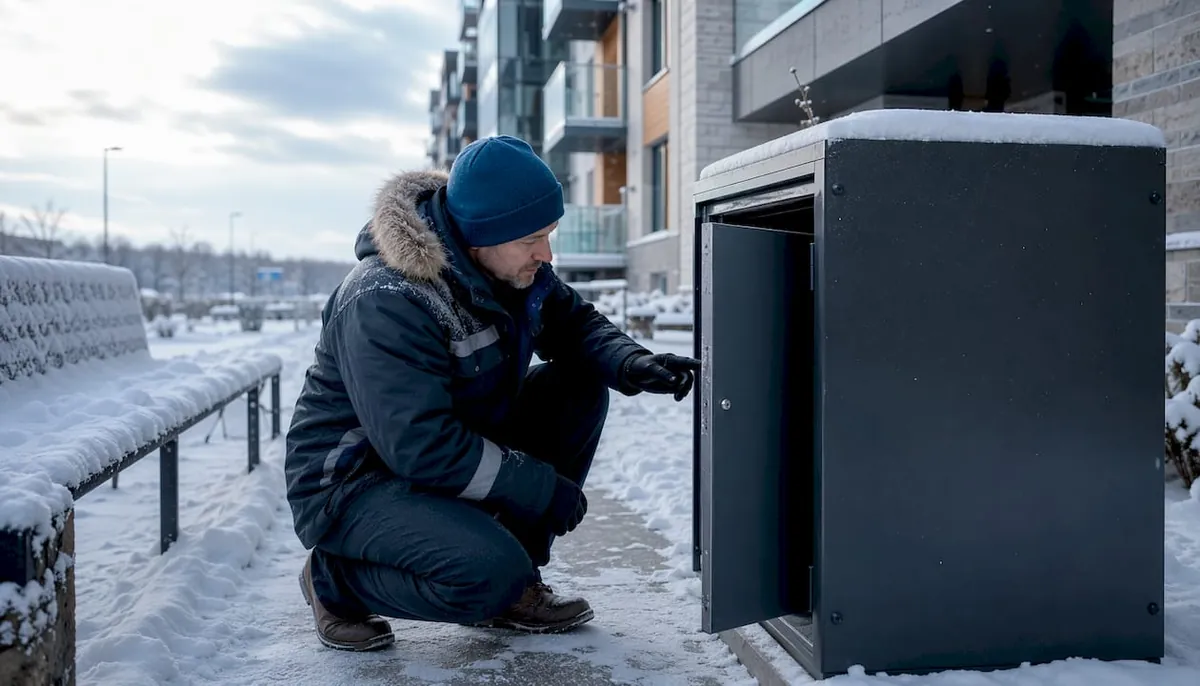
Cold-weather locker technology is package-locker hardware and environmental controls engineered to stay operational and protect contents through freezing temperatures, snow, ice, and high winds. For multifamily property managers, that means lockers built from industrial-grade steel with corrosion-resistant powder-coat finishes, integrated heaters or air conditioners, and sealed enclosures rated to operate across wide temperature ranges. Some outdoor locker products marketed for extreme weather cite operating ranges as wide as −13°F to 122°F. Our Luxer One® outdoor lockers are built around these same principles.
The practical payoff is straightforward: fewer frozen doors, less water and ice damage to packages, and fewer service calls during the months when your maintenance team is already stretched.
- Structural materials: Industrial-grade steel and powder-coat finishes resist freeze/thaw cycling and corrosion.
- Active controls: Integrated heaters, air conditioners, or refrigeration keep internal compartments within safe operating ranges.
- Seals and drainage: Gaskets, drip edges, and elevated bases prevent ice buildup and water intrusion.
- Remote monitoring: Temperature telemetry and alerts convert reactive repairs into scheduled maintenance.
Pro Tip: Before your first hard freeze, confirm your lockers have a documented operating temperature range from the manufacturer, not just a general “weatherproof” marketing claim.
Table of Contents
- What physical materials make a locker cold-weather ready?
- How does active temperature management work in cold lockers?
- How do you prevent frozen doors and wet packages?
- What do installation and siting require for outdoor lockers?
- What does a winter readiness checklist look like?
- What does cold-weather locker installation actually cost?
- How should you evaluate vendors for cold-weather performance?
- Key Takeaways
- The part most property managers skip until January
- We can help you spec and deploy cold-weather systems
- Useful sources and Luxer One resources
What physical materials make a locker cold-weather ready?
The enclosure itself does most of the work before any heater ever switches on. Industrial-grade steel with powder-coat finishing resists the corrosion that accelerates when salt, meltwater, and freeze/thaw cycles combine, a combination that destroys lesser finishes within two or three winters in northern U.S. climates.
Insulation is the next variable. Panelized insulated cabinets hold interior temperatures far more efficiently than thin sheet-metal shells, reducing how hard any active heating system has to work. Cold-climate steel building design uses thermal breaks and insulated panels to prevent heat loss through the structure itself, the same principle applies directly to locker enclosures and their mounting shelters.
Door seals and gaskets are where most field failures actually occur. Low-temperature latch hardware and compression gaskets prevent air infiltration and stop doors from freezing shut after a wet snowfall. Sloped tops, overhangs, and raised bases handle the structural side: elevated foundations keep bases above meltwater and ice, while sloped rooflines shed snow loads before they stress the frame. Reinforced frames and tamper-resistant fasteners matter year-round, but they become especially relevant when vandalism attempts increase during low-traffic winter nights.
- Powder-coat or UV-resistant finish rated for outdoor exposure
- Compression door gaskets and low-temperature latch hardware
- Panelized insulation or thermal-break construction
- Sloped tops and overhangs to shed snow loads
- Raised base or concrete pedestal above grade
For a detailed breakdown of freeze-resistant material choices, we publish specification-level guidance tailored to multifamily cold-climate installs.
How does active temperature management work in cold lockers?
Passive insulation has limits. Once ambient temperatures drop below roughly 20°F for extended periods, most parcel lockers need active heating to keep electronics, touchscreens, and locking mechanisms functional. Active temperature management uses powered heating and, for food-grade applications, compressor-based refrigeration to hold internal compartments within defined ranges regardless of what is happening outside.
The most common architecture for general parcel lockers is an integrated electric resistance heater controlled by a thermostat, low wattage, thermostatically switched, and designed to prevent freeze damage rather than maintain a warm interior. For refrigerated pickup lockers, the system mirrors the compressor, condenser, evaporator, and fan arrangement used in commercial walk-in coolers, just scaled to individual compartments. Refrigerated food lockers typically hold chilled compartments at roughly 34–43°F and frozen compartments at approximately −8 to −2°F, with many units supporting ambient, refrigerated, and frozen modes simultaneously.
Control systems have matured significantly. Modern units support multi-mode temperature profiles, remote telemetry, and automated alerts when a compartment drifts out of its target range. That last feature matters most operationally: a temperature excursion caught at 2 AM by an automated alert is a service call scheduled for morning, not a resident complaint about spoiled groceries discovered at pickup.
- Anti-freeze heating: Low-wattage electric elements, thermostatically controlled, for general parcel protection
- Packaged AC/heat: Integrated units for year-round climate control in enclosed kiosk designs
- Compressor refrigeration: For chilled and frozen food pickup, using the same refrigeration cycle as commercial coolers
- Remote telemetry: Continuous temperature monitoring with configurable alert thresholds
- Backup power: Surge protection and, for refrigerated units, UPS or generator hookup to maintain cold chain during outages
Key spec to request: Ask vendors for the minimum ambient temperature at which active heating engages and the maximum hold time during a power outage before compartment temperatures drift out of range.
How do you prevent frozen doors and wet packages?
Moisture control is as operationally critical as temperature control. A locker that holds 40°F internally but allows condensation to pool on door frames will still freeze shut overnight when temperatures drop. The fix is a combination of drainage design, ventilation, and active anti-ice measures.
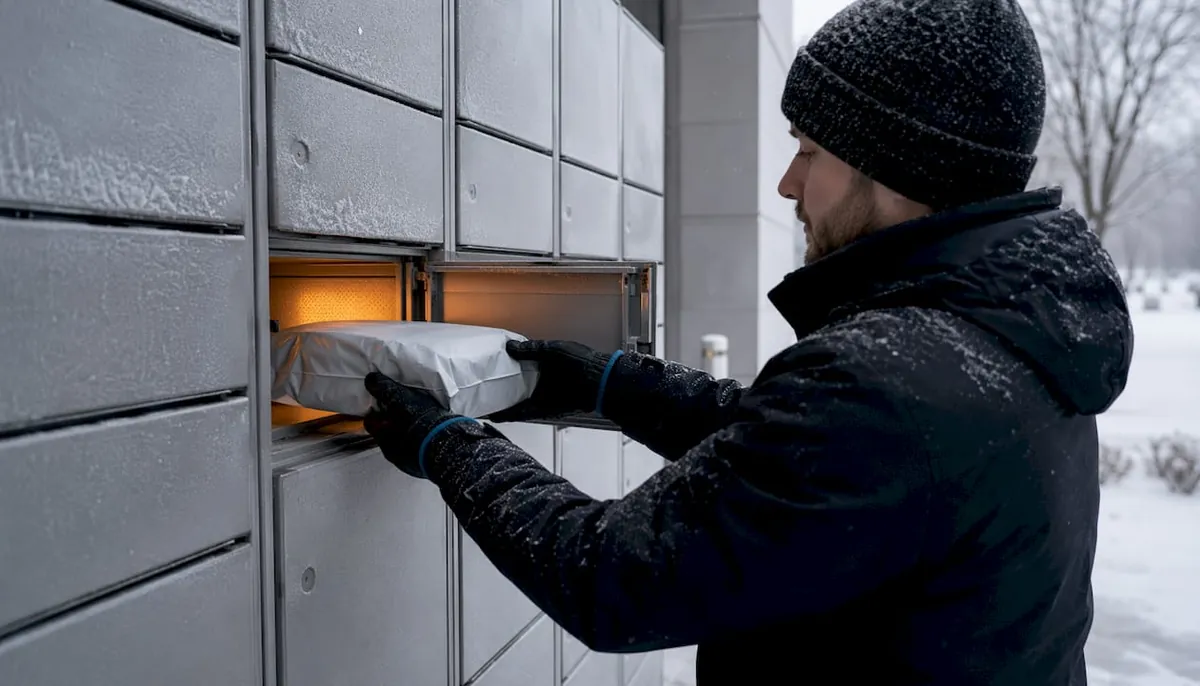
Drainage paths, drip edges, and sealed cable penetrations keep water from collecting inside locker cavities. Elevated mounting on a concrete pad keeps the base above pooling meltwater. Proper ventilation prevents condensation when warm interior air meets cold enclosure walls during temperature swings, a problem that worsens in climates with frequent freeze/thaw cycles, like the mid-Atlantic and Pacific Northwest.
Active anti-ice options include heated door frames and thermostatically controlled defrost cycles for refrigerated units. For general parcel lockers, a low-wattage internal heater running on a simple thermostat often handles this without meaningful energy cost.
- Clear snow from a 3-foot zone around lockers after each storm
- Inspect and clear drain holes monthly during winter
- Prefer sheltered placement under a roof overhang when siting outdoors
Pro Tip: Poly mailers handle brief moisture exposure better than corrugated boxes, if your property sees heavy snow, include a note in resident communications about packaging preferences during winter months.
What do installation and siting require for outdoor lockers?
Site selection is where cold-weather performance is won or lost before a single package is delivered. The right site provides power, shelter from prevailing winds, drainage, and clear access for snow removal equipment.
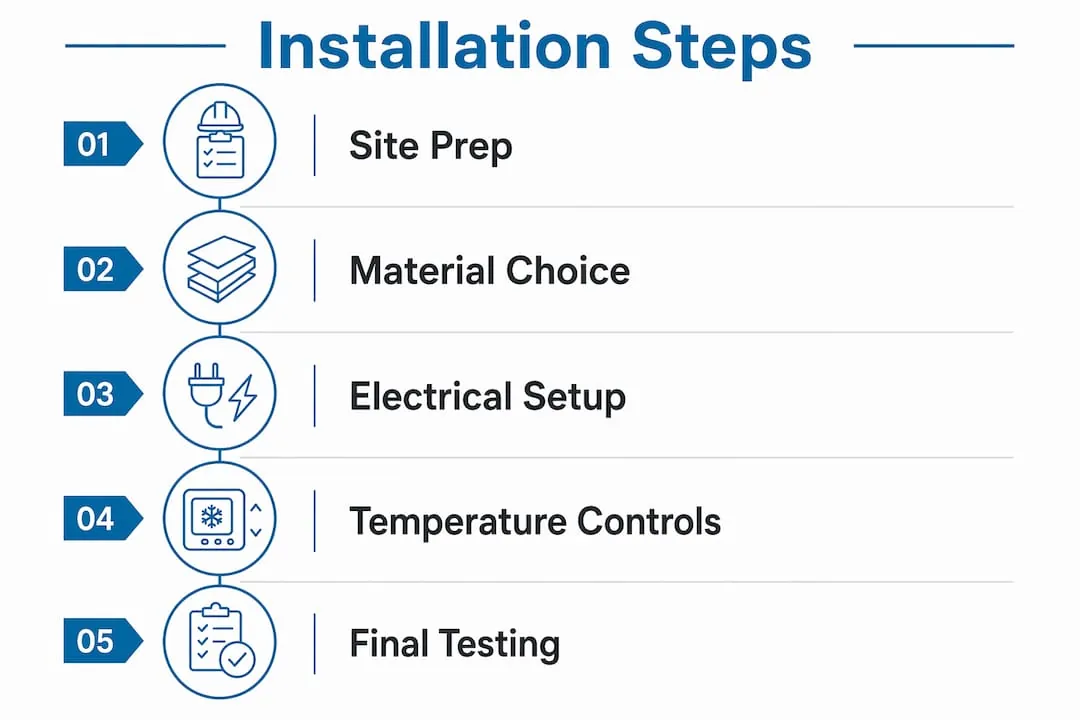
Power requirements for lockers with integrated HVAC or refrigeration typically call for a dedicated circuit. Refrigerated units draw continuous power; confirm amperage requirements with the vendor before electrical rough-in, and build in capacity for future expansion. Surge protection is non-negotiable in regions with winter storm-related grid instability.
For layout, snow-resistant siting guidance from our team covers roof overhangs, mounting elevations, and snow-plow clearance paths, details that are easy to overlook during summer planning but become obvious problems in January. ADA clearance requirements apply year-round and must account for snow accumulation reducing effective pathway width. A raised concrete pad or pedestal keeps the locker base above ice buildup and meltwater.
- Dedicated electrical circuit sized for HVAC/refrigeration load plus future capacity
- Roof overhang or shelter structure on the prevailing-wind side
- Concrete pad elevated 4–6 inches above grade
- Minimum 5-foot snow-plow clearance on at least one side
- Electrical and municipal siting permits confirmed before installation
What does a winter readiness checklist look like?
A short, repeatable pre-season checklist prevents most cold-weather failures. Run it before the first hard freeze, not after.
Pre-season steps (run in October or early November):
- Calibrate thermostats and verify heater or AC activation at set thresholds.
- Run a full heating/cooling cycle and confirm temperature holds within spec.
- Inspect all door gaskets for cracks, compression loss, or gaps.
- Verify condensate drains are clear and unobstructed.
- Confirm remote telemetry is active and alert thresholds are configured.
- Test backup power or UPS for refrigerated units.
Ongoing in-season monitoring:
- Monthly: physical inspection of seals, drain paths, and snow clearance zones
- Monthly: review telemetry logs for temperature excursions or door-open anomalies
- Quarterly: deep service inspection of HVAC components and locking mechanisms
- Annually: full HVAC/refrigeration preventive maintenance by a qualified technician
When negotiating service contracts, ask specifically for winter surge response times, parts coverage for heating and refrigeration components, and whether the vendor's SLA applies during declared weather emergencies. We publish a year-round performance guide with testing protocols and telemetry check recommendations that property teams can use as a baseline.
What does cold-weather locker installation actually cost?
Costs break into four buckets: enclosure and material premiums, active HVAC or refrigeration equipment, electrical upgrades and site prep, and ongoing energy and service costs. The table below shows typical ranges; actual figures vary by region, property configuration, and vendor.
| Cost Component | Typical Range | Key Assumptions |
|---|---|---|
| Enclosure premium (insulated vs. standard) | - | Panelized insulation, powder-coat finish, upgraded seals |
| Integrated HVAC pack (heater/AC) | - | Thermostatically controlled; higher end for packaged AC |
| Refrigeration system (chilled/frozen) | - | Compressor-based; multi-mode units at higher end |
| Electrical upgrade and site prep | - | Dedicated circuit, concrete pad, conduit run |
| Annual energy (heating only) | - | Low-wattage anti-freeze heat; varies by climate zone |
| Annual energy (refrigeration) | - | Continuous compressor cycling; climate-dependent |
For parcel-only applications, improved enclosure insulation combined with thermostatically controlled low-wattage anti-freeze heating achieves most operational goals at a fraction of full refrigeration costs. Save the compressor-based system for properties offering grocery or meal-kit pickup.
How should you evaluate vendors for cold-weather performance?
Prioritize operating temperature specifications, documented winter deployments, warranty terms, and remote monitoring capabilities, in that order. A vendor who cannot produce a tested operating temperature range is selling you a marketing claim, not an engineered system.
Vendor questions to ask before signing:
- What is the rated operating temperature range, and is it tested or modeled?
- What materials and finishes are used, and what corrosion warranty applies?
- What UL, ETL, or equivalent certifications cover the electrical and refrigeration components?
- Can you provide references for cold-climate installs in U.S. markets with similar winter conditions?
- What is your response SLA for heating or refrigeration failures in winter months?
Neutral evaluation scorecard:
| Criterion | What to Look For |
|---|---|
| Durability | Industrial steel, rated powder-coat, documented freeze/thaw testing |
| Cold-weather controls | Thermostat range, active heating/cooling specs, multi-mode refrigeration |
| Service and response | Winter SLA, parts availability, local technician network |
| Energy efficiency | High-efficiency compressors, setback profiles, insulation R-value |
| Total cost of ownership | Install + energy + service over a 5-year horizon |
Our Luxer One® outdoor weatherproof lockers address durability and active temperature control, with installation in 4-6 weeks and custom configuration options for multifamily properties. Refrigerated locker options support chilled and frozen pickup for properties adding grocery or meal-kit services.
Key Takeaways
Cold-weather locker technology requires industrial materials, active temperature controls, proper site prep, and a repeatable maintenance schedule to stay operational through U.S. winters.
| Point | Details |
|---|---|
| Specify materials first | Require industrial-grade steel, rated powder-coat, and compression gaskets before evaluating any other feature. |
| Active controls are non-negotiable in cold climates | Thermostatically controlled heating prevents frozen electronics and stuck doors; refrigeration adds food-safe pickup capability. |
| Site prep determines winter performance | A dedicated circuit, elevated pad, and snow-clearance zone prevent most field failures before they start. |
| Run a pre-season checklist every fall | Calibrate thermostats, inspect gaskets, verify drains, and confirm telemetry alerts before the first hard freeze. |
| Luxer One® | Offers outdoor weatherproof and refrigerated locker options with rapid deployment and cold-climate configuration support. |
The part most property managers skip until January
The engineering conversation about cold-weather lockers is well-documented. What gets skipped is the resident communication side, and that gap shows up fast during the first snow event of the season.
When temperatures drop and packages start arriving in poly mailers, wet corrugated boxes, and the occasional frozen food delivery, residents need to know what the locker can and cannot do. A simple one-page “winter locker rules” notice, posted digitally and physically before December, covers pickup timing (don’t leave perishables overnight), packaging preferences, and who to contact if a door feels stiff. That notice also sets expectations so a resident who finds a slightly cold package doesn’t assume the system failed.
Operations teams that run pre-season testing in October and publish resident guidance before the first freeze handle winter with far fewer escalations than those who react after the complaints arrive. Schedule the checklist. Write the notice. Both take less than two hours and save considerably more than that in staff time and resident friction over a full winter.
We can help you spec and deploy cold-weather systems
Property managers who have read this far know what to ask for. We put those specs into production: outdoor weatherproof Luxer One® lockers built for year-round U.S. climates, refrigerated locker options for food and grocery pickup, automated package rooms for high-volume properties, and monitored package room services for teams that want a managed approach.
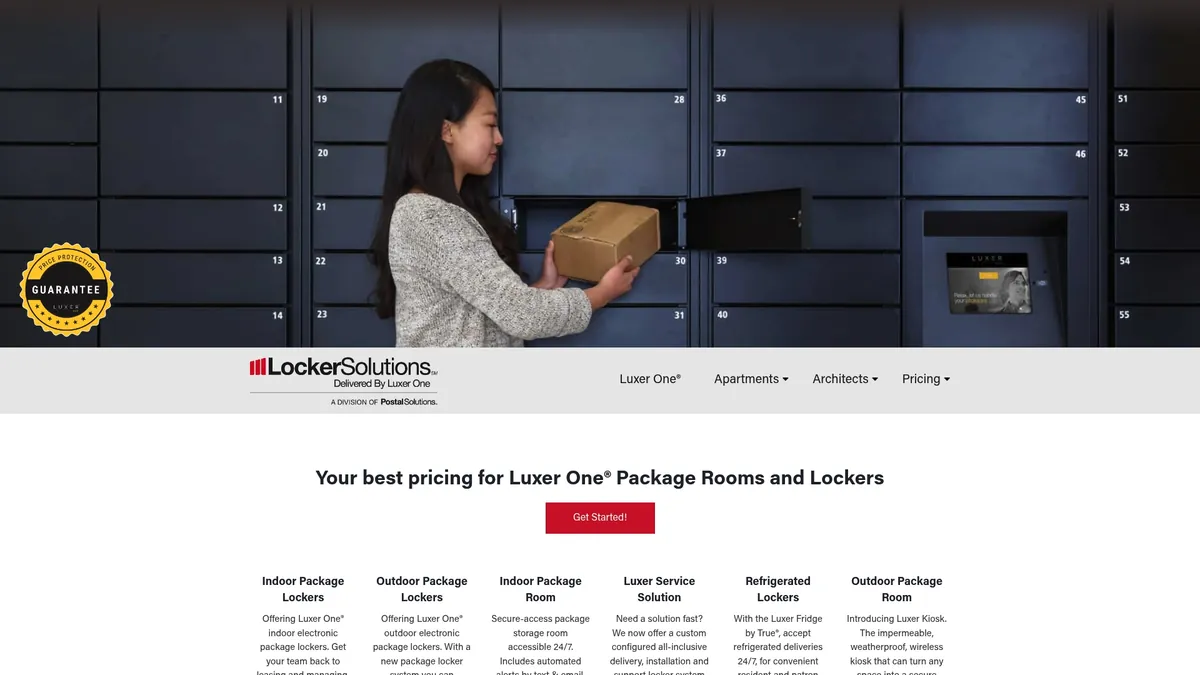
Every deployment includes configuration support and installation services, so you are not sourcing a product and figuring out site prep separately. If you are specifying a new build or retrofitting an existing property for winter readiness, the right next step is a conversation about your site's specific climate zone, power availability, and package volume. Request specs or a demo and a member of our team will walk you through the options that fit your property.
Useful sources and Luxer One resources
- Freeze-Resistant Locker Materials for Cold Climates: material specifications and finish guidance for cold-climate multifamily installs
- Snow-Resistant Locker Design: A Guide for Developers: siting, overhangs, snow clearance zones, and mounting elevations
- Year-Round Outdoor Locker Performance: A Facility Manager's Guide: pre-season testing protocols, telemetry checks, and winter readiness templates
- Insulated Locker Cabinet Technology: A Property Manager's Guide: insulated cabinet options and performance trade-offs
- Refrigerated Food Lockers for Safe Food Pickup, MH-USA: temperature ranges and multi-mode specs for chilled and frozen locker compartments
- Cold-Weather Construction: How Steel Buildings Perform in Harsh Climates, Red Direct: thermal break and insulated panel design principles applicable to locker shelters
Recommended
Ready for a Luxer One® package locker quote?
Tell us your unit count and we'll send right-sized pricing with a fast response time.
Get my free quote