September 16, 2026
Property Managers: Build a 7–10 Day Buffer for Holiday Package Surge
Prepare for the holiday package surge. Ship 7 to 10 days earlier, use expedited service for time critical orders, and plan locker capacity for multifamily...
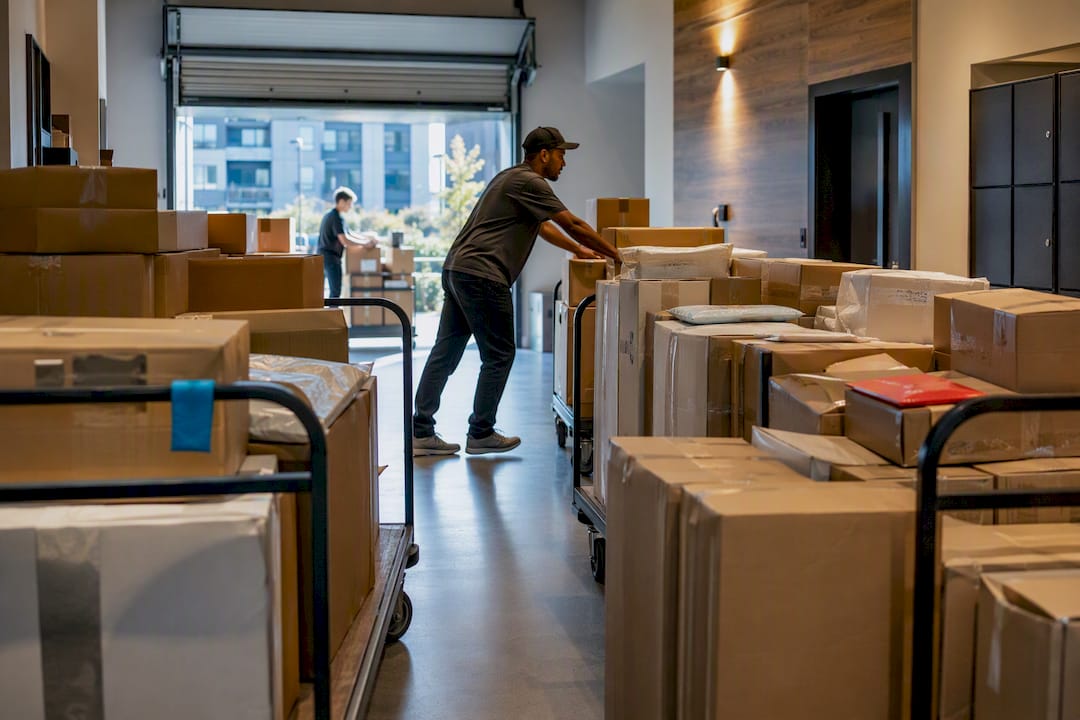
Holiday package volumes will spike again this year, and the single best move for shippers, recipients, and property managers is the same: build in extra lead time now. Ship at least a week earlier than you normally would, choose expedited service for anything that must arrive by a specific date, and if you manage a multifamily property, start capacity planning before Thanksgiving. The sections below cover exact deadlines, carrier prep, a shipper checklist, and property-level fixes.
TL;DR:
- Shipping at least one week earlier than usual is recommended to account for peak congestion, especially for ground services that tighten deadlines well in advance.
- For time-sensitive or valuable packages, use tracking, signature confirmation, and insurance to reduce the risk of delays or loss during high-volume weeks.
- Property managers should upgrade or quickly deploy secure package storage solutions, like electronic lockers, to handle three times the normal volume without overwhelming staff or space.
- Carrier policies vary during peak season, with some suspending guarantees and rural or weather-affected regions experiencing longer delays, making individualized planning essential.
- Building capacity now with scalable systems and clear communication with residents can help mitigate delivery pileups and reduce last-minute logistical chaos.
Table of Contents
- What’s Driving This Year’s Holiday Package Surge
- How Carriers and Retailers Get Ready for the Rush
- What Should You Do Right Now to Avoid Delays?
- Getting Multifamily Properties Ready for Peak-Season Package Volume
- Why Carrier Rules Aren’t the Same Everywhere This Season
- What This Season’s Data Actually Tells Us
- How Locker Solutions Helps Properties Handle the Holiday Rush
- Sources
- FAQ
What’s Driving This Year’s Holiday Package Surge
Holiday retail sales are projected to grow roughly 4% to 4.8% this year, reaching an estimated $1.70 to $1.71 trillion in total spending. That growth doesn’t spread evenly across the season. A bigger share of it now moves through e-commerce than in past years, and every one of those online orders eventually becomes a physical box that needs a truck, a driver, and a doorstep.
Shopper behavior compounds the timing problem. Research from ICSC summarized by Retail Dive shows many shoppers plan to be more selective this year, waiting for deals rather than spreading purchases out.
By the Numbers: Locker Solutions’ own tracking of multifamily properties finds apartment package volumes can climb to 2.5 to 3 times normal levels during peak holiday weeks.
What that means in practice:
- Order volume concentrates around a handful of promotional dates rather than spreading evenly through November and December.
- Carriers absorb a short, intense spike rather than a gradual ramp.
- Multifamily properties see compressed delivery windows land on the same few days each week.
How Carriers and Retailers Get Ready for the Rush
Carriers don’t get caught off guard by this every year. They add seasonal drivers, extend shift hours, lease extra sorting space, and adjust delivery routes weeks in advance. Local reporting on UPS operations found the carrier openly identifies its busiest shipping days each December and tells customers to ship ahead of those dates rather than on them.
Mid-December tends to be the crunch point for ground shipments, with volume compounding as Christmas approaches. A “delivery by” estimate a carrier gives you in early November can look very different by December 15, once every retailer’s promotional calendar lands in the same network at once.
A few things worth keeping in mind about cutoffs:
- Ground shipping deadlines are typically the first to tighten, often a week or more before expedited cutoffs.
- Expedited and overnight services usually hold their advertised windows longer into December, but at a higher price.
- Rising fuel and labor costs during peak weeks can push carriers toward tighter capacity allocation, according to industry commentary tied to the same holiday retail forecasts.
Treat any published “ship by” date as the last safe moment for ordinary conditions, not a guarantee. Add a buffer of two to three business days for ground service, especially for anything ordered after the first week of December.
What Should You Do Right Now to Avoid Delays?
The earlier you act, the more options you keep. Here’s the order of operations that actually works:
- Ship 7 to 10 days earlier than your usual habit. For ground service in particular, that buffer absorbs the sorting delays that show up once volume peaks.
- Label and package for speed. Clear, legible labels and sturdy boxing cut down on manual handling exceptions, which are one of the most common causes of holiday delays.
- Match the service to the stakes. Use tracking and signature confirmation for anything valuable, and buy shipping insurance for items you can’t afford to lose in transit.
- Split large orders into multiple shipments. A single delayed box can hold up an entire order; splitting reduces that single point of failure.
- Use buy-online-pickup-in-store where it’s offered. It sidesteps the last-mile bottleneck entirely for time-sensitive purchases.
- Tell recipients what to expect. A quick note that a package might run a few days late prevents a wave of “where is it” messages later.
- Escalate with the carrier only after you’ve got specifics. Tracking number, expected delivery date, and last scan location in hand, contact support directly rather than guessing.
Pro Tip: Set your personal ship-by deadline five days earlier than the carrier’s official one. That gap is your insurance policy against the exact week everyone else waits until.
Getting Multifamily Properties Ready for Peak-Season Package Volume
Property managers face a version of this problem that’s structurally different from an individual shipper’s. It’s not about one box arriving late. It’s about hundreds of boxes arriving at once, with nowhere secure to put them.
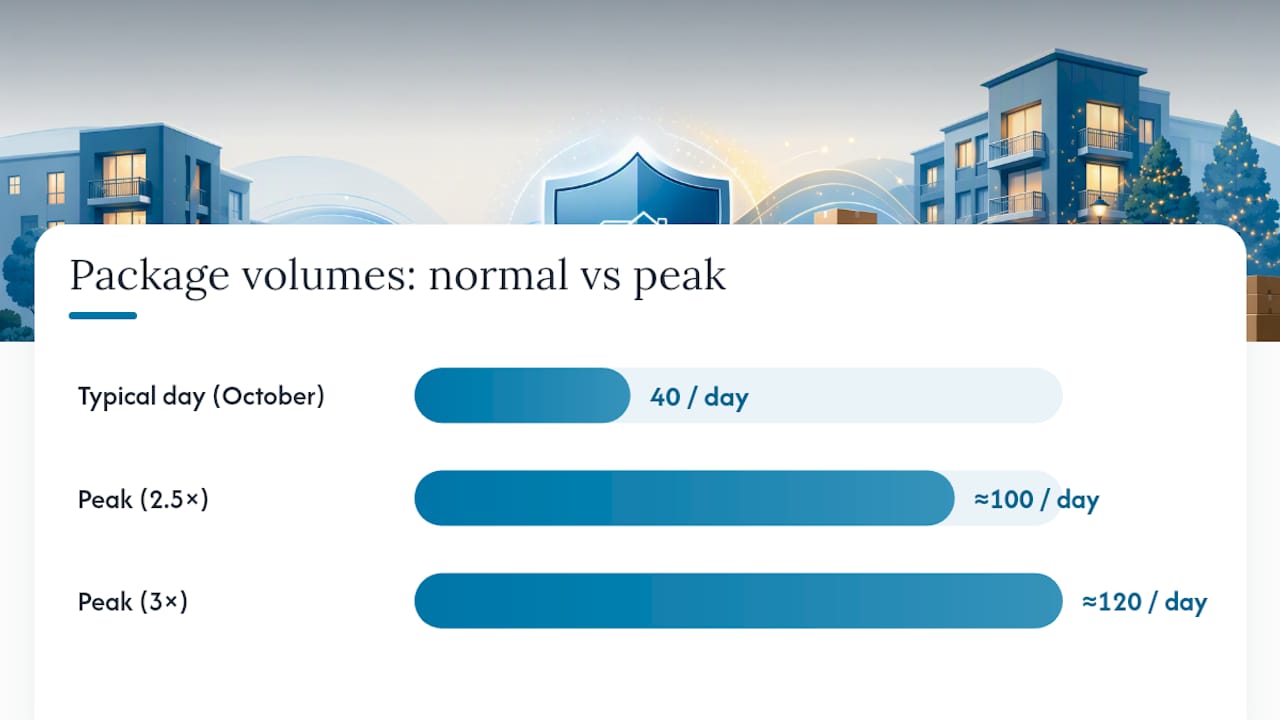
Internal data on apartment communities shows package volumes can hit 2.5 to 3 times normal levels during the holiday peak. A leasing office that comfortably handles 40 packages a day in October can suddenly face well over 100 a day in mid-December, with no added staff hours to match.
The properties that get through the season without a pileup in the mailroom tend to share a few operational traits:
- Secure electronic lockers or an automated package room that lets residents pick up on their own schedule, including overnight.
- Refrigerated locker capacity for perishable holiday deliveries like meal kits, wine, or gifts that can’t sit in a warm hallway.
- Staggered delivery windows negotiated with major carriers to reduce single-point congestion at the loading dock.
- Automated pickup alerts so residents know the moment a package arrives instead of finding out three days later.
- Video surveillance and access control tied into the same system, so package security doesn’t depend on staff supervision.
Installation timelines matter here more than most managers expect. Modular outdoor locker kiosks can go in within a few weeks, while larger indoor automated package rooms with full property-management-system integration take longer to plan and install. If your property hasn’t started that conversation yet, prioritize a quick-deploy option for this season and treat a bigger system as a 2027 project. Locker Solutions also documents specific overflow tactics for multifamily properties that don’t require a full system overhaul, including temporary locker units and monitored interim package rooms. Property teams coordinating physical installation work alongside other site upgrades may also find value in general property maintenance planning practices that keep facility projects on schedule during a busy season.
Why Carrier Rules Aren’t the Same Everywhere This Season
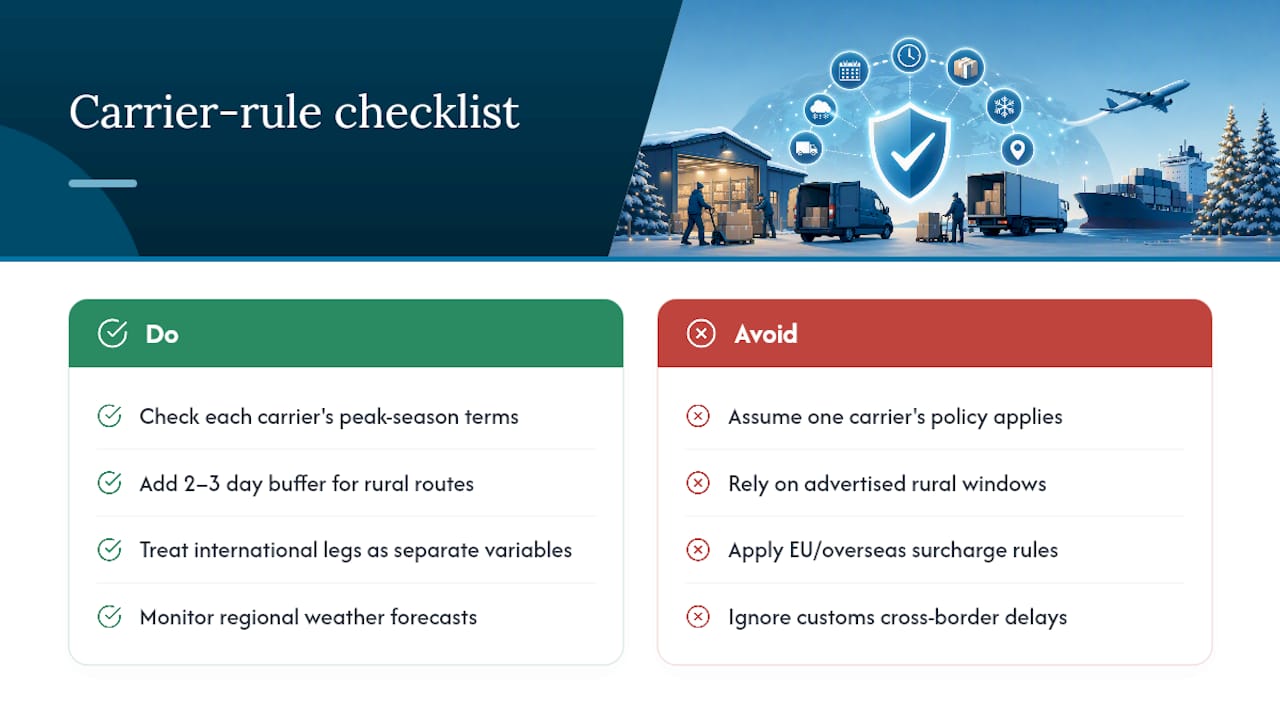
Not every carrier handles the holiday crunch identically, and assuming one company’s policy applies across the board is a common mistake. Some carriers suspend certain service guarantees during peak weeks, meaning a money-back promise for late delivery that applies in October may not apply the week before Christmas. Others quietly extend transit-time estimates for specific regions without broadly publicizing the change.
Rural and low-density delivery areas tend to see the biggest gap between advertised and actual delivery windows, simply because peak-season routes there get less redundancy than dense metro routes. Weather-related regional delays stack on top of volume delays, and a single storm system can push an entire region’s ground network back by two or three days.
International shipments carry their own wrinkle. Customs processing slows independently of domestic carrier capacity, so a package that clears a US sorting facility on time can still sit at a border checkpoint for days. If you’re shipping across borders during peak season, treat that leg of the trip as a separate, less predictable variable.
It’s also worth noting that pricing rules around holiday travel and package surcharges vary by jurisdiction. EU regulations governing package holiday surcharges, for instance, don’t apply to US shipping carriers, so don’t assume a policy you read about from an overseas operator translates to domestic service. Always check the specific carrier’s own peak-season terms rather than relying on general assumptions carried over from a different market or a previous year.
What This Season’s Data Actually Tells Us
The forecasts and carrier statements point to one conclusion worth saying plainly: this isn’t a bad-luck season, it’s a structural one. Retail growth, concentrated promotional windows, and network capacity limits collide every year around the same two or three weeks, and they’ll keep colliding as long as e-commerce keeps growing faster than delivery infrastructure does.
Where conventional advice falls short is treating “ship early” as the whole answer. It’s necessary but not sufficient. Individual shippers who ship early still lose time to carrier network congestion they can’t control. Property managers who assume their current package room setup will scale linearly with resident growth are making the same mistake at a different level. Both problems are capacity problems, not timing problems alone.
If you take one thing from this, prioritize capacity over speed. A property relying on staff hours and floor space to absorb the same spike does not, no matter how early residents place their orders.
— Locker Solutions
How Locker Solutions Helps Properties Handle the Holiday Rush
The surge itself isn’t the real problem for a multifamily property. The real problem is having nowhere secure to put 300 packages when your leasing office was built to handle 100.
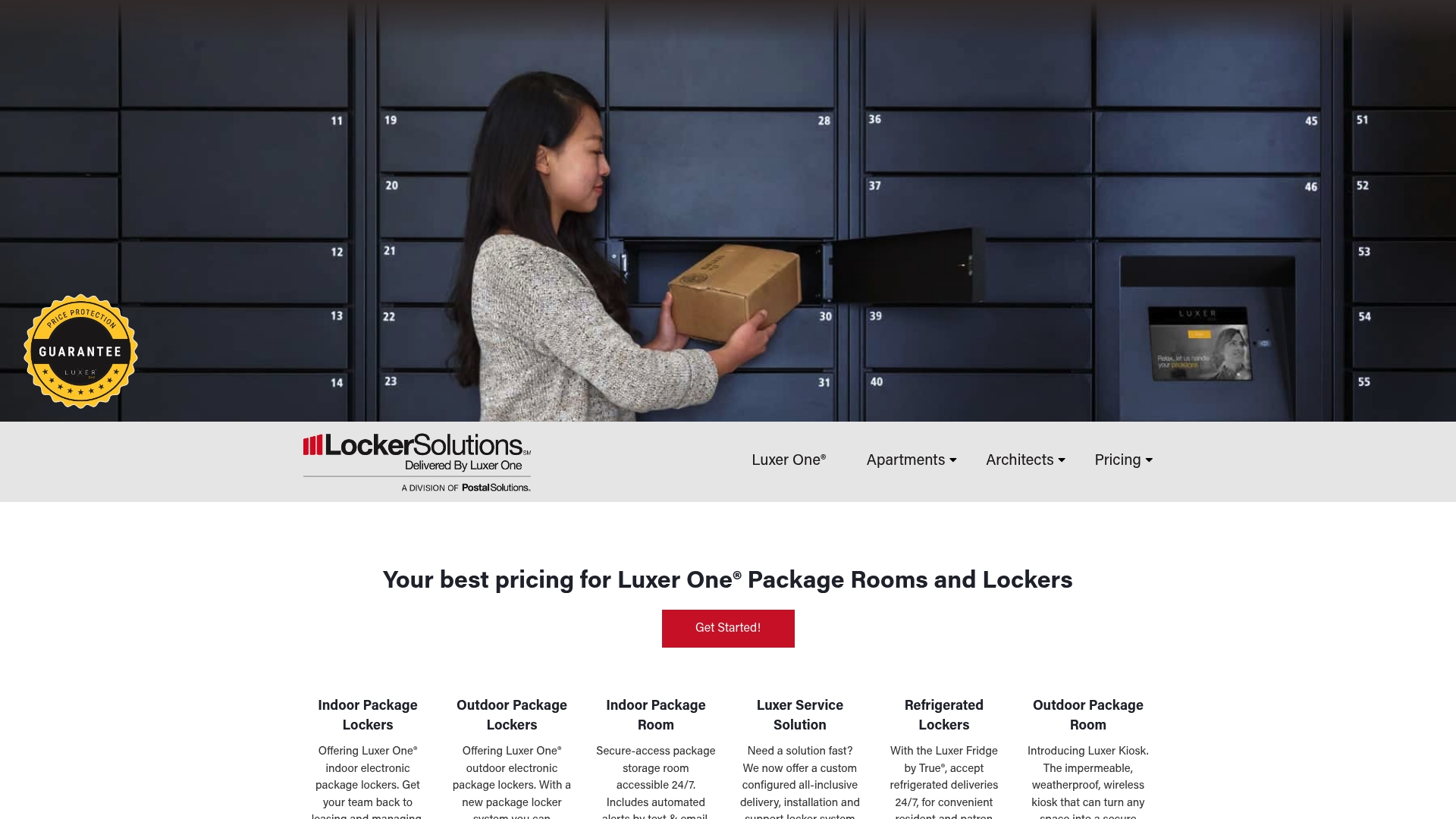
Every system pairs with automated pickup alerts, video surveillance, and access control, so residents retrieve packages 24/7 without waiting on office hours, and your team isn’t hand-sorting boxes during the busiest weeks of the year. Systems integrate with existing property management software, and installation timelines range from a few weeks for outdoor kiosks to a longer runway for full indoor package rooms. If your property hasn’t locked in holiday capacity yet, now is the window to act. Explore the automated package rooms guide to see what fits your property’s size and timeline, and request a capacity assessment before peak volume hits your loading dock.
Sources
- Holiday Retail Sales Expected To Hit $1.7 Trillion This Year — Forbes
- Shoppers seek value, deals this holiday season | Retail Dive
- UPS Store gears up for holiday package surge this busy season — YourErie
FAQ
Is a holiday package surge actually expected this year?
Yes. Holiday retail sales are forecast to grow roughly 4% to 4.8%, reaching around $1.70 trillion, and that growth translates directly into higher shipping volume during peak weeks.
When is the busiest shipping day for carriers?
Mid-December tends to be the peak crunch point for ground shipments, and carriers like UPS publicly identify their busiest days each season and recommend shipping well ahead of them.
How much extra time should I add to my shipping deadline?
Add at least two to three business days beyond a carrier’s published ground shipping deadline, and five or more days of personal buffer if the delivery date matters.
Can apartment package rooms actually handle the holiday volume spike?
A standard leasing office setup often can’t, but scalable solutions like electronic lockers and automated package rooms are built specifically to absorb the 2.5 to 3x volume increase properties see during peak weeks.
Do all carriers handle holiday delays the same way?
No. Some carriers suspend certain delivery guarantees during peak weeks, and rural or weather-affected regions typically see longer delays than dense metro routes, so it’s worth checking each carrier’s specific peak-season policy.
Recommended
Ready for a Luxer One® package locker quote?
Tell us your unit count and we'll send right-sized pricing with a fast response time.
Get my free quote