June 18, 2026
Overflow Package Solutions for Multifamily Properties
Discover overflow package solutions that enhance delivery management in multifamily properties. Improve resident experience and efficiency today!

Overflow package solutions are systems and services designed to handle excess delivery volume in multifamily residential properties without disrupting common areas or resident experience. The core challenge is predictable: package volume spikes during holidays, promotions, and move-in seasons overwhelm standard package rooms fast. The best solutions combine automated lockers, on-demand storage capacity, and integrated tracking platforms to keep deliveries moving. Property managers who treat overflow management as a core operational function, not an emergency response, protect both resident satisfaction and staff productivity.
What makes overflow package solutions effective for multifamily properties?
Effective overflow package management, the industry term for handling excess delivery volume at scale, depends on three core capabilities: capacity that scales on demand, integration with existing delivery systems, and automation that reduces manual labor.
Scalability is the first test. On-demand overflow capacity activates within days to meet sudden demand spikes without requiring long-term leases or capital investments. That speed matters most during the november through january peak window, when delivery volumes at apartment communities can double or triple overnight.

Integration is the second requirement. A solution that operates in isolation from your existing access control or delivery tracking platform creates more work, not less. The most effective systems sync with property management software, carrier APIs, and resident notification tools so every package is tracked from drop-off to pickup.
Automation is the third pillar. Modular packaging lines maintain consistent throughput during high-volume periods and reduce the need for extra labor shifts. Automation also stabilizes cost-per-unit volatility, which matters when you are managing a tight operating budget.
Additional criteria worth evaluating:
- Security and access control: Residents need 24/7 pickup access without staff involvement.
- Aesthetics: Solutions that spill into lobbies or hallways damage the property’s image and frustrate residents.
- Resident communication: Automated alerts reduce “where is my package?” calls to the front desk.
Pro Tip: Audit your busiest delivery week from the past year. Use that volume as your baseline capacity requirement, then select a solution that handles at least 20% above that number.
Comparing automated lockers, off-site fulfillment, and in-house handling
Not every overflow solution fits every property. The right choice depends on your building size, resident volume, available space, and budget.
| Solution | Best for | Key benefit | Main trade-off |
|---|---|---|---|
| Automated package lockers | Properties of all sizes | 24/7 secure resident access | Upfront hardware cost |
| Off-site on-demand fulfillment | High-volume or space-constrained properties | No on-site footprint required | Requires carrier coordination |
| In-house kitting and handling | Properties with dedicated staff | Full operational control | Labor and space intensive |
| Modular automated packaging lines | Seasonal spike management | Consistent throughput at scale | Requires integration planning |
Automated package lockers
Package lockers provide 24/7 access and reduce both package theft and lobby congestion. Luxer One® electronic lockers, offered through Locker Solutions, are available in indoor, outdoor, and refrigerated configurations. Outdoor and weatherproof units extend capacity beyond the building footprint without consuming interior common area space. The resident pickup experience is fully automated: a notification arrives, the resident enters a code or scans an app, and the locker opens. No staff involvement required.
Off-site on-demand fulfillment
Off-site fulfillment and secure external storage is often more cost-effective than physical on-site expansion. Partners prep and organize packages before delivery to the property, which reduces on-site clutter and keeps the lobby clear. This model works best for properties that lack the square footage for additional lockers or package rooms. The trade-off is coordination: you need a reliable logistics partner and clear carrier communication protocols.
In-house kitting and secondary packaging services
Kitting and secondary packaging services reduce manual handling by 20–30% and prevent common area clutter during overflow periods. These services prep, label, and organize packages before distribution. The benefit is control. The cost is real: you need trained staff, dedicated space, and consistent workflows. For most mid-size multifamily properties, this model works best as a supplement to automated systems rather than a standalone solution.
Modular automated packaging lines
Modular lines are purpose-built for seasonal spikes. They deploy quickly, handle high throughput, and do not require permanent infrastructure. The limitation is that they work best when integrated with your existing tracking and access systems. A modular line running in isolation creates a data gap that frustrates residents and staff alike.
How technology integration improves overflow package management
Technology integration is the difference between a package system that works and one that creates new problems. Aligning overflow solutions with core property management technologies reduces operational volatility during demand surges. The practical result is fewer missed deliveries, fewer resident complaints, and less staff time spent on manual tracking.
Key integration points for multifamily properties:
- Delivery management platforms: Real-time tracking visibility for every package from carrier drop-off to resident pickup.
- Access control compatibility: Secure resident pickup without staff involvement, tied directly to your existing unified access control system.
- Automated resident alerts: SMS or app notifications that trigger the moment a package is logged, reducing front desk inquiries.
- Carrier API connections: Direct data feeds from UPS, FedEx, Amazon, and USPS so your system knows what is arriving before it lands.
- Reporting dashboards: Volume data by day, week, and carrier helps you forecast future spikes and right-size your capacity.
The hidden value of integration is predictability. When your overflow system shares data with your property management platform, you can identify bottlenecks before they become resident complaints. Operational volatility drops when every system speaks the same language.
Pro Tip: Before selecting any overflow solution, ask the vendor for a list of property management software integrations. If your platform is not on the list, request a timeline for compatibility. A system that does not connect to your existing tools will cost you more in staff time than it saves.
What proactive overflow logistics strategies prevent bottlenecks?
Reactive overflow management is the most expensive kind. Moving from reactive to proactive overflow management is the single most important shift a property manager can make for operational stability and resident satisfaction.
-
Forecast seasonal spikes in advance. Pull delivery volume data from the previous two years. Identify your peak weeks and plan capacity increases at least 30 days ahead of those windows.
-
Partner with providers that offer rapid deployment. Scalable overflow solutions deploy rapidly to support seasonal spikes without requiring permanent infrastructure investments or overtime pay. Vet your partners before you need them, not during a crisis.
-
Standardize your intake workflow. A written protocol for how packages are received, logged, sorted, and stored eliminates the improvisation that creates logjams. Every staff member should follow the same steps every time.
-
Communicate proactively with residents. Send a notice before peak seasons explaining your package handling process, pickup windows, and any temporary changes. Residents who understand the system are far less likely to escalate complaints.
-
Set clear holding time limits. Packages that sit unclaimed for more than 72 hours block capacity for new arrivals. Automated reminders at 24, 48, and 72 hours push residents to pick up promptly.
-
Evaluate temporary versus permanent solutions honestly. A temporary modular unit solves a short-term problem but adds long-term coordination costs. If your property receives high package volume year-round, a permanent automated locker system delivers better economics over a two-year horizon.
-
Treat overflow costs as a line item, not a surprise. Hidden overflow costs include staff time managing logjams and liability risks from lost or stolen packages. Budgeting for flexible overflow solutions converts unpredictable emergencies into predictable operating expenses.
Budget-conscious and creative overflow package solutions
Cost-effective overflow management does not require a full infrastructure overhaul. Several approaches deliver real results at lower upfront investment.
-
Repurpose underused common space. A rarely used storage room or bike room can serve as a temporary package staging area during peak weeks. Pair it with a digital check-in log to maintain tracking without expensive hardware.
-
Use local third-party logistics providers with flexible contracts. Short-term agreements with regional fulfillment partners give you overflow capacity without long-term commitments. Negotiate volume-based pricing so costs scale with actual demand.
-
Combine manual intake with digital tracking. A barcode scanner and a cloud-based package log costs far less than a full locker system. For smaller properties, this hybrid approach covers most overflow scenarios while keeping overhead low.
-
Add refrigerated lockers for sensitive deliveries. Refrigerated lockers for apartments handle grocery deliveries, meal kits, and pharmaceuticals that standard lockers cannot. As resident expectations for cold-chain delivery grow, this addition protects both packages and resident trust.
-
Assess ROI before committing. Calculate the staff hours currently spent on manual package handling each week. Multiply by your hourly labor cost. That number is your baseline for evaluating any solution’s return. A system that costs $500 per month but saves 20 staff hours is a clear win at most wage rates.
Investing in automated overflow packaging is a direct driver of resident loyalty and property value. The math is straightforward: residents who receive packages reliably and without friction renew leases at higher rates.
Key takeaways
The most effective overflow package solutions for multifamily properties combine on-demand capacity, technology integration, and automation to prevent resident disruption and control operating costs.
| Point | Details |
|---|---|
| Scale capacity before peak seasons | Forecast volume spikes 30 days ahead and activate on-demand solutions before overflow occurs. |
| Prioritize technology integration | Choose solutions that sync with your access control, tracking, and property management platforms. |
| Automate resident notifications | Automated alerts reduce front desk inquiries and speed up resident pickup times. |
| Budget for overflow as a fixed cost | Treating overflow as a predictable expense prevents costly emergency responses and staff overtime. |
| Match solution type to property size | Automated lockers suit most properties; off-site fulfillment works best for space-constrained buildings. |
The operational reality most property managers learn too late
At Locker Solutions, we have worked with property managers across a wide range of building types and sizes. The pattern we see most often is this: a property installs a basic package room, it works fine for two years, and then a single holiday season breaks the system entirely. Staff spend hours sorting packages by hand. Residents file complaints. A few do not renew.
The mistake is not the original package room. The mistake is treating overflow as an edge case rather than a routine operational condition. E-commerce volume has grown consistently for over a decade. Every multifamily property will face overflow. The only question is whether you have a plan when it happens.
The properties that handle it best share one trait: they invested in systems that connect to each other. An automated locker that does not talk to your access control platform is half a solution. A fulfillment partner that does not integrate with your tracking system creates a data gap that costs you staff time every single day.
Our honest recommendation is to start with the integration question, not the hardware question. Ask which systems your current property management platform supports. Build your overflow solution around that answer. The hardware options, whether Luxer One® lockers, package rooms, or outdoor kiosks, matter far less than whether they work together as a single system.
The future of package management in multifamily is not more storage. It is smarter routing, better data, and resident experiences that require zero staff intervention. Properties that build toward that model now will have a measurable leasing advantage within three years.
— Locker Solutions
See how Locker Solutions handles overflow at your property
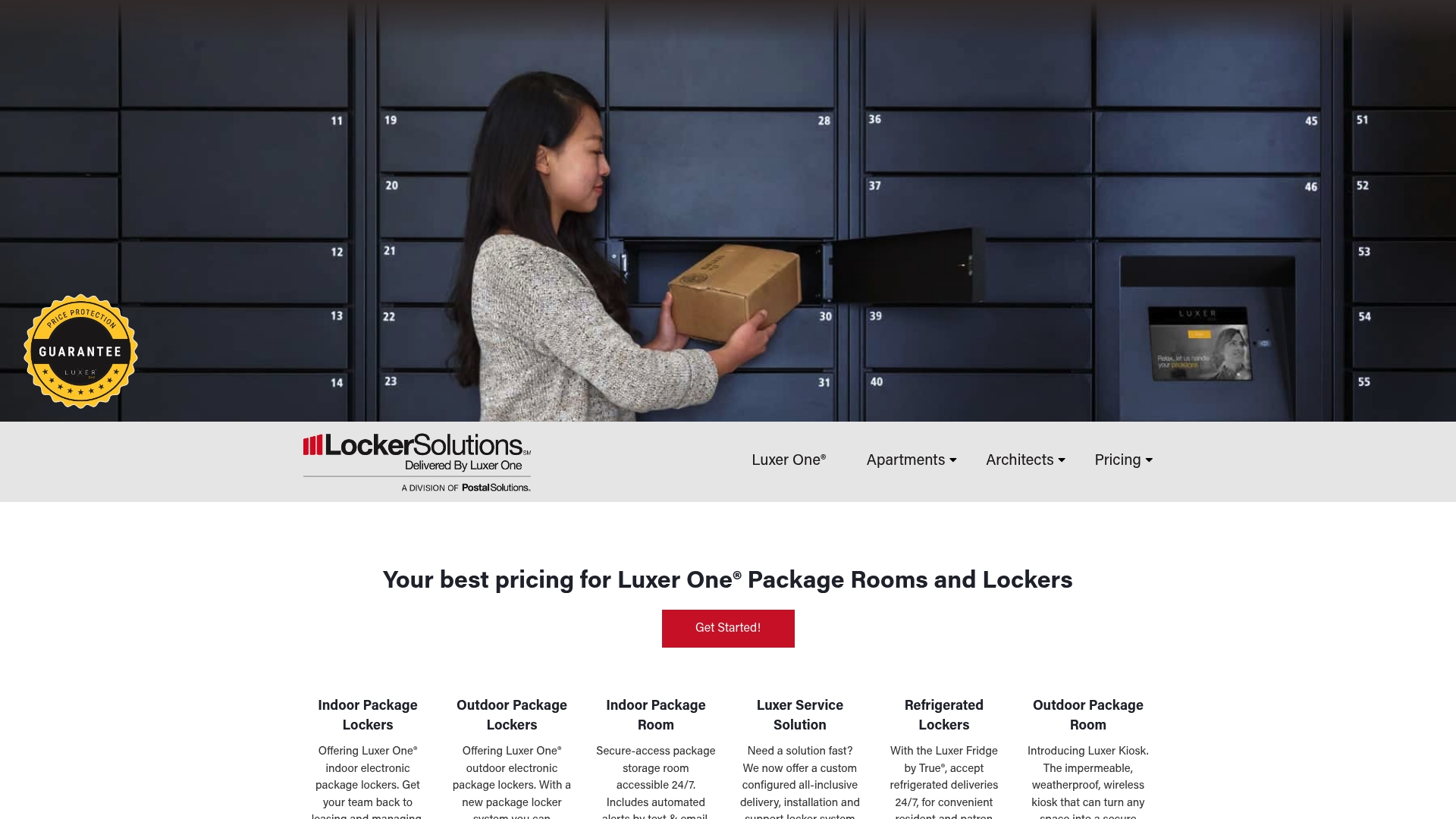
Locker Solutions provides Luxer One® automated lockers, monitored package room management, and outdoor weatherproof kiosks built specifically for multifamily properties. Every product integrates with major property management platforms and access control systems, so your overflow solution works as part of your existing operation rather than alongside it. Whether you manage a 50-unit building or a 500-unit community, Locker Solutions configures a system sized to your actual delivery volume. Explore apartment locker options or request a consultation to see which configuration fits your property’s layout and resident needs.
FAQ
What are overflow package solutions for apartments?
Overflow package solutions are systems and services that handle excess delivery volume when a property’s standard package room or locker capacity is full. They include automated lockers, off-site fulfillment, and modular storage units.
How quickly can overflow capacity be deployed?
On-demand overflow capacity activates within days to meet sudden demand spikes. Rapid deployment options avoid the need for permanent infrastructure or additional staff hiring.
Do automated lockers reduce package theft?
Yes. Automated lockers provide 24/7 secure resident access and reduce both package theft and lobby congestion by eliminating unattended package staging in common areas.
What is the most cost-effective overflow solution for smaller properties?
Combining a digital package log with a repurposed storage room covers most overflow scenarios for smaller buildings at low cost. Adding a compact locker unit becomes cost-effective once manual handling exceeds roughly 10 staff hours per week.
How does technology integration improve overflow management?
Integration connects your overflow solution to access control, carrier tracking, and resident notification systems. That connection eliminates manual data entry, reduces missed pickups, and gives you volume data to forecast future spikes.
Recommended
- Why Package Solutions for Residential Properties Matter — Locker Solutions Blog
- Package security for multifamily: Why it matters — Locker Solutions Blog
- Apartment package solutions terminology guide — Locker Solutions Blog
- Secure Package Pickup Workflow for Multifamily Properties — Locker Solutions Blog
Ready for a Luxer One® package locker quote?
Tell us your unit count and we'll send right-sized pricing with a fast response time.
Get my free quote