May 24, 2026
Why Package Solutions for Residential Properties Matter
Discover why package solutions for residential properties are essential to prevent theft, save costs, and boost tenant trust today!
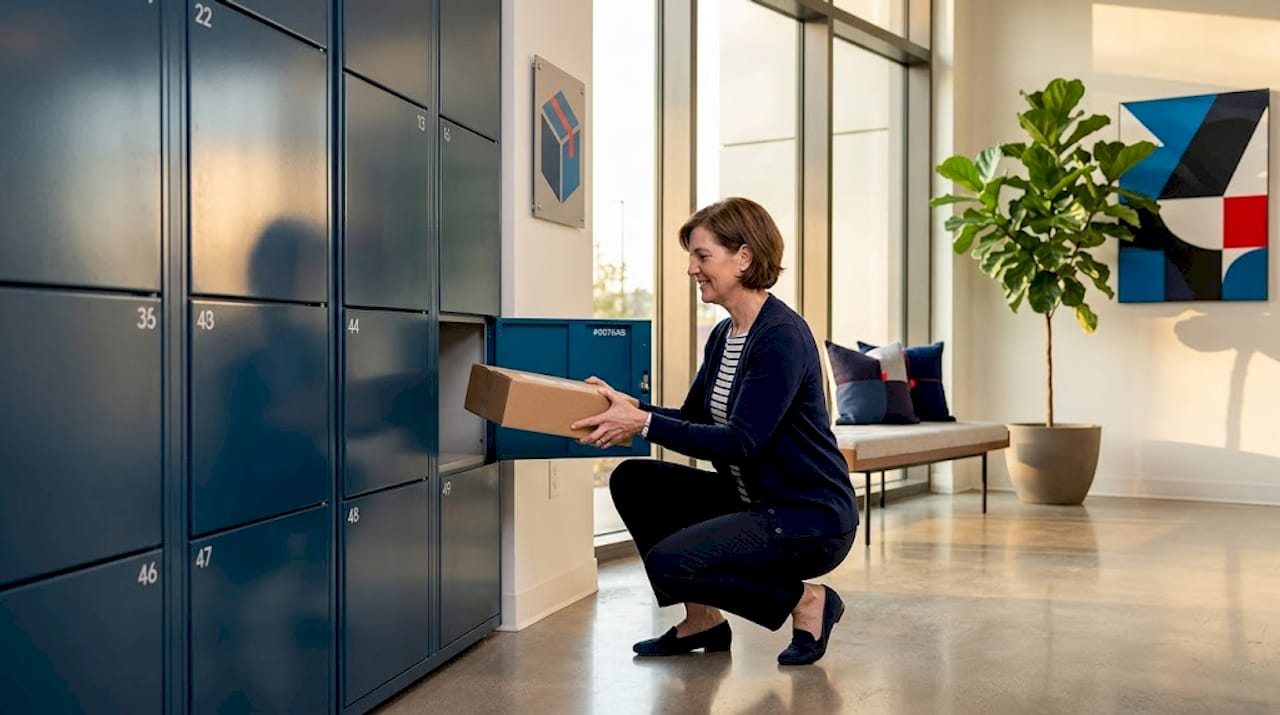
Multifamily properties are drowning in packages. The numbers make the case without any editorial help: Americans lost $12.8 billion from roughly 228 million stolen packages in 2025, hitting nearly 30% of all U.S. households. For property managers already stretched thin, this is not a background problem. It is a daily operational crisis that affects staff hours, resident trust, and lease renewal rates. Understanding why package solutions for residential properties have become non-negotiable infrastructure is the first step toward fixing the problem for good.
Table of Contents
- Key takeaways
- Why package solutions for residential properties are now critical
- Types of package solutions: lockers, rooms, and hybrids
- How package solutions reduce staffing burdens
- How package solutions improve resident satisfaction
- Strategic planning for package solution implementation
- My take on where package management goes wrong
- See how Locker-solutions handles this for multifamily properties
- FAQ
Key takeaways
| Point | Details |
|---|---|
| Package theft is a billion-dollar problem | One in three households was hit in 2025, making theft prevention a baseline property requirement. |
| Automation cuts staffing costs dramatically | One 400-unit building reduced package staff from 12 to 2 after installing a secure automated system. |
| Resident decisions hinge on package convenience | 85% of renters say package handling influences whether they sign or renew a lease. |
| Hybrid systems outperform single solutions | Combining lockers with package rooms handles overflow and oversized deliveries that lockers alone cannot. |
| Package management is core infrastructure | Treating it as an afterthought costs properties in turnover, theft exposure, and unnecessary staff overhead. |
Why package solutions for residential properties are now critical
The sheer volume of deliveries hitting multifamily buildings today would have seemed absurd a decade ago. In a 400-unit property, daily deliveries average 187 packages, climbing to 208 during peak periods like the holidays. That is not a temporary spike. It is the new baseline, and most properties are still managing it with clipboards, back-office shelving, and overextended leasing staff.
The operational strain is measurable and significant. When packages pile up in a leasing office, staff spend hours logging, sorting, and notifying residents. That time is pulled directly away from leasing tours, maintenance coordination, and resident engagement. The work is repetitive, error-prone, and frankly demoralizing for property teams who were hired to do something more meaningful.
Space is equally problematic. Ad hoc storage in mail rooms or behind the front desk was never designed to handle today’s volume. Oversized deliveries from furniture and appliance retailers make it worse. A 60-inch television does not fit in a standard mailroom cubby, and it definitely cannot sit in a hallway without becoming a liability.
The financial exposure from theft is what tends to shock property owners most. When retailers absorb $7.9 billion in refunds and replacements due to stolen packages, residents who experience repeated losses do not blame shipping carriers. They blame the property for not providing a secure receiving environment. That perception gap is a direct threat to renewals.
Pro Tip: Track your staff’s weekly package-handling hours for just one month. Most property managers are stunned to discover it consumes 15 to 20 hours of labor per week in a mid-size building.
Types of package solutions: lockers, rooms, and hybrids
Choosing the right package management system starts with understanding what each format actually does, not just what it looks like in a brochure.
Parcel lockers use fixed, individual compartments. Each delivery goes into a dedicated unit, and the resident receives a unique code to retrieve it. This format works well for properties with moderate, predictable volume and standard-size deliveries. Security is strong at the individual compartment level because no two residents share access to the same space. The limitation is inflexibility. A standard locker bank cannot accommodate a large package, and if too many residents fail to pick up promptly, the system saturates fast.
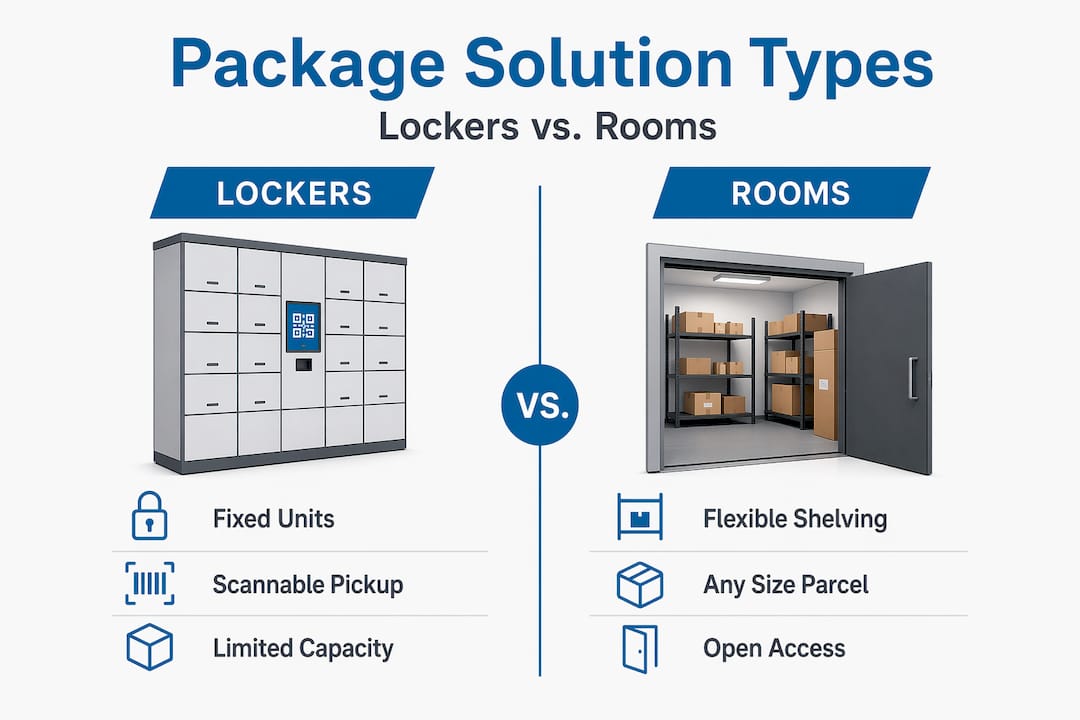
Package rooms operate differently. Package rooms offer flexible shelving without fixed size limits, making them suited for high-volume properties and buildings that regularly receive oversized deliveries. Access is controlled at the room level rather than the compartment level, typically through electronic entry, video monitoring, and resident-specific access codes. The trade-off is that room-level security is slightly less granular than individual locker security, though modern systems with video surveillance close most of that gap.
Here is a practical comparison to guide your thinking:
| Feature | Parcel lockers | Package rooms |
|---|---|---|
| Oversized package support | Limited | Strong |
| Individual compartment security | Yes | No (room-level access) |
| Scalability for high volume | Low to moderate | High |
| Upfront cost | Moderate | Variable by size |
| Best fit | Steady, predictable volume | High or unpredictable volume |
Hybrid configurations combine both formats and represent the most practical choice for most mid-to-large properties. A locker bank handles everyday deliveries with clean individual security, while an adjoining package room absorbs overflow and oversized items. Hybrid systems avoid locker saturation that occurs during lease-up peaks or holiday seasons. You get the security precision of lockers with the capacity flexibility of rooms. It is the format that scales with your property instead of forcing you to retrofit constantly.
For a detailed breakdown of how these formats compare for different building types, the parcel lockers guide for property managers at Locker-solutions is worth reading before you finalize any configuration.
How package solutions reduce staffing burdens
The operational efficiency argument for package solutions is not theoretical. It is documented in real properties with real numbers.
One case study tells the story clearly. After a 400-unit building installed a 24/7 secure package room with automated pickup, the results were immediate. Package staff dropped from 12 to 2, and resident wait times fell by 600%. Ten full-time positions redirected to other property needs. That is not a marginal efficiency gain. It is a structural transformation in how the property operates.
Here is why the numbers move so dramatically:
- Automated delivery workflows guide carriers directly to the locker or room, removing staff from the intake process entirely.
- Real-time resident notifications eliminate the “did my package arrive?” calls that clog the leasing office phone line every afternoon.
- Self-service pickup means residents retrieve packages on their own schedule, 24 hours a day, without staff assistance.
- Digital logging and chain of custody replace paper sign-in sheets and manual inventory checks with automatic records.
- Carrier compliance tools built into many modern systems train delivery drivers to use the correct workflow, which cut staff handling by 80% in documented cases.
The payroll savings alone often justify the system within a year or two, depending on property size. But the less-discussed benefit is staff morale. When a leasing agent is not spending three hours a day sorting packages, they are available to do the work that actually drives revenue, such as tours, follow-ups, and resident relationship management.
Pro Tip: When evaluating package solutions, ask vendors specifically about carrier compliance tools. A system your delivery drivers do not use correctly is a system that still requires staff intervention.
How package solutions improve resident satisfaction
Property managers sometimes treat package management as a back-end operational issue. Residents experience it as a front-end quality-of-life issue. That gap in perspective is where renewal decisions get lost.
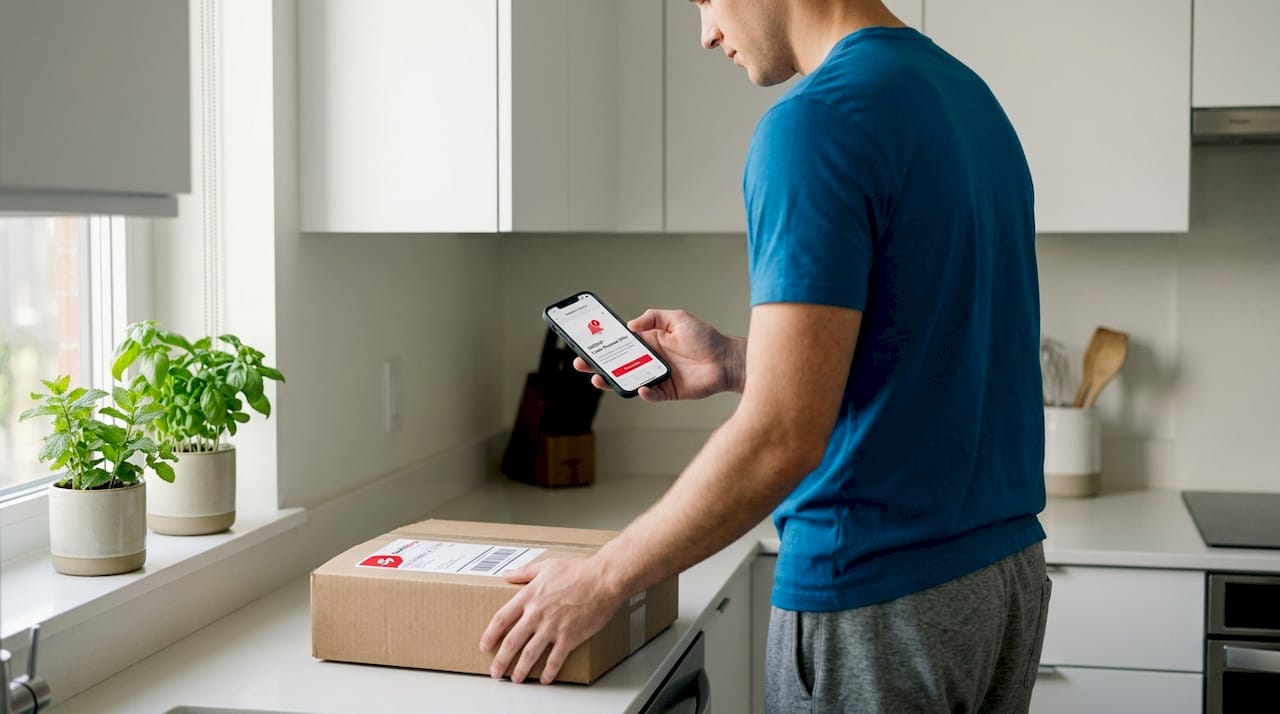
85% of renters say package convenience influences their leasing decisions, and 20% of renewals are swayed directly by how well a property handles package delivery. When you consider the cost of turning over a unit, including vacancy, cleaning, leasing commissions, and concessions, retaining a resident by offering excellent package management is one of the most cost-effective investments a property can make.
Security plays a direct role in satisfaction. Residents who have experienced package theft or who have watched deliveries pile up in an unsecured lobby do not feel good about their building. They feel exposed. A visible, well-managed locker system or monitored package room signals that the property takes security seriously, which changes the emotional calculus of living there.
The privacy and autonomy factors are significant too. Resident adoption of smart lockers is strongly driven by the ability to pick up packages without interacting with staff or neighbors. That preference for low-contact, self-directed pickup is not just a pandemic-era quirk. It reflects a genuine shift in how residents want to engage with their building services.
“The best amenity is one that removes friction from daily life. Package pickup, done right, is invisible. Done wrong, it becomes a daily reminder that your property isn’t keeping up.”
For a concrete look at how package management drives resident satisfaction and renewals, Locker-solutions has published data-backed guidance specifically for multifamily operators.
Strategic planning for package solution implementation
Choosing a system is the easy part. Deploying it so it actually works at scale requires planning that most properties underestimate.
Capacity planning is the first decision point. Calculate your average daily volume and then model peak scenarios. A system that works fine in October will fail in mid-December if you have not built in overflow capacity. The cost of under-building your package infrastructure is paid in staff overtime, resident complaints, and lockers that stay jammed with uncollected items.
Key strategic considerations before implementation:
- Map your delivery patterns. Understand not just volume but time-of-day concentration. If 60% of deliveries hit between 10 a.m. and 2 p.m., your intake workflow needs to handle that surge without bottlenecks.
- Account for oversized deliveries. Any property with residents who order furniture, fitness equipment, or appliances needs a package room component. Lockers alone will fail here.
- Train your carriers. Driver workflow compliance is a major predictor of system success. Work with your vendor on carrier onboarding protocols from day one.
- Plan for your resident demographics. A tech-forward resident base will adopt smart lockers quickly. A mixed or senior demographic may need more support and simpler interfaces.
- Build in scalability. A hybrid locker plus room configuration gives you room to grow without replacing your entire system when volume increases.
The following table outlines how property size should generally map to solution type:
| Property size | Recommended approach |
|---|---|
| Under 100 units | Smart parcel locker bank |
| 100 to 300 units | Locker bank with overflow package room |
| 300 to 500 units | Hybrid system with automated package room |
| 500+ units | Full automated package room plus locker annexes |
Pro Tip: Do not design your package infrastructure around today’s volume. Project 18 to 24 months forward using your building’s growth rate. Systems that are right-sized at installation become bottlenecks within two years if lease-up continues.
My take on where package management goes wrong
I’ve spent a lot of time talking to property managers who are frustrated with their package solutions, and the failure pattern is remarkably consistent. The mistake is not choosing the wrong technology. It is treating the installation as the finish line instead of the starting point.
I’ve seen properties invest in excellent locker systems and then watch them fail within six months because nobody trained the carriers, nobody set up the notification workflows properly, and nobody told residents how to use them. The technology was fine. The implementation was absent.
The other misconception I encounter regularly is the belief that a fully automated system eliminates the need for any human involvement. It does not. Package management is core property infrastructure that affects cost, revenue, and resident satisfaction simultaneously. What automation does is reduce the labor intensity dramatically and free your team to focus on exceptions rather than routine handling. You still need someone to manage carrier escalations, handle misdelivered items, and respond when a resident cannot access their locker at 11 p.m.
What I’ve found actually separates high-performing package operations from struggling ones is resident-centric design. The properties that get this right put the pickup experience first. They ask: “Is this intuitive for a resident who has never used this system before, at 7 a.m. before coffee?” Perceived ease of use and privacy are what drive resident adoption, not feature lists. The properties that internalize this design principle see faster adoption, fewer support tickets, and noticeably higher satisfaction scores.
Package management is no longer a background amenity. In a competitive multifamily market, it is a differentiator that residents notice, talk about, and factor into renewal decisions. Treat it accordingly.
— Craig
See how Locker-solutions handles this for multifamily properties
If the case for dedicated package infrastructure is clear and you are ready to explore specific configurations for your property, Locker-solutions offers the full range of what multifamily properties actually need. Their product lineup through Luxer One® includes indoor and outdoor electronic package lockers, refrigerated storage for grocery and meal kit deliveries, automated package rooms, and weatherproof kiosks built for varied climates.
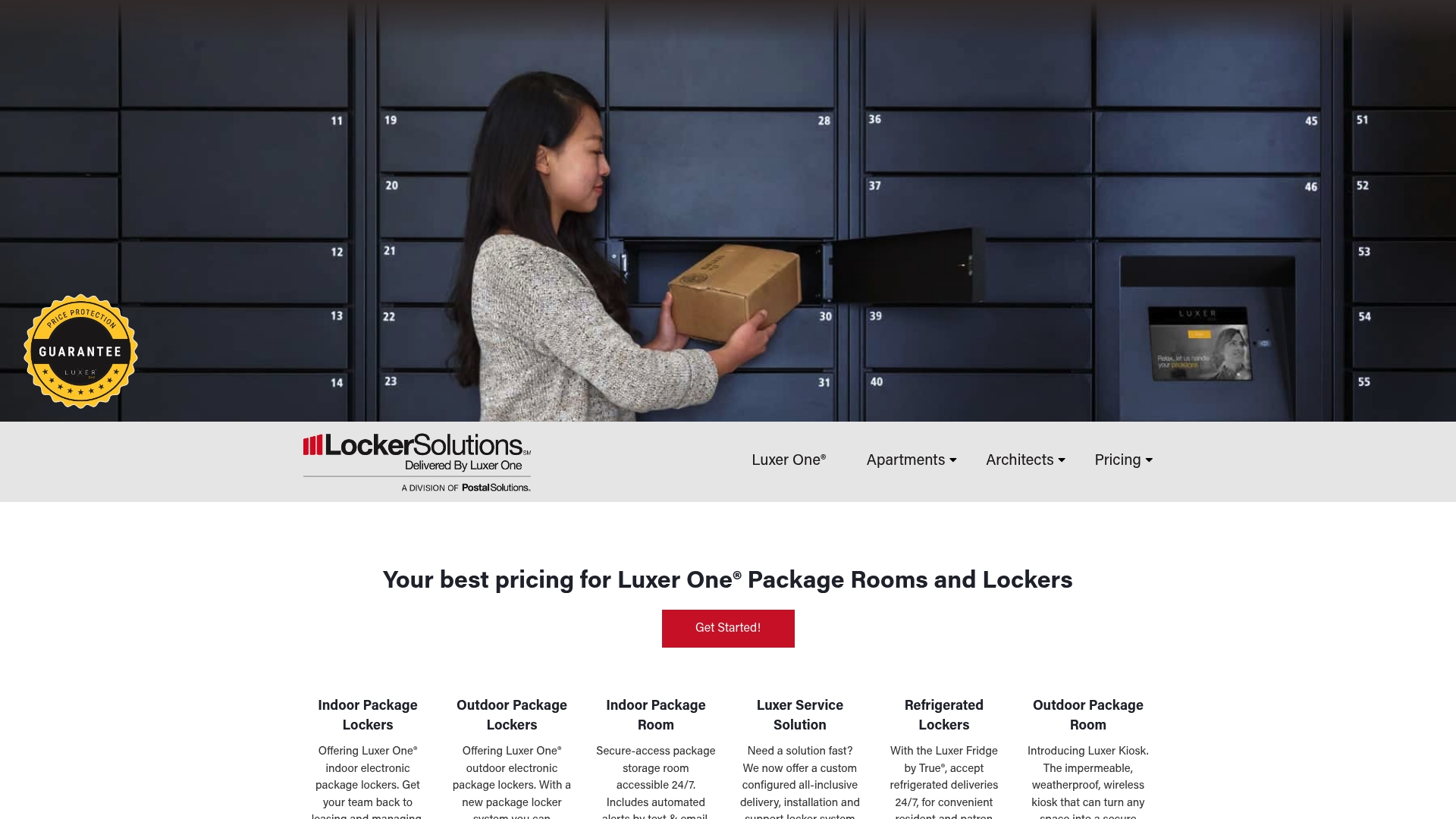
Every configuration supports automated delivery workflows, real-time resident alerts, and video surveillance integration. The automated package rooms guide covers exactly how these systems are deployed in buildings of different sizes and layouts. For properties that need full-service support, the package room management service takes ongoing management off your plate entirely. Custom configurations, rapid deployment, and dedicated maintenance support are standard, not optional add-ons. Visit Locker-solutions to request a consultation or explore products suited to your property’s scale and delivery patterns.
FAQ
Why do multifamily properties need dedicated package solutions?
Without a dedicated system, package handling falls to leasing staff, consumes significant labor hours, and leaves residents exposed to theft. A dedicated solution removes staff from the intake process and secures every delivery until pickup.
What is the difference between parcel lockers and package rooms?
Parcel lockers use fixed individual compartments best for moderate, standard-size deliveries, while package rooms offer flexible shelving suited to high volume and oversized items. Many properties use both in a hybrid configuration.
How much can a package solution reduce staffing costs?
Documented cases show property teams reducing package staff from 12 to 2 after implementing an automated package room, representing substantial payroll savings at mid-to-large properties.
Do package solutions actually affect lease renewals?
Yes. 20% of lease renewals are influenced by how well a property handles package delivery, making it a measurable factor in resident retention decisions.
What drives residents to actually use smart locker systems?
Resident adoption is primarily driven by perceived convenience, privacy during pickup, and 24/7 access, not the sophistication of the technology itself. Simple, intuitive systems with reliable notifications see the fastest adoption rates.
Recommended
Ready for a Luxer One® package locker quote?
Tell us your unit count and we'll send right-sized pricing with a fast response time.
Get my free quote