September 23, 2026
Site Planning First: Parking Garage Lockers for Property Teams
A deployment-first guide for multifamily property teams on site planning, ADA reach, sizing, power, and ROI for parking garage parcel lockers. 2–6 week...
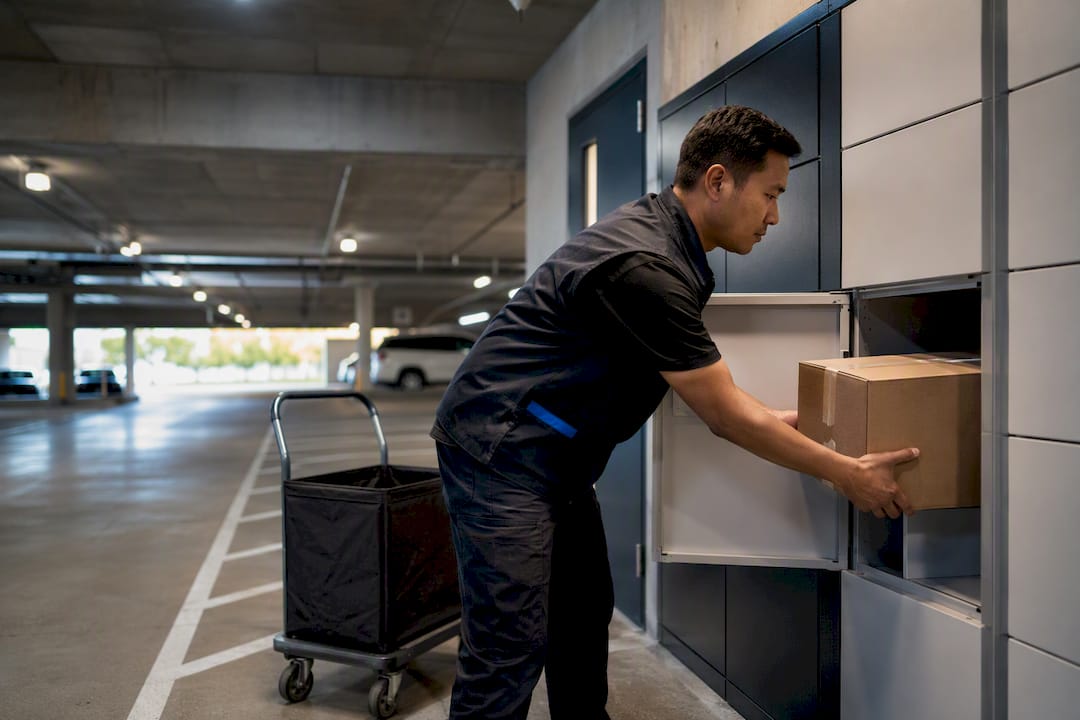
Weatherproof smart parking garage lockers are the right call for most properties over roughly 100 units, since garage bays offer covered, security-camera-adjacent space that carriers already pass through daily. Smaller communities or buildings with heavy grocery and oversize volume often do better with an automated package room instead. Either way, Locker Solutions can typically install a full system in weeks, and the payoff shows up fast in staff hours no longer spent chasing packages.
TL;DR:
- The USPS now requires a minimum of one parcel locker per five mail compartments to manage delivery volumes effectively.
- Placement near high-traffic entry points, such as garage entrances or elevator lobbies, significantly increases locker usage and resident adoption.
- Lockers should be sized based on unit count, package history, and seasonality, with oversize and refrigerated compartments for larger deliveries and perishables.
- ADA compliance depends on proper hardware installation, including accessible compartments, low-force controls, and measurements within the 15 to 48 inches reach range.
- Outdoor-rated units with corrosion-resistant finishes, proper drainage, and dedicated power circuits ensure durability against climate and delivery needs.
Table of Contents
- What Do Parking Garage Lockers Actually Manage?
- Where Should Garage Lockers Go for Best Carrier Access?
- How Many Compartments and What Sizes Do You Need?
- What ADA Rules Apply to Garage Locker Controls?
- What Technical Specs Matter for Outdoor Garage Installs?
- What Is the Real ROI of Garage Package Lockers?
- Installation Checklist: What to Confirm Before Move-In
- Locker Solutions’ Perspective: Common Pitfalls and What to Ask Vendors
- How Locker Solutions Gets Garage Lockers Installed Fast
- Sources
- FAQ
What Do Parking Garage Lockers Actually Manage?
This guide covers electronic parcel lockers, weatherproof kiosks, refrigerated compartments, and automated package rooms placed in or near a garage, not personal storage units for tenants’ belongings. The workflow is the same across form factors: a carrier scans a package at the property, the system assigns an open compartment sized to fit it, the resident gets a text or app notification with a code, and pickup happens on the resident’s schedule, day or night.
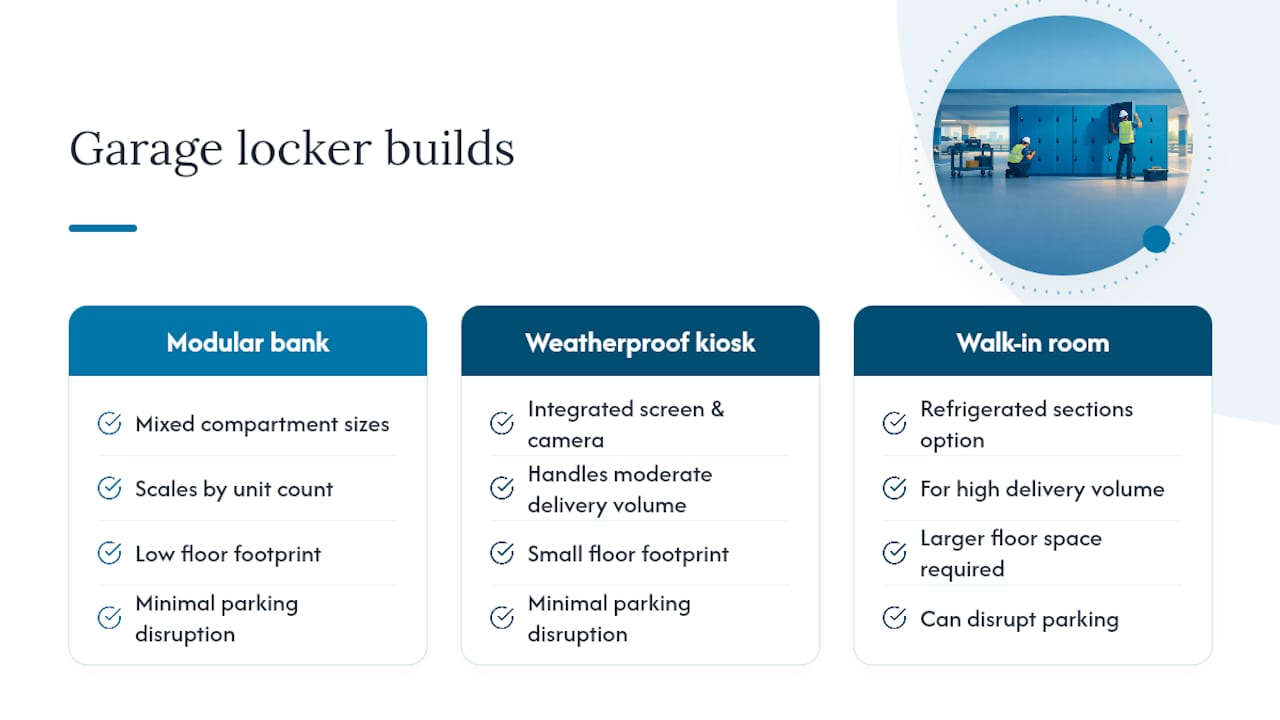
In garage settings, that usually means one of three builds: a modular locker bank with mixed compartment sizes, a weatherproof kiosk with an integrated screen and camera, or a walk-in package room with refrigerated sections for perishables. The right choice depends on unit count, delivery volume, and how much floor space the garage can spare without disrupting parking.
Where Should Garage Lockers Go for Best Carrier Access?
Placement decides whether a locker system gets used or gets ignored. Put the bank near a garage entrance, elevator lobby, or mail area, since placement near high-traffic entry points and correct compartment mix drives higher throughput and resident adoption than units tucked into a far corner. A locker bank nobody walks past becomes a locker bank nobody uses.
A few placement priorities matter more than the rest:
- Keep the unit clear of parking lanes, ramps, and fire lanes so it never becomes a liability.
- Confirm a delivery vehicle can pull up within a short walk, or coordinate carrier routing directly with your local post office when USPS placement questions come up.
- Route lighting and CCTV sightlines to the locker face, not just the surrounding area.
- Plan for a drainage slope and a solid mounting pad before hardware arrives.
Pro Tip: Walk the proposed site with a delivery driver, not just a leasing agent, before you finalize placement. Drivers will spot access problems, blind turns, and awkward drop points that look fine on a floor plan but slow every single delivery in practice.
How Many Compartments and What Sizes Do You Need?
Size the system to unit count and package history, not guesswork. USPS now requires new and remodeled apartment buildings to provide parcel lockers at a ratio roughly equivalent to one per several customer mail compartments, up from the older 10-to-1 ratio, and that revised standard is a reasonable floor for any garage deployment, even where it isn’t strictly required.
Compartment mix matters as much as total count:
- Small and medium compartments handle the bulk of e-commerce volume.
- Large and oversize compartments absorb furniture-adjacent deliveries and multi-box orders, and skipping them is the fastest way to get overflow at the leasing office.
- Refrigerated compartments matter wherever grocery and meal-kit delivery is common.
Build in seasonal headroom. Industry advisory data shows operators typically use multiple intake methods on average rather than relying on just one product, which is a strong argument for sizing a locker bank for normal months and pairing it with a package room or overflow shelving for November and December.
What ADA Rules Apply to Garage Locker Controls?
Accessibility compliance isn’t optional, and it’s cheaper to design in than to retrofit. The Access Board sets operable-part reach ranges between 15 inches and 48 inches, along with clear floor space and side or forward approach requirements that apply directly to locker touchscreens, keypads, and door handles.
Design decisions that keep you compliant:
- Reserve a portion of compartments, including at least one accessible size tier, within that 15" to 48" reach band.
- Use push-plate or low-force controls rather than small pinch-grip latches, since operable-parts guidance favors simple, low-force activation over fine-motor mechanisms.
- Document every measurement and approach clearance during design review, not after installation.
That 15" to 48" reach window is the single most-cited number in accessibility audits of locker installations, and it’s worth printing out and taping to the wall during your walkthrough. A detailed breakdown of ADA locker requirements covers the code language in full, and pairing that with early architectural review, similar to how ADA bathroom fixture placement gets flagged before pour dates in other trades, avoids expensive rework after concrete is already down.
What Technical Specs Matter for Outdoor Garage Installs?
Garage bays aren’t climate-controlled offices, so hardware choices need to reflect that. Outdoor-rated enclosures with corrosion-resistant finishes hold up against exhaust residue, road salt tracked in on tires, and temperature swings that indoor units never face. If grocery or meal-kit pickup is part of the plan, refrigerated compartments need their own power circuit sized for continuous run time, not just standard outlet capacity.
Power and connectivity should be settled before the concrete pad goes in:
- Prewire a dedicated, outdoor-rated circuit rather than relying on a shared garage outlet.
- Plan primary network connectivity plus a cellular backup, since a garage-level outage should never take the whole locker bank offline.
- Position CCTV and lighting to cover the full locker face and the approach path.
Pro Tip: Ask your installer for remote diagnostics as a standard feature, not an add-on. A compartment jam or connectivity drop found by a system alert saves a maintenance trip that an angry resident text would otherwise trigger.
What Is the Real ROI of Garage Package Lockers?
The staff-time argument is the one that gets locker projects approved. Industry reporting confirms smart lockers meaningfully cut front-office package handling time and improve resident convenience, though the same reporting is candid that lockers alone don’t fully absorb holiday-season surges without support.
Budget across four categories: hardware and compartment mix, installation labor, ongoing software or monitoring subscription, and routine maintenance. Payback typically comes from redirected staff hours, not from a locker fee alone, so estimate the leasing team hours currently spent logging and handing off packages and compare that against the subscription cost.
The most common failure mode isn’t the hardware, it’s carrier behavior. Carrier adoption of the locker workflow is frequently the weakest link in a deployment, and properties that skip driver training or clear signage end up with packages dumped at the leasing office anyway. Pairing a locker bank with an occasional overflow package room, rather than betting everything on one system, is the more resilient setup.
Installation Checklist: What to Confirm Before Move-In
A rushed install creates rework that costs more than the delay would have. Work through these steps in order:
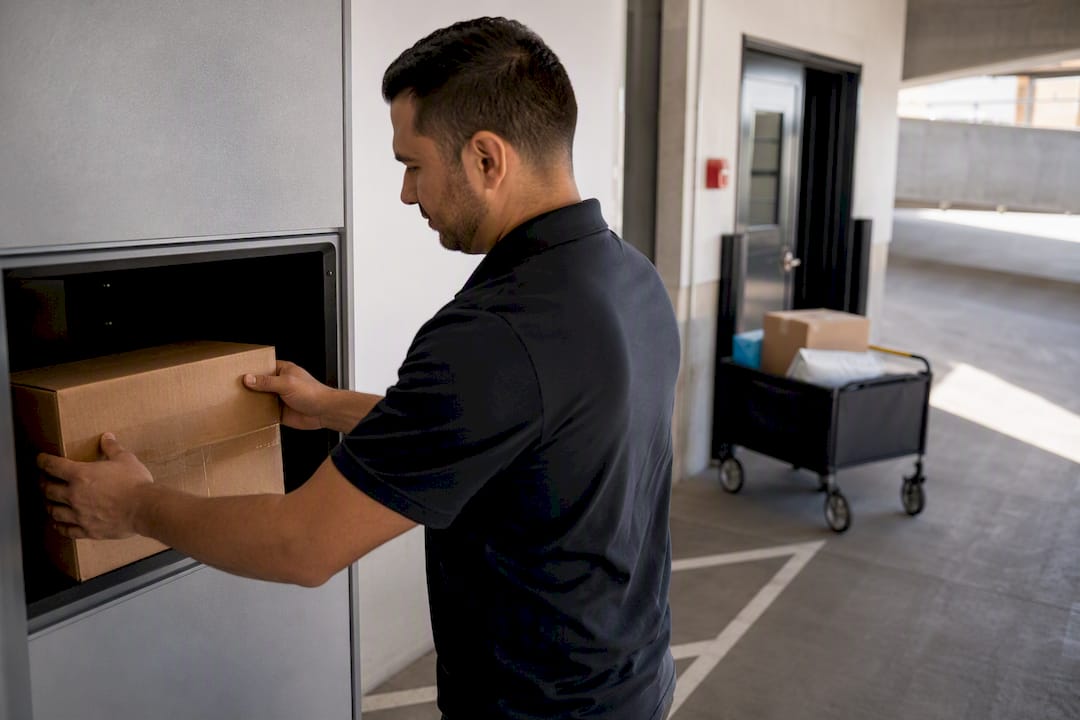
- Confirm the concrete pad or mounting surface, clearance dimensions, ADA path of travel, drainage slope, and lighting plan.
- Prewire power and network conduit to the exact locker footprint, and confirm the circuit is outdoor-rated before hardware arrives.
- Coordinate carrier training and post exterior signage that shows drivers exactly where to scan and drop.
- Lock in a maintenance service-level agreement with remote diagnostics so issues get flagged before residents notice.
Early site surveys catch power routing and drainage problems before they become change orders, and that single step prevents most of the schedule slips property teams run into.
Locker Solutions’ Perspective: Common Pitfalls and What to Ask Vendors
The mistake we see most often is undersizing for the sake of a lower quote, then paying for it in overflow packages at the leasing desk within two months. Poor carrier access and skipped maintenance planning follow close behind. Rapid, locally supported installation cuts that disruption window, since a property running for weeks without a working system is a property still paying staff to manage packages by hand.
Before signing with any vendor, ask about lead time, financing terms, service-level response times, local maintenance coverage, and how easily the system expands if unit count grows.
— Locker Solutions
How Locker Solutions Gets Garage Lockers Installed Fast
Locker Solutions is the direct route to a working system without months of vendor back-and-forth. As a Luxer One® partner, the company installs indoor and outdoor parcel lockers, refrigerated compartments, and full package room management with white-glove setup handled locally, not shipped hardware and a manual.
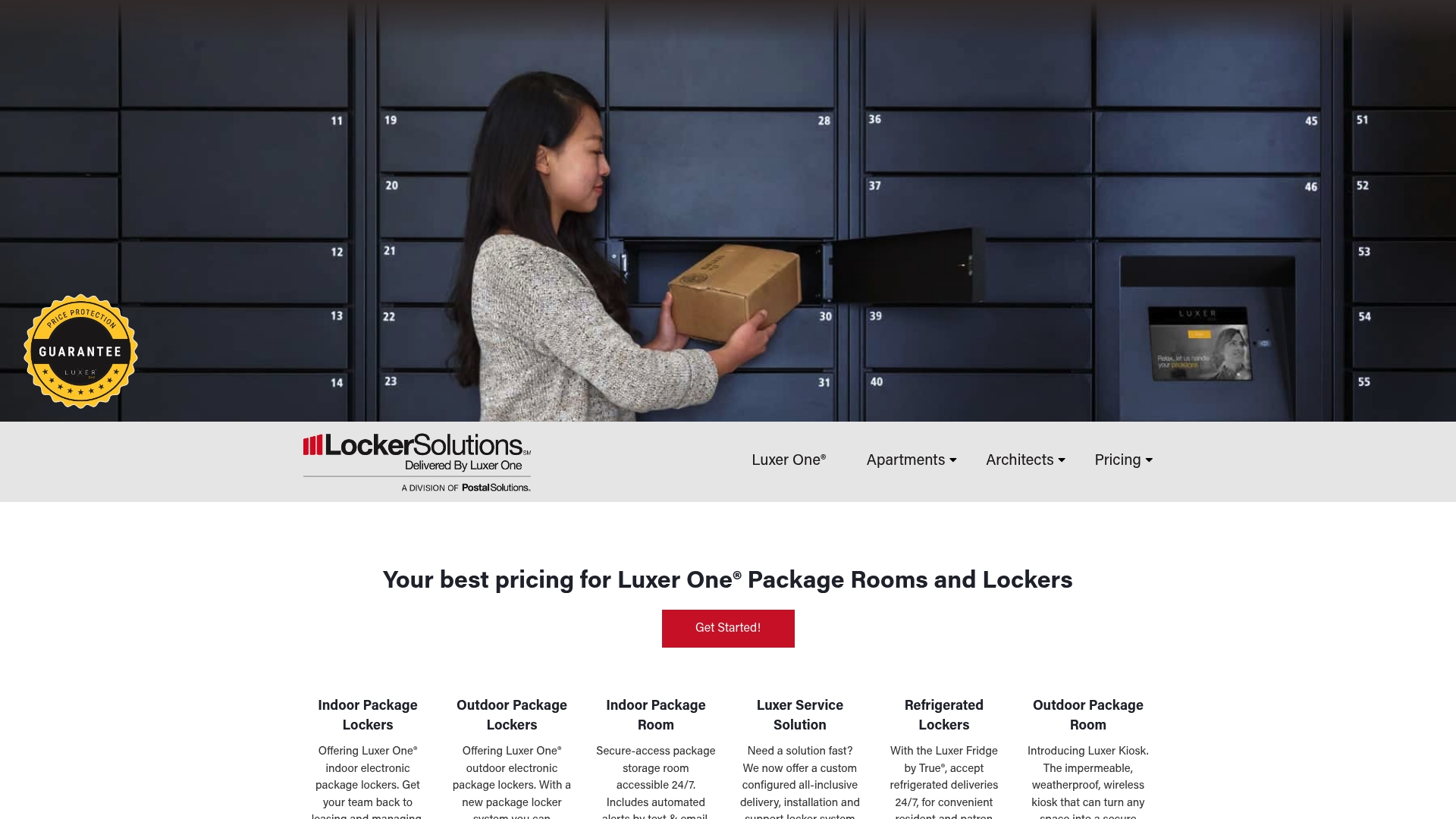
Properties typically see installation completed in two to six weeks, backed by 100% financing options and a written price protection guarantee, so budgets don’t shift mid-project. For garage or exterior deployments specifically, the outdoor kiosk lineup is built for weatherproof durability without sacrificing the reach-range and control specs accessibility review requires. If your property needs unified credentialing across parking access and package pickup, Luxer Access folds both into one resident credential.
Ready to move forward? Request a site survey and sizing assessment through Locker Solutions’ product overview to get a real installation timeline for your property instead of a generic estimate.
Sources
- Parcel lockers – USPS Employee News
- ADA Accessibility Guidelines — Chapter 4 (Access Board)
- From package delivery to parking: How tech is changing multifamily communities — Multifamily Executive
FAQ
How Many Parking Garage Lockers Does a Property Need?
Size to unit count and delivery history first, then use the USPS ratio of one parcel locker per five mail compartments as a baseline floor. Properties with heavy e-commerce volume or grocery delivery should add oversize and refrigerated compartments beyond that minimum.
Are Parking Garage Lockers ADA Compliant by Default?
No, compliance depends on installation choices, not the hardware alone. Controls and at least some compartments need to sit within the 15-inch to 48-inch reach range the Access Board specifies, with clear floor space and low-force operable parts.
Do Garage Lockers Work in Cold or Wet Climates?
Yes, provided the units are outdoor-rated with corrosion-resistant finishes and proper drainage at the mounting pad. Refrigerated compartments need a dedicated circuit sized for continuous operation regardless of outside temperature.
How Fast Can Locker Solutions Install a Garage Locker System?
Locker Solutions typically completes installation in two to six weeks from order to working system, backed by 100% financing and a written price protection guarantee. Exact timing depends on site readiness, including power, network, and pad preparation completed ahead of the install date.
Will a Locker Bank Alone Handle Holiday Package Volume?
Not reliably on its own. Industry reporting notes smart lockers recover significant staff time but don’t fully absorb peak holiday surges, which is why many properties pair a locker bank with an automated package room for overflow during the busiest months.
Recommended
Ready for a Luxer One® package locker quote?
Tell us your unit count and we'll send right-sized pricing with a fast response time.
Get my free quote