September 2, 2026
Property Managers: Package Locker RFP with Sample Clauses & Checklist
Procurement ready package locker RFP for property managers and housing authorities. Includes copy paste sample clauses, admin submission checklist,...

Property Managers: Package Locker RFP with Sample Clauses & Checklist
A procurement-ready package locker RFP locks in a carrier-agnostic, PMS-integrated locker system with enforceable service level agreements and cost transparency across the full contract term, not just the sticker price. It needs sections covering scope, hardware specs, integrations, service and warranty terms, submission rules, evaluation scoring, contract structure, and pricing format. Standards like NASPO ValuePoint cooperative agreements and vendors such as Locker Solutions give procurement teams a real benchmark for what “complete” looks like.
TL;DR:
- Clearly define the objectives, site parameters, and scope of work upfront to ensure bid comparisons are accurate and aligned with your key priorities.
- Specify measurable hardware standards such as gauge, compartment sizes, and security features to prevent vague responses and facilitate technical evaluation.
- Require documented API, integration, and carrier compatibility details to avoid vendor lock-in and ensure seamless property management system synchronization.
- Include SLA, maintenance, and warranty expectations in the contract to secure vendor responsiveness and long-term system reliability.
- Use detailed, standardized templates for costing and administrative submissions to minimize errors and streamline bid evaluation.
Table of Contents
- What to Define First: Objectives, Sites, and Scope of Work
- Technical and Hardware Specifications to Include
- Software, Integrations, and Carrier Compatibility
- Service, Maintenance, Warranties, and Life-Cycle Support
- Administrative Requirements and Submission Format
- Evaluation Criteria and Scoring Rubric
- Contract Terms, Period, and Cooperative Purchasing Options
- Budgeting and Pricing Guidance
- Sample RFP Clauses You Can Adapt
- Reducing Procurement Risk and Speeding Up Deployment
- How Locker Solutions Can Help With Your RFP
- Selected Public RFPs and Procurement Resources to Consult
- Sources
What to Define First: Objectives, Sites, and Scope of Work
Before writing a single technical requirement, decide what problem the locker system needs to solve. Resident convenience, package theft reduction, and refrigerated delivery for groceries and meal kits are different priorities that pull toward different hardware and staffing models. Vague scope language is why bids come back impossible to compare.
Nail down these basics before drafting the rest of the RFP:
- Success criteria: define what “working” looks like, such as reduced staff time spent on package handling or a target pickup rate within 24 hours.
- Site inventory: list building types, unit counts, average daily package volume per site, and whether siting is indoor, outdoor, or both.
- Delivery model: specify whether you want standalone lockers, a staffed package room, or a monitored management service, and require a pilot site if you’re uncertain which fits.
Technical and Hardware Specifications to Include
Hardware specs are where vague RFPs fall apart during evaluation, because “durable” and “secure” mean nothing without measurable requirements. Spell out cabinet gauge, compartment size ranges, and locking mechanisms so every bidder prices against the same baseline.
Require bidders to address each of the following in their technical response:
- Construction and compartment sizing: steel gauge, powder coating, and a compartment size matrix covering small parcels through oversized deliveries.
- Locking technology: PIN entry, RFID, and mobile one-time-passcode access, plus documented tamper resistance testing.
- Power and connectivity: cellular or hardwired network options, battery backup duration, and outdoor units rated for regional temperature and moisture extremes.
- Installation anchoring: bolt patterns, pad or slab requirements, and coordination needed with existing entry doors or vestibules.
- Security features: integrated video, audit logs of every locker open event, and real-time tamper alerts tied to access control.
Pro Tip: Ask bidders to submit compartment size matrices as a table, not narrative text. It makes side-by-side comparison across proposals dramatically faster during technical scoring.
Software, Integrations, and Carrier Compatibility
The software layer is where vendor lock-in quietly creeps into a contract, so the RFP has to spell out interoperability requirements instead of assuming they exist. One HACP solicitation explicitly required documented integration language so the resulting system wouldn’t become a data silo disconnected from property management software.
Require bidders to confirm, in writing:
- Open APIs and PMS integration: documented endpoints for syncing resident data and package events with your property management system.
- Single sign-on: support for SAML 2.0 or OpenID Connect so staff aren’t managing a separate login.
- Carrier agnosticism: proof of tested workflows with major carriers, not just a claim of compatibility.
- Licensing and data terms: patch cadence, who owns resident and package data, and how a breach gets reported.
Service, Maintenance, Warranties, and Life-Cycle Support
A locker system is only as good as the vendor’s response when something breaks. Housing authority solicitations for parcel lockers commonly require software subscriptions, annual preventative inspections, and on-site repair capacity as part of the base contract, not as a paid add-on.
Build these expectations into the service section:
- SLA metrics: response time windows (often 24 to 48 hours for non-emergency issues) and a stated uptime target.
- Preventative maintenance: inspection frequency and a documented spare-parts policy for high-failure components like locks and touchscreens.
- Support model: remote monitoring, on-site technician visits, or a fully monitored package room, depending on staffing level.
- Warranty terms: coverage length, what’s included, and whether replacement parts are held in regional inventory.
Administrative Requirements and Submission Format
Missing a required attachment or misnaming a file is the fastest way to get disqualified before anyone reads the technical response. Housing authority procurement teams consistently flag administrative noncompliance as a leading cause of rejected bids, ahead of any technical shortfall.
Spell out these requirements clearly enough that a first-time bidder can’t misread them:
- Required attachments: executive summary, full technical response, cost proposal on the required Excel template, and a redacted copy if your jurisdiction requires public disclosure review.
- Portal and registration rules: confirm whether bidders need SAM.gov registration, a state vendor number, or access to a specific e-procurement portal before submission.
- File naming conventions: state the exact format expected (vendor name, RFP number, document type) to avoid rejection on a technicality.
- Addenda and Q&A process: set a firm deadline for written questions, name a single point of contact, and state how addenda will be distributed to all registered bidders.
Evaluation Criteria and Scoring Rubric
A clear rubric protects both sides: bidders know what wins, and evaluators have a defensible record if a decision gets challenged. Cooperative solicitations under NASPO ValuePoint often use combined technical and cost scoring with a minimum threshold, commonly around 65% of available points, before a bid is eligible for award.
A workable rubric usually splits like this:
- Technical merit (50 to 60%): integration approach, SLA commitments, installation plan, references, and pilot performance if one was run.
- Cost (30 to 40%): total lifecycle cost using the required Excel template, scored independently of the technical volume.
- Local or set-aside participation (5 to 15%): relevant where Section 3 or similar local hiring provisions apply.
- Mandatory pass/fail items: insurance minimums, licensing, and registration status that disqualify a bid outright if missing, regardless of score.
Contract Terms, Period, and Cooperative Purchasing Options
Most public parcel locker contracts run a base term with extension options, often producing a total lifecycle around five years. The Housing Authority of the City of Pittsburgh’s parcel locker procurement follows this pattern, and addenda during the open solicitation window are common enough that bidders should expect at least one.
When drafting contract language, address:
- Term structure: state the base period plus extension options explicitly, rather than a single fixed date.
- Cooperative purchasing: if you want other agencies to piggyback on your contract, include NASPO ValuePoint or master agreement participation language upfront.
- Core clauses: insurance minimums, indemnity, termination for convenience, and a defined change order process for scope adjustments.
Budgeting and Pricing Guidance
Cost proposals need a common format or comparisons fall apart. NASPO ValuePoint solicitation documents typically separate technical and cost proposals entirely, forbidding pricing data in the technical volume so evaluators aren’t influenced by cost before scoring quality.
Structure your cost section around:
- Pricing model comparison: require bidders to quote capital purchase, lease, and subscription options separately if all three are viable for your property.
- Line-item Excel template: installation, staff training, software licensing, and remote monitoring should each appear as their own line, not bundled.
- Common cost drivers to watch: per-locker software subscription fees, network connectivity charges, and per-visit service call rates tend to be where quotes diverge most.
Sample RFP Clauses You Can Adapt
Real procurement language moves faster than anything written from scratch. Here’s a scope excerpt you can adapt directly: “Vendor shall provide electronic package lockers with carrier-agnostic intake, PMS integration via documented API, and 24/7 resident pickup access across [X] sites totaling [Y] units.”
A workable SLA clause: “Vendor shall respond to service tickets within 24 hours and resolve critical outages within 48 hours, with uptime measured monthly at no less than 99%.”
For cost instructions: “Cost proposals shall be submitted using Attachment C (Cost Template) and shall itemize hardware, installation, software licensing, and ongoing service fees separately.”
Keep in mind:
- Public RFPs frequently issue one or more addenda during the solicitation window, so build a monitoring habit into your procurement calendar.
- Base contract terms of two to three years with extension options are the norm, not the exception.
Pro Tip: Request a sample attachments pack, including scope of work, evaluation plan, and sample agreement templates, before you draft from a blank page. It saves days of rework.
Reducing Procurement Risk and Speeding Up Deployment
Every RFP that runs smoothly follows roughly the same path: internal review of goals, a draft RFP circulated for feedback, a limited Q&A window, a final RFP with an addenda period, then a pilot before full deployment. Skipping the pilot step is the single most common reason disputes surface after award, because acceptance criteria never got tested against real package volume.
A clear submission checklist and defined pilot acceptance criteria prevent most of the disagreements that derail a contract midstream. We can support this process directly, offering site surveys, a sample attachments pack, and pilot programs sized to a single building before you commit to a full property rollout.
— Locker Solutions
How Locker Solutions Can Help With Your RFP
Locker Solutions is built to answer exactly the kind of RFP outlined above, not to make you reverse-engineer requirements around a limited product line. We supply electronic smart lockers, weatherproof outdoor kiosks, refrigerated lockers, automated package rooms, and ongoing on-site package room management, all backed by nationwide installation and support teams that already understand PMS integration and carrier-agnostic workflows.
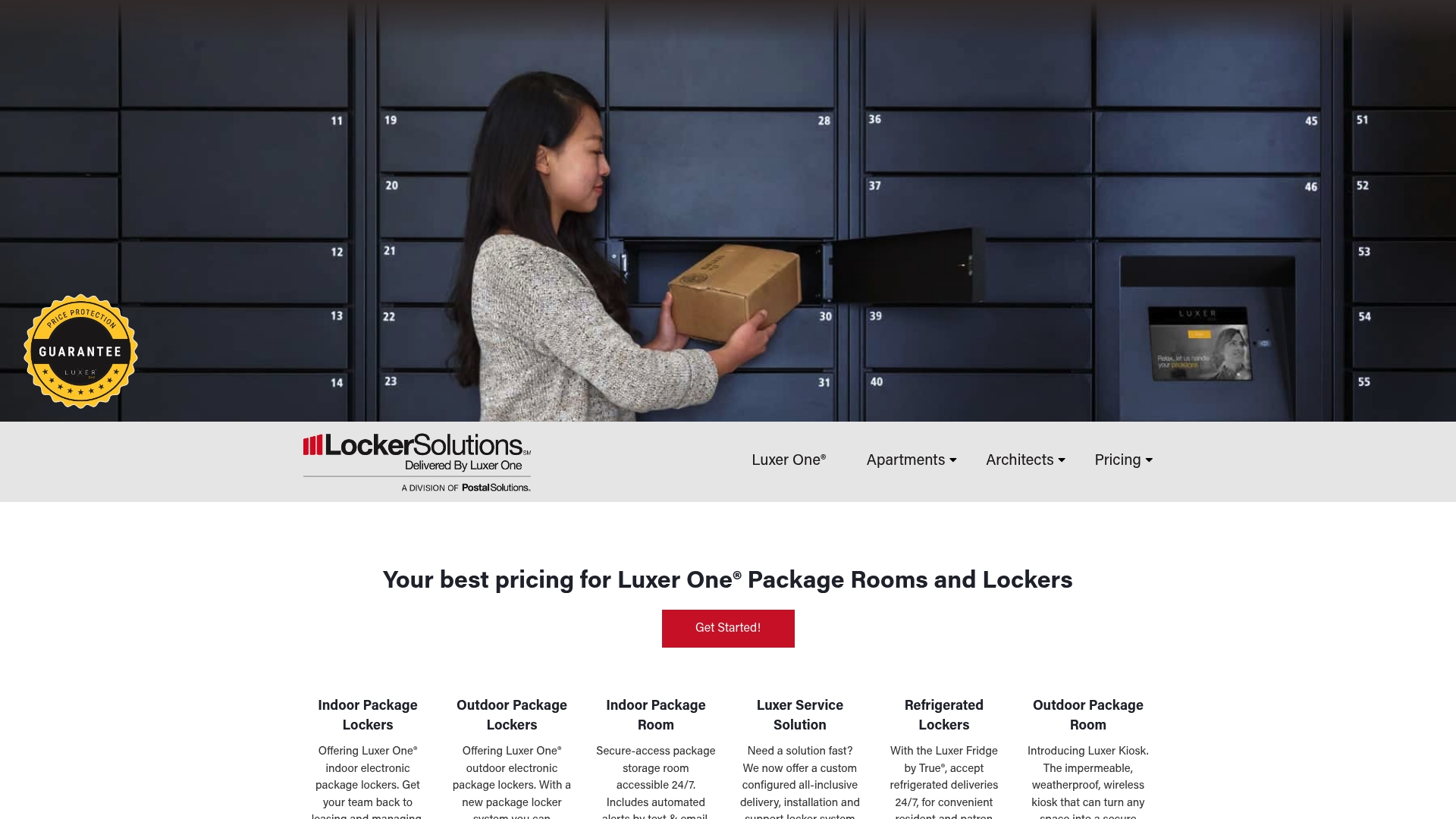
If you’re drafting a package locker RFP right now, request a sample attachments pack covering scope of work, evaluation criteria, and a sample service agreement, so your technical and cost sections start from a proven baseline instead of a blank page. You can also schedule a site survey to get realistic installation timeline estimates before the RFP goes out. Start by reviewing Locker Solutions for Apartments to see current hardware, refrigerated options, and package room management services, then reach out for pilot program details specific to your property portfolio.
Selected Public RFPs and Procurement Resources to Consult
- Parcel Locker System RFP, Housing Authority of the City of Pittsburgh: Hacp
- NASPO ValuePoint Small Package Delivery Services solicitation: Evp
- PHA Parcel Locker Services RFP (P-005431): Highergov
- Campus Delivery & Logistics Solutions RFP: eandi.org RFP document
Sources
- Parcel Locker System - Housing Authority of the City of Pittsburgh
- REQUEST FOR PROPOSALS for Small Package Delivery Services Issued by the STATE OF NORTH CAROLINA
- NASPO ValuePoint Master Agreement / solicitation document
- PHA Parcel Locker Services RFP (P-005431)
Recommended
Ready for a Luxer One® package locker quote?
Tell us your unit count and we'll send right-sized pricing with a fast response time.
Get my free quote