May 29, 2026
Explaining Package Room Solutions for Property Managers
Unlock the potential of your property with our guide on explaining package room solutions. Streamline deliveries and enhance security now!
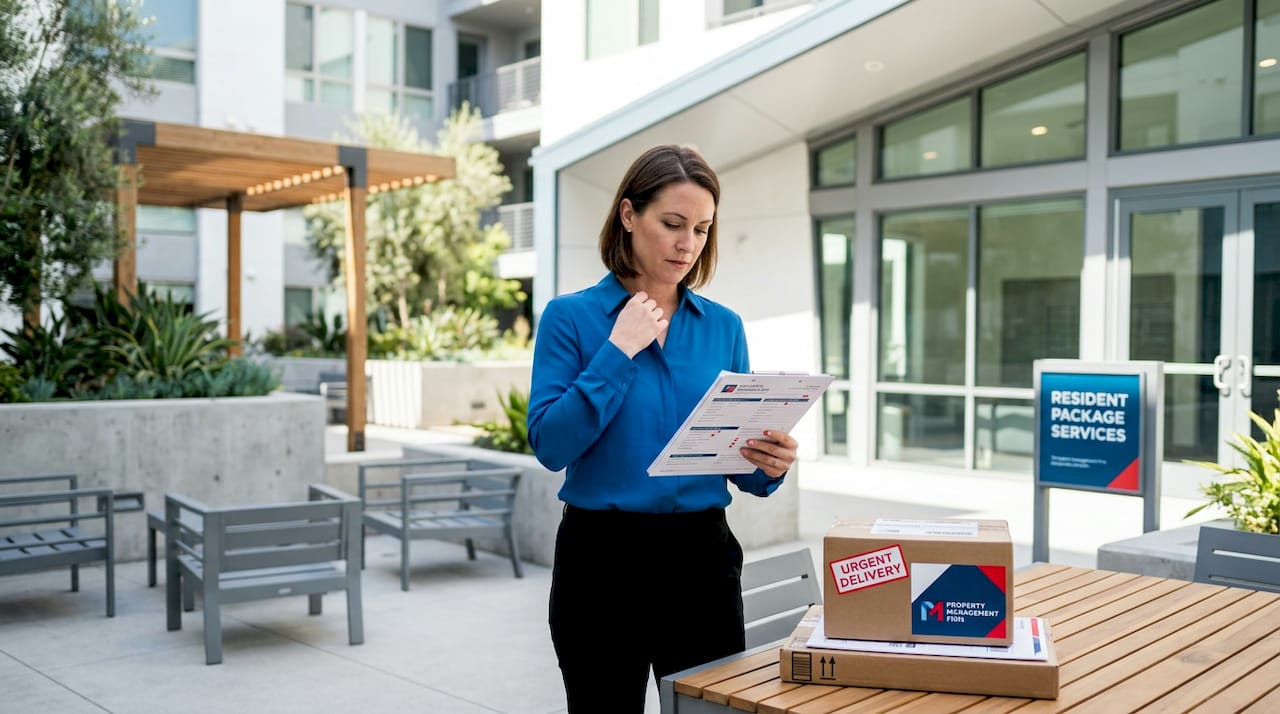
Most property managers assume a package room is just a locked closet with shelves. That assumption is costing them resident complaints, staff hours, and real security exposure. Explaining package room solutions properly means going well beyond storage. It means understanding how automated intake, carrier workflows, and real-time notification software work together to create a system that handles thousands of deliveries with minimal human intervention. This guide breaks down the technology, the models, the operational pitfalls, and the specific criteria you need to evaluate before signing any vendor contract.
Table of Contents
- Key takeaways
- What package room solutions actually are
- Types of package room models compared
- Operational challenges and what to ask vendors
- Best practices for implementing package room solutions
- How package rooms improve resident experience
- My honest take on where property managers go wrong
- See what Locker-solutions can do for your property
- FAQ
Key takeaways
| Point | Details |
|---|---|
| Package rooms are tech systems | Secure storage is only one component; software, access control, and carrier workflows drive operational success. |
| Carrier compliance is the weak link | Driver bypass behavior is the leading cause of package management failures, not hardware limitations. |
| No single model fits all properties | Unit count, volume, and resident demographics determine whether lockers, smart rooms, or hybrid models make sense. |
| Data reporting reveals performance gaps | Operational reporting helps you identify compliance failures and adjust workflows before complaints escalate. |
| Implementation requires upfront training | Carrier SOPs issued before deployment reduce errors and set the standard for consistent deliveries. |
What package room solutions actually are
A package room solution is not a room with a lock on the door. It is a combination of physical infrastructure and software that manages every stage of the delivery lifecycle: intake, logging, resident notification, and pickup. Automated smart package rooms pair a secured physical space with intelligent software that logs deliveries, notifies residents in real time, and tracks every package from drop-off to collection.
The intake workflow looks like this: a carrier arrives, scans a barcode or uses a PIN to gain temporary access, drops the package, and the system automatically records the event. The resident gets an instant alert by text or app notification. No front desk involvement. No sticky notes on doors. The entire transaction is logged with a timestamp and, in most cases, a camera image.
More advanced deployments go further. Some systems now incorporate computer vision and optical character recognition to read shipping labels without manual scanning. AI-driven tracking can flag anomalies, such as a package left in the wrong zone or a carrier who accessed the room but recorded no delivery. These features matter because they give you an audit trail you can actually use.
Key technology components in modern package room solutions include:
- Cloud-based access control granting carriers temporary, tracked entry through PIN codes, mobile apps, or video intercoms
- Automated notifications sent by text, email, or app push alert the moment a package is logged
- Video surveillance integration capturing timestamped footage of every delivery event
- AI and optical recognition reading labels and flagging irregularities without manual input
- Operational dashboards showing real-time package counts, pickup rates, and compliance data
Pro Tip: Ask any vendor to show you what the system logs when a carrier accesses the room but does not scan a package. If the system cannot detect or flag that gap, you have a compliance blind spot built into your contract.
Types of package room models compared
Understanding the types helps you match the right model to your property. There is no universal answer. The right choice depends on your unit count, daily package volume, available square footage, and the technical comfort level of your residents.
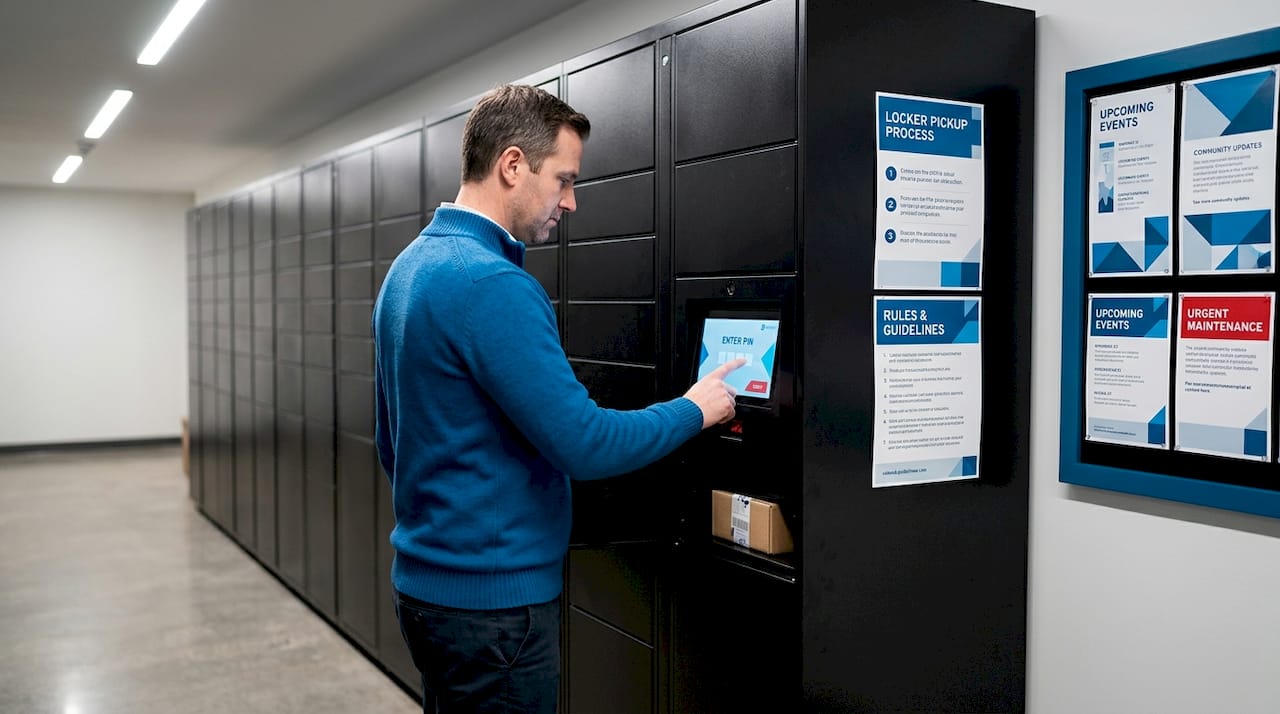
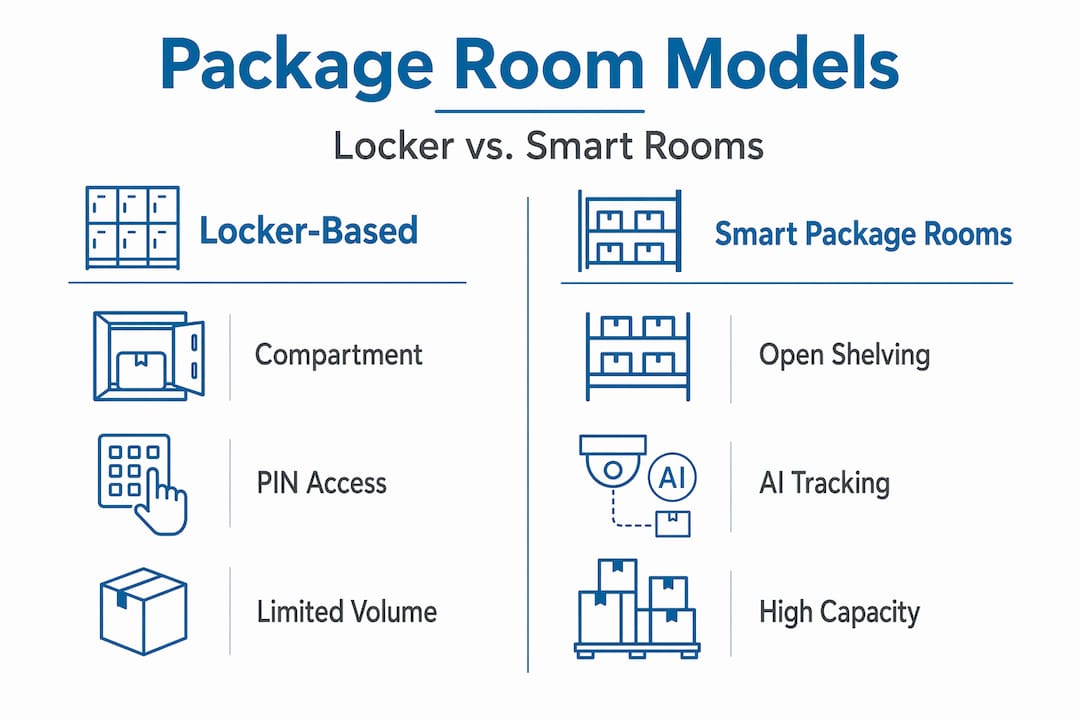
Locker-based systems are the most familiar model. Individual compartments are assigned per delivery, and residents use a code to retrieve their package. They work well for smaller properties and buildings with lower daily volumes. The limitation is physical capacity. A fixed number of lockers means overflow is a constant operational problem during peak periods like holiday seasons.
Smart package rooms with open shelving take a different approach. Instead of fixed compartments, packages are placed on open shelving inside a secured room. AI-driven tracking handles the identification and notification side. According to Blueprint’s 2026 multifamily framework, AI-powered smart rooms triple storage capacity compared to locker systems, reducing overflow and cutting resident wait times from 30 minutes to seconds at high-volume properties.
Hybrid staffed centers convert underused amenity spaces into managed package centers with part-time attendants. This hybrid model compares favorably to third-party offsite services when space is available, but it lacks scalability across a portfolio. Staffing costs and scheduling gaps create inconsistency.
Third-party offsite services redirect deliveries to an external facility that residents visit separately. This eliminates the onsite management burden entirely, but it adds friction for residents and reduces your control over the experience.
| Model | Best for | Advantage | Drawback |
|---|---|---|---|
| Locker-based | Properties under 150 units | Simple resident experience, proven tech | Limited capacity, overflow risk |
| Smart room with open shelving | 150+ units, high daily volume | Maximum capacity, AI tracking, audit trail | Higher upfront setup requirements |
| Hybrid staffed center | Mid-size buildings with spare amenity space | Human oversight, handles edge cases | Not scalable, staffing dependent |
| Third-party offsite | Properties with no available space | Zero onsite management | Adds resident friction, less control |
One fact from the research that surprises most managers: properties typically run 2.4 intake methods simultaneously, with some using five or more. Layering methods adds complexity and creates carrier confusion. Before adding another solution, audit what you already have in place.
Operational challenges and what to ask vendors
Here is the part most vendor presentations skip entirely. The technology works. The hardware holds up. What breaks package management systems at scale is carrier behavior.
Carrier non-compliance, where delivery drivers bypass the intake workflow by leaving packages outside the room, in lobbies, or with unauthorized individuals, is the primary cause of package management failures. Not software bugs. Not hardware malfunctions. Drivers who do not follow the process.
When evaluating vendors, ask these specific questions:
- How does your system detect when a carrier accesses the room but fails to log a package? You want a specific technical answer, not a general one.
- What is your protocol when a carrier consistently bypasses the workflow? There should be a documented escalation process.
- Do you provide onsite support or remote response when compliance failures spike? Labor backup during peak periods matters enormously.
- What carrier training materials do you supply, and how are they delivered before go-live? Verbal promises about training do not count. Ask for the actual documents.
- Can you show data from an existing deployment demonstrating compliance rates over time? Real numbers from comparable properties tell you more than a demo environment.
Vendors who cannot answer these questions with specifics are selling you hardware, not a system. Standardized carrier communication issued before deployment, including single-page SOPs covering staging, logging, and handling oversized or perishable items, is what separates properties that run smoothly from those that manage complaints daily.
Pro Tip: Run a carrier behavior test during your vendor evaluation. Ask the vendor to demonstrate what happens in the system when a driver accesses the package room but deliberately skips the scan step. The system’s response to that specific scenario tells you everything about its real compliance infrastructure.
Best practices for implementing package room solutions
Knowing how to manage package rooms effectively comes down to four operational disciplines that most managers underinvest in.
Build a tiered decision framework before you buy. Operators who match solution types to property characteristics, rather than selecting vendors based on relationships, consistently outperform on resident satisfaction metrics. Your framework should map unit count, average daily package volume, available square footage, and resident demographics to specific solution types before any vendor conversation begins.
Set up access layers properly. Cloud-based access control using PIN codes, mobile app controls, and video intercoms allows you to give carriers temporary tracked access without compromising resident security. Each carrier credential should be distinct, time-limited, and logged separately from resident access events.
Train carriers before day one. This sounds obvious. It almost never happens. Pictorial SOPs, meaning one-page visual guides showing exactly where to scan, where to stage packages, and who to call for exceptions, reduce delivery errors more than any software feature. Distribute them to carrier district managers, not just individual drivers, so the standard survives staff turnover.
Use your data. Most package management platforms generate operational reports that most managers never open. Pickup rate trends, overflow frequency, carrier compliance scores, and average package dwell time are signals you can act on. If pickup rates drop, residents may not be getting notifications. If compliance scores fall, a specific carrier may be cutting corners. The data tells you before the complaints do.
- Review operational reports weekly during the first 90 days after deployment
- Identify your top three carriers by volume and track their compliance scores separately
- Set overflow thresholds that trigger automatic alerts before capacity is reached
- Document every compliance failure with timestamps and camera evidence for carrier escalation
When you are designing efficient package rooms from the ground up, plan for at least 20 percent more capacity than your current volume requires. Properties grow. Delivery volumes grow faster.
How package rooms improve resident experience
Well-implemented package room solutions deliver measurable benefits across three categories that matter to residents and operators alike.
Security and theft reduction are the most immediate wins. Packages left in lobbies or on doorsteps are easy targets. A secured room with video surveillance and access-controlled entry eliminates the most common theft vectors. Operators consistently report notable reductions in theft, wait times, and staffing costs when solutions are tailored and processes standardized across a property.
Resident convenience is equally significant. The ability to pick up a package at 11 PM without interacting with staff is no longer a luxury feature. It is a leasing expectation in competitive urban markets. Contactless delivery and self-service pickup reduce friction at every touchpoint.
On the operational side, the benefits compound over time:
- Fewer staff hours spent logging, sorting, and notifying residents about packages
- Reduced liability exposure from lost or damaged deliveries
- Faster response to overflow during holiday surges through automated alerts
- A cleaner audit trail for handling disputes about missing packages
- Higher resident retention scores tied directly to package satisfaction
For a detailed look at locker vs. package room tradeoffs, the decision often comes down to average package size and daily volume rather than budget alone.
My honest take on where property managers go wrong
I have watched a lot of properties spend real money on package room infrastructure and still field the same resident complaints six months later. The pattern is consistent. They bought the hardware. They skipped the process.
What I have learned after seeing these implementations play out across many properties is this: the technology is table stakes. Every credible vendor has a solid platform. What separates successful deployments from expensive failures is the operational layer wrapped around the hardware. Carrier compliance protocols. Standardized workflows. Data review habits. These are the decisions that actually determine outcomes.
The other mistake I see constantly is treating package management as a single-property problem. If you manage a portfolio, the inconsistency between properties creates its own dysfunction. Carriers learn your worst-managed property’s habits and apply them everywhere. A portfolio-wide standard, consistently enforced, changes that dynamic.
My strongest advice: before you evaluate a single vendor, define what “working” looks like in measurable terms. Pickup rate above 90 percent within 24 hours. Compliance incidents below five per month. Resident complaints about packages trending down quarter over quarter. Without those benchmarks, you cannot know whether your investment is performing. And you will be back in this evaluation cycle two years from now.
— Craig
See what Locker-solutions can do for your property
If this breakdown has made one thing clear, it is that the right package management solution requires both the right hardware and the right operational support behind it. Locker-solutions specializes in exactly that combination for multifamily properties across the country.
From Luxer One® smart package rooms and locker systems to refrigerated lockers, outdoor weatherproof kiosks, and fully automated room configurations, Locker-solutions offers products built specifically for the volume and complexity of residential properties. Every deployment includes carrier integration support, onsite installation, and ongoing maintenance. The automated package room options are configurable to fit buildings from 50 units to thousands, with nationwide sales and installation teams ready to support your specific property layout and resident profile. Contact Locker-solutions to request a consultation or product demo tailored to your portfolio.
FAQ
What is a package room solution for apartments?
A package room solution combines a secured physical space with software that manages delivery intake, resident notifications, and package tracking. It goes well beyond basic storage by integrating access control, audit logging, and carrier compliance workflows.
How do smart package rooms differ from lockers?
Smart package rooms use open shelving and AI-driven tracking to handle significantly higher volume than fixed locker compartments. AI-powered smart rooms can triple storage capacity, making them better suited for high-volume multifamily properties.
What causes package management systems to fail?
Carrier non-compliance, where drivers bypass intake workflows, is the primary cause of failures. Hardware malfunctions are rarely the issue. Effective vendor contracts address compliance detection and enforcement directly.
How should property managers evaluate package room vendors?
Ask vendors to demonstrate how their systems detect and respond to carrier bypass incidents, what carrier training materials they provide, and whether they can show real compliance data from comparable properties. Vendor answers to those specific questions reveal operational capability beyond the demo environment.
What access control features should a package room include?
Modern package rooms should offer cloud-based access control with PIN codes, mobile app access, and video intercoms. Each carrier credential should be distinct, time-limited, and logged separately from resident access to maintain a clean audit trail.
Recommended
Ready for a Luxer One® package locker quote?
Tell us your unit count and we'll send right-sized pricing with a fast response time.
Get my free quote