September 1, 2026
1–3 Year Payback: Procurement Ready Locker ROI for Property Managers
Procurement ready ROI playbook for property managers. Measure package volume, staff hours, and reclaimed space, run a worked payback, and get a...
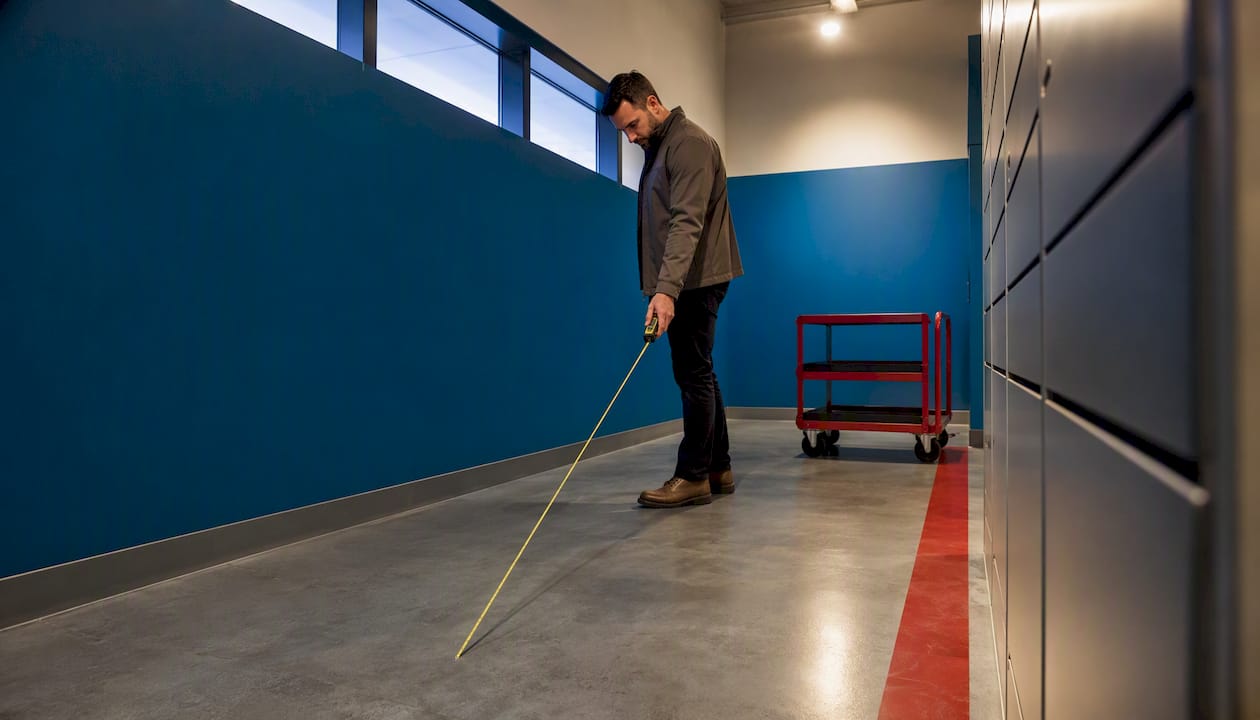
Package lockers typically pay for themselves in one to three years when parcel volume and staffing costs justify the investment. The math is driven by two levers: reduced labor hours spent sorting and delivering packages and reclaimed square footage that once stored boxes. Before you sign a contract, measure your property’s actual package volume and staff time for 90 days. That baseline tells you whether your specific building lands at the fast end of the payback range or the slow one.
TL;DR:
- Package lockers typically deliver a return on investment within one to three years, depending on parcel volume, staffing, and space savings.
- The most significant savings come from reduced labor hours, reclaiming space, fewer lost packages, and increased resident satisfaction.
- Costs include hardware, installation, software, integration, and ongoing maintenance, with a detailed baseline measurement needed for accurate ROI projection.
- Continuous monitoring of package handling, staff time, and utilization rates is essential to ensure the lockers reach their payback potential.
- Smaller buildings may struggle to justify locker investments unless parcel volume or competitive pressures make the upgrade financially advantageous.
Table of Contents
- What Measurable Benefits Do Package Lockers Actually Deliver?
- What Costs Should You Budget for a Package Locker System?
- How Do You Calculate Labor and Risk Savings From Lockers?
- How Do You Calculate the Payback Period for Package Lockers?
- Can Package Lockers Increase Rent or Retention?
- Where Does Package Locker ROI Typically Fall Short?
- What Does a Locker Solutions Deployment Actually Include?
- Should You Pilot or Commit to a Full Package Locker Rollout?
- How Locker Solutions Approaches ROI Validation With Customers
- Get a Site-Specific ROI Estimate
- Sources
What Measurable Benefits Do Package Lockers Actually Deliver?
The ROI case for package lockers rests on four categories of savings, and property managers who ignore any one of them tend to underestimate the total return.
- Labor hours: Staff stop logging, sorting, and re-delivering packages by hand, which is the single largest recurring cost most properties eliminate.
- Space: Mailrooms and storage closets converted to lockers free up leasable or amenity square footage.
- Liability: Fewer lost or misdelivered packages means fewer disputes, refunds, and insurance claims.
- Resident satisfaction: 24/7 pickup access removes the front-desk bottleneck that generates the most common maintenance complaints in multifamily buildings.
Higher-education campuses see a similar pattern. Deployments there report measurable labor-hour reductions and space optimization alongside improved student satisfaction, which suggests the mechanics translate well beyond residential settings into any high-density property with concentrated delivery windows.
What Costs Should You Budget for a Package Locker System?
A full total cost of ownership model needs four line items, not just the sticker price on the hardware.
- Hardware: Module count, door-size mix, weatherproofing for outdoor kiosks, and refrigeration units all move the base price. A 40-door indoor unit costs far less than an outdoor, climate-controlled setup serving the same resident count.
- Installation: Electrical work, network drops, site prep, and ADA-compliant access paths. Retrofits into existing buildings often cost more than new-construction installs because of conduit runs and concrete work.
- Software and integrations: Subscription fees for the locker platform plus integration costs with your property management system and access control stack.
- Maintenance and lifecycle: Warranty terms, expected part replacement, and the multi-year service contract that keeps the units running.
Pro Tip: Track your current package-handling costs for a full three months before you request vendor quotes. That baseline turns a generic ROI pitch into a precise ROI and payback calculation specific to your property.
Compare install and construction line items against savings using a package locker cost calculator before finalizing a budget.
How Do You Calculate Labor and Risk Savings From Lockers?
Start by logging how staff actually spend package-related time today: hours per day receiving, logging, sorting, and hand-delivering, multiplied by the fully burdened wage rate (base pay plus payroll taxes and benefits). Most properties find this number higher than expected once someone tracks it for a week.
- Record daily hours spent on each package task, not just total time at the desk.
- Multiply by the fully burdened hourly rate, not the base wage alone.
- Project savings after deployment, accounting for seasonal spikes like move-in weeks and holiday shipping surges.
- Add indirect savings: fewer lost-package disputes, lower claims volume, and reduced overtime during peak periods.
A field experiment found that installing an on-premises parcel locker cut in-building delivery time by half and reduced delivery vehicle dwell time by one third, with 96% resident satisfaction in the study building. That courier dwell-time reduction matters for properties with limited loading zones or gated access, where delivery trucks blocking driveways generates its own complaint volume separate from package handling itself.
How Do You Calculate the Payback Period for Package Lockers?
Building a payback model takes six inputs, each with a realistic range based on property size and market.
- Annual maintenance: Usually a percentage of hardware cost, often in the low single digits annually.
- Staff hours saved per week: Pulled from your 90-day baseline measurement.
- Fully burdened wage rate: Local market rate plus benefits load.
- Reclaimed space value: Square footage freed, valued at your market’s rent per square foot or amenity conversion value.
- Utilization rate: Percentage of residents actually using the system versus requesting front-desk delivery.
Run three scenarios: best case (high utilization, full staff-hour reduction), likely case (moderate adoption), and worst case (slow adoption, partial staff reallocation). Property managers commonly report payback within two to three years when these inputs are measured rather than assumed. Utilization is the variable that swings results the most. Unexpected maintenance, like a damaged door module or a network outage requiring a service call, adds months back onto the timeline if it isn’t budgeted for upfront.
Can Package Lockers Increase Rent or Retention?
Amenity value is harder to quantify than labor savings, but it still belongs in the model, conservatively.
- Estimate a rent premium or retention lift based on comparable properties with and without the amenity, rather than assuming a fixed dollar figure.
- Some operators layer in ancillary revenue through convenience fees for refrigerated or oversized locker access, though realistic expectations should stay modest since this rarely offsets hardware cost alone.
- Treat reclaimed mailroom square footage as a financial asset. Whether converted to leasable storage, a package-adjacent amenity, or staff space, it carries a dollar value that belongs on the same ledger as labor savings.
Where Does Package Locker ROI Typically Fall Short?
Most ROI shortfalls trace back to three predictable causes.
- Underutilization: Residents keep requesting front-desk delivery out of habit. Mitigate with move-in orientation and courier onboarding so drivers default to the locker bank.
- Hidden costs: Power and network upgrades, vandalism repair, or unbudgeted maintenance calls erode projected savings.
- Contract pitfalls: Vague SLAs on response time for jammed units or software downtime.
- Site constraints: Limited footprint, ADA clearance requirements, or courier acceptance policies that vary by carrier.
Smaller buildings sometimes lack the commercial viability to justify locker investment without shared funding from carriers or municipal programs.
Pro Tip: Write utilization targets and response-time SLAs directly into your vendor contract, not just into your internal ROI model. A verbal promise about “24 hour maintenance response” is worthless if it isn’t in the agreement.
What Does a Locker Solutions Deployment Actually Include?
Locker Solutions builds Luxer One® systems configured for the property in front of you, not a one-size-fits-all box.
- Indoor and outdoor electronic lockers, refrigerated units for perishable deliveries, and weatherproof kiosks for exposed sites.
- Automated package rooms that handle high-volume buildings without dedicated staff monitoring.
- Rapid deployment timelines, custom door configurations, and nationwide installation support.
- Optional managed package-room service for properties that want daily on-site oversight without hiring in-house staff.
| Deployment factor | What to confirm before install |
|---|---|
| Power | Dedicated circuit capacity at the install location |
| Network | Hardwired or cellular connectivity for locker software |
| Footprint | Clear floor space for module count plus ADA-compliant approach |
| Security | Camera coverage angle and lighting at the locker bank |
Review the complete property manager’s guide to locker types before finalizing site requirements.
Should You Pilot or Commit to a Full Package Locker Rollout?
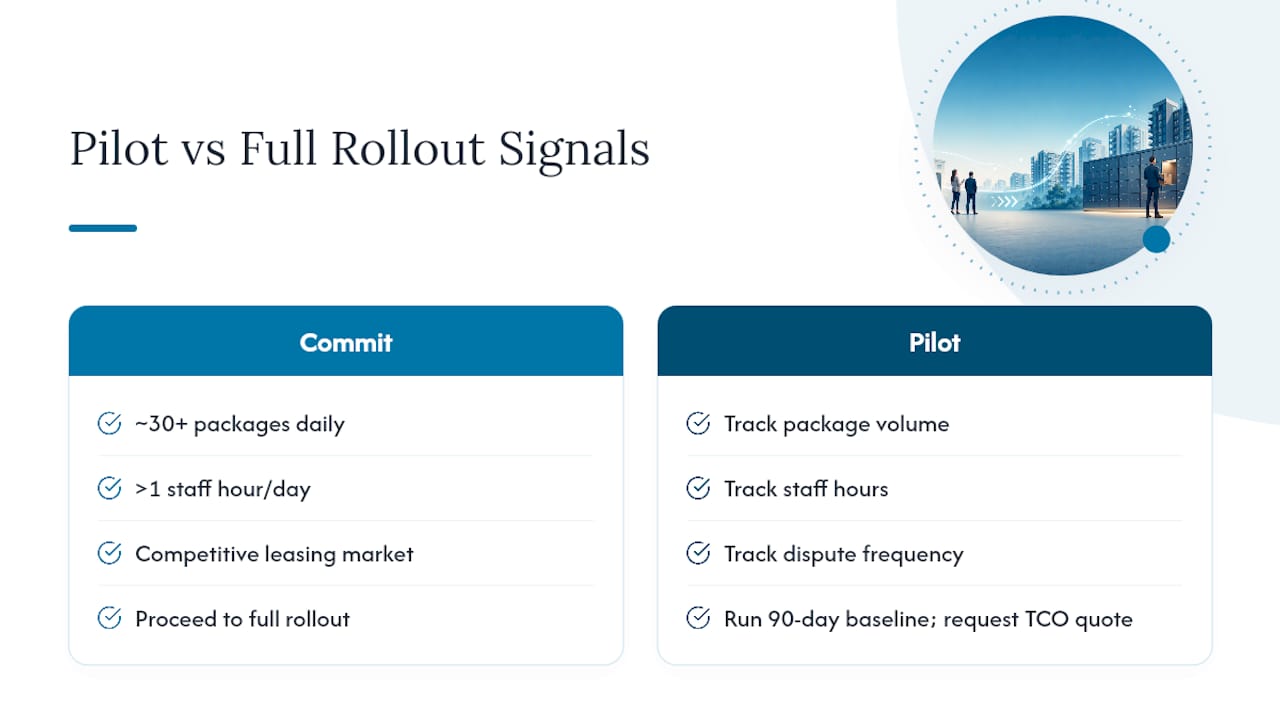
Three signals point toward committing rather than piloting: parcel volume above roughly 30 packages daily, staff spending more than an hour a day on package tasks, or a competitive leasing market where amenity differentiation matters. If none of those apply yet, run a 90-day baseline first. Track package volume, staff hours, and dispute frequency, then request a total cost of ownership quote against that real data. The verdict stands: labor and space savings drive most of the return, and measurement beats guessing every time.
How Locker Solutions Approaches ROI Validation With Customers
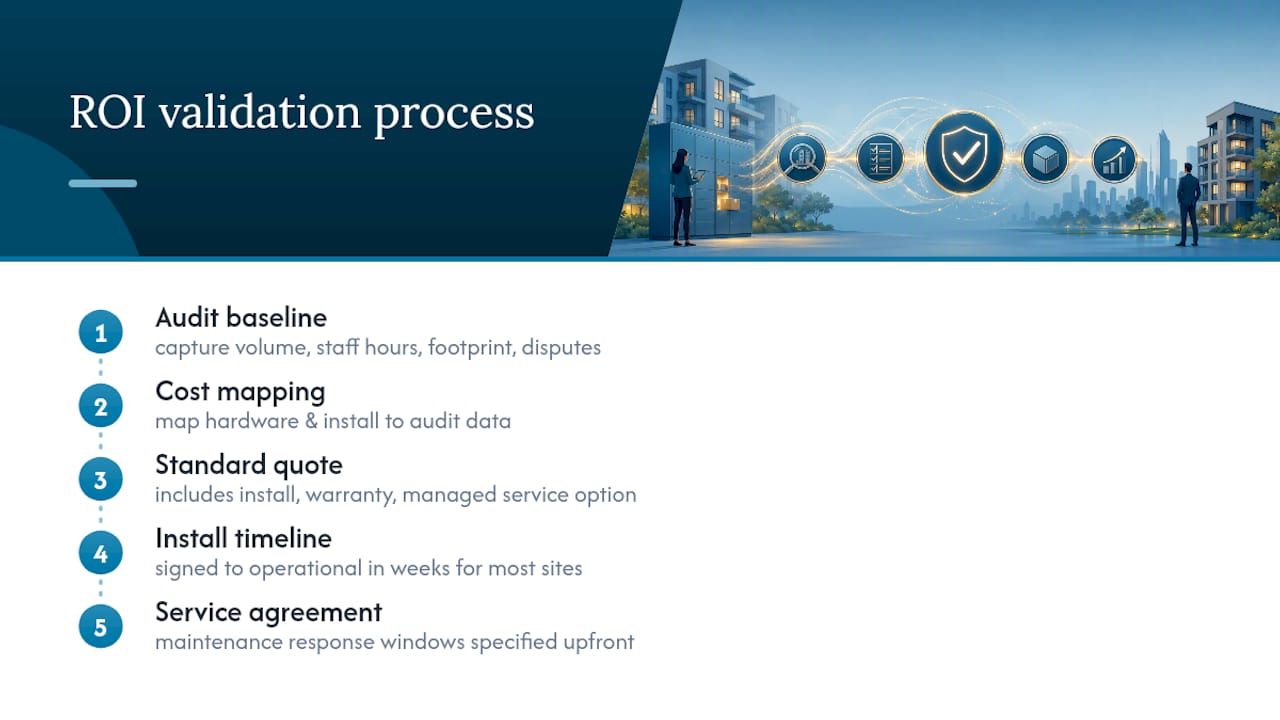
An audit starts with the same data your own baseline should capture: package volume, current staff hours, storage footprint, and dispute history. From there, a proposal maps hardware and install costs against those numbers rather than a generic industry average.
Standard quotes include installation, hardware warranty terms, and the option to add managed package-room service if staffing daily oversight isn’t practical. Timelines vary by site complexity, but most installs move from signed agreement to operational lockers within a matter of weeks, not months. Service-level agreements spell out maintenance response windows upfront, so response time isn’t a negotiation after something breaks.
— Locker Solutions
Get a Site-Specific ROI Estimate
The worked examples above give you a framework, but your building’s actual numbers depend on parcel volume, staff wages, and floor plan specifics that a generic calculator can’t capture. Locker Solutions offers a site audit that plugs your real package-handling data into a cost model, so the payback estimate you get reflects your property, not an industry average.
An audit typically needs three inputs from you: current package volume, staff hours spent on handling, and available install footprint. From there, Locker Solutions builds a proposal that includes hardware, installation, and warranty terms, plus an optional managed package-room service if you’d rather not add oversight to your team’s plate. Explore the outdoor locker options if your site lacks indoor mailroom space, or check unified access control integration if your property already runs a keyless entry system. Request a site-specific quote today and get a payback estimate built on your building’s real numbers.
Sources
- Do parcel lockers reduce delivery times? Evidence from the field (ScienceDirect)
- 6 Key Benefits of Parcel Lockers for Apartment Managers (Mail & Packages)
Recommended
Ready for a Luxer One® package locker quote?
Tell us your unit count and we'll send right-sized pricing with a fast response time.
Get my free quote