October 2, 2026
Property Managers: Apartment Package Policy That Fits 90%+ Weekly Use
A procurement checklist for property managers to set apartment package policy by throughput, oversize and perishables handling, ADA and fire-code checks,...

For most apartment communities, a smart package room is the stronger starting point, with parcel lockers added for curbside or lower-volume buildings and a refrigerated module layered in only where grocery deliveries run high. That mix tends to match what residents actually want: secure holding and fast pickup, while giving staff a system that scales instead of overflowing at the front desk. The right choice always comes down to daily volume, package size mix, and how much staff time you can free up.
TL;DR:
- Parcel lockers are best for moderate volumes and curbside or lobby placement but struggle with oversized packages and bulk deliveries.
- Smart package rooms outperform lockers in high-volume buildings because they manage overflow with flexible staging and advanced workflows.
- Adding refrigerated modules is recommended only when grocery deliveries are frequent, and outdoor kiosks provide weatherproof options for communities without indoor space.
- Placement near high-traffic areas and clear courier workflows are critical to maximize utilization and prevent underuse of the system.
- Evaluating vendor proposals should focus on throughput capacity, security features, integration with property management software, and real-world utilization data from similar properties.
Table of Contents
- Comparing parcel lockers, package rooms, and refrigerated modules
- How to evaluate package management systems for your property
- Getting the rollout right on site
- What drives cost, and how to build the ROI case
- What Locker Solutions brings to an apartment package program
- A property operator’s take on where to start
- How Locker Solutions supports your rollout
- Sources
- FAQ
Comparing parcel lockers, package rooms, and refrigerated modules
Each system type solves a different piece of the delivery puzzle, and most properties end up combining two or more.
- Smart parcel lockers work well for moderate volume and curbside or lobby placement, but they have fixed compartment sizes that can’t absorb oversized boxes or bulk deliveries.
- Smart package rooms suit high-volume buildings best: open shelving, kiosk check-in, and flexible staging handle oversized items that lockers simply can’t fit. Reporting on multifamily deployments found that intelligent package rooms often outperform fixed lockers in high-volume buildings because they manage overflow through flexible staging and computer vision workflows that lockers cannot replicate.
- Refrigerated lockers make sense once grocery and meal-kit deliveries become a regular pattern, and they typically integrate as an add-on module alongside a locker bank or package room rather than as a standalone system.
- Outdoor kiosks give properties a weatherproof option for garden-style communities or buildings without indoor lobby space, letting couriers drop packages without staff access to interior areas.
A hybrid approach, package room plus a smaller locker bank and one refrigerated unit, usually produces the best balance of throughput and space efficiency for mid-size to large communities.
How to evaluate package management systems for your property
Compare vendor proposals against the same operational checklist every time, not against a features list.
- Throughput. Match rated capacity to your average daily package count plus peak-season loads (holiday deliveries can run well above baseline).
- Package profile. If oversized boxes or grocery deliveries are common, weight your decision toward a package room or a hybrid setup rather than lockers alone.
- Security and accountability. Look for video surveillance, courier sign-in logs, and proof-of-delivery timestamps built into the workflow.
- Integration. Confirm the system connects to your property management software and sends automated pickup alerts, cutting the number of times staff has to intervene.
- Service and maintenance. Ask directly about service-level agreements, local technician response times, and whether on-site package room management is available as an add-on.
- Regulatory and accessibility fit. Confirm reach ranges and ventilation requirements with your local building or fire inspector before finalizing a layout.
Placement and workflow guidance in Locker Solutions’ overview of package security for multifamily properties covers how secure storage and access design affect day-to-day operations, which is worth reviewing before you send out a request for proposals.
Pro Tip: Ask every vendor for utilization data from a property similar in size to yours, not just national averages.
Getting the rollout right on site
Most failed installations trace back to a handful of avoidable mistakes, not the hardware itself.
- Placement: put the system somewhere residents pass daily. Installation guidance for apartment managers identifies poor placement and weak sightlines as a recurring cause of underused locker systems, and basements or hidden outdoor corners are common offenders.
- Layout: decide how much of the footprint goes to fixed lockers versus open shelving, and leave enough circulation space for couriers to load without blocking resident access.
- Accessibility and code: forward approach reach ranges used in planning typically run 15 to 48 inches from the finished floor, though local jurisdictions can set stricter standards, so confirm with your building inspector early. Enclosed package rooms also need to be checked for fire egress and ventilation requirements before construction begins.
- Courier workflows and signage: a simple, clearly signed check-in process keeps couriers accountable and reduces misdelivered packages; Locker Solutions’ guide to secure parcel handling breaks down what that workflow looks like in practice.
- Seasonal surges: build a temporary staging plan and a staff protocol for holiday peaks before volume spikes, not after.
What drives cost, and how to build the ROI case
Total project cost depends on more than the hardware itself.
- Base cost drivers include the locker or package room configuration, any refrigerated modules, installation complexity tied to the building’s layout, and whether you add on-site package room management staffing.
- Deployment timelines and financing terms should both appear in every vendor proposal you compare, since a faster install can offset a higher upfront configuration cost.
- Quantify benefits in staff hours reclaimed from manual package logging and resident-notification calls, plus the reduced liability from clear proof-of-delivery records.
Resident-preference data from a 2025 national survey shows more than 90% of residents who use parcel lockers do so weekly, with 95% saying secure holding until pickup matters to them. That level of use is a meaningful amenity signal worth including in a retention and occupancy argument to ownership. For a deeper walkthrough of these calculations, Locker Solutions’ cost and ROI guide lays out the components in more detail. For portfolio-level context on how amenities like this affect asset value, see this multifamily asset management guide.
What Locker Solutions brings to an apartment package program
A national partner supplies indoor and outdoor electronic lockers, refrigerated modules, smart package rooms, weatherproof kiosks, and daily on-site package room management for multifamily properties. Selection criteria worth weighing include rapid deployment timelines, custom configuration to fit your building’s footprint, ongoing local maintenance support, and integration with your property management software.
When comparing providers, ask for a documented deployment timeline, service-level commitments, and references from properties of a similar size before signing anything.

A property operator’s take on where to start
Start with site selection and courier accountability before you pick hardware. A well-placed package room with a clean courier check-in process will outperform a poorly sited locker bank every time, regardless of brand or feature list.
— Locker Solutions
How Locker Solutions supports your rollout
The company supplies indoor and outdoor lockers, refrigerated modules, smart package rooms, and unified access control, paired with nationwide installation and ongoing local maintenance. Properties get one point of contact for hardware, setup, and the option of daily on-site package room management instead of juggling separate vendors for each piece.
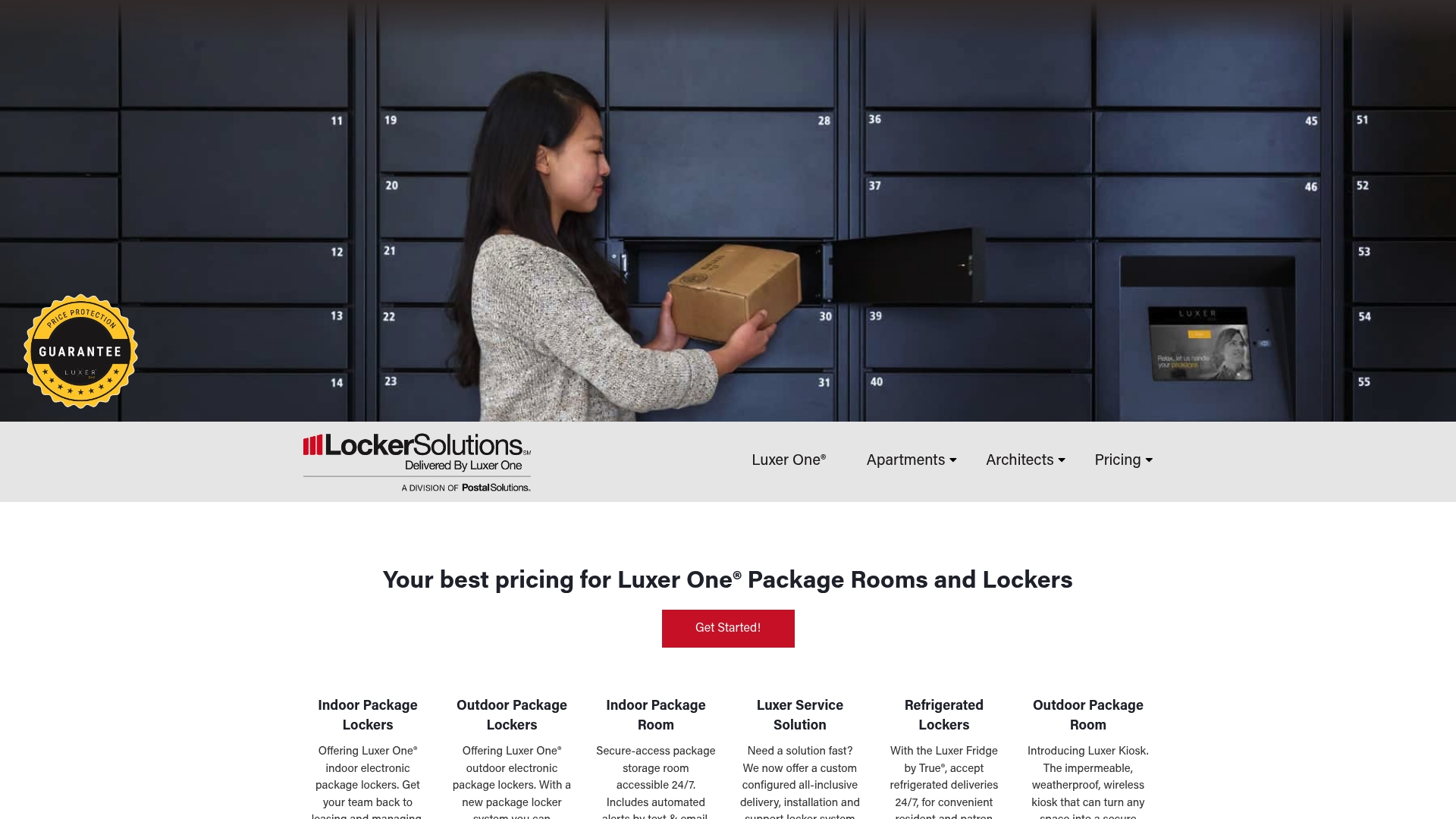
In a vendor meeting, come prepared to ask about deployment timeline, service-level agreements, utilization metrics from comparable properties, and references you can call directly.
| What to request | Why it matters |
|---|---|
| Deployment timeline | Confirms how fast the system goes live after signing |
| SLA terms | Sets expectations for maintenance response times |
| Utilization data from similar properties | Grounds your ROI model in real numbers |
| References | Lets you verify claims before committing |
- Review the core product lineup to see which configuration fits your property size.
- Ask about on-site package room management if your team wants staffing included rather than handled in-house.
Request a demo or an ROI assessment to see how a package room or locker configuration would perform on your property.
Sources
- Key Findings from Parcel Pending’s 2025 Resident Preferences Report | National Apartment Association
- MDU property managers shut door on lockers in favor of smart package rooms | Buildings
- Integrating package lockers in 2019: what apartment managers need to know | Multifamily Executive
- ADA reach ranges standards guide
FAQ
What is the difference between a smart package room and parcel lockers?
A smart package room uses open shelving and kiosk check-in to handle oversized and high-volume deliveries, while parcel lockers have fixed compartments better suited to moderate volume. Industry reporting found package rooms often outperform lockers in high-volume buildings because they can absorb overflow that lockers cannot fit.
Do apartment package systems need to meet ADA requirements?
Yes, enclosed package rooms and locker installations need to meet accessibility standards, with forward approach reach ranges commonly planned at 15 to 48 inches from the finished floor. Local jurisdictions can set stricter rules, so confirm specifics with your building inspector before finalizing a layout.
How important are package lockers to resident satisfaction?
Very important for residents who use them: survey data shows more than 90% of residents who use parcel lockers do so weekly, and 95% say secure holding until pickup matters to them. That level of regular use makes package infrastructure a meaningful factor in resident satisfaction and renewal decisions.
Where should a package locker or room be placed for best results?
Place the system somewhere residents pass daily, such as near the leasing office or main building entrance, since installation guidance identifies poor visibility and weak sightlines as a leading cause of low utilization. Basements and hidden outdoor corners consistently underperform compared to high-traffic locations.
Does Locker Solutions offer refrigerated lockers for groceries and perishables?
Yes, Locker Solutions supplies refrigerated locker modules as part of its Luxer One® product lineup, typically added alongside a package room or locker bank for properties with regular grocery or meal-kit delivery volume. Details on configuration options are available through Locker Solutions’ refrigerated locker page.
Recommended
Ready for a Luxer One® package locker quote?
Tell us your unit count and we'll send right-sized pricing with a fast response time.
Get my free quote