August 10, 2026
Leasing Tour Talking Points Checklist for Agents
Boost your leasing tours with essential talking points. Discover the key elements that convert prospects into satisfied tenants.

Every leasing tour that converts follows the same pattern: a strong opening, a clear value frame, and a confident close. Your leasing tour talking points checklist, in its shortest form, covers six non-negotiables: first impression, amenity hook, safety and maintenance, pricing clarity, package management, and next steps. Industry expert Rick Ellis puts it plainly: bring heart to every presentation, because prospects are making one of the biggest financial decisions of their lives. The FSU Leasing Tour Checklist confirms the core items: lease questions, move-in costs, subletting policy, amenities, and maintenance procedures.
Six talking points every tour must hit:
- Entrance impression: “Welcome, I’m glad you’re here. Let me show you what makes this community different.”
- Amenity hook: Lead with the feature that solves their biggest daily frustration.
- Safety and maintenance: Explain how requests are handled and how fast.
- Pricing clarity: State base rent, deposit, and any fees without hesitation.
- Package management: Show how residents receive deliveries without staff involvement.
- Next steps: Ask for the application before they leave.
Three starter scripts to copy and use today:
- Greeting: “Hi [Name], I’m [Your Name]. I’ve pulled a few options that match what you described. Ready to take a look?”
- Value frame: “What I love about this community is that [top amenity] means you never have to deal with [specific frustration] again.”
- Assumptive close: “Based on what you’ve told me, [Unit X] fits perfectly. The application takes about ten minutes. Want to get started?”
Key Takeaways
A strong leasing tour combines a repeatable checklist, prospect-specific talking points, and fast follow-up to convert more showings into signed leases.
| Point | Details |
|---|---|
| Prepare in three windows | Run space, building, and materials checks at 2–4 hours and on arrival. |
| Match talking points to the prospect | Segment by industry and priority; answer their actual concern, not a generic script. |
| Cover lease questions at the close | State rent, deposit, and fees confidently after the prospect is emotionally engaged with the space. |
| Demo amenities as solved problems | Frame every feature as the end of a specific frustration, including 24/7 package pickup. |
| Follow up within hours | Send the same-day message while the tour is still fresh; a 48-hour delay costs applications. |
| Locker Solutions package management | Adds a concrete operational talking point: 24/7 resident pickup with no staff involvement. |
Table of Contents
- What should your pre-tour checklist cover?
- How do you customize talking points by prospect profile?
- What lease and fee questions should you cover on every tour?
- How do you present amenities and building operations as solved problems?
- What route and staging approach gets the best results?
- How do you close the tour and follow up to get the application?
- What templates and tools should every agent have ready?
- Why empathy converts better than a polished script
- Package management as a leasing advantage
- Sources
What should your pre-tour checklist cover?
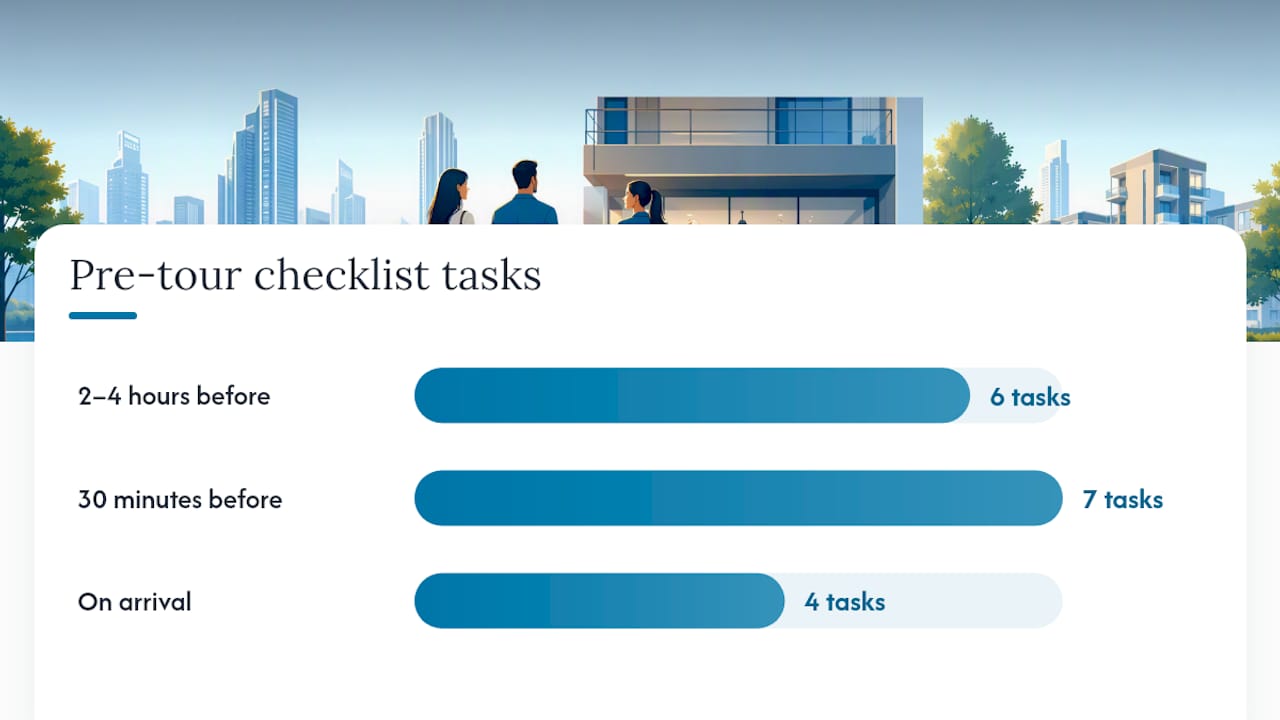
A rushed pre-tour is the fastest way to lose a prospect before you’ve said a word. CRE leasing templates break preparation into three windows: two to four hours before, thirty minutes before, and on arrival.
| Time Window | Tasks |
|---|---|
| 2–4 hours before | Confirm unit is clean and odor-free; test HVAC and lighting; check restrooms; verify elevator programming; notify security and front desk; confirm parking availability |
| — | Gather printed space sheet, floor plan, business cards, tape measure, proposal template, and access cards; review prospect’s background and stated priorities |
| On arrival | Walk the route yourself; adjust lighting and temperature; remove any visible clutter; confirm amenity spaces are accessible |
Intelligence checklist: Know the current tenant mix, any recent move-outs, the prospect’s industry and company size, and which objections are most common for this unit type. If a broker is involved, know their relationship with the property.
Pro Tip: Stage the model unit like a hotel room: every light on, blinds open, a neutral scent. Prospects decide within ninety seconds whether they can picture themselves living there.
The thirty-minute window is where most agents cut corners. That’s exactly when a prospect is parking, forming their first impression of the property exterior, and deciding whether the tour is worth their time.
How do you customize talking points by prospect profile?
One script does not fit every prospect. AFI’s training framework emphasizes mapped routes with “wow moments” and scripted talking points per stop, adjusted for who is standing in front of you.
By industry:
- Tech/creative: Lead with high-speed internet infrastructure, collaborative common areas, and flexible lease terms.
- Financial/professional services: Emphasize security, quiet hours, professional lobby aesthetics, and proximity to transit.
- Healthcare/medical: Highlight proximity to medical centers, 24/7 access, and reliable package management for medical supply deliveries.
- Students/young professionals: Focus on affordability, community events, package lockers for frequent online orders, and month-to-month options.
By prospect priority:
- Cost/value: “The effective rent after our move-in special is $[X]. That includes parking and all utilities.”
- Growth/expansion: “This floor plan scales with you. We have larger units available in the same building when you’re ready.”
- Security/privacy: “Access is controlled at every entry point. Residents use a single credential for the building, amenities, and package room.”
- Sustainability: “The building uses [specific efficiency feature]. Residents consistently report lower utility bills.”
Objection responses:
- “The price is too high.” “I hear you. Let me show you the effective rent after incentives, and we can compare that to what’s included.”
- “The space feels small.” “Let me show you how [Unit Y] is laid out. Most residents are surprised by the storage.”
- “I’m not sure about the neighborhood.” “Here’s what I can tell you about the building’s security setup and what residents have said about the commute.”
Role-play exchange:
Agent: “What’s the biggest frustration with your current place?” Prospect: “Packages always get stolen or left in the hall.” Agent: “That’s exactly why we installed a 24/7 automated package system. Residents get a text the moment a delivery arrives and pick it up whenever they want.”
Pro Tip: Convert every feature into a benefit before you say it aloud. Package lockers aren’t a feature. They’re the end of missed deliveries.
What lease and fee questions should you cover on every tour?
Prospects who leave without clear answers on pricing rarely come back. Cover these before they ask:
- Move-in date availability and lease term options (6, 12, or 24 months)
- Base rent and effective rent after any concessions
- Security deposit amount and conditions for return
- Pet policy, pet deposit, and monthly pet rent
- Parking: included or additional cost
- Utilities: which are included, which are tenant-paid
- Subletting and reletting rules
- Application fee and approval timeline
Time this conversation for late in the walkthrough or at the close, not at the door. Prospects who are already emotionally engaged with the space receive pricing information far more openly than those who haven’t seen it yet.
How do you present amenities and building operations as solved problems?
Grace Hill’s research shows that standardized talking points per amenity, combined with a branded leave-behind, help tours stand out and improve recall. The key is framing every amenity as a problem already solved.
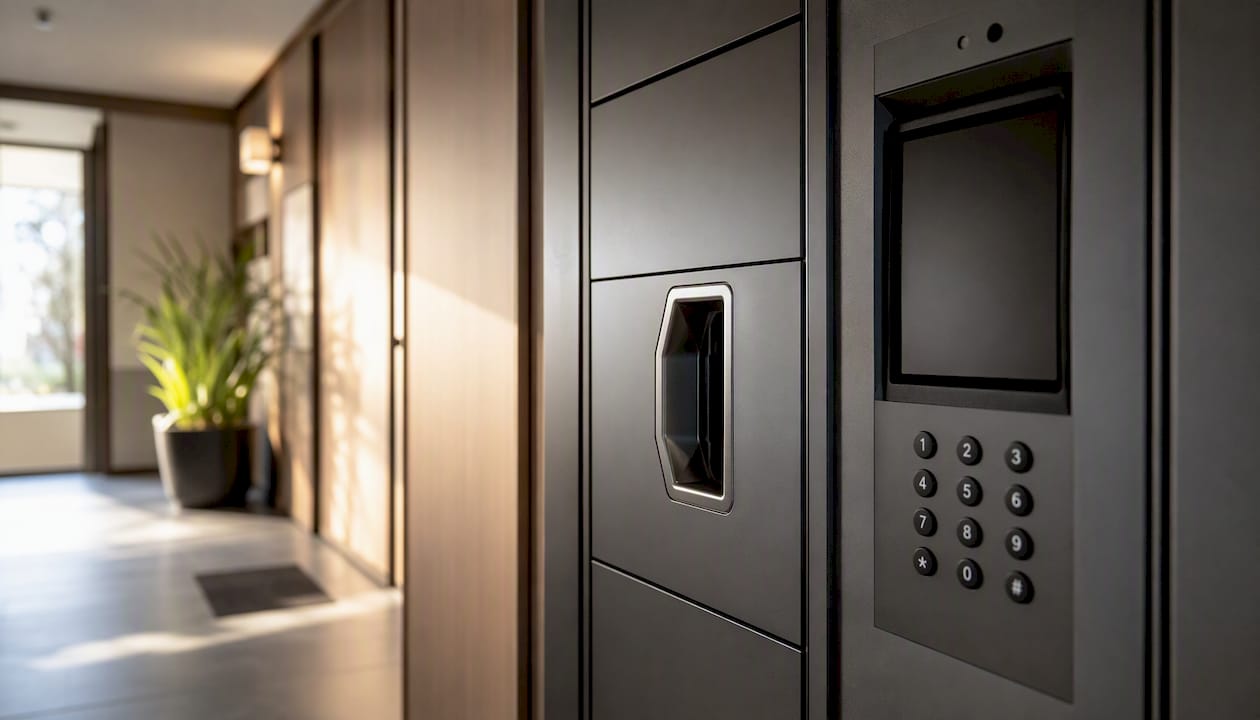
Amenity demo sequence: Entry → common areas → gym → package room or locker bank → return to leasing office.
At each stop, state the problem first, then the solution:
- Package room/lockers: “Residents used to miss deliveries or wait for staff to hand them over. Now, they get a text and pick up on their schedule, any time of day.” Reference the automated package room guide for specifics on how these systems work.
- Gym: “It’s open 24/7 with keycard access, so your schedule doesn’t dictate when you can work out.”
- Common areas: “Residents use this space for [specific use case]. It’s included in your rent.”
Leave-behind checklist for amenity demos:
| Amenity | Talking Point | Leave-Behind Item |
|---|---|---|
| Package lockers | 24/7 pickup, automated alerts | Package management one-pager |
| Gym | 24/7 keycard access | Amenity hours card |
| Common areas | Included in rent, bookable | Community calendar |
Maintenance responsiveness is an operational talking point most agents underuse. State the process clearly: “Maintenance requests go through [app/portal]. Non-emergency requests are typically addressed within [X] business days. After-hours emergencies have a direct line.” See building management best practices for how to frame these workflows credibly.
What route and staging approach gets the best results?
RentOk’s guidance frames the property tour as a controlled, high-impact interaction. Route order matters because it shapes the emotional arc of the visit.
Suggested route:
- Entrance and lobby (first impression)
- Common amenities (community feel)
- Model or staged unit (aspirational)
- Vacant unit (realistic)
- Return to leasing office (close)
Sensory checklist before the prospect arrives:
- Lighting: every fixture on, no burned-out bulbs
- Smell: neutral, no cleaning product odor
- Temperature: 68–72°F
- Noise: close windows near street noise if possible
Staging do’s and don’ts:
- Do use feature-to-benefit statements at every stop. AFI training specifically warns against pointing out the obvious; instead, connect each detail to a resident problem it solves.
- Don’t apologize for anything. If a space has a limitation, redirect to a benefit.
- Do control pace. A 20–40 minute tour is ideal. If the prospect lingers, let them. If they’re disengaged, move faster.
Safety protocol: Before any in-person tour, check in with a colleague or front desk staff. Notify security of the tour time and route. For vacant units, keep the door open or propped.
How do you close the tour and follow up to get the application?
Showami’s step-by-step guide confirms that asking for the application during the tour and following up within hours materially improves conversion.
Closing scripts:
- Summary close: “You mentioned [priority]. This unit checks that box, plus [bonus]. I think it’s worth moving forward.”
- Assumptive close: “I’ll hold this unit for 24 hours while you complete the application. Want me to send you the link now?”
- Urgency close: “We have two other showings scheduled this week. I’d hate for you to miss it.”
Leave-behind list:
- Printed space sheet (unit, square footage, rent, effective rent, move-in availability)
- Floor plan
- Proposal or pricing summary
- Business card with direct contact
- Application link or printed instructions
Three follow-up templates:
- Same-day (within 2–4 hours): “Hi [Name], great meeting you today. [Unit X] is still available. Here’s the application link: [link]. Let me know if you have questions.”
- 48-hour check-in: “Hi [Name], just checking in on [Unit X]. Availability can change quickly. Happy to answer any questions before you decide.”
- Application encouragement (72 hours): “Hi [Name], I wanted to reach out one more time. We have a deadline of [date] to hold this unit. The application takes about ten minutes. I’m here if you need anything.”
Speed is the variable most agents underestimate. Reaching out within a few hours keeps the emotional momentum from the tour alive.
What templates and tools should every agent have ready?
Tour packet checklist:
- Space sheet fields: unit number, square footage, base rent, effective rent, tenant improvement allowance, move-in availability, lease term options
- Floor plan (printed and digital)
- Proposal template with pricing summary
- Business card and direct contact
- Application instructions or QR code
Inspection checklist fields (drawn from the Northline commercial lease inspection checklist):
- HVAC: functioning, filter condition, age
- Plumbing: no visible leaks, water pressure, drain speed
- Electrical: panel condition, outlet function, lighting
- Interior: walls, floors, ceilings for visible damage
- Accessibility: door widths, ramp access, elevator function
Talking-points generator outline:
- What is the prospect’s industry?
- What is their stated top priority (cost, growth, security, sustainability)?
- What objections have they raised in prior conversations?
- Which amenities match their lifestyle or work pattern?
- What is the one “wow moment” on this property that fits their profile?
Answer those five questions before every tour and your talking points write themselves.
Why empathy converts better than a polished script
The agents who close the most tours aren’t the ones with the smoothest pitch. They’re the ones who treat the tour as a conversation, not a presentation. Rick Ellis makes this case directly: prospects are making a major financial and personal decision, and they can tell when an agent is going through the motions.
A simple opener changes the dynamic immediately: “Before I show you around, what matters most to you in a home?” That one question shifts the tour from a monologue to a dialogue, and every talking point you deliver afterward lands with more weight because it’s answering something they actually said.
The operational details, the maintenance process, the package lockers, the lease terms, all of it becomes more persuasive when it’s framed as a direct answer to a real concern. Script the facts. Leave room for the human.
Package management as a leasing advantage
Residents who can receive deliveries at any hour without staff involvement are residents who stay. Locker Solutions’ automated package room solutions give leasing agents a concrete operational talking point: 24/7 pickup, automated delivery alerts, and zero staff interruptions for package handoffs.
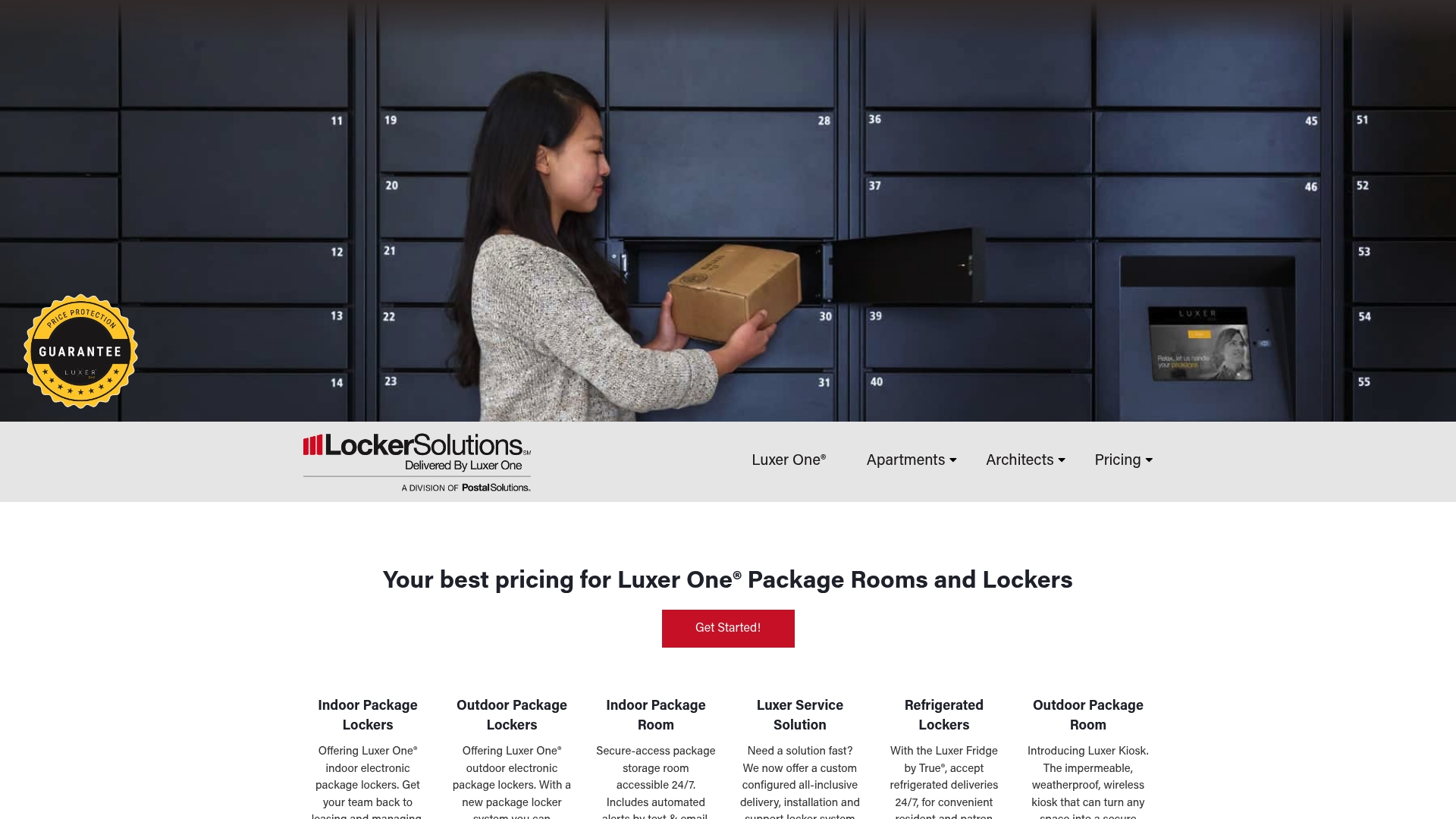
For prospects who order frequently online or receive medical or grocery deliveries, this is a genuine differentiator. Mention it during the amenity demo, leave the one-pager in the tour packet, and point prospects to the package room management service page for details. Contact Locker Solutions to find out which system fits your property’s size and layout.
Sources
- Bring Your Heart to Your Leasing Presentation — Ellis Consulting
- Leasing Tour Checklist — Florida State University housing (PDF)
- Commercial lease inspection checklist — Northline Inspection
- Mastering the Art of the “Property Tour” that Closes Leads — RentOk Blogs
- Training Your Team to Give the Perfect Property Tour — AFI
- How to Conduct a Rental Tour: Step-by-Step (Checklist Included) — Showami
- From Meh to Memorable: The Apartment Tour Tips You Need — Grace Hill
This article is general information, not a substitute for advice from a qualified lawyer. Consult a qualified legal professional about your own circumstances before acting on anything here.
Recommended
Ready for a Luxer One® package locker quote?
Tell us your unit count and we'll send right-sized pricing with a fast response time.
Get my free quote