August 17, 2026
NC Renter Preference Trends: What Renters, Managers Need
Discover how NC renter preference trends impact the rental market. Understand rising expectations and what renters truly value in 2026.

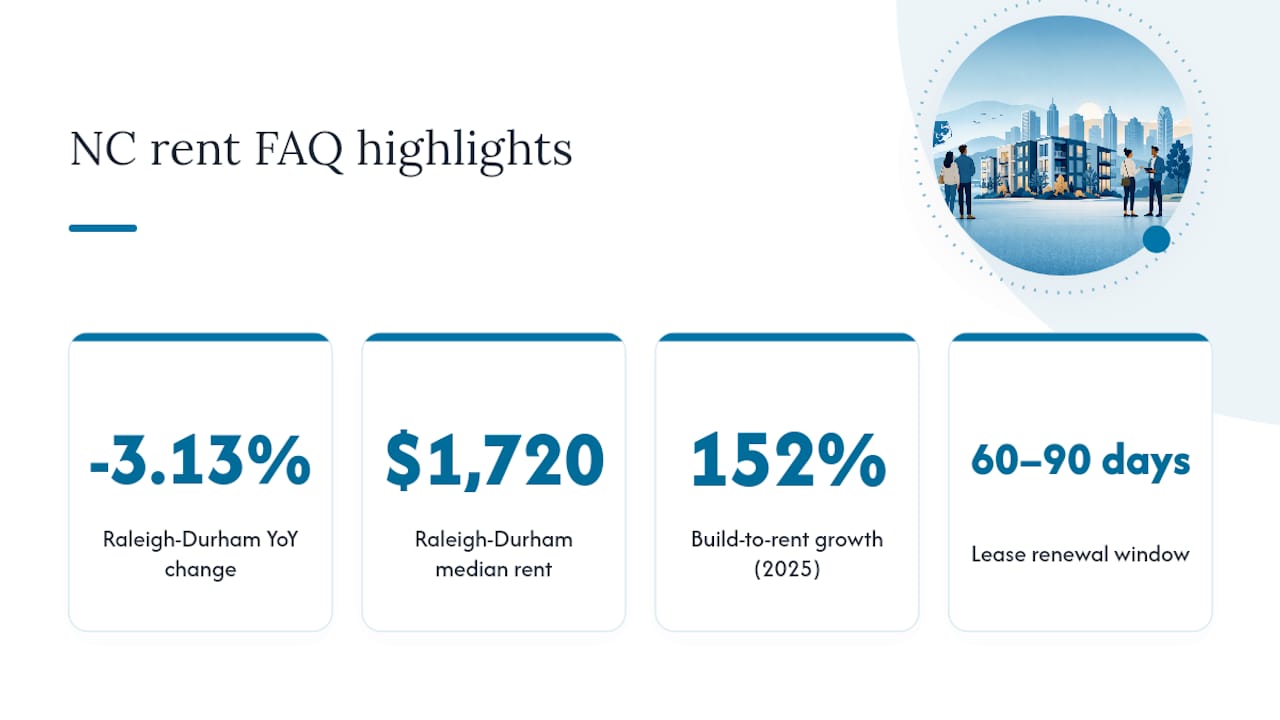
Rents across North Carolina are moderating in some metros while renter expectations keep climbing, and that gap is the real story of NC renter preference trends heading into 2026. Raleigh-Durham’s blended median rent sat at $1,720 in July 2026, down about 3.13% year over year, yet units still leased in roughly 10 days. At the same time, build-to-rent supply is projected to jump 152% in 2025, and 63% of Gen Z renters now rank speed and ease as very or extremely important when choosing a place to live.
What this means: rents are cooling in places like Raleigh-Durham, but renters have gotten pickier, not more patient. Predictable monthly costs, fast turnaround, and reliable package handling now separate listings that lease in days from listings that sit for weeks.
Key Takeaways
North Carolina’s rent growth is moderating in key metros like Raleigh-Durham while renter expectations around cost transparency, speed, and package handling continue to rise statewide
| Point | Details |
|---|---|
| Rents are mixed, not falling everywhere | Raleigh-Durham rents dipped about 3.13% year over year to $1,720, while other counties still rise once adjusted for inflation. |
| Speed and flexibility now dominate | Rently’s 2026 survey found 63% of Gen Z rate leasing speed and ease as very or extremely important. |
| Predictable costs drive retention | Many renters say predictable monthly costs make renting worthwhile long term, according to the Rently survey. |
| BTR supply is surging fastest in NC | Build-to-rent supply is projected to grow 152% in 2025, concentrated around Charlotte and Raleigh. |
| Renters should negotiate early | Start lease-renewal conversations 60 to 90 days before the lease ends, before the unit is remarketed. |
| Managers should fix friction, not just price | Faster maintenance, transparent fees, and 24/7 package access now count as baseline expectations, not upgrades. |
Table of Contents
- Statewide Rent Trends and Metro-Level Snapshots
- What’s Actually Driving NC Renter Demand
- What Renters Actually Want Right Now
- Build-to-Rent Growth Is Reshaping Where Renters Land
- What Renters Should Do Next
- How Property Managers Should Respond
- Local Policy Is Quietly Reshaping the Rental Market
- How NC Compares to National Renter Trends
- The Real Signal Behind the Numbers
- Where to Read More
- Frequently Asked Questions
- Sources
Statewide Rent Trends and Metro-Level Snapshots
North Carolina’s rent picture varies significantly by county, with important differences beyond the statewide average
NC Commerce’s county-level data shows that once you adjust for inflation, rents are still climbing in a broad swath of counties, particularly those tied to job growth corridors around the Triangle and Charlotte metro. That’s a different picture from the nominal rent numbers you’ll see quoted in most headlines, which can mask real cost pressure or, in some cases, overstate it.
Here’s the metro-level snapshot as of mid-2026:
- Raleigh-Durham: blended median rent of $1,720, down roughly 3.13% year over year, with units averaging about 10 days on market.
- Charlotte: rents have held steadier than the Triangle, buoyed by continued in-migration and a build-to-rent pipeline that’s reshaping the suburban rental stock.
- Secondary and suburban markets: demand is accelerating faster than in urban cores, as renters trade downtown proximity for space and lower per-square-foot costs.
A quick methodology note matters here. “Median rent” in most of these trackers refers to asking rent on active listings, not signed lease prices, and figures from Doorstead, NC Commerce, and Zillow Research don’t always use the same sample or update cadence. NC Commerce leans on inflation-adjusted county series drawn from Census and BLS inputs. Doorstead and Zillow Research pull from active listing data, updated more frequently but with less historical depth. When you compare numbers across sources, check the timeframe before assuming you’re looking at apples to apples.
What’s Actually Driving NC Renter Demand
Four forces are doing most of the work behind these numbers.
- In-migration and population growth. North Carolina keeps adding residents and jobs faster than most states, and that keeps rental demand resilient even as rent growth cools.
- Remote and hybrid work. Fewer renters need to live minutes from a downtown office, which has softened premium pricing in some urban cores and pushed demand toward the suburbs.
- School-district quality. Family renters are willing to pay more, or drive farther, for the right district. That’s a big reason more than 60% of Durham’s apartment searches come from out-of-towners relocating for jobs, schools, or both.
- The buy-versus-rent math. With mortgage rates still elevated, plenty of would-be buyers are staying in the rental pool longer than they planned, adding pressure at the mid-tier price point.
Durham’s out-of-towner statistic is worth sitting with for a second: when the majority of your applicant pool has never lived in your city, listing photos, virtual tours, and clear move-in cost breakdowns aren’t nice extras. They’re the entire first impression.
What Renters Actually Want Right Now
Ask ten renters what matters most and you’ll get ten answers, but survey data narrows the field considerably. Two of the more useful data sets come from Rently’s 2026 Renting by Generation survey and the NMHC renter preferences research, and together they paint a consistent picture.
- Speed and flexibility in leasing. Rently found 63% of Gen Z renters rate speed and ease as very or extremely important, a generational shift that’s pushing self-guided tours and same-day approvals from novelty to expectation.
- Predictable monthly costs. Rently also found 54% of renters say predictable costs make renting feel worthwhile for the long haul. Surprise fees are a top reason renters churn at lease renewal.
- Reliable maintenance response. Slow work orders are consistently cited as a top driver of non-renewal in market commentary.
- Package handling and contactless pickup. NMHC’s research documents rising baseline expectations for secure, 24/7 package access, especially as delivery volume keeps climbing.
- High-speed, reliable internet. With hybrid work now standard, connectivity quality ranks alongside square footage for a lot of renters.
- Pet policies. Flexible pet terms and reasonable fees increasingly decide between two otherwise comparable units.
- Home-office flexibility. Layouts that accommodate a desk or nook are a quiet but growing differentiator.
For out-of-state and out-of-town renters, these preferences translate directly into how they triage listings online: strong photos, a real virtual tour, and upfront disclosure of total move-in costs get the click. Everything else gets skipped.
Pro Tip: Before you tour, ask the leasing office three specific questions: what’s the average maintenance response time, is the internet provider building-wide or resident-choice, and is package pickup available 24/7 without staff on-site. The answers tell you more about daily life there than the amenity list ever will.
Build-to-Rent Growth Is Reshaping Where Renters Land
Build-to-rent housing, entire neighborhoods of single-family homes built specifically for renters, is the fastest-growing supply category in North Carolina right now.
A statewide report projects BTR supply will grow 152% in 2025, against a broader housing gap the same report pegs at 764,478 units statewide, including 322,360 rental units. That’s a wide gap for BTR construction to fill, and it explains why so much of the new supply pipeline is concentrated around two metros.
- Charlotte has become one of the state’s clearest BTR growth centers, with entire communities of rental houses replacing what used to be conventional apartment development.
- Raleigh is close behind, driven by the same in-migration and school-district pull discussed earlier.
- Local reporting on BTR growth elsewhere suggests these homes often rent for less per square foot than nearby apartments, which could ease pressure on family-sized units specifically, even where overall apartment rents hold steady.
More BTR supply generally means more competition for landlords offering comparable square footage, and that competition is part of why rents in metros like Raleigh-Durham have started to slip even as leasing stays fast.
What Renters Should Do Next
Whether you’re searching for a new lease or facing a renewal, the current market rewards preparation over speed alone.
- Start 60 to 90 days before your target move date. This gives you time to compare total monthly cost, not just base rent, across multiple properties.
- Add up the real number. Utilities, pet fees, parking, and package or amenity fees can add hundreds of dollars a month to a listed rate. Ask for an itemized move-in cost sheet before you apply.
- Check the practical details, not just the finish level. AC age, internet provider options, and package pickup hours tell you more about your day-to-day experience than granite counters do.
- Use days-on-market as leverage. A unit that’s sat empty for three weeks in a market with 10-day average turnaround is a signal the landlord may be open to a concession.
- Bring data to renewal conversations. If comparable units nearby are renting for less, say so, and ask directly for a rate match or a one-time discount instead of a full increase.
Pro Tip: The best time to open a renewal conversation is 60 to 90 days before your lease ends, before the property has started actively marketing your unit. Landlords are far more receptive to a modest concession at that point than after they’ve already budgeted for turnover costs.
How Property Managers Should Respond
The properties leasing fastest in this market aren’t necessarily the cheapest. They’re the ones that removed friction from the decision.
Total-cost transparency is now a leasing tool, not just a courtesy. Listing every fee upfront, rather than surfacing them during the application, shortens the sales cycle because renters no longer have to guess at their real monthly number. Faster maintenance turnaround, virtual tours, and e-signature leasing all reduce the same kind of friction from a different angle.
On the amenity side, a short checklist covers most of what current renter surveys flag as baseline, not bonus:
- Reliable, building-wide high-speed internet
- Clear, flexible pet policies with transparent fees
- Secure package management available around the clock, without staff dependency
- Modern access control integrated with the property’s leasing software
- Well-maintained common areas that photograph well for listings
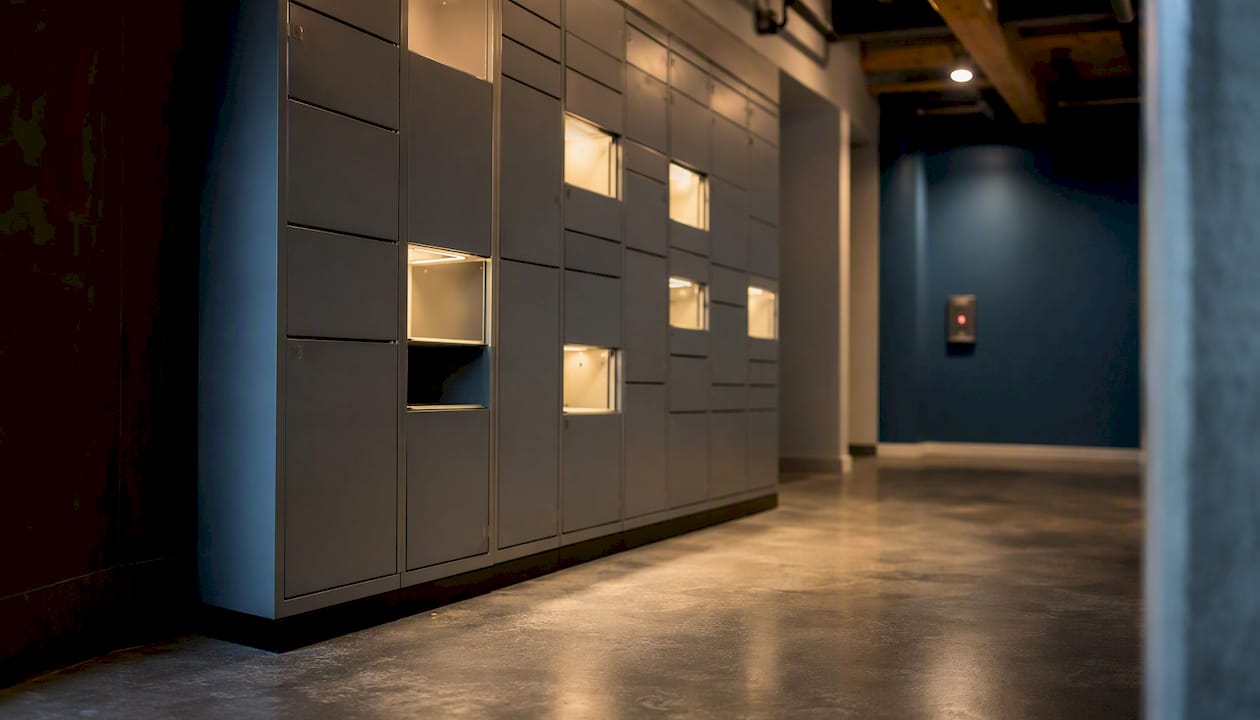
Vendors supplying that package infrastructure should be held to a short standard: 24/7 pickup access, direct PMS integration, video monitoring, and weatherproofing for any outdoor units. Outdoor lockers that fail in North Carolina’s summer humidity or winter freeze cycles create more resident complaints than they solve.
Properties that market package convenience prominently, rather than treating it as back-office infrastructure, tend to lease up faster because it directly answers one of renters’ most consistent frustrations: uncertainty about whether a delivery will actually be there when they get home.
That’s not a minor operational detail. NMHC’s research on package handling and leasing flexibility shows those expectations have shifted from “nice to have” to baseline in the space of a few years, and a property that’s still relying on a front-desk sign-out sheet is competing against buildings that solved this problem already.
Local Policy Is Quietly Reshaping the Rental Market
Zoning decisions at the county and municipal level are doing as much to shape North Carolina’s rental supply as any single market force. Where local governments have loosened density restrictions or fast-tracked build-to-rent permitting, particularly in the Charlotte and Raleigh suburbs, supply has responded quickly. Where zoning stays restrictive, rent pressure tends to persist longer, regardless of what regional demand is doing.
Some municipalities have also moved on tenant-protection measures, including notice requirements for rent increases and limits on certain fees. These rules vary significantly by city and county, so renters and landlords alike need to check local ordinances rather than assume statewide uniformity. North Carolina doesn’t have statewide rent control, but that doesn’t mean every jurisdiction handles lease terms, notice periods, or fee disclosures the same way.
The practical takeaway: a renter comparing two listings ten miles apart may be operating under two different sets of local rules on notice periods or fee caps, and it’s worth a quick check with the local housing office or a legal aid resource before signing.
How NC Compares to National Renter Trends
North Carolina is largely running the same playbook as the rest of the country, just on a faster clock in a handful of metros.
Nationally, rent growth has cooled from the sharp post-pandemic spikes, and renter preference surveys from NMHC and Rently reflect trends that show up in nearly every major metro, not just North Carolina’s. The emphasis on predictable costs, fast leasing, and package handling isn’t a regional quirk. It’s the new national baseline.
Where North Carolina stands out is the pace of build-to-rent construction and the strength of in-migration. Many slower-growth states are seeing BTR supply increase modestly; North Carolina’s projected 152% jump puts it well ahead of the national curve. That combination, faster population growth paired with faster new-supply delivery, is why some NC metros are seeing rents soften even while national renter demand stays firm. It’s a state absorbing growth quickly enough that supply is starting to catch up in specific submarkets, something that isn’t happening at the same pace nationally.
The Real Signal Behind the Numbers
I’d argue the most overlooked part of NC renter preference trends isn’t the rent direction at all. It’s that renters are treating leasing decisions with the same total-cost scrutiny they’d apply to a car purchase, and properties that still lead with base rent alone are losing ground to ones that lead with the full monthly number. For renters, the one move that pays off most right now is starting the search 60 to 90 days out and demanding an itemized cost breakdown before applying anywhere. For property managers, the fastest lever isn’t a rent cut. It’s closing the small, daily friction points, slow maintenance tickets, unclear package pickup, opaque fees, that quietly drive non-renewals even when the base rent is competitive.
Where to Read More
- NC Commerce publishes county-level, inflation-adjusted rent series, useful for tracking which counties are actually rising versus flat.
- NMHC’s renter preferences research is the industry benchmark survey for what renters expect on touring, leasing flexibility, and package handling.
- Rently’s 2026 Renting by Generation survey breaks renter priorities down by generation, with regularly refreshed figures.
- Doorstead’s Raleigh-Durham market report tracks live metro rent medians and days-on-market, updated more frequently than most static reports.
- The NC Chamber’s housing-gap report offers the clearest statewide projection for build-to-rent supply growth and the broader housing shortfall.
Frequently Asked Questions
Are North Carolina rents currently rising or falling? It depends on the metro. Raleigh-Durham’s blended median rent slipped about 3.13% year over year to $1,720 as of July 2026, while several counties still show rent increases once adjusted for inflation, according to NC Commerce data.
What do NC renters want most right now?
How is build-to-rent housing affecting NC rental prices? Build-to-rent supply is projected to grow 152% in 2025, concentrated in Charlotte and Raleigh, adding competition that’s helping moderate rents for comparable square footage in those metros.
Does North Carolina have rent control? No. North Carolina has no statewide rent control, though some municipalities have adopted local tenant-protection measures like rent-increase notice requirements, so renters should check local ordinances directly.
How can renters use current market data to negotiate a lease? Compare a unit’s days on market against the metro average, bring nearby comparable rents to the conversation, and start renewal discussions 60 to 90 days before lease end for the best chance at a concession.
This article is general information, not a substitute for advice from a qualified financial advisor. Consult a qualified financial professional about your own circumstances before acting on anything here.
Sources
- New report details significant housing supply gap in North Carolina — NC Chamber
- North Carolina’s build-to-rent boom: Charlotte and Raleigh leading the way — Greater CAA
- Speed, flexibility reshape renting expectations — Florida Realtors (summary of Rently 2026 report)
- NMHC Renter Preferences Survey Report — NMHC
- How Is the Raleigh-Durham Metro Rental Market Doing in 2026? July Data & Landlord Insights — Doorstead
Recommended
- Top Apartment Differentiators for Renters: 2026 Guide — Locker Solutions Blog
- Common NYC Property Management Challenges for Multifamily Managers — Locker Solutions Blog
- Common Utah Property Management Challenges: Owner’s Guide — Locker Solutions Blog
- Your essential multifamily amenities checklist for 2026 - Luxer One Locker Solutions
Ready for a Luxer One® package locker quote?
Tell us your unit count and we'll send right-sized pricing with a fast response time.
Get my free quote