August 2, 2026
Common NYC Property Management Challenges for Multifamily Managers
Discover solutions to common NYC property management challenges. Tackle rising costs, compliance issues, and tenant experience gaps effectively.

The top common NYC property management challenges are rising operating costs, tightening local compliance, package-delivery strain, staffing constraints, and tenant-experience failures rooted in pre-move-in gaps. Prioritize these now:
- Operating costs for rent-stabilized units rose 6.3% between 2024 and 2025, often outpacing allowable rent increases.
- Local Law 97 caps carbon emissions for large buildings; fines run up to $268 per metric ton over the limit.
- Reactive repairs cost 3–5x more than preventive maintenance (BOMA estimate).
- 73% of property managers cite operations, staffing, and revenue as their biggest pressures.
- Luxer One® (Locker Solutions) is the recommended package-management solution for reducing labor burden and resident friction.
| NYC Metric | Value | Why It Matters |
|---|---|---|
| Operating-cost increase, rent-stabilized units (2024–2025) | 6.3% | Erodes margins on regulated doors |
| Local Law 97 fine rate | Up to $268/metric ton over limit | Compliance failure is a direct P&L hit |
| Reactive vs. preventive maintenance cost multiplier | 3–5x | Deferred work destroys reserves |
Next-day actions:
- Schedule a Local Law 97 compliance audit with your energy consultant.
- Enable digital maintenance intake to cut manual triage touches.
- Run per-door profitability on all rent-stabilized units.
- Pilot package lockers in your highest-volume building.
- Start unit-level digital records separating regulated from market-rate apartments.
Pro Tip: Automate the acknowledgment and triage layer for maintenance requests first. A resident who gets an instant confirmation stops calling the front desk, and your team stops fielding the same status question six times a day.
Table of Contents
- Why reactive maintenance keeps draining your budget
- How staffing pressure forces you to automate
- What pre-move-in gaps actually cause tenant problems
- Practical mitigation strategies that actually move the needle
- Handling turnover and vacancy in NYC multifamily
- Navigating rent stabilization in NYC
- Emergency preparedness and building safety compliance
- Resident communication in diverse NYC populations
- Locker Solutions cuts package chaos and staff burden in NYC buildings
- Key Takeaways
Why reactive maintenance keeps draining your budget
BOMA’s data is blunt: emergency repairs cost 3–5x what scheduled work costs. In NYC’s aging pre-war and mid-century stock, that multiplier hits fast. A boiler that gets quarterly service rarely fails at 11 PM on a Friday. One that gets ignored almost always does.
The fix is centralizing documentation and reducing touches per work order. BOMA operators who track this consistently find that fewer handoffs mean faster resolution and lower spend. Pair a digital maintenance log with a scheduled inspection calendar, and deferred work stops compounding into reserve hits.
How staffing pressure forces you to automate
Maintenance costs rose 18–25% in many markets since 2023, and staffing costs climbed 12–18%; automating key workflows reclaims team capacity without adding staff. Hiring your way out of that math doesn’t work.
Top-performing operators automate a small number of high-volume workflows: maintenance coordination, tenant communication, and package handling. Those three alone reclaim meaningful team capacity without adding headcount. The 2026 best practices guide from Locker Solutions covers the operational frameworks that make this practical at scale.

What pre-move-in gaps actually cause tenant problems
Most tenant disputes trace back to decisions made before the lease was signed. Weak screening, vague lease clauses, and no clear rent-collection standard create problems that look like tenant behavior but are really management gaps.
Set payment expectations in writing on day one. Spell out maintenance response windows in the lease. Inconsistent enforcement of policies that were never clearly communicated is the root of most disputes, not the tenant.
Practical mitigation strategies that actually move the needle
Insurance premiums have risen substantially across many markets in recent years. Combined with labor and materials inflation, marginal doors can quietly go unprofitable. Run per-door ROI analysis quarterly.
On vendor management: centralize sourcing and compliance tracking. Fragmented vendor systems create hidden backlogs where vendors exist but can’t be activated because onboarding is stalled. That delay costs you leasing windows and resident satisfaction.
Handling turnover and vacancy in NYC multifamily
Turnover costs vary widely per unit depending on scope. In NYC, where only 45% of rental units are market-rate, a single slow turn on a regulated unit can cascade into compliance exposure if records aren’t clean at handoff.
Build a unit-turn checklist that triggers automatically at notice. Assign one person to own the turn timeline, not just the individual tasks. Vacancy loss in this market is rarely about demand; it’s almost always a coordination failure.
Navigating rent stabilization in NYC
Only 45% of NYC rental units are market-rate. That means revenue management on a mixed portfolio starts with legal status, not pricing ambition. Clean unit-by-unit records, current registrations, and complete lease files aren’t administrative overhead; they’re the foundation of a reliable rent roll.
Failing to differentiate regulated from market-rate units in your operating systems causes record-keeping errors that surface as hidden liability during refinancing or sale. Unit-level digital records are the only reliable fix.
Emergency preparedness and building safety compliance
NYC buildings face overlapping compliance deadlines: Local Law 97 emissions caps, Local Law 11 facade inspections, Local Law 152 gas piping inspections, Local Law 157 natural gas detector requirements, and fire safety codes. Missing one deadline doesn’t just mean a fine; it can force emergency capex that crowds out planned renovations.
Treat compliance as a dynamic operations task, not an engineering side file. A system that tracks deadlines, logs filing status, and escalates repair scope while options still exist is what separates operators who stay ahead from those who absorb surprise costs.
Resident communication in diverse NYC populations
NYC buildings routinely house residents who speak different languages, have different communication preferences, and carry different expectations about landlord responsiveness. A single communication channel fails most of them.
Use layered outreach: app notifications, email, and posted notices for anything time-sensitive. For disputes, document every exchange in writing and respond within a defined window. The NYC Comptroller’s Responsible Property Management Standards recommend periodic resident satisfaction surveys as a baseline practice. Consistency in response time matters more than the channel itself.
Locker Solutions cuts package chaos and staff burden in NYC buildings
Package volume in NYC multifamily buildings has reached a point where lobby pile-ups and staff-managed deliveries are a genuine labor drain. Locker Solutions (Luxer One®) addresses this directly: automated package rooms and electronic lockers eliminate the manual handoff entirely, with 24/7 resident pickup, automated alerts, AI-powered label reading, and video surveillance built in.
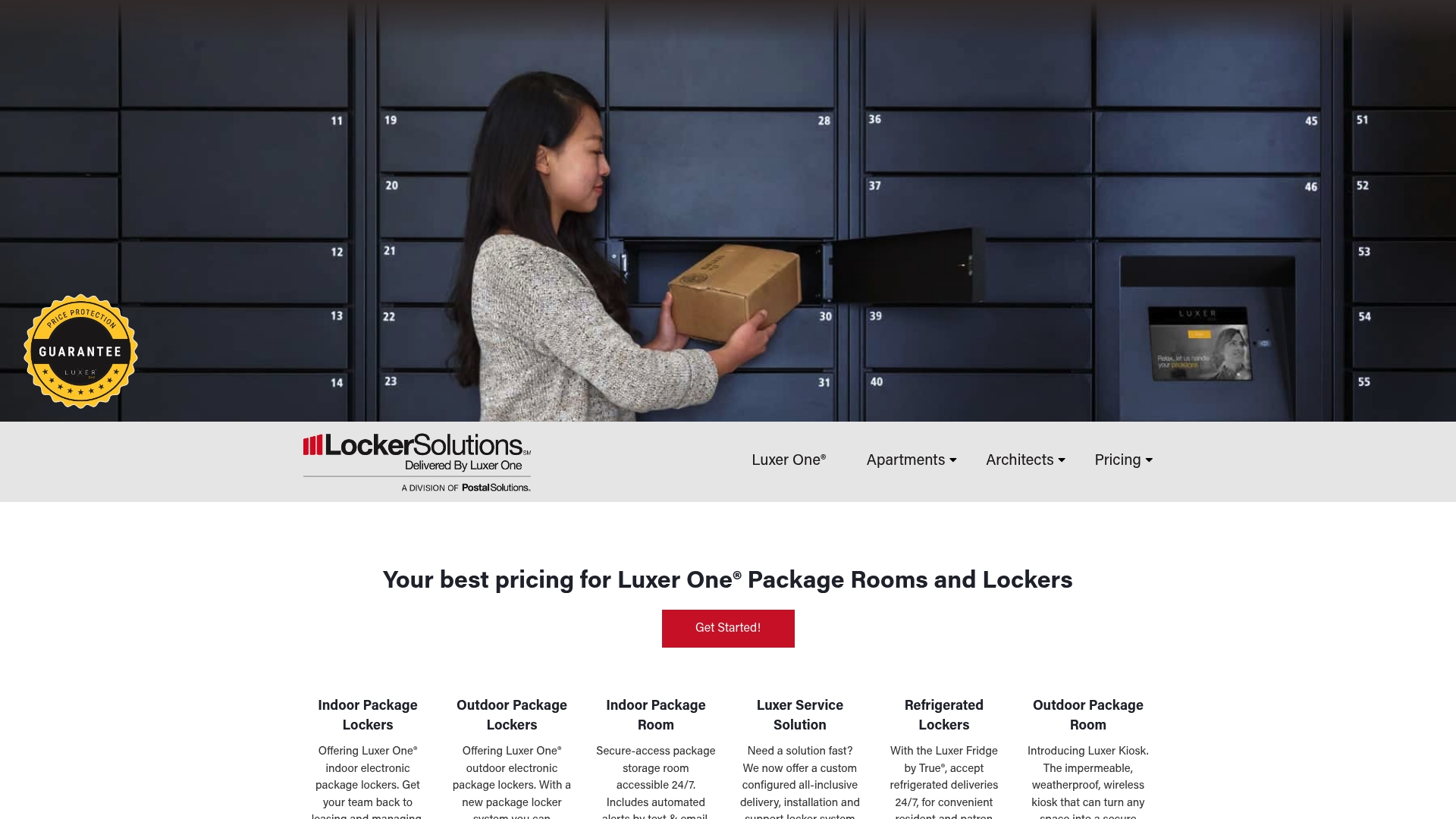
The product line covers indoor and outdoor electronic lockers, refrigerated lockers for grocery and meal-kit deliveries, monitored package rooms, and unified access control. Every system integrates with property management software, so resident pickup data flows into your existing workflow without a separate login.
Pilot rollout in three steps:
- Site survey to map entry points, electrical access, and delivery volume.
- Hardware installation and staff training (typically completed within days, not weeks).
- Pilot operations with automated resident alerts active from day one.
Pro Tip: Start the pilot in your highest-volume building or the entry point with the most delivery congestion. A clear before/after on staff hours and resident complaints makes the ROI case for the rest of the portfolio.
For properties that want a fully managed option, Locker Solutions also offers a package room management service where on-site daily operations are handled end-to-end. Get a quote or explore configuration options at Locker Solutions for Apartments.
Key Takeaways
NYC multifamily managers who control compliance deadlines, automate high-friction workflows, and maintain unit-level digital records protect NOI and reduce operational risk across both regulated and market-rate doors.
| Point | Details |
|---|---|
| Operating cost pressure | Rent-stabilized unit costs rose 6.3% in 2024–2025, outpacing most allowable increases. |
| Compliance is a P&L issue | Local Law 97 fines reach up to $268 per metric ton over the emissions limit. |
| Preventive maintenance pays | Reactive repairs cost 3–5x more than scheduled work, per BOMA estimates. |
| Automate before you hire | Maintenance costs rose 18–25% since 2023, and staffing costs increased 12–18%; automating key workflows reclaims capacity without adding staff. |
| Locker Solutions | Luxer One® automated package rooms and lockers reduce staff labor and improve resident pickup experience in NYC multifamily buildings. |
Recommended
Ready for a Luxer One® package locker quote?
Tell us your unit count and we'll send right-sized pricing with a fast response time.
Get my free quote