October 1, 2026
Smart Lockers for Property Managers: 2026 Guide | Luxer One® Blog
Discover how smart lockers can streamline package delivery for property managers. Enhance resident access and reduce staff workload in 2026.
Smart lockers are electronically controlled storage units that automate package delivery and resident self-service pickup using digital authentication methods such as PIN codes, QR codes, RFID badges, and mobile apps. Property managers at multifamily communities across the country, from storage lockers in San Francisco high-rises to storage lockers in Las Vegas resort-style complexes, are deploying these systems to eliminate front-desk package chaos and reduce staff workload. Brands like Luxer One and Southwest Solutions have built product lines specifically for residential properties, offering everything from indoor parcel lockers to refrigerated units for grocery deliveries. The result is a package management infrastructure that gives residents 24/7 self-service access while giving property teams real-time visibility and a full audit trail.
What are smart lockers and how do they work?

Smart lockers are automated package delivery systems that combine electronic locks, digital authentication, sensors, and cloud software into a single integrated unit. A carrier drops off a package, the system assigns an available compartment, and the resident receives an automated notification with a unique access code or QR code. The resident retrieves the package at any hour without staff involvement. Every transaction is logged, timestamped, and accessible through a management dashboard.
The technology stack behind a secure locker system includes several distinct layers working together:
- Electronic locks: Solenoid locks handle high-frequency, rapid-cycle use cases like shared package areas. Motorized locks provide heavier-duty security for larger compartments or outdoor environments.
- Authentication methods: PIN codes, RFID badges, QR code scanning, mobile app access, and biometric options each serve different resident preferences and security requirements.
- Sensors: Door status sensors confirm whether a compartment is properly closed. Tamper detection sensors trigger alerts when unauthorized access is attempted.
- Connectivity: Wired Ethernet is the preferred connection for reliability. Wi-Fi and cellular backup maintain operation during network interruptions.
- Cloud software: Real-time monitoring and audit trails give property managers instant visibility into every delivery, pickup, and access event.
Pro Tip: Request a live demo of the cloud dashboard before purchasing any system. The quality of reporting and alert configuration varies significantly between vendors, and it directly affects how much time your team spends managing exceptions.
What are the installation requirements for smart lockers?
Successful deployment depends on site preparation, not just the hardware. Property managers who skip the infrastructure assessment phase often face costly retrofits after installation.
- Dedicated power supply. Each locker bank requires a dedicated electrical circuit. Shared circuits create voltage fluctuations that can disrupt electronic locks and controller boards. Confirm amperage requirements with the vendor before scheduling electrical work.
- Reliable network connectivity. Wired Ethernet with cellular backup is the standard for dependable operation. Cellular backup prevents a network outage from locking residents out of their packages.
- Indoor vs. outdoor placement. Indoor units require climate-controlled or at minimum temperature-stable environments. Outdoor units need weatherproof casing, UV-resistant materials, and anchoring to a concrete pad or structural wall. Properties in extreme climates, whether desert heat in Las Vegas or coastal fog in San Francisco, should specify units rated for those conditions.
- Physical anchoring. Proper anchoring prevents theft of the entire unit and is often required by insurance carriers. Bolt-down kits and wall-mount brackets are standard for most commercial-grade systems.
- Integration with property management systems. API-based integration with platforms like Yardi, RealPage, or Entrata automates resident registration and notification workflows. Without integration, staff must manually update resident databases, which reintroduces the labor burden the system was meant to eliminate.
Pro Tip: Walk the delivery path from the building entrance to the locker location before finalizing placement. Carriers will skip a locker bank that requires navigating multiple secured doors or long hallways. Convenience for the carrier directly determines adoption rates.
What types of smart lockers are available for multifamily properties?
Smart lockers come in multiple configurations designed for different property sizes, delivery volumes, and package types. Choosing the wrong configuration is one of the most common and expensive mistakes property managers make.
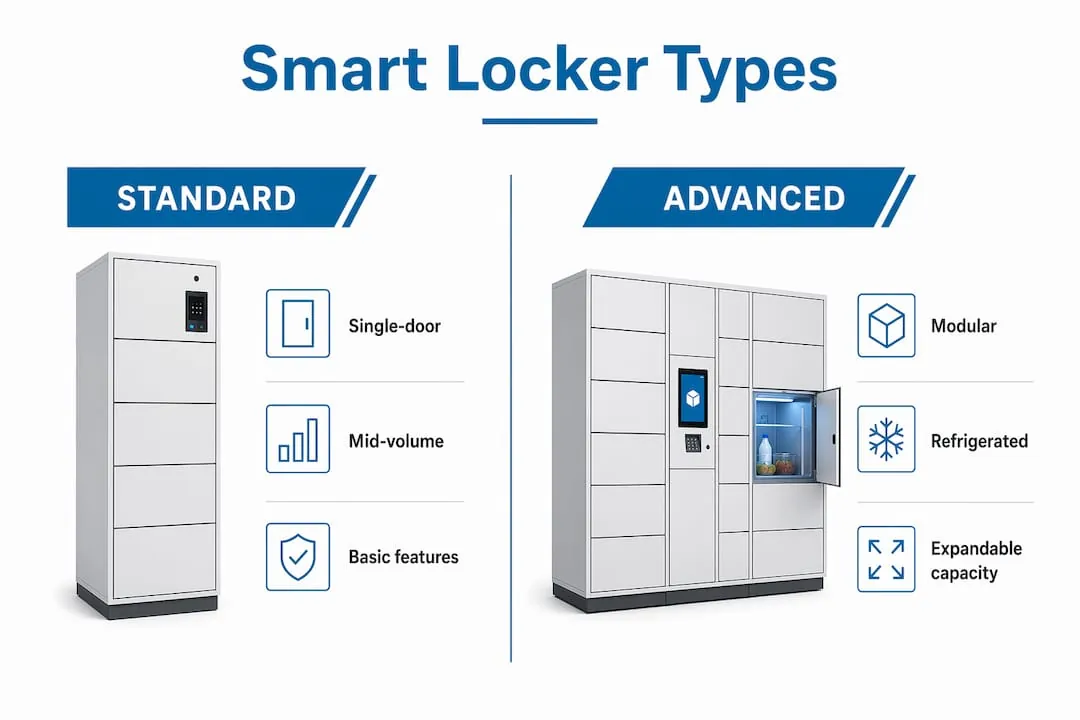
| Locker type | Best use case | Key feature |
|---|---|---|
| Standard single-door parcel locker | Low to mid-volume properties | Simple deployment, lower upfront cost |
| Modular multi-door system | Growing communities with variable volume | Expandable without replacing the controller |
| Bulk item locker | Large packages, furniture, appliances | Oversized compartments with reinforced doors |
| Refrigerated locker | Grocery and meal kit deliveries | Temperature-controlled compartments |
| Outdoor weatherproof unit | Properties without a dedicated mail room | UV-resistant, waterproof casing |
| Temporary or rental locker | Construction sites, short-term leases | Portable, no permanent installation required |
Modular systems deserve special attention for multifamily properties. Modular design allows capacity expansion without replacing the core controller or software, which protects the initial investment as package volume grows. A 100-unit building that adds 50 units in a new phase can add locker columns rather than buying an entirely new system.
Refrigerated lockers address a growing delivery category. Grocery delivery services like Amazon Fresh and Instacart have made perishable package management a real operational need. A standard parcel locker cannot hold a grocery order safely for more than a few hours. A refrigerated locker unit solves that problem directly.
What are the key benefits of smart locker systems for property teams?
The operational case for secure locker systems is direct. Smart lockers increase package security, reduce staff handling time, and improve resident satisfaction through 24/7 self-service access. Each benefit compounds the others.
- Reduced package theft. Every delivery is logged with carrier confirmation, compartment assignment, and resident pickup time. That audit trail eliminates disputes and deters theft more effectively than a front desk sign-in sheet.
- Lower staff workload. Front desk staff at busy properties can spend hours per day receiving, sorting, and notifying residents about packages. Automated notifications and self-service pickup eliminate that workload entirely.
- 24/7 resident access. Residents who work irregular hours or travel frequently can retrieve packages at midnight without calling the leasing office. That convenience directly affects lease renewal decisions.
- Software analytics. Delivery volume reports, peak usage times, and compartment utilization data help property managers right-size their locker capacity and plan future expansions.
- Property value and tenant retention. Package management is now a standard amenity expectation in multifamily leasing. Properties without a reliable package management solution face a competitive disadvantage in markets where residents have options.
“The shift from manual package handling to automated locker systems is not a technology upgrade. It is an operational redesign that changes how residents experience the building every single day.”
The parcel locker meaning in a multifamily context goes beyond simple storage. A postal locker or mail container at a community mailbox handles letters. A smart locker system handles the full range of e-commerce deliveries, from small envelopes to large boxes, with carrier-specific workflows and resident-facing notifications built in.
Key Takeaways
Smart lockers are the most effective package management infrastructure for multifamily properties because they automate delivery, secure access, and give property teams real-time control without adding staff.
| Point | Details |
|---|---|
| Technology integration matters | Electronic locks, sensors, and cloud software must work together for reliable operation. |
| Site prep determines success | Dedicated power, wired Ethernet, and proper anchoring prevent the most common deployment failures. |
| Configuration must match property needs | Modular, refrigerated, and outdoor units serve different property types and delivery volumes. |
| Benefits are operational and financial | Reduced staff workload, lower theft rates, and higher resident satisfaction all affect the bottom line. |
| Vendor evaluation should include failure testing | Confirm how the system behaves during power loss or network outages before signing a contract. |
What property managers get wrong when selecting smart lockers
The most common mistake is evaluating smart locker systems purely on price and compartment count. Those two metrics miss the factors that determine whether a system actually works in daily operation.
System reliability depends on engineering choices like controller processing capacity, sensor integration, and network redundancy. A system that looks identical to a premium product on a spec sheet may fail silently during a network interruption, leaving residents locked out and staff fielding complaints. Testing failure modes before deployment is not optional. Ask every vendor to demonstrate what happens when power is cut, when the network drops, and when a door sensor fails to register a closed compartment.
Biometric authentication and video analysis are becoming more common in secure locker access systems. These features require higher-capacity controllers and a technology stack built to support future upgrades. If you select a system with a low-capacity controller today, adding biometric access later may require replacing the entire control unit, not just adding a reader.
Site selection is the other underrated factor. A locker bank placed in a poorly lit corner of a parking garage will see low adoption regardless of how good the technology is. Residents need to feel safe retrieving packages, especially at night. Placement near building entrances, with adequate lighting and ideally camera coverage, drives the resident adoption rates that justify the investment.
At our company, we have seen properties install well-specified systems in poor locations and then blame the technology when adoption stalls. The hardware is only part of the equation. The resident experience starts before they ever touch the locker.
Luxer One lockers for multifamily package management
We specialize in Luxer One® package management systems for multifamily residential properties, offering indoor and outdoor locker options, refrigerated units, and automated package rooms. Every system includes cloud-based management software, automated resident notifications, and professional installation support.
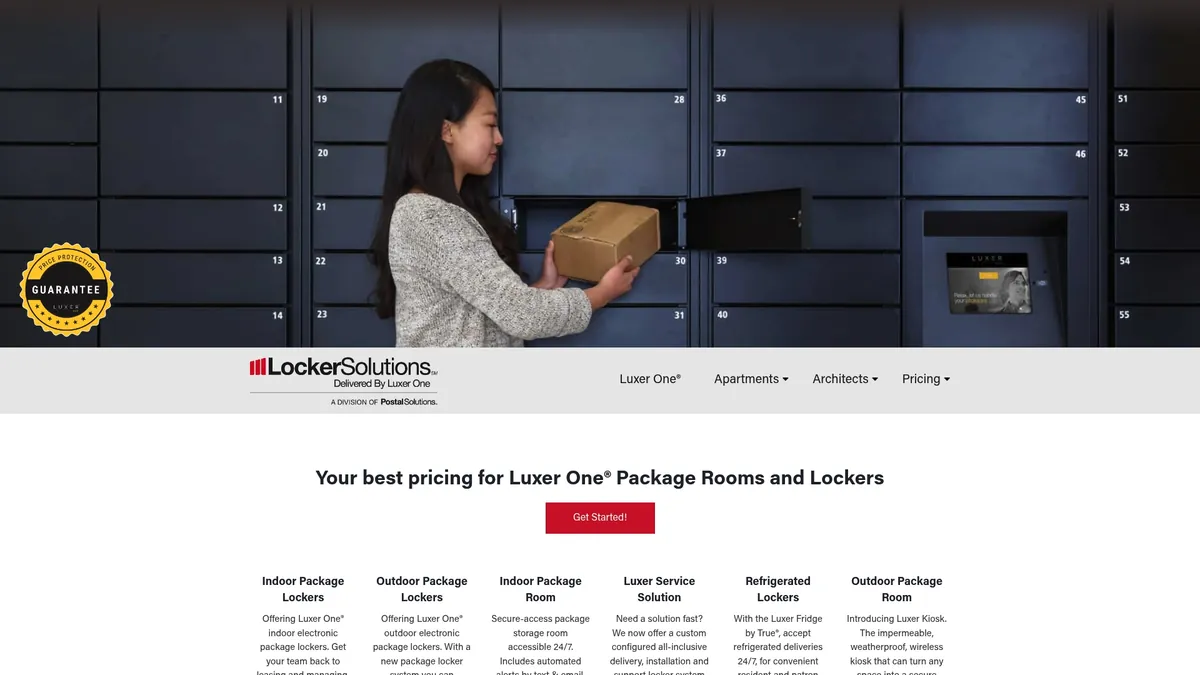
Property managers and developers can choose from modular locker banks sized for small communities or large mixed-use developments, with outdoor weatherproof configurations built for properties without a dedicated mail room. We also offer automated package room management for properties that need higher-volume capacity than individual locker banks provide. Contact us to request a site assessment and product recommendation tailored to your property’s delivery volume and layout.
FAQ
What is the parcel locker meaning in multifamily housing?
A parcel locker is a secure, electronically controlled compartment that holds package deliveries until the recipient retrieves them using a unique access code or mobile app. In multifamily housing, parcel lockers replace front desk package handling with automated, self-service delivery management.
What is secure locker access and how does it work?
Secure locker access refers to the digital authentication layer that controls who can open a locker compartment. Methods include PIN codes, QR codes, RFID badges, and mobile app credentials, each generating a logged access event for the property management team.
Does USPS offer smart locker services?
USPS provides free Smart Package Lockers at select post office locations for secure, keyless parcel pickup and returns. These public postal lockers serve as a convenient alternative to home delivery but are not a substitute for on-site residential locker systems.
How do smart lockers differ from standard mail containers?
Standard mail containers and postal lockers hold letters and small parcels without electronic access control or notifications. Smart lockers add electronic locking, digital authentication, automated resident alerts, and cloud-based audit trails that standard mail containers do not provide.
What should property managers prioritize when comparing locker vendors?
Property managers should prioritize system reliability under failure conditions, integration with existing property management software, and the vendor’s installation and support track record. Compartment count and price are secondary to whether the system operates dependably every day.
Recommended
Ready for a Luxer One® package locker quote?
Tell us your unit count and we'll send right-sized pricing with a fast response time.
Get my free quote