June 19, 2026
Student Housing Delivery Solutions: 2026 Manager's Guide
Discover effective student housing delivery solutions to streamline package management, enhance security, and improve student satisfaction.

Student housing delivery solutions are specialized systems and services designed to manage, secure, and distribute the high volume of packages arriving daily for student residents in campus housing and Purpose-Built Student Accommodation (PBSA). Property managers at communities running hundreds of units face a real operational problem: package rooms overflow, front desk staff spend hours sorting parcels, and students complain about missing deliveries. The right combination of smart locker technology like Luxer One, parcel management software like Traizr, and coordinated logistics turns that chaos into a controlled, auditable process.
1. What are the top technologies transforming student housing delivery solutions?
Smart lockers and automated package rooms are the two most impactful technologies in student accommodation logistics today. Both eliminate the front desk bottleneck that plagues most PBSA properties.
Smart locker systems like Luxer One provide 24/7 secure storage with instant SMS or email notifications the moment a package is deposited. Students pick up on their own schedule, which prevents backlogs and package clutter at reception. That single shift from staff-managed pickup to self-service pickup recovers hours of labor every week.
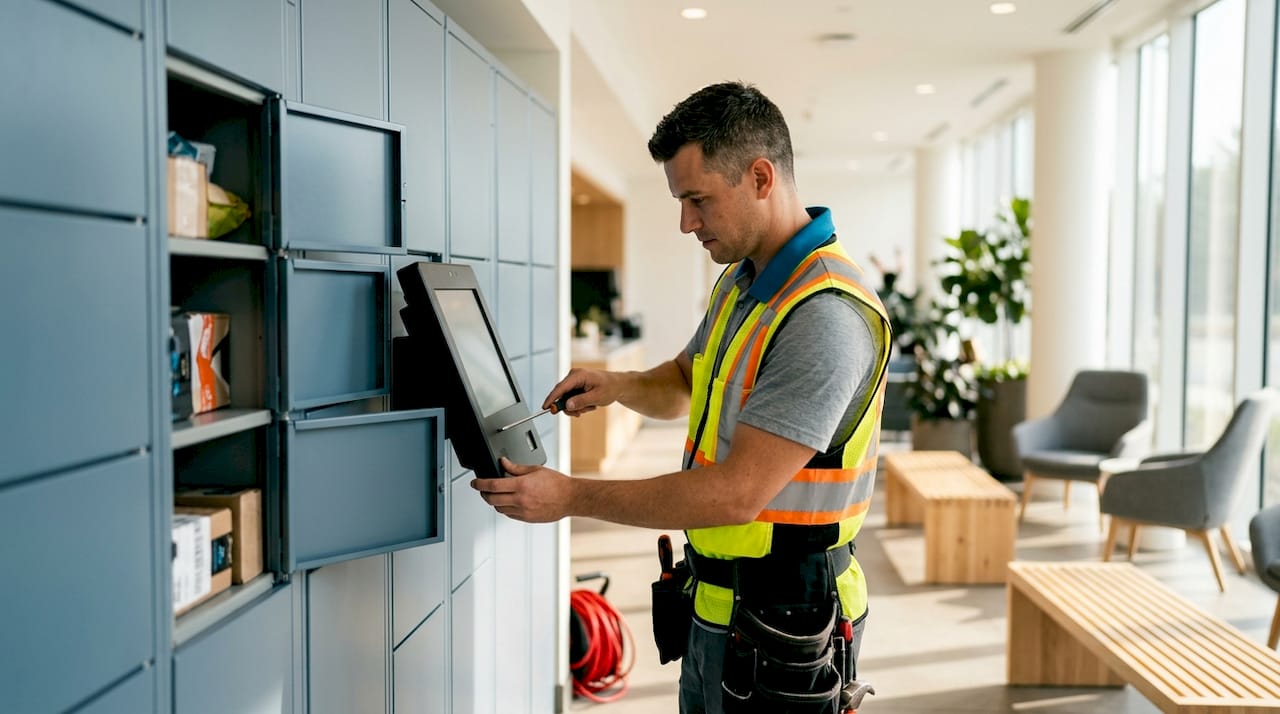
Parcel management software adds a second layer of control. Platforms like Traizr automate package logging through OCR and barcode scanning, generate real-time tracking data, and create a digital audit trail for every parcel. Last-mile delivery software reduces manual workload and errors by sending immediate notifications and enabling secure handoff with QR codes or electronic signatures.
| Feature | Manual system | Automated system |
|---|---|---|
| Package logging | Staff enters data by hand | OCR/barcode scan on arrival |
| Student notification | Phone call or posted list | Instant SMS/email alert |
| Pickup hours | Office hours only | 24/7 self-service |
| Audit trail | Paper log, error-prone | Digital record, timestamped |
| Peak period capacity | Bottlenecks quickly | Scales with locker bank size |
Pro Tip: When evaluating parcel software, confirm it can handle your peak move-in week volume before you commit. A system that works fine in October may collapse under 500 daily deliveries in August.
2. How modular construction reshapes student housing delivery logistics
Modular construction is the fastest-growing method for delivering new student housing stock, and it directly changes how property developers plan delivery timelines and on-site logistics.
Prefabricated student accommodation reduces project delivery timelines by 30–50% compared to traditional construction. That compression means developers collect rental income months earlier and students move in on schedule. Modular units are produced fully finished in factories, which eliminates the weather delays and quality inconsistencies common in site-built projects.
The on-site speed is equally significant. Builders can assemble 16–20 rooms per day using modular technology. That pace minimizes campus disruption, which matters enormously when adjacent buildings remain occupied during construction.
Key benefits for developers and administrators:
- Predictable costs: Factory production locks in material and labor pricing early.
- Faster occupancy: Compressed timelines mean earlier lease-up and revenue.
- Reduced site congestion: Fewer tradespeople on campus at any one time.
- Consistent quality: Controlled factory environments reduce defect rates.
- Simpler FF&E coordination: Fully finished modules arrive ready for furnishing, not framing.
3. What logistics strategies work best for occupied student residences?
Delivering furniture, fixtures, and equipment (FF&E) into a building where students are already living requires a level of coordination that standard freight services do not provide. The wrong approach creates congestion in corridors, disrupts studying, and generates noise complaints.
Phased installation and delivery scheduling protect security and avoid disrupting daily student routines. Work proceeds floor by floor or wing by wing, so the disruption zone stays contained. Students in unaffected areas experience no change to their routine.
White glove delivery services take this further. Beltmann Integrated Logistics, which specializes in student and senior living environments, structures deliveries around strict sequencing to respect privacy and minimize traffic during high-density academic periods. That level of precision is not optional in occupied buildings. It is the baseline expectation.
Operational tactics that protect residents during active delivery periods:
- Stage freight in a designated loading zone, not in hallways or common areas.
- Use consolidated freight shipments to reduce the number of delivery windows.
- Assign a dedicated site coordinator who communicates directly with the property manager.
- Schedule heavy deliveries outside peak student movement times (early morning or late evening).
- Confirm elevator reservations in advance to avoid conflicts with resident use.
Pro Tip: Build a delivery schedule matrix before any FF&E project begins. Map each floor, the delivery date, the crew size, and the elevator window. Share it with your building manager and the logistics provider at least two weeks out.
4. Which software features matter most for managing student packages?
The right delivery management software does more than log parcels. It gives property managers the data and automation needed to run a tight operation across one building or an entire portfolio.
Centralized delivery management is the feature that matters most for portfolio owners. A single dashboard showing package status across multiple properties eliminates the need for separate logins and disconnected spreadsheets. It also makes staffing decisions easier because managers can see where volume is concentrated on any given day.
Automated logging through OCR and barcode scanning is the second non-negotiable. Automated package logging speeds up sorting and storage, helping PBSA properties handle hundreds to thousands of packages weekly without slowing down. Manual entry at that scale introduces errors that damage resident trust.
Critical software features to evaluate:
- Real-time parcel tracking: Students and staff see package status from scan to pickup.
- Instant notifications: Automated SMS or email alerts reduce “where is my package?” inquiries at the front desk.
- Digital handoff: QR code or electronic signature confirms pickup and closes the chain of custody.
- Reporting and analytics: Delivery volume reports justify staffing levels and identify operational gaps.
- Multi-property management: One login for all sites reduces administrative overhead.
- Carrier integration: Compatibility with UPS, FedEx, Amazon, and USPS prevents logging gaps.
For a deeper look at how these features apply to campus environments specifically, the college mailroom solutions guide from Locker Solutions covers the full workflow from carrier drop-off to student pickup.
5. How to handle seasonal and peak delivery volumes in student housing
Move-in week is the stress test every student housing property faces. Package volume can spike three to five times above the weekly average, and systems that work fine in November fail visibly in August.
Modular smart locker banks solve the capacity problem directly. You can add locker columns to an existing Luxer One installation without replacing the core system. That modularity means you right-size capacity for your peak period rather than your average week.
Notification automation is equally important during surges. When students receive an instant alert and pick up within 24 hours, lockers turn over fast enough to absorb the next wave of deliveries. Without that automation, lockers fill up and overflow back to the front desk.
| Scenario | Recommended approach | Key benefit |
|---|---|---|
| Move-in week surge | Expand locker bank, add temporary staff | Absorbs volume without front desk overflow |
| Holiday package spike | Activate overflow package room | Keeps lockers clear for time-sensitive parcels |
| Low-budget property | Hybrid locker plus managed package room | Balances cost and capacity |
| Multi-building campus | Centralized software with per-building reporting | Identifies which buildings need more capacity |
Additional tactics for peak period management:
- Use delivery data from prior years to forecast volume and schedule staff shifts accordingly.
- Partner with a third-party logistics provider for temporary offsite storage during extreme surges.
- Send proactive resident communications before move-in week explaining pickup procedures and locker locations.
- Set package expiration windows in your software so unclaimed parcels are flagged and returned promptly.
For a current operational framework, the 2026 resident deliveries guide from Locker Solutions covers peak period planning in detail.
Key takeaways
Effective student housing delivery solutions require automated locker systems, purpose-built parcel software, and coordinated logistics working together to handle volume, security, and resident experience at scale.
| Point | Details |
|---|---|
| Automate package logging | OCR and barcode scanning eliminate manual entry errors and speed up sorting at high volumes. |
| Deploy smart lockers for 24/7 access | Luxer One lockers with instant notifications cut front desk workload and prevent pickup backlogs. |
| Plan for peak periods in advance | Modular locker banks and delivery data analytics let you scale capacity before move-in week hits. |
| Use phased logistics in occupied buildings | Floor-by-floor sequencing and consolidated freight protect resident privacy and reduce congestion. |
| Centralize software across properties | A single dashboard for multi-property portfolios improves staffing decisions and operational visibility. |
What I’ve learned about student housing delivery after years in the field
The most common mistake property managers make is treating package management as a front desk problem rather than an infrastructure problem. You cannot staff your way out of a volume issue. When a 400-unit student property receives 600 packages on a Monday after a holiday weekend, no amount of extra hands at the reception desk fixes the underlying capacity gap. The fix is hardware and software working together before the surge arrives.
The second mistake is underestimating how much students care about convenience. In a competitive PBSA market, 24/7 locker access is not a luxury amenity. It is a baseline expectation for residents who order groceries, textbooks, and electronics online every week. Properties that still require front desk pickup during office hours are losing lease renewals to competitors who figured this out two years ago.
The data angle is the most underused opportunity I see. Delivery volume reports give property managers the evidence they need to justify staffing changes, locker expansions, and budget requests to ownership. Most managers have the data sitting in their software and never pull it. That is a missed opportunity to make a business case with numbers instead of anecdotes.
Finally, do not treat the logistics of FF&E delivery and the logistics of daily parcel management as separate problems. Both require sequencing, coordination, and the right technology. Properties that solve both together run more efficiently and create a better experience from move-in day forward.
— Locker Solutions
How Locker Solutions simplifies student housing package management
Managing package delivery in student housing does not have to consume your staff’s day. Locker Solutions provides Luxer One secure lockers and monitored package rooms built specifically for high-volume residential properties, including PBSA communities.
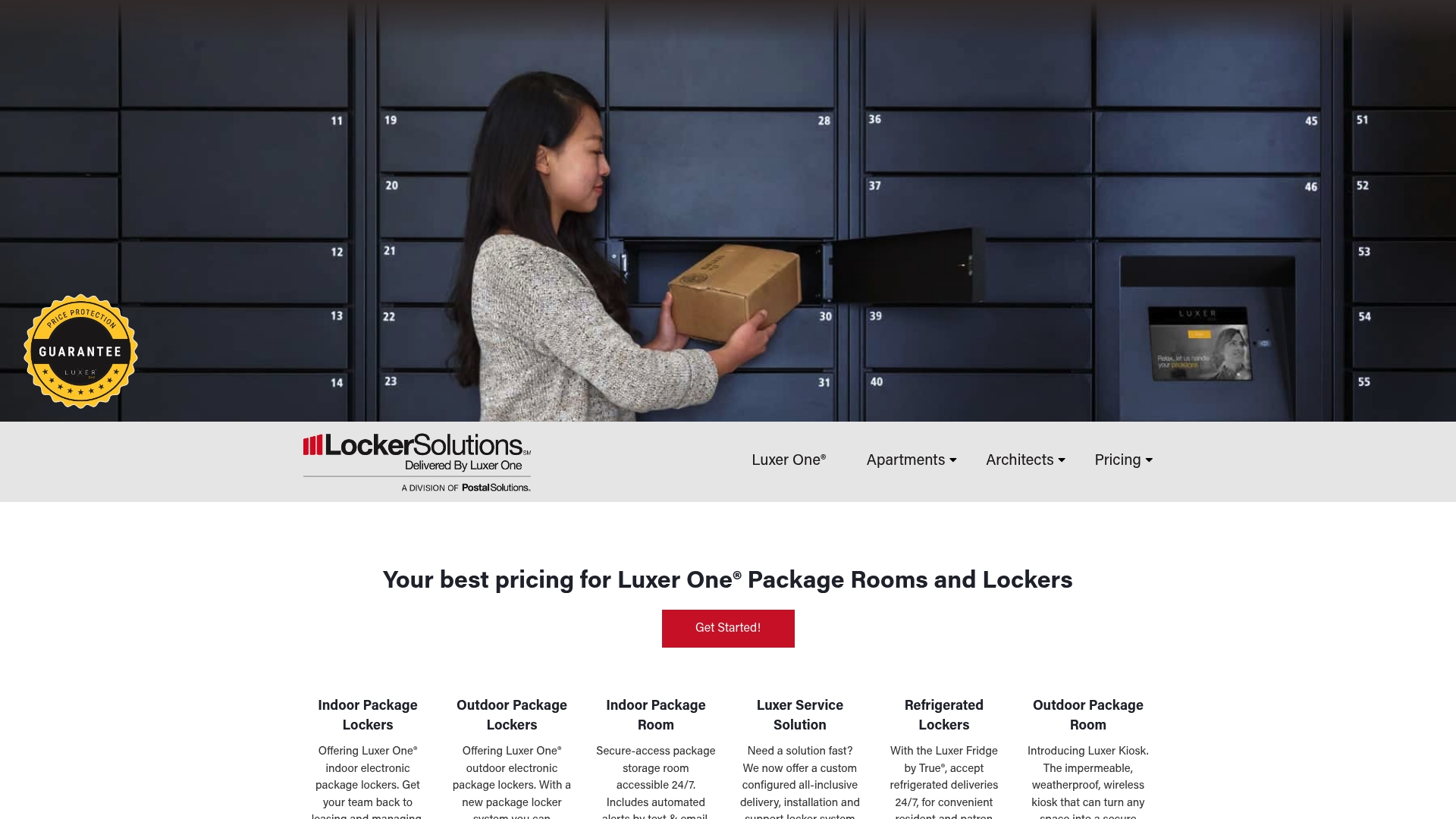
From indoor and outdoor locker banks to refrigerated lockers for grocery and meal kit deliveries, every system integrates with parcel management software to give you real-time visibility and automated resident notifications. Locker Solutions also offers monitored package room services that reduce staff workload without requiring a full locker installation. Whether you manage a single residence hall or a portfolio of student communities, Locker Solutions scales to your property size and budget. Explore the full range of apartment parcel solutions and request a demo to see how quickly you can get a system running before your next move-in season.
FAQ
What are student housing delivery solutions?
Student housing delivery solutions are systems and services that manage the receipt, storage, and pickup of packages for student residents. They typically include smart lockers, automated package rooms, and parcel management software.
How do smart lockers reduce workload for property managers?
Smart lockers like Luxer One accept packages from any carrier and send students an instant notification, eliminating the need for staff to sort, store, and hand out parcels manually.
What software features are most important for PBSA package management?
The most critical features are automated barcode or OCR logging, real-time student notifications, digital pickup confirmation, and multi-property reporting dashboards that support staffing decisions.
How should property managers prepare for move-in week package surges?
Deploy modular locker banks that can expand capacity, activate overflow package rooms, and use prior-year delivery data to schedule additional staff during the highest-volume days.
Does modular construction affect how student housing is outfitted and delivered?
Yes. Modular units arrive fully finished from the factory, which compresses project timelines by 30–50% and reduces on-site disruption, making FF&E coordination faster and more predictable.
Recommended
- Resident Deliveries: A Property Manager’s 2026 Guide — Locker Solutions Blog
- Dorm Package Management: A Guide for Students and Admins — Locker Solutions Blog
- Multifamily Package Delivery Explained for Property Managers — Locker Solutions Blog
- Resident Packages: A 2026 Guide for Property Managers — Locker Solutions Blog
Ready for a Luxer One® package locker quote?
Tell us your unit count and we'll send right-sized pricing with a fast response time.
Get my free quote