June 12, 2026
Dorm Package Management: A Guide for Students and Admins
Discover effective dorm package management strategies for students and admins. Improve delivery efficiency and reduce lost packages on campus!
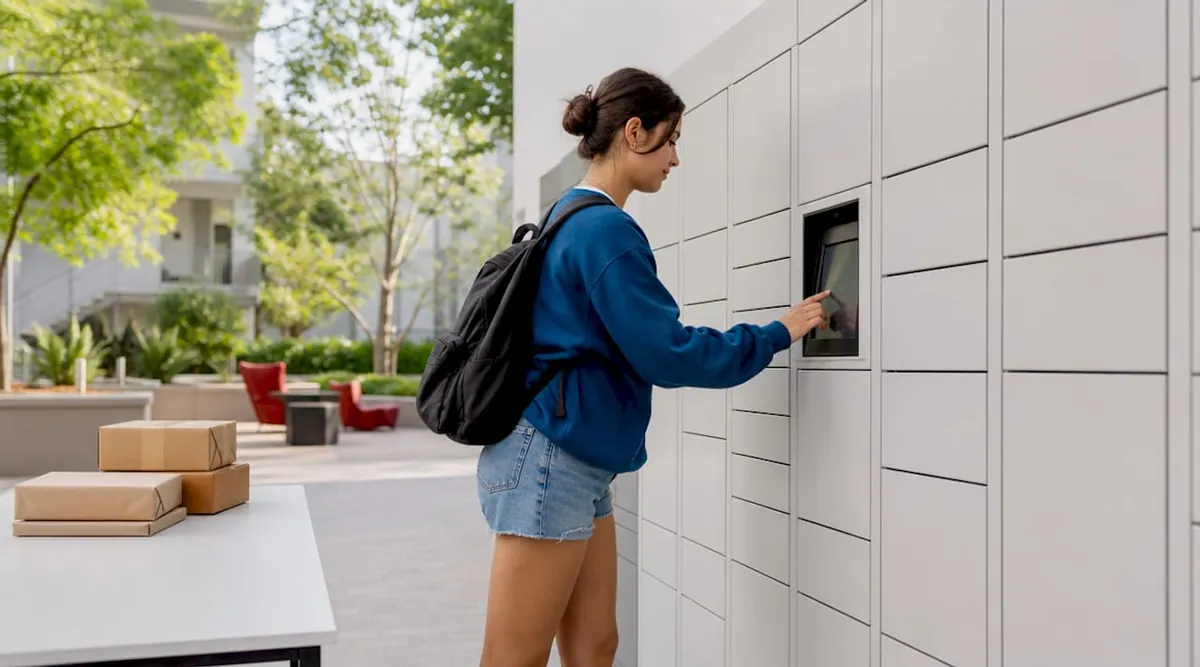
Dorm package management is the structured system colleges use to receive, store, and distribute packages to students living in dormitories, covering everything from mailroom intake to final pickup. As online shopping volumes climb each semester, residential mail management has become one of the most operationally demanding functions on any campus. Lost deliveries, uncollected parcels, and overwhelmed front desks create friction for students and staff alike. The good news is that a combination of correct addressing, clear university policies, and smart locker technology can resolve most of these problems before they start.
What is dorm package management and why does it matter?
Dorm package management covers three core functions: intake, storage, and retrieval. When any one of these breaks down, students lose packages and administrators lose time. The system works best when every stakeholder, from the student placing an Amazon order to the mailroom supervisor scanning barcodes, understands their role.
The scale of the problem is real. Manual package handling in university mailrooms causes significant delays, especially during peak semester start periods when volume spikes beyond what staff can process in a single shift. At the University of Connecticut, staff reported package backlogs severe enough that the university moved to install Amazon lockers on the Storrs campus in early 2026 to relieve pressure.
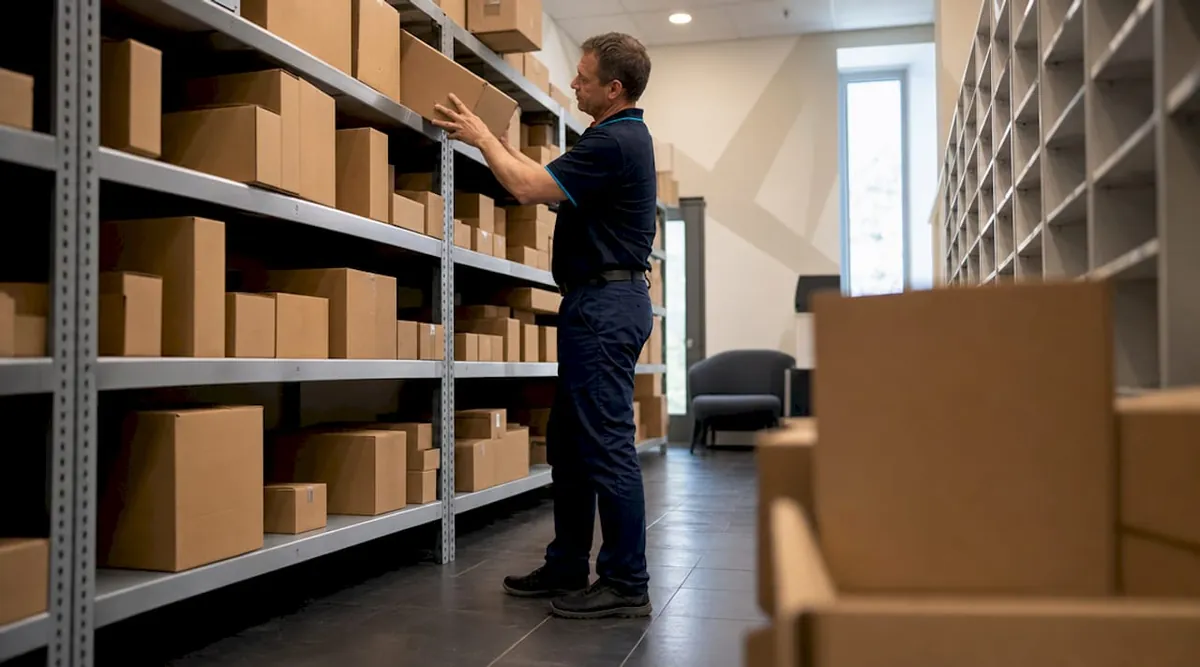
University package handling also carries financial stakes for students. Uncollected packages at UMass Dartmouth are returned to sender after 30 days, and students can be held financially responsible for the return shipping fees. That policy turns a missed notification into a real cost, which is exactly why understanding the full system matters from day one.
How addressing and university policies affect delivery success
The single most preventable cause of lost packages is an incomplete or incorrect delivery address. Universities like UMass Dartmouth and University of Findlay explicitly state that improperly addressed packages are significantly more likely to be delayed or lost entirely. Most institutions require a specific format that includes the student’s full legal name, the residence hall name, and a unique Mail Stop Code or Box ID assigned at move-in.
A correctly formatted address for a dorm package typically looks like this:
- Student full name (as registered with the university)
- Residence hall name and room number
- Mail Stop Code or Box ID (assigned by the university)
- University street address
- City, state, and ZIP code
Skipping the Mail Stop Code is the most common mistake. Carriers route packages to central sorting facilities first, and without that code, the package has no clear path to the right building or student.
Beyond addressing, universities enforce strict retrieval policies. Students must present a valid university-issued photo ID when picking up packages at institutions including the University of Findlay, UMass Dartmouth, and Lindenwood University. No exceptions are made for forgotten IDs, and staff are not permitted to release packages based on verbal confirmation alone.
Pro Tip: Before placing your first order of the semester, log into your university’s housing portal and confirm your exact Mail Stop Code. Copy it into a note on your phone so you can paste it into any shipping form without guessing.
Some universities also allow authorized pickup by a third party, but the process is specific. Lindenwood University requires a prior written email notification naming the authorized person, and both the student and the alternate must present valid IDs at the time of pickup. Assuming a roommate can grab your package without that paperwork will result in a refused handover.
Comparing delivery methods and storage options in dorms
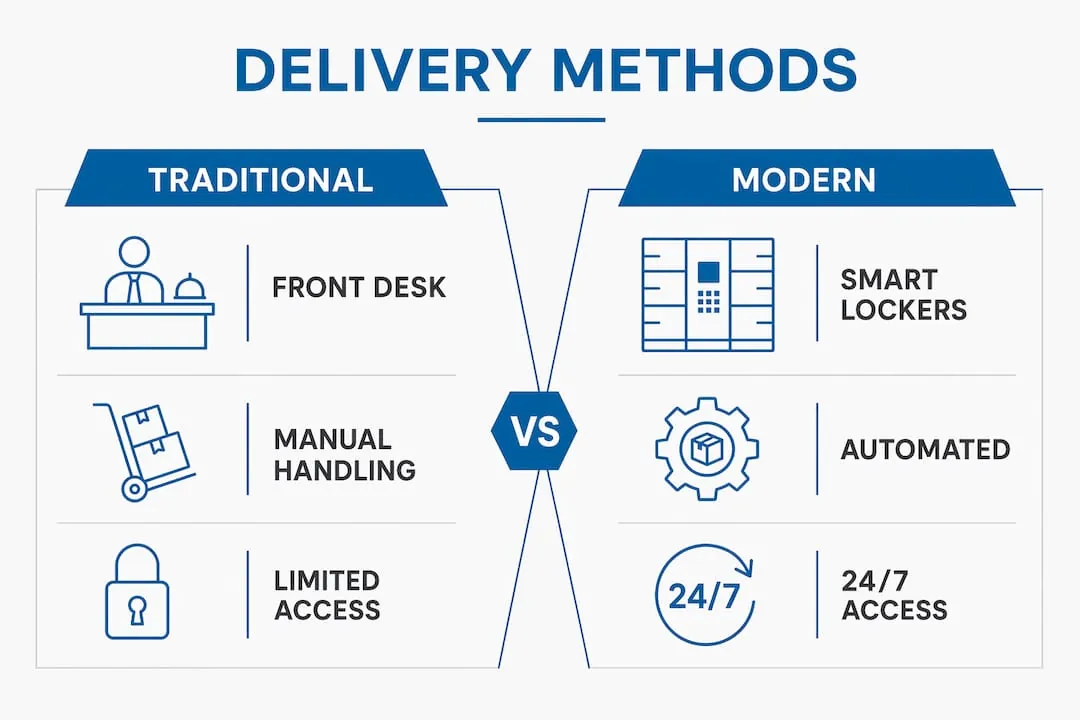
Not all campus delivery systems work the same way, and the method your university uses directly affects how quickly and securely you receive packages. The three most common models are front desk handling, centralized package centers, and smart locker systems.
Front desk handling places the burden on residential advisors or building staff to accept, log, and store packages until students collect them. This model works at low volume but collapses under pressure. Staffing shortages at hall desks drove Saint Mary’s College to open a dedicated student package center in early 2026, consolidating deliveries from multiple residence halls into one staffed location with consistent hours and trained personnel.
Centralized package centers solve the staffing problem but introduce a new one: students must travel to a single location, often with limited hours, to collect their items. During finals week or move-in weekend, lines at these centers can stretch out the door.
Smart locker systems address both problems at once. Smart lockers automate package intake and retrieval, provide 24/7 student access, and include security features like sensors and surveillance cameras that reduce theft risk. The lockers can be configured in different sizes to handle everything from a small envelope to a large shipping box.
| Delivery method | Staffing required | Hours of access | Theft risk | Best for |
|---|---|---|---|---|
| Front desk handling | High | Limited to desk hours | Moderate | Small buildings, low volume |
| Centralized package center | Moderate | Set business hours | Low | Mid-size campuses |
| Smart locker system | Minimal | 24/7 | Very low | High-volume, large campuses |
USPS, UPS, and FedEx each follow different campus delivery protocols. Some carriers deliver directly to central mailrooms, while last-mile couriers may leave packages in unsecured locations, increasing theft exposure. Knowing which carriers your university accepts at which locations helps you choose the right shipping option when placing orders.
Pro Tip: When ordering high-value items, select a carrier that your university’s mailroom officially accepts rather than defaulting to the cheapest shipping option. The extra cost is worth the security.
Best practices for students managing package deliveries
Students who treat package pickup as a passive process end up with the most problems. Taking a few deliberate steps at the start of each semester prevents the majority of delivery failures.
- Confirm your address format before ordering. Pull the exact address format from your university’s housing or mail services page. Use it as a saved template in your Amazon, Target, or other retail accounts so every order ships correctly from the start.
- Enable all notification channels. Smart locker software sends automatic email or app notifications with access codes or QR codes the moment a package is deposited. Turn on both email and push notifications so you never miss an alert.
- Pick up within 48 hours. Most universities send a second reminder after 24 hours and begin the return process after 30 days. Picking up within 48 hours keeps your mailbox clear and prevents financial holds from accumulating on your student account.
- Carry your university ID at all times. Package retrieval without a valid university-issued photo ID is refused at virtually every institution. A photo of your ID on your phone is not accepted as a substitute at most schools.
- Arrange authorized pickup in writing if needed. If you cannot collect a package yourself, send a formal email to your mailroom naming the person who will pick it up, and make sure they bring both their own ID and a copy of your authorization. Verbal requests are not honored.
For students using smart lockers, the process is faster than a traditional mailroom visit. You receive a code, enter it at the locker terminal, and retrieve your package in under a minute. The university library locker installations at several campuses show how this model scales across different campus locations without adding staff.
Administrative strategies for improving package system efficiency
Administrators who wait until volume overwhelms their current system before making changes face a much harder transition. The most effective approach is to audit your current workflow at the start of each academic year and identify the specific bottlenecks before peak demand arrives.
Centralizing package handling is the first and most impactful move most campuses can make. Consolidating deliveries from multiple residence halls into one location reduces the number of staff needed, creates consistent service hours, and makes tracking easier. The shift Saint Mary’s made to a dedicated package center is a direct example of this principle working in practice.
Integrating smart locker technology with existing mailroom operations does not require replacing your entire system. Smart locker pods can be customized in size and configuration to fit specific campus needs, and they integrate with existing mail management software to increase throughput while reducing labor costs. A phased installation, starting with the highest-volume residence halls, lets administrators test the system before scaling.
Policy enforcement matters as much as infrastructure. Clear, written policies on pickup deadlines, ID requirements, and authorized pickup procedures reduce staff disputes and protect the university from liability. Post these policies in every residence hall common area and include them in the new student orientation packet.
Pro Tip: Track your package volume data by week across the full academic year. The patterns will show you exactly when to schedule additional staff hours and when locker capacity needs to expand, turning reactive crisis management into planned operations.
Consistent communication with students is the final piece. Send reminder emails when packages have been waiting for more than 48 hours, and include the financial hold policy in those reminders. Students who understand the consequences of delayed pickup respond faster than those who receive generic notifications.
How technology is transforming dormitory package tracking
Technology has moved dormitory package tracking from a clipboard-and-signature process to a fully automated system in the span of a few years. The shift matters because it removes the human bottleneck from both ends of the transaction.
Andy Kelly, Associate Director of Logistics at the University of Connecticut, noted that on-campus lockers reduce wait times and improve delivery speed, directly addressing the mailroom backlog that builds during high-volume periods. UConn’s decision to install Amazon lockers on the Storrs campus in 2026 reflects a broader trend of universities treating smart locker access as a baseline service expectation rather than a premium amenity.
The core technology stack in a modern dorm mail system includes:
- Automated intake scanning that logs each package the moment it arrives and triggers an instant student notification
- Mobile app integration that delivers access codes or QR codes directly to the student’s phone
- Video surveillance at locker terminals that creates a transaction record for every pickup
- Data dashboards that give administrators real-time visibility into package volume, locker occupancy, and uncollected items
The security dimension is significant. Every transaction logged by a smart locker system creates an audit trail that resolves disputes about missing packages in minutes rather than days. When a student claims a package was never received, administrators can pull the video record and delivery log immediately.
For campuses with outdoor residential buildings, outdoor parcel lockers built for variable weather conditions extend the same 24/7 access model to locations where an indoor mailroom is not practical.
Key takeaways
Effective dorm package management requires correct addressing, consistent policy enforcement, and the right storage technology working together at every stage of the delivery process.
| Point | Details |
|---|---|
| Address format is non-negotiable | Include the full residence hall name and Mail Stop Code on every order to prevent delays. |
| ID policy is universal | Virtually every university requires a valid university-issued photo ID for package pickup, no exceptions. |
| Smart lockers reduce staff burden | Automated locker systems provide 24/7 access and cut manual processing time significantly. |
| Uncollected packages carry real costs | A 30-day return policy at schools like UMass Dartmouth can result in financial holds on student accounts. |
| Centralized centers outperform hall desks | Dedicated package centers deliver more consistent service than front desk models under high volume. |
What we’ve learned from watching campuses get this right and wrong
From our experience working with residential properties and university settings, the gap between a functional package system and a failing one almost always comes down to one decision: whether administrators treat package management as a facilities problem or a resident experience problem. When it’s treated as a facilities problem, the solution is always reactive. A new shelf gets added, a new staff member gets assigned, and the system limps forward until the next crisis.
When it’s treated as a resident experience problem, the thinking changes. The question becomes: how does a student feel when they get a notification, walk to a locker, and retrieve their package in 90 seconds at 11 PM? That experience builds trust in the institution. It signals that the university respects students’ time.
The technology to deliver that experience exists right now. The barrier is almost never budget. It’s the assumption that the current system is “good enough.” In our view, good enough stopped being acceptable the moment students started expecting the same convenience on campus that they get at home. Universities that have made the shift to automated, locker-based systems report fewer staff complaints, fewer lost package disputes, and measurably higher student satisfaction scores. That’s not a coincidence.
Smart locker solutions built for university dorms
We specialize in Luxer One® smart locker systems designed specifically for the demands of university housing. Whether you’re managing a single residence hall or a multi-building campus, our university package lockers handle high-volume delivery periods without adding staff hours. Systems include automated intake scanning, instant student notifications, video surveillance, and 24/7 access. Indoor and outdoor configurations are available, with custom sizing to fit any campus layout. For administrators ready to move beyond the clipboard-and-signature model, our team provides installation in 4-6 weeks from signed agreement, full installation support, and ongoing maintenance. Explore our package room management options to find the right fit for your campus.
FAQ
What is dorm package management?
Dorm package management is the system a university uses to receive, store, and distribute packages to students living in dormitories. It includes addressing protocols, mailroom or locker intake, student notifications, and ID-verified pickup procedures.
How should I address packages sent to my dorm?
Include your full legal name, residence hall name and room number, your university-assigned Mail Stop Code or Box ID, and the university’s street address. Missing the Mail Stop Code is the most common cause of delayed or lost packages.
What happens if I don’t pick up my package on time?
Most universities, including UMass Dartmouth, return uncollected packages to the sender after 30 days and may place a financial hold on the student’s account to cover return shipping costs.
How do smart lockers improve the student pickup experience?
Smart lockers send an automatic email or app notification with an access code the moment a package is deposited, allowing students to retrieve their items at any hour without waiting for staff assistance.
Can someone else pick up my package for me?
Yes, but the process requires prior written authorization. Lindenwood University, for example, requires a formal email naming the authorized person, and both parties must present valid photo ID at the time of pickup.
Recommended
Ready for a Luxer One® package locker quote?
Tell us your unit count and we'll send right-sized pricing with a fast response time.
Get my free quote